Centrifugal Filter, Separator or Purifier
CN → US| HS Code | Tariff Rate | Origin | Destination | Doc |
|---|---|---|---|---|
| 8421110000 | 35.0% | CN | US | Official Doc |
| 8421190000 | 36.3% | CN | US | Official Doc |
Product Images
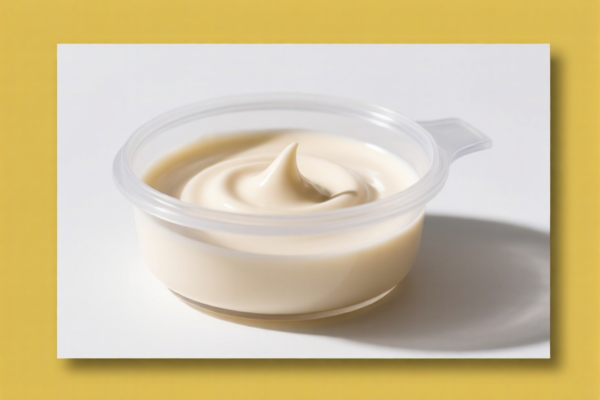
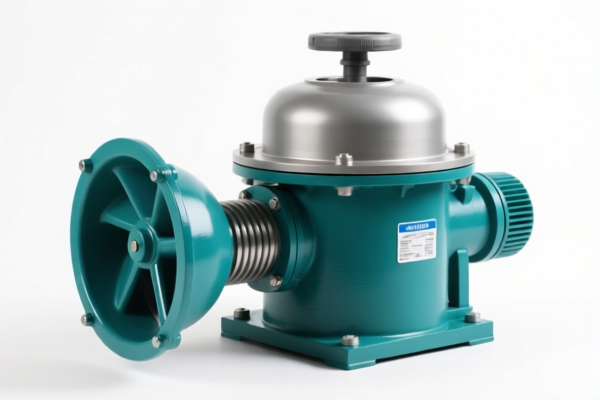
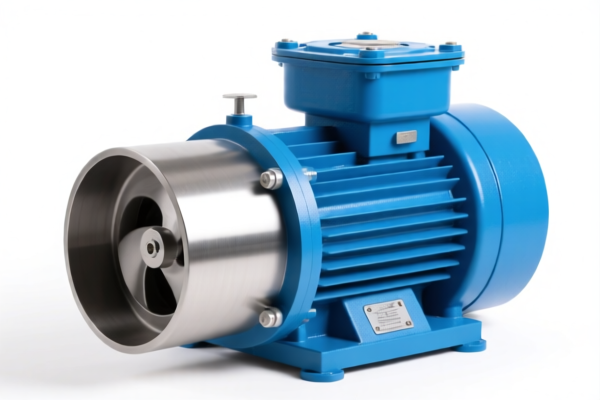
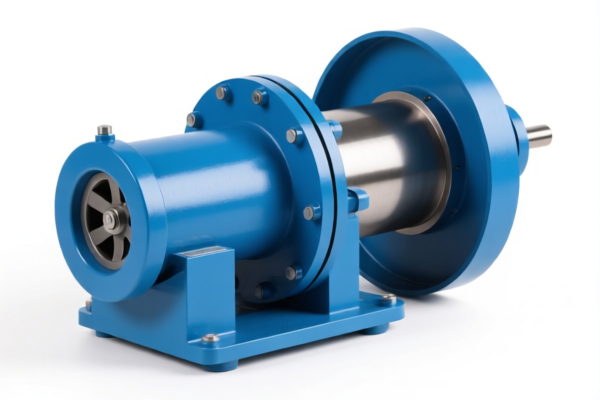
AI Analysis
🌀 Centrifugal Filter, Separator, or Purifier (Machinery for Liquids or Gases)
🌐 HS Code Reference & Customs Clearance Guide | 2026 Latest Tariff Analysis | Professional Clearance Strategy
📌 I. Product Definition & Classification: What Exactly Is This Equipment?
Centrifugal Filters, Separators, and Purifiers are industrial machines that utilize rotational force (centrifugal force) to separate substances of different densities. They are critical in industries ranging from food processing (dairy/oil) to chemical manufacturing and wastewater treatment.
In international trade, these are broadly categorized under HS Chapter 84, specifically under Heading 8421: "Centrifuges, including centrifugal dryers; filtering or purifying machinery and apparatus, for liquids or gases."
The classification hinges on the specific application and function:
Cream Separators (Dairy/Fat Separation):
Machines designed specifically for separating cream from milk or similar operations in the food/dairy industry. These are highly specific subheadings.
Other Centrifugal Machinery:
This includes industrial centrifuges used for solid-liquid separation, liquid-liquid separation (non-dairy), air/gas purification, or dewatering (dryers). If it’s not explicitly a "cream separator," it falls into the "Other" category.
⚠️ Key Distinction Point:
- If the machine is primarily used for separating cream from milk → It is a Cream Separator (8421.11.00.00).
- If the machine is used for industrial filtration, general liquid separation, gas purification, or centrifugal drying → It is "Other" (8421.19.00.00).
📦 II. HS Code Classification Details (2026 Latest Tariff Reference)
| HS Code | Product Description | Application Scenario | Tax Rate (CN Origin to US) |
|---|---|---|---|
8421.11.00.00 |
Centrifuges: Cream separators | Dairy processing plants, butter production, cream skimming | 25.0% (Base 0% + 25% Additional) |
8421.19.00.00 |
Centrifuges: Other | Industrial centrifuges, fuel filters, air purifiers, solid-bowl centrifuges, centrifugal dryers | 0.0% (Base 0% + 0% Additional) |
🔍 Critical Reminder:
- Do not confuse "Cream Separators" with general industrial centrifuges. Even if they look similar (rotating bowls), the intended use dictates the code.
- Industrial applications (e.g., separating sludge from water, purifying chemicals, drying clothes in industrial settings) DO NOT qualify for the "Cream Separator" code. They must be classified under8421.19.00.00.
- Tax Implication: Misclassifying an industrial centrifuge as a cream separator could lead to an overpayment of 25%. Conversely, misclassifying a cream separator as "Other" could lead to underpayment penalties.
💰 III. 2026 Latest Tariff Rate Breakdown
✅ Applicable Country: United States (US)
✅ Country of Origin: China (CN)
✅ Effective Date: Current rates apply as per 2026 trade policies.
🎯 1. 8421.11.00.00 — Cream Separators
| Item | Details |
|---|---|
| Base Tariff Rate | 0.0% (Ad Valorem) |
| Additional Tariff (Section 301) | +25.0% |
| Total Tax Rate | 25.0% |
| Tax Calculation | CIF Value × 25% |
| De Minimis Exemption | ❌ Not Eligible (Section 301 duties apply regardless of value) |
| Legal Basis Path | USITC:8421.11.00.00 → FTASupplemental:01 (Section 301) |
📌 Explanation:
- Although the base tariff for centrifuges is generally low or zero, cream separators are subject to the 25% additional duty under Section 301 of the Trade Act of 1974.
- This is a high-cost item for US importers compared to other centrifugal machinery.
🎯 2. 8421.19.00.00 — Other Centrifuges
| Item | Details |
|---|---|
| Base Tariff Rate | 0.0% (Ad Valorem) |
| Additional Tariff (Section 301) | 0.0% |
| Total Tax Rate | 0.0% |
| Tax Calculation | CIF Value × 0% = $0 |
| De Minimis Exemption | N/A (0% duty) |
| Legal Basis Path | USITC:8421.19.00.00 |
📌 Explanation:
- Most industrial centrifuges, filters, and purifiers fall under this "Other" category.
- This category benefits from a 0% total tariff rate, making it significantly more cost-effective for importers.
- Common Examples: Fuel oil purifiers, sewage sludge centrifuges, air filtration centrifuges, centrifugal dryers for fabrics or industrial parts.
🛠️ IV. Customs Clearance Practical Advice
✅ 1. Documentation Checklist (Mandatory)
| Document | Required | Description |
|---|---|---|
| ✅ Product Specifications | ✔️ | Detailed technical sheet: RPM, capacity, motor power, separation type. |
| ✅ Intended Use Statement | ✔️ | CRITICAL: Clearly state if the machine is for dairy/cream or general industrial/chemical use. |
| ✅ Product Photos | ✔️ | Clear images of the machine, nameplate, and internal components (rotor/bowl). |
| ✅ Commercial Invoice | ✔️ | Must accurately describe the goods. Avoid vague terms like "Machine." Use specific terms like "Industrial Fuel Oil Purifier" or "Dairy Cream Separator." |
| ✅ Packing List | ✔️ | List all parts, accessories, and tools included. |
| ✅ Certificate of Origin | ✔️ | Required to verify origin for Section 301 assessment. |
✅ 2. Declaration Strategy (Key Tips)
🔥 "Describe the Function, Not Just the Shape!"
| Scenario | Correct Declaration | Incorrect Declaration | Consequence |
|---|---|---|---|
| Industrial centrifuge for wastewater | 8421.19.00.00 - "Industrial Centrifuge for Liquid-Solid Separation" |
"Centrifuge" (Vague) | High risk of audit, potential reclassification. |
| Cream separator for dairy | 8421.11.00.00 - "Cream Separator" |
"Centrifuge" | Underpayment of 25% tax + penalties. |
| Air filter system | 8421.19.00.00 - "Air Purifying Apparatus" |
"Filter" (May be 8421.99) | Ensure it fits 8421.19 for "purifying machinery." |
📌 Why this matters:
- Customs officers may inspect the machine. If they determine it is used for dairy processing, they will reclassify it to8421.11.00.00and assess 25% duty.
- If it is used for chemical, oil, or wastewater treatment, it remains at 0% duty under8421.19.00.00.
✅ 3. Special Cases & Warnings
| Case | Handling Advice |
|---|---|
| Multi-Use Machines | If a machine can be used for both dairy and industrial purposes, declare based on the primary intended use for the shipment. Provide proof of intended use. |
| Parts & Accessories | Parts specific to cream separators may also fall under 8421.11. General centrifuge parts fall under 8421.19 or 8421.99. |
| Centrifugal Dryers | If the machine is a dryer (removing liquid from solids), it is still classified under 8421.19.00.00 as "Other" centrifuges. 0% Duty. |
🌍 V. Global Market Comparison (2026)
| Country/Region | Recommended HS Code | Duty Rate (CN Origin) | Notes |
|---|---|---|---|
| 🇺🇸 USA | 8421.11.00.00 (Cream) |
25.0% | High duty on dairy-specific equipment. |
| 🇺🇸 USA | 8421.19.00.00 (Other) |
0.0% | Zero duty for industrial centrifuges/filters. |
| 🇨🇳 China | 8421.11.00 / 8421.19.00 |
~10-14% | Import duties vary, but generally lower than US Section 301. |
| 🇪🇺 EU | 8421.11 / 8421.19 |
0-4.5% | Generally low duties, no Section 301 equivalent. |
| 🇬🇧 UK | 8421.11 / 8421.19 |
0-4.5% | Post-Brexit tariffs generally favorable for machinery. |
📌 Conclusion:
- The US market is the most challenging due to the 25% additional duty on cream separators.
- Industrial centrifuges enjoy 0% duty, making them highly competitive.
- Accurate classification is the single most important factor for cost control.
📌 VI. Common Mistakes & Pitfalls
❌ Mistake 1: Declaring an industrial fuel purifier as a "Cream Separator" to avoid taxes?
👉 Risk: Customs will verify usage. If found non-compliant, you face 25% back duties + penalties.
👉 Correct: Declare as 8421.19.00.00 for 0% duty.
❌ Mistake 2: Declaring a dairy cream separator as "Other Centrifuge" (8421.19.00.00)?
👉 Risk: 25% tax evasion. Customs will reclassify and demand payment.
👉 Correct: Declare as 8421.11.00.00 and pay 25% duty.
❌ Mistake 3: Vague description "Centrifuge Machine" on Invoice.
👉 Risk: Customs will issue a Request for Information (RFI), delaying clearance by weeks.
👉 Correct: Use specific terms: "Industrial Solid Bowl Centrifuge" or "Dairy Cream Separator."
✅ Best Practice:
"Industrial Centrifugal Filter for Wastewater Treatment, 1000 RPM, Model XYZ, Origin: China"
🎯 VII. Conclusion: Precision in Classification Saves Money!
🎯 Key Takeaway:
🔹 Cream Separators = 25% Duty (High Cost)
🔹 Industrial Centrifuges/Filters/Dryers = 0% Duty (Low Cost)
🔹 "Know Your Function!"
If it separates cream from milk, expect to pay 25%.
If it filters oil, purifies water, or dries solids, expect 0%.
📌 Pro Tip:
If you are importing used centrifuges, ensure they are new or remanufactured to avoid strict sanitary regulations (especially for food-contact equipment).
For industrial centrifuges, consider applying for a Section 301 Exclusion if available (though currently,8421.19is already 0%, so exclusions are unnecessary for this code).
📣 Immediate Action:
📞 Consult a Customs Broker to review your product's intended use.
📄 Prepare Technical Specifications that clearly state the separation purpose.
🚀 Avoid costly misclassification and ensure smooth, duty-efficient clearance.
✨ Professional Clearance Starts with Accurate Classification!
💼 Every Percentage Point of Duty Saved Is Pure Profit!
Customer Reviews
About HS Code Classification
The Harmonized System (HS) is an internationally standardized nomenclature developed by the World Customs Organization (WCO) to classify traded products. Over 200 countries use the HS system as the basis for customs tariffs, trade statistics, and import/export regulations.
Each HS code follows a hierarchical structure:
- Chapter (2 digits) — Broad category of goods (e.g., Chapter 84: Machinery and Mechanical Appliances)
- Heading (4 digits) — More specific grouping within the chapter
- Subheading (6 digits) — Internationally standardized breakdown, used by all WCO member countries
- National subdivisions (8-10 digits) — Country-specific extensions for further classification, such as US HTSUS 10-digit codes
Correct HS code classification is essential for smooth customs clearance, accurate duty payment, and compliance with trade regulations. Misclassification can lead to customs delays, overpayment of duties, or penalties.
When importing from CN to US, the applicable tariff rates may include:
- Most-Favored-Nation (MFN) rate — The standard duty rate applied to WTO members
- General rate — Applied to countries without trade agreements
- Trade remedy duties — Additional tariffs such as Section 301 (anti-dumping), Section 232 (national security), or countervailing duties
The information provided on this page is for reference purposes only. For official classification, please consult with your local customs authority or a licensed customs broker.