Ceramic Frying Pan
CN → US| HS Code | Tariff Rate | Origin | Destination | Doc |
|---|---|---|---|---|
| 6911108010 | 38.3% | CN | US | Official Doc |
| 6911108090 | 38.3% | CN | US | Official Doc |
| 6912003550 | 19.8% | CN | US | Official Doc |
| 6912004810 | 19.8% | CN | US | Official Doc |
| 6912004810 | 19.8% | CN | US | Official Doc |
Product Images
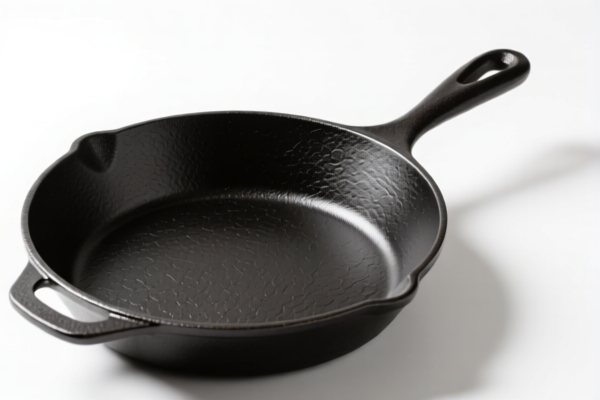
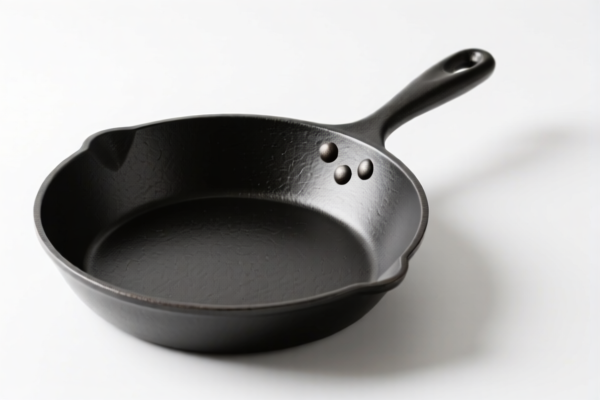
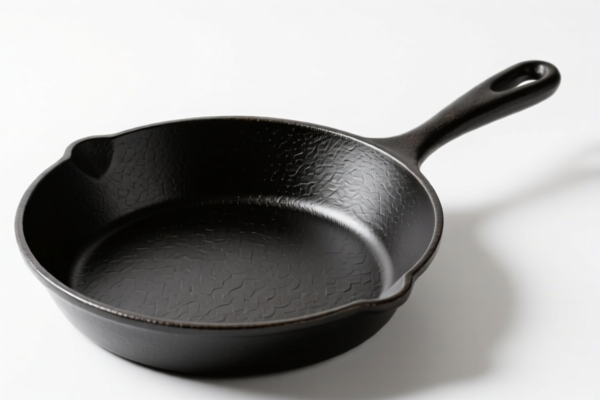
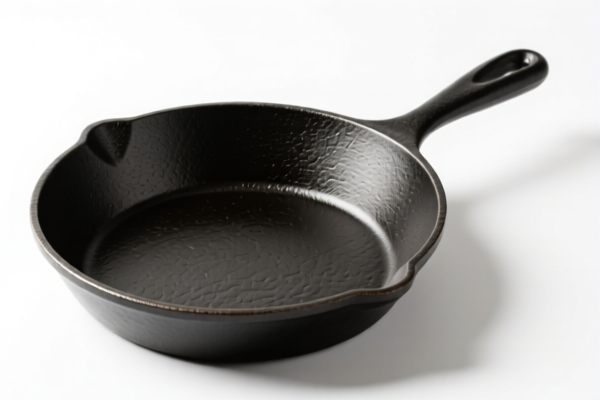
AI Analysis
🍳 Ceramic Frying Pan (Kitchen Ware)
🌐 HS Code Reference & Customs Clearance Guide | 2026 Latest Tariff Analysis | Professional Clearance Strategy
📌 I. Product Definition & Classification: Do You Really Know "Ceramic Frying Pan"?
A ceramic frying pan is a type of kitchenware made primarily from ceramic materials, designed for cooking food (specifically frying eggs or other items). In international trade, ceramic kitchenware is strictly divided based on its specific shape, function, and whether it falls under general tableware or specific cooking utensils.
Ceramic Tableware (Dinnerware): Includes plates, bowls, cups, and general kitchen utensils that do not have a specific single-purpose designation like "pan" or "pot" in the customs tariff, or are considered general "kitchen articles."
Ceramic Cooking Utensils (Pots/Pans): Specifically designated for heating/cooking, such as "pots," "pans," and "frying pans."
⚠️ Key Distinction Point:
- If the item is described generally as "kitchen utensils" or "tableware" without specifying a specific cooking vessel type like "pan" or "pot" in the official summary, it may fall under 6911.10 (Tableware/Kitchenware).
- If the item is explicitly a "pan," "frying pan," "shallow frying pan," or "pot," it falls under 6912.00 (Ceramic pots, pans, cooking and storage jars).
- Note: The provided DATA shows two distinct categories with different tax rates. Proper classification is critical to avoid overpayment or customs rejection.
📦 二、HS Code Classification Details (2026 Latest Tariff Authority对照)
| HS Code | Product Description | Application Scenario | Tax Rate Structure |
|---|---|---|---|
6911.10.80.10 |
Ceramic material, kitchen utensils used for frying eggs | General "kitchen utensil" classification, often used if the specific "frying pan" subheading is not available or if it's considered general ware | 38.3% |
6911.10.80.90 |
Ceramic material, belongs to tableware and kitchenware category | General tableware/kitchenware category, broad classification | 38.3% |
6912.00.35.50 |
Ceramic material, other pots in kitchen supplies | "Other pots" category, for specific ceramic cooking pots not fitting other subheadings | 19.8% |
6912.00.48.10 |
Ceramic material, shallow frying pan, suitable for food contact | Explicit "shallow frying pan" | 19.8% |
6912.00.48.10 |
Ceramic material, frying pan, belongs to tableware and kitchenware | Explicit "frying pan" | 19.8% |
🔍 Important Reminder:
-6911.10items (38.3%): Higher tax rate. These are often treated as general ceramic tableware/kitchenware.
-6912.00items (19.8%): Lower tax rate. These are specific cooking utensils (pots/pans).
- Critical Error: Misclassifying a "frying pan" as general "kitchenware" (6911.10) will result in double the tax (38.3% vs 19.8%). Always check if the product fits the specific "pan" or "pot" description in6912.00.
💰 三、2026 Latest Tariff Rate Breakdown (Including Additional Taxes & Policy Add-ons)
✅ Applicable Country: United States (US)
✅ Country of Origin: China (CN)
✅ Effective Date: Current as of 2025/2026 tariff schedules
🎯 1. 6911.10.80.10 & 6911.10.80.90 —— Ceramic Kitchenware/Tableware
| Item | Content |
|---|---|
| Base Duty Rate | 20.8% (ad valorem) |
| Section 301 Additional Duty | +7.5% (Trade remedy tariffs) |
| Section 122 Additional Duty | +10% (Specific US trade enforcement) |
| Total Tax Rate | 38.3% |
| Tax Calculation | CIF Value × 38.3% |
| De Minimis Exemption | ❌ Not Eligible (Section 301/122 goods are excluded from de minimis) |
| Legal Basis Path | USITC:6911.10.80.10/90 → SECTION 301: +7.5% → SECTION 122: +10% |
📌 Explanation:
- The 20.8% is the standard MFN (Most Favored Nation) base duty for ceramic tableware.
- The 7.5% is the Section 301 additional tariff applied to many Chinese ceramic goods.
- The 10% is the Section 122 tariff, often applied to specific categories of Chinese imports for national security or economic reasons.
- Total 38.3% is a significant cost burden. Strategic classification is vital.
🎯 2. 6912.00.35.50, 6912.00.48.10 —— Ceramic Pots/Pans (Frying Pans)
| Item | Content |
|---|---|
| Base Duty Rate | 9.8% (ad valorem) |
| Section 301 Additional Duty | +0.0% (Some ceramic cooking vessels may be exempt or have different rates) |
| Section 122 Additional Duty | +10% |
| Total Tax Rate | 19.8% |
| Tax Calculation | CIF Value × 19.8% |
| De Minimis Exemption | ❌ Not Eligible (Section 122 goods are excluded from de minimis) |
| Legal Basis Path | USITC:6912.00.48.10 → SECTION 122: +10% |
📌 Note:
- The 9.8% base duty is lower than tableware.
- Section 301 (7.5%) does not apply to these specific cooking utensil subheadings, resulting in a much lower total rate.
- Section 122 (10%) still applies.
- Savings: By correctly classifying as6912.00.48.10(Frying Pan) instead of6911.10(General Kitchenware), you save 18.5% on the total tax rate.
🛠️ 四、Customs Clearance Practical Advice (Real-World Pitfall Avoidance Guide)
✅ 1. Required Documentation Checklist (Non-negotiable)
| Document | Must Provide | Explanation |
|---|---|---|
| ✅ Product Specification Sheet | ✔️ | Include material (ceramic), coating (non-stick?), dimensions, and intended use. |
| ✅ Product Photos (Clear) | ✔️ | Must clearly show the item is a pan (handles, shallow depth) vs. a plate/bowl. |
| ✅ Commercial Invoice | ✔️ | Must clearly state: "Ceramic Frying Pan, for cooking food" – avoid vague terms like "kitchen accessory." |
| ✅ Packing List | ✔️ | List quantities, weights, and HS Codes accurately. |
| ✅ Certificate of Origin (CO) | ✔️ | If applicable, to prove origin for Section 122/301 application. |
| ✅ FCC/CE/RoHS Reports | ✔️ | Not always required for ceramic, but good for proof of safety standards if questioned. |
✅ 2. Declaration Tips (Key Mantras)
🔥 "Be Specific: 'Pan' saves half, 'Utensil' costs all!"
| Scenario | Correct Declaration | Incorrect Declaration |
|---|---|---|
| Actual Product: Ceramic Frying Pan | 6912.00.48.10 (19.8%) |
6911.10.80.90 (38.3%) |
| Product Description | "Ceramic Frying Pan, 10-inch, non-stick coating, for stovetop use" | "Ceramic Kitchen Ware" or "Ceramic Plate" |
| Result | ✅ Lower tax, faster clearance | ❌ Overpayment of 18.5% tax, potential audit |
📌 Critical Warning:
- Do not use generic terms like "Kitchen Utensil" or "Tableware" if the item is clearly a frying pan. Customs can easily identify the shape from photos.
- If you declare it as6911.10to be "safe," you are voluntarily paying double tax.
✅ 3. Special Situations
| Situation | Handling Advice |
|---|---|
| Set Items (Pan + Lid + Handle) | Declare as a single unit under 6912.00.48.10 if the pan is the essential character. |
| Packaged Gift Sets | If a set includes a pan and a plate, classify based on the principal item (the pan) for better tax rate, but ensure invoice details are clear. |
| Sample Shipments | Even for samples, Section 122 applies. De minimis exemption does not apply to Section 122 goods. |
| Re-export | If re-exported from a bonded warehouse, ensure proper documentation to avoid duty assessment. |
🌍 五、Global Market Comparison (2026 Latest)
| Country/Region | Recommended HS Code | Base Duty | Additional Taxes (China) | Total Estimated Cost | Notes |
|---|---|---|---|---|---|
| 🇺🇸 USA | 6912.00.48.10 (Pan) |
9.8% | +10% (Sec 122) | 19.8% | Best Rate |
| 🇺🇸 USA | 6911.10.80.90 (General) |
20.8% | +7.5% (Sec 301) + 10% (Sec 122) | 38.3% | Avoid |
| 🇨🇳 China | 6912.00.48.10 |
9.8% | None | 9.8% | Import duty for China |
| 🇪🇺 EU | 6912.00 |
3.5% | None | 3.5% | No Section 301/122 equivalent |
| 🇬🇧 UK | 6912.00 |
3.5% | None | 3.5% | Post-Brexit alignment |
📌 Conclusion:
- USA is the most challenging market due to Section 301 and Section 122 tariffs.
- Classification is everything: Getting the HS Code right from6911.10to6912.00can save you 18.5% on the CIF value.
- EU/UK are much more favorable with no additional punitive tariffs on this category.
📌 六、Common Errors & Pitfalls (Blood & Tears Lessons)
❌ Error 1: Declaring "Ceramic Frying Pan" as "Ceramic Plate" or "Kitchen Utensil"
👉 Consequence: You pay 38.3% tax instead of 19.8%. Overpayment!
❌ Error 2: Using vague descriptions like "Ceramic Item"
👉 Consequence: Customs may reject the declaration, request manual classification, and delay shipment.
❌ Error 3: Ignoring Section 122 Tariff
👉 Consequence: Even if you get the base duty right, forgetting the 10% Section 122 addition leads to underpayment and penalties.
✅ Correct Practice:
"Ceramic Non-Stick Frying Pan, 24cm, with Bakelite Handle, Model XYZ, Food Grade Certified"
HS Code:6912.00.48.10
Tax Rate: 19.8%
🎯 七、Conclusion: Precise Classification, Savings, and Efficiency!
🎯 Remember the Mantra:
🔹 "Pan is 19.8%, Utensil is 38.3% – choose wisely!"
🔹 "Section 122 is 10%, don't forget it!"
🔹 "Be specific in description, avoid generic terms!"
📌 Pro Tip:
If your ceramic frying pan is originally from Vietnam, Thailand, or Malaysia, it may be eligible for Section 301 exemptions (if applicable) and lower base duties, significantly reducing costs.
Recommendation: Apply for an Advance Ruling from US Customs if you are shipping large volumes to secure the6912.00.48.10classification and avoid audits.
📣 Take Action Now:
📞 Consult a professional customs broker + Provide clear product photos + Apply for Advance Ruling
🚀 Let your ceramic frying pan clear customs smoothly, save costs, and maximize profits!
✨ Professional Clearance Starts with Accurate Classification!
💼 Every cent of your cost deserves precise calculation!
Customer Reviews
About HS Code Classification
The Harmonized System (HS) is an internationally standardized nomenclature developed by the World Customs Organization (WCO) to classify traded products. Over 200 countries use the HS system as the basis for customs tariffs, trade statistics, and import/export regulations.
Each HS code follows a hierarchical structure:
- Chapter (2 digits) — Broad category of goods (e.g., Chapter 84: Machinery and Mechanical Appliances)
- Heading (4 digits) — More specific grouping within the chapter
- Subheading (6 digits) — Internationally standardized breakdown, used by all WCO member countries
- National subdivisions (8-10 digits) — Country-specific extensions for further classification, such as US HTSUS 10-digit codes
Correct HS code classification is essential for smooth customs clearance, accurate duty payment, and compliance with trade regulations. Misclassification can lead to customs delays, overpayment of duties, or penalties.
When importing from CN to US, the applicable tariff rates may include:
- Most-Favored-Nation (MFN) rate — The standard duty rate applied to WTO members
- General rate — Applied to countries without trade agreements
- Trade remedy duties — Additional tariffs such as Section 301 (anti-dumping), Section 232 (national security), or countervailing duties
The information provided on this page is for reference purposes only. For official classification, please consult with your local customs authority or a licensed customs broker.