Ceramic Machine
CN → US| HS Code | Tariff Rate | Origin | Destination | Doc |
|---|---|---|---|---|
| 8514399000 | 36.3% | CN | US | Official Doc |
| 8464200120 | 37.0% | CN | US | Official Doc |
| 8464100100 | 35.0% | CN | US | Official Doc |
| 6914908000 | 40.6% | CN | US | Official Doc |
| 6914108000 | 44.0% | CN | US | Official Doc |
| 8479820080 | 35.0% | CN | US | Official Doc |
Product Images
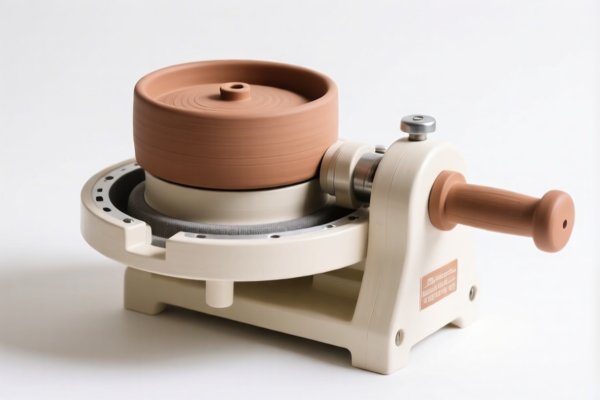
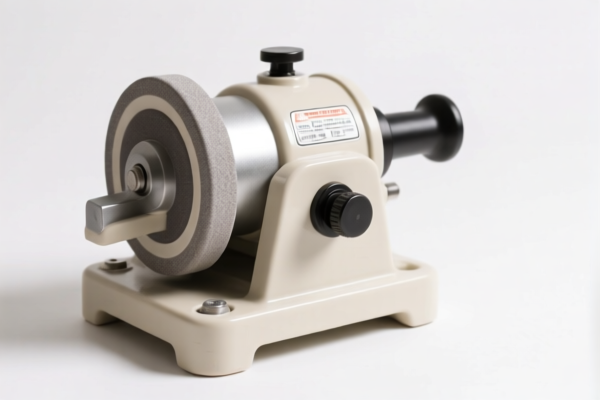
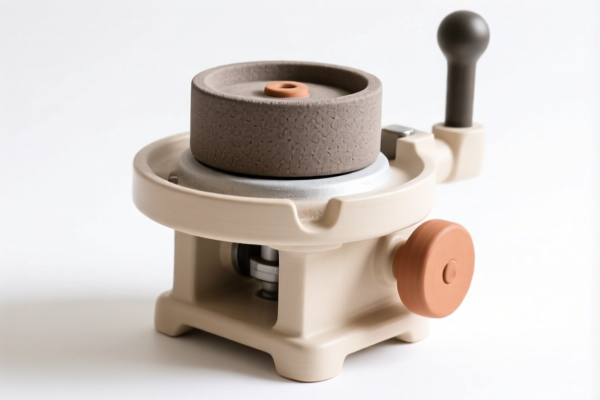
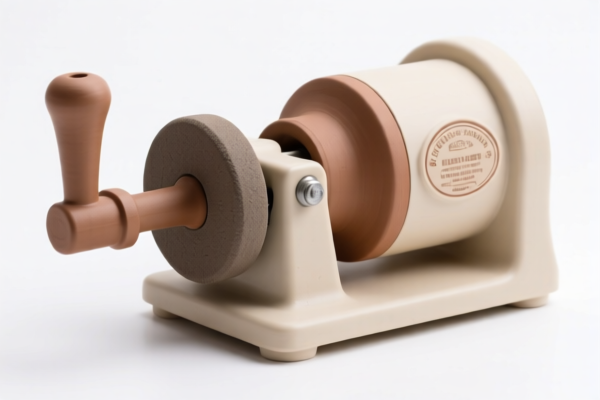
AI Analysis
🏺 Ceramic Machine: HS Code Classification & Customs Clearance Guide (2026)
🌐 HS Code Reference & Customs Strategy | 2026 Latest Tariff Analysis | Professional Clearance Protocol
📌 I. Product Definition & Classification: What Exactly is a "Ceramic Machine"?
"Ceramic Machine" is a broad industrial term that can refer to several different types of equipment used in the processing, shaping, or manufacturing of ceramic materials. In international trade, the classification depends entirely on the primary function of the machine:
- Heating Equipment: Ovens or kilns used to fire/bake ceramics.
- Machining/Grinding Equipment: Machines that cut, grind, or polish ceramic materials.
- Ceramic Products: If the "machine" is actually a finished ceramic item (e.g., a ceramic tool holder), it falls under ceramics.
⚠️ Key Distinction:
- If the machine heats the ceramic → It is an electrical heating appliance (Chapter 85).
- If the machine machines/grinds the ceramic → It is a machine tool (Chapter 84).
- If the item is made of ceramic and is a finished product → It is a ceramic article (Chapter 69).
- If the machine has a general mechanical purpose (like a generic mixer/grinder) → It may fall under general machinery (Chapter 84/85).
📦 II. HS Code Classification Details (Based on Provided Data)
The following HS Codes are derived from the specific logic provided in the <DATA> section. Each code reflects a different interpretation of the term "Ceramic Machine."
| HS Code | Product Description & Logic | Tax Rate | Key Tax Components |
|---|---|---|---|
8514.39.90.00 |
Electrical Heating Equipment: Infers the device is an electric heater/oven for ceramics. Classified as "Other" heating equipment. | 36.3% | Base: 1.3% Add'l: 25.0% Section 301: 10% |
8464.20.01.20 |
Machine Tool for Stone/Ceramics: "Ceramic" matches material; "Machine" matches tool form. Used for cutting/grinding ceramic. | 37.0% | Base: 2.0% Add'l: 25.0% Section 301: 10% |
8464.10.01.00 |
Machine Tool for Stone/Ceramics (Laser/Waterjet?): Matches material and form. Often associated with laser or waterjet cutting of ceramics. | 35.0% | Base: 0.0% Add'l: 25.0% Section 301: 10% |
6914.90.80.00 |
Ceramic Articles (Other): Interpreted as a ceramic product rather than a machine. Fits "Ceramic Products" category. | 40.6% | Base: 5.6% Add'l: 25.0% Section 301: 10% |
6914.10.80.00 |
Ceramic Articles (Household/Ceramics): Explicitly "ceramic." Classified as a ceramic item. | 44.0% | Base: 9.0% Add'l: 25.0% Section 301: 10% |
8479.82.00.80 |
Machinery with Specific Function: Matches "Grinding" function. Classified as a mechanical appliance/machine. | 35.0% | Base: 0.0% Add'l: 25.0% Section 301: 10% |
🔍 Critical Insight:
- The term "Ceramic Machine" is ambiguous. Customs will classify based on function.
- Heating =8514(Lowest base tax, but high total due to add-ons).
- Cutting/Grinding =8464or8479(Best base tax options: 0% or 2%).
- Finished Product =6914(Highest total tax: 44.0%).
💰 III. 2026 Tariff Rate Breakdown (Including Add-ons & Policy Surcharges)
✅ Applicable Country: USA (US)
✅ Origin: China (CN)
✅ Effective Date: From November 10, 2025 (for subsequent imports)
🎯 1. 8514.39.90.00 – Electrical Heating Equipment (Ceramic Kiln/Oven)
| Item | Detail |
|---|---|
| Base Tariff | 1.3% |
| Section 301 Add-on | +25.0% (USITC Footnote) |
| IEEPA Surcharge | +10.0% (China-specific, effective Nov 2025) |
| Total Tax Rate | 36.3% |
| Calculation | CIF Value × 36.3% |
| De Minimis Exemption | ❌ Not Eligible (Denied) |
| Legal Basis | IEEPA:9903.01.25 → IEEPA:9903.01.24 → USITC:8514.39.90.00 → FOOTNOTE:301 |
📌 Explanation:
- This classification assumes the machine is an electric heater (e.g., ceramic kiln).
- Despite a low base rate (1.3%), the 35% combined surcharge makes it expensive.
- Strategy: If you are exporting a kiln, this is the most likely classification.
🎯 2. 8464.20.01.20 & 8464.10.01.00 – Machine Tools for Ceramic
| Item | Detail |
|---|---|
| Base Tariff | 2.0% (Code .20) / 0.0% (Code .00) |
| Section 301 Add-on | +25.0% |
| IEEPA Surcharge | +10.0% |
| Total Tax Rate | 37.0% (.20) / 35.0% (.00) |
| Calculation | CIF Value × 35%~37% |
| De Minimis Exemption | ❌ Not Eligible |
| Legal Basis | IEEPA:9903.01.25 → IEEPA:9903.01.24 → USITC:8464.xxxx → FOOTNOTE:301 |
📌 Explanation:
- These codes apply if the machine cuts, grinds, or shapes ceramic.
-8464.10.01.00is the most cost-effective option if applicable (0% base tax).
- Key Requirement: The machine must be specifically designed for machining hard materials like stone or ceramics.
🎯 3. 8479.82.00.80 – Other Machinery (e.g., Grinding Machine)
| Item | Detail |
|---|---|
| Base Tariff | 0.0% |
| Section 301 Add-on | +25.0% |
| IEEPA Surcharge | +10.0% |
| Total Tax Rate | 35.0% |
| Calculation | CIF Value × 35.0% |
| De Minimis Exemption | ❌ Not Eligible |
| Legal Basis | IEEPA:9903.01.25 → IEEPA:9903.01.24 → USITC:8479.82.00.80 → FOOTNOTE:301 |
📌 Explanation:
- If the machine is a generic grinder or mixer used in ceramic production but not a dedicated "machine tool," it may fall here.
- Lowest Total Tax (35.0%) if properly classified as machinery.
🎯 4. 6914.90.80.00 & 6914.10.80.00 – Ceramic Articles (Misclassification Risk)
| Item | Detail |
|---|---|
| Base Tariff | 5.6% (.90) / 9.0% (.10) |
| Section 301 Add-on | +25.0% |
| IEEPA Surcharge | +10.0% |
| Total Tax Rate | 40.6% (.90) / 44.0% (.10) |
| Calculation | CIF Value × 40.6%~44.0% |
| De Minimis Exemption | ❌ Not Eligible |
| Legal Basis | IEEPA:9903.01.25 → IEEPA:9903.01.24 → USITC:6914.xxxx → FOOTNOTE:301 |
📌 Explanation:
- These codes classify the item as a finished ceramic product, not a machine.
- Highest Tax Burden (44.0%).
- Risk: Only use if the item is actually a ceramic tool/handle, not a mechanical device. Misclassifying a machine as a ceramic product can lead to penalties for incorrect declaration.
🛠️ IV. Customs Clearance Practical Advice (Avoid Pitfalls)
✅ 1. Documentation Checklist (Essential for Clearance)
| Document | Required? | Purpose |
|---|---|---|
| ✅ Product Specifications | ✔️ | Clearly state function (Heating? Grinding? Shaping?). |
| ✅ Technical Drawings | ✔️ | Prove it is a machine with electrical/mechanical components. |
| ✅ Photos | ✔️ | Show control panels, motors, heating elements (if applicable). |
| ✅ Commercial Invoice | ✔️ | Describe as "Ceramic Processing Machine" or "Electric Kiln," NOT "Ceramic Product." |
| ✅ User Manual | ✔️ | Confirm intended use (e.g., "For firing ceramics" vs. "For grinding ceramics"). |
✅ 2. Declaration Strategy (Key Tips)
🔥 "Define Function, Not Material!"
| Scenario | Recommended HS Code | Reason |
|---|---|---|
| Ceramic Kiln/Oven | 8514.39.90.00 |
It is an electrical heating device. |
| Ceramic Grinder/Cutter | 8464.10.01.00 |
Lowest tax (35%) if it's a dedicated machine tool. |
| General Mechanical Mixer | 8479.82.00.80 |
If it’s a generic machine used in ceramic processes. |
| Ceramic Tool/Holdings | 6914.90.80.00 |
Avoid if it’s a machine. Use only for finished ceramic goods. |
⚠️ Critical Warning:
- Do NOT declare a machine as "Ceramic Product" (6914) to avoid machinery taxes.
- Reason: Customs will inspect. If they find motors, wires, or control panels, they will reclassify it, leading to back taxes, fines, and shipment delays.
✅ 3. Special Circumstances
| Situation | Recommendation |
|---|---|
| OEM Custom Machine | Provide client contract + design specs to prove it’s a machine, not a product. |
| Multi-Function Machine | Declare based on primary function. If it heats, use 8514. If it grinds, use 8464. |
| Components (Parts) | If shipping only ceramic parts (no motor/electricity), use 6914. If shipping the whole machine, use 8464/8514. |
🌍 V. Global Customs Comparison (2026)
| Country/Region | Recommended HS Code | Tariff (China Origin) | Notes |
|---|---|---|---|
| 🇺🇸 USA | 8464.10.01.00 |
35.0% | Best rate for machining. |
| 🇺🇸 USA | 8514.39.90.00 |
36.3% | For kilns/ovens. |
| 🇨🇳 China | 8464.10.01.00 |
Low Import Duty | No Section 301/IEEPA. |
| 🇪🇺 EU | 8464.10 |
Low | No 301/IEEPA add-ons. |
| 🇬🇧 UK | 8464.10 |
Low | No 301/IEEPA add-ons. |
📌 Conclusion:
- The USA imposes the highest tariffs due to Section 301 and IEEPA surcharges.
-8464.10.01.00(35.0%) is the most competitive rate if the machine is a dedicated ceramic grinder/cutter.
-8514.39.90.00(36.3%) is standard for kilns.
📌 VI. Common Errors & Pitfalls (Lessons Learned)
❌ Error 1: Declaring a "Ceramic Grinding Machine" as "Ceramic Product" (6914).
👉 Consequence: 44.0% tax vs. 35.0%. Plus, risk of audit for misclassification.
❌ Error 2: Declaring a "Kiln" as "General Machinery" (8479).
👉 Consequence: Customs may reclassify to 8514 (36.3%) and assess additional taxes/interest.
❌ Error 3: Missing "Control Panel" or "Motor" in description.
👉 Consequence: Customs may doubt it’s a machine, leading to delays or incorrect classification.
✅ Correct Practice:
"Electric Ceramic Kiln, Model XYZ, 220V, 5KW, with Digital Control Panel, for Industrial Firing"
OR
"Ceramic Waterjet Cutting Machine, Model ABC, 380V, for Stone/Ceramic Processing"
🎯 VII. Conclusion: Precise Classification Saves Money!
🎯 Remember the Golden Rule:
🔹 "Function over Material!"
🔹 "Heating = 8514 (36.3%) | Grinding = 8464 (35.0%) | Finished = 6914 (44.0%)"
🔹 "Avoid 6914 for Machines!"
📌 Pro Tip:
- If you are exporting to the USA, always verify if the machine qualifies for 8464.10.01.00 (0% base tax) to minimize the 35% total rate.
- Apply for an Advance Ruling from US Customs if the function is complex.
📣 Immediate Action:
📞 Contact a professional customs broker.
📄 Provide Technical Specifications proving the machine’s function.
🚀 Optimize your HS Code to save 8-9% in taxes!
✨ Professional Clearance Starts with Accurate Classification!
💼 Every Percent Counts!
Customer Reviews
About HS Code Classification
The Harmonized System (HS) is an internationally standardized nomenclature developed by the World Customs Organization (WCO) to classify traded products. Over 200 countries use the HS system as the basis for customs tariffs, trade statistics, and import/export regulations.
Each HS code follows a hierarchical structure:
- Chapter (2 digits) — Broad category of goods (e.g., Chapter 84: Machinery and Mechanical Appliances)
- Heading (4 digits) — More specific grouping within the chapter
- Subheading (6 digits) — Internationally standardized breakdown, used by all WCO member countries
- National subdivisions (8-10 digits) — Country-specific extensions for further classification, such as US HTSUS 10-digit codes
Correct HS code classification is essential for smooth customs clearance, accurate duty payment, and compliance with trade regulations. Misclassification can lead to customs delays, overpayment of duties, or penalties.
When importing from CN to US, the applicable tariff rates may include:
- Most-Favored-Nation (MFN) rate — The standard duty rate applied to WTO members
- General rate — Applied to countries without trade agreements
- Trade remedy duties — Additional tariffs such as Section 301 (anti-dumping), Section 232 (national security), or countervailing duties
The information provided on this page is for reference purposes only. For official classification, please consult with your local customs authority or a licensed customs broker.