Ceramic Measuring Spoon
CN → US| HS Code | Tariff Rate | Origin | Destination | Doc |
|---|---|---|---|---|
| 6912004810 | 19.8% | CN | US | Official Doc |
| 6912004890 | 19.8% | CN | US | Official Doc |
| 6914108000 | 44.0% | CN | US | Official Doc |
| 6911108010 | 38.3% | CN | US | Official Doc |
| 6914908000 | 40.6% | CN | US | Official Doc |
| 6911108090 | 38.3% | CN | US | Official Doc |
Product Images
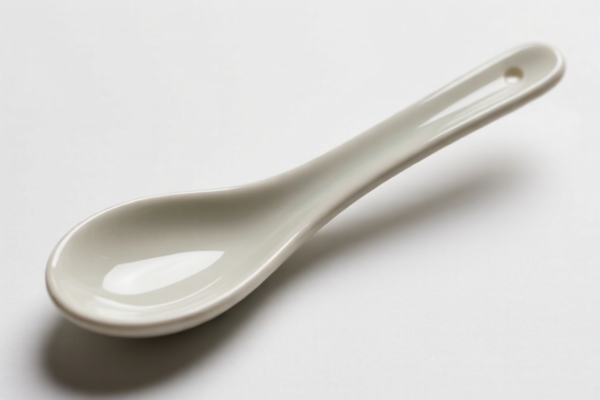
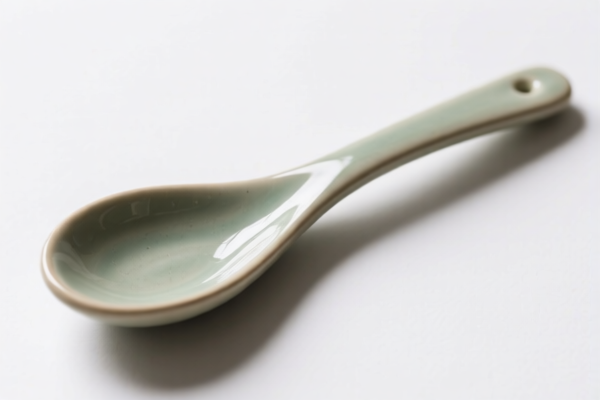
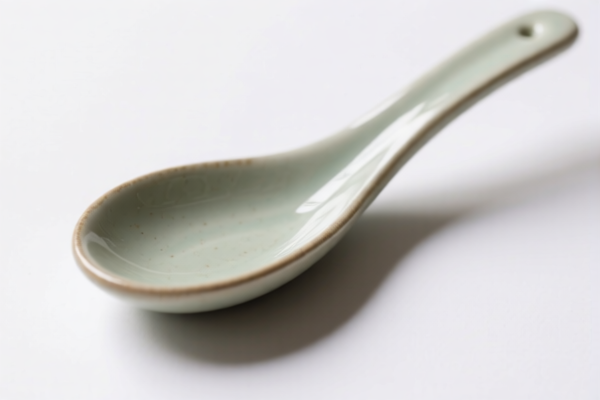
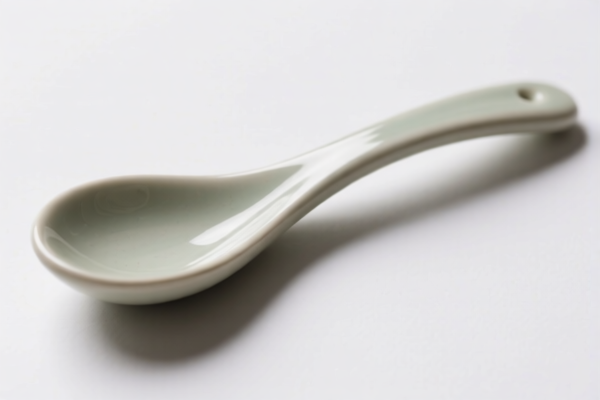
AI Analysis
🥄 Ceramic Measuring Spoons: HS Code Classification & US Customs Clearance Guide
🌐 HS Code Reference & Customs Strategy | 2026 Latest Tariff Analysis | Professional Clearance Guide
📌 I. Product Definition: What Exactly Is a "Ceramic Measuring Spoon"?
In international trade, Ceramic Measuring Spoons are primarily categorized based on their primary function and physical composition. While the material is ceramic, customs classification heavily depends on whether the item is deemed "Kitchen/Tableware" (for food contact) or a "General Ceramic Artifact" (for general use or industrial/measuring purposes without food contact context).
⚠️ Key Distinction:
- If the spoon is explicitly for food measurement (kitchenware/utensil) → It often falls under Kitchenware/Tableware chapters (6911, 6912).
- If the spoon is for general laboratory/measuring use or not primarily for food → It may fall under Other Ceramic Articles (6914).
- Note: Despite the name "Measuring," if it resembles cutlery/kitchenware, it often gets classified as kitchenware, which can have significantly different tariff rates.
📦 II. HS Code Classification Details (2026 US Tariff Schedule)
Below is the precise mapping of Ceramic Measuring Spoons to their corresponding HS Codes, tax rates, and legal justifications based on the provided data.
| HS Code | Product Description (Summary) | Total Tax Rate | Key Tax Components | Primary Classification Logic |
|---|---|---|---|---|
6914.10.80.00 |
Ceramic measuring spoon; material: porcelain; classified as other ceramic articles | 44.0% | Base: 9.0% + Section 301: 25.0% + 122 Clause: 10% |
Classified as a non-tableware ceramic item (e.g., general measuring tool, not for food service). |
6911.10.80.10 |
Ceramic measuring spoon; for food contact; classified as dining/kitchen utensils | 38.3% | Base: 20.8% + Section 301: 7.5% + 122 Clause: 10% |
Classified as tableware (porcelain/ceramic for table use), including food-contact utensils. |
6914.90.80.00 |
Ceramic measuring spoon; classified as other ceramic articles | 40.6% | Base: 5.6% + Section 301: 25.0% + 122 Clause: 10% |
Classified as a general ceramic article, not specifically tableware or other specified subheadings. |
6911.10.80.90 |
Ceramic measuring spoon; for table/kitchen use; shape: other vessels | 38.3% | Base: 20.8% + Section 301: 7.5% + 122 Clause: 10% |
Classified as tableware, but under the "other" category for porcelain/ceramic table items. |
6912.00.48.10 |
Ceramic measuring spoon; for kitchen use; material: ceramic | 19.8% | Base: 9.8% + Section 301: 0.0% + 122 Clause: 10% |
Classified as other ceramic tableware/kitchenware with exempted Section 301 tariffs (likely due to specific subheading exclusions or newer tariff treatments for certain kitchen ceramics). |
🔍 Critical Observation:
- Tariff Spread: Rates range from 19.8% to 44.0%.
- Biggest Difference: The Section 301 (Trade War) Tariff varies drastically:
-6914.xxcodes incur 25% add-on.
-6911.xxcodes incur only 7.5% add-on.
-6912.xxcode incurs 0% add-on!
- Why?6912covers "Other table, kitchen, toilet, indoor-decorative or similar household articles," which often enjoys preferential or exempted status under specific trade agreements or exclusions compared to6914(other ceramics) or6911(porcelain tableware).
💰 III. 2026 US Tariff Rate Breakdown (Detailed Analysis)
✅ Applicable Country: USA (US)
✅ Origin: China (CN)
✅ Effective Date: Current as of 2026
🎯 1. 6914.10.80.00 & 6914.90.80.00 — High-Tariff Path (General Ceramics)
| Component | Rate | Legal Basis |
|---|---|---|
| Base Duty | 9.0% (6914.10) / 5.6% (6914.90) |
HTSUS General Rate |
| Section 301 Tariff | 25.0% | USITC Footnote 9903.88.01 (China-origin goods) |
| 122 Clause Tariff | 10.0% | Specific US Trade Policy Clause (likely related to recent executive orders) |
| Total Effective Rate | 44.0% (6914.10) / 40.6% (6914.90) |
Sum of all duties |
| De Minimis Exemption | ❌ Denied | deny_de_minimis applies to Chinese-origin goods under these codes |
📌 Explanation:
- These codes classify the measuring spoons as non-tableware ceramics.
- The 25% Section 301 tariff is the primary cost driver.
- Risk: High classification risk if the item is clearly for kitchen/food use, as it may be reclassified to lower-tariff kitchen codes.
🎯 2. 6911.10.80.10 & 6911.10.80.90 — Medium-Tariff Path (Porcelain Tableware)
| Component | Rate | Legal Basis |
|---|---|---|
| Base Duty | 20.8% | HTSUS General Rate for Porcelain Tableware |
| Section 301 Tariff | 7.5% | USITC Footnote 9903.88.01 (Partial exemption/reduction for some porcelain) |
| 122 Clause Tariff | 10.0% | Specific US Trade Policy Clause |
| Total Effective Rate | 38.3% | Sum of all duties |
| De Minimis Exemption | ❌ Denied | deny_de_minimis applies |
📌 Explanation:
- These codes classify the spoons as porcelain/ceramic tableware.
- The Section 301 tariff is reduced to 7.5% for certain porcelain items, saving significant costs vs.6914.
- Key Requirement: Must be explicitly for table/kitchen use and made of porcelain (high-quality ceramic).
🎯 3. 6912.00.48.10 — Low-Tariff Path (Other Ceramic Kitchenware) 🏆 BEST OPTION
| Component | Rate | Legal Basis |
|---|---|---|
| Base Duty | 9.8% | HTSUS General Rate for Other Ceramic Tableware |
| Section 301 Tariff | 0.0% | Exempted (Specific subheading exclusion or policy) |
| 122 Clause Tariff | 10.0% | Specific US Trade Policy Clause |
| Total Effective Rate | 19.8% | Lowest in the dataset |
| De Minimis Exemption | ❌ Denied | deny_de_minimis still applies for China origin |
📌 Explanation:
- This is the most cost-effective classification.
- Section 301 Tariff is 0%, a massive advantage.
- Requirement: Must be classified as ceramic (non-porcelain) kitchenware/tableware.
- Strategy: If your product is not high-fired porcelain, aim for this code. Ensure it is marketed as kitchen utensil to qualify for6912.
🛠️ IV. Customs Clearance Practical Advice
✅ 1. Documentation Checklist (Mandatory)
| Document | Required? | Notes |
|---|---|---|
| Commercial Invoice | ✅ | Must clearly state: "Ceramic Measuring Spoon," Material: Ceramic/Porcelain, Use: Kitchen/Tableware |
| Product Photos | ✅ | Clear images showing the spoon, shape, and any markings (e.g., "Food Grade," "Kitchen Use") |
| Product Specification Sheet | ✅ | Include material type (Porcelain vs. Earthenware/Ceramic), dimensions, weight |
| Packaging List | ✅ | Show unit composition (e.g., set of 4 spoons) |
| FCC/CE/RoHS Certs | ❓ | Optional for ceramics, but may help if claimed as "Food Safe" or "BPA-Free" |
| Origin Certificate (CO) | ✅ | To prove Chinese origin (required for 301 tariff assessment) |
✅ 2. Classification Strategy (How to Choose the Right HS Code)
🔥 "Kitchen First, Porcelain Second, General Last!"
| Scenario | Recommended HS Code | Why? |
|---|---|---|
| High-Fired Porcelain, for Kitchen | 6911.10.80.10 or 6911.10.80.90 |
Qualifies as porcelain tableware; lower 301 tariff (7.5%) |
| Earthenware/Stoneware/Ceramic, for Kitchen | 6912.00.48.10 |
Qualifies as other ceramic tableware; 0% 301 tariff (Best Value) |
| Laboratory/General Purpose, Non-Food | 6914.10.80.00 or 6914.90.80.00 |
Classified as other ceramics; high 301 tariff (25%) |
⚠️ Warning:
- Do not misdeclare kitchenware as "general ceramics" to avoid scrutiny; this can lead to audits and penalties.
- Do not claim6912if the item is clearly porcelain (high-fire); CBP may reclassify to6911.
✅ 3. Common Mistakes & Pitfalls
❌ Mistake 1: Claiming 6912 for porcelain items
👉 Consequence: CBP reclassifies to 6911 (20.8% base + 7.5% 301 = 38.3%), resulting in back taxes + interest.
❌ Mistake 2: Declaring kitchen spoons as "measuring instruments" under 9031 or 6914
👉 Consequence: High tariff (44%), and potential rejection for lack of "instrument" certification.
❌ Mistake 3: Ignoring 122 Clause Tariff (10%)
👉 Consequence: Underpayment by 10% on all codes. This is a new/additional duty layer.
✅ Best Practice:
"Ceramic Kitchen Measuring Spoons, Set of 4, Food-Grade Ceramic, Non-Porcelain, Model XYZ" → Aim for
6912.00.48.10.
🌍 V. Global Market Comparison (2026)
| Country | Recommended HS Code | Estimated Duty | Notes |
|---|---|---|---|
| 🇺🇸 USA | 6912.00.48.10 |
19.8% | Lowest US rate; 0% 301 tariff |
| 🇨🇳 China | 6912.00.48.10 |
9.8% | Base import duty; no 301 |
| 🇪🇺 EU | 6912.00.48.10 |
5.7% | Standard EU duty for ceramics |
| 🇬🇧 UK | 6912.00.48.10 |
5.7% | Post-Brexit standard rate |
| 🇨🇦 Canada | 6912.00.48.10 |
5.5% | Low duty under CUSMA |
📌 Conclusion:
- USA is the most complex market due to Section 301 and 122 Clause tariffs.
- Optimizing HS Code (choosing6912over6914) can save ~20-24% in duties.
📌 VI. Final Recommendations
🎯 For Importers into the USA:
- Aim for
6912.00.48.10if your product is non-porcelain ceramic. This gives you the lowest total tariff (19.8%) due to 0% Section 301. - If your product is porcelain, accept the 38.3% rate under
6911.10.80.10/90. - Avoid
6914codes unless the item is not for kitchen use (e.g., lab measuring tools), as they carry 44% total tariff. - Always include the 122 Clause (10%) in your cost calculations — it applies to all these codes.
📞 Pro Tip:
Apply for a Binding Ruling from US CBP before large shipments. Clarify whether your specific ceramic type qualifies as "porcelain" (
6911) or "other ceramic" (6912). This prevents costly misclassification audits.
✨ Professional Clearance Starts with Precise Classification!
💼 Save 20%+ by choosing the right HS Code — don’t let tariffs eat your margin!
Customer Reviews
About HS Code Classification
The Harmonized System (HS) is an internationally standardized nomenclature developed by the World Customs Organization (WCO) to classify traded products. Over 200 countries use the HS system as the basis for customs tariffs, trade statistics, and import/export regulations.
Each HS code follows a hierarchical structure:
- Chapter (2 digits) — Broad category of goods (e.g., Chapter 84: Machinery and Mechanical Appliances)
- Heading (4 digits) — More specific grouping within the chapter
- Subheading (6 digits) — Internationally standardized breakdown, used by all WCO member countries
- National subdivisions (8-10 digits) — Country-specific extensions for further classification, such as US HTSUS 10-digit codes
Correct HS code classification is essential for smooth customs clearance, accurate duty payment, and compliance with trade regulations. Misclassification can lead to customs delays, overpayment of duties, or penalties.
When importing from CN to US, the applicable tariff rates may include:
- Most-Favored-Nation (MFN) rate — The standard duty rate applied to WTO members
- General rate — Applied to countries without trade agreements
- Trade remedy duties — Additional tariffs such as Section 301 (anti-dumping), Section 232 (national security), or countervailing duties
The information provided on this page is for reference purposes only. For official classification, please consult with your local customs authority or a licensed customs broker.