Ceramic Pigment Set
CN → US| HS Code | Tariff Rate | Origin | Destination | Doc |
|---|---|---|---|---|
| 2825907500 | 35.0% | CN | US | Official Doc |
| 3207100000 | 38.1% | CN | US | Official Doc |
| 3207200000 | 39.9% | CN | US | Official Doc |
| 2825909000 | 38.7% | CN | US | Official Doc |
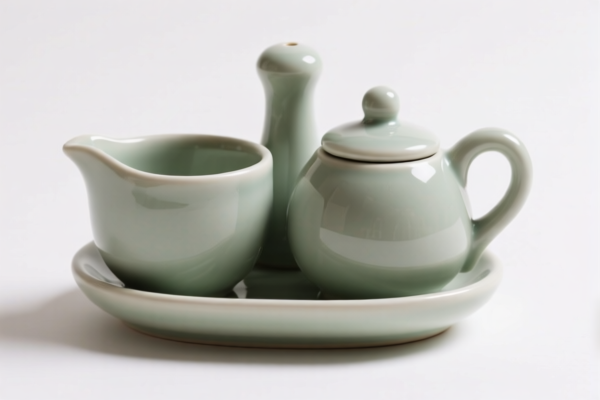
Product Images



AI Analysis
🏺 Ceramic Pigment Set: HS Code Classification & US Import Tax Analysis (2026)
🌐 HS Code Reference & Customs Clearance Guide | 2026 Latest Tariff Schedule | Professional Entry Strategy
📌 I. Product Definition & Classification: What Exactly is a "Ceramic Pigment"?
A Ceramic Pigment Set typically refers to a collection of powdered colorants used in the ceramic industry. These pigments are essential for decorating pottery, tiles, and porcelain through glazes, underglazes, or overglazes. In international trade, these products are generally classified based on their chemical composition (inorganic vs. organic) and specific use (ceramic industrial application).
⚠️ Key Classification Point:
- If the pigments are complex prepared pigments (mixed binders/additives specifically for ceramic use) → Chapter 32
- If the pigments are pure or simple inorganic metal oxides/salts without complex preparation → Chapter 28
📦 II. Detailed HS Code Breakdown (2026 Latest Schedule)
Below are the four potential HS Codes identified for "Ceramic Pigment Set" based on the provided data, along with their logical classification reasons.
| HS Code | Classification Logic | Tax Rate (Total) | Tax Breakdown |
|---|---|---|---|
| 2825.90.75.00 | Inorganic Metal Oxide Category Ceramic pigments fall under inorganic metal oxides or salts. Specifically, they align with materials like Cadmium oxide. There is no material conflict with this subheading. |
35.0% | Base Duty: 0.0% Section 301: 25.0% Section 122: 10% |
| 3207.10.00.00 | Prepared Pigments (Color Preparations) The product name explicitly includes "Ceramic" (material) and "Pigment" (form). This fully meets the classification requirements for "prepared pigments" under Chapter 32. |
38.1% | Base Duty: 3.1% Section 301: 25.0% Section 122: 10% |
| 3207.20.00.00 | Ceramic Glazes & Similar Preparations "Ceramic" corresponds to the "used in the ceramic industry" requirement. "Pigment" falls under the category of "glazes, engobes, and similar preparations." Material and use are highly consistent. |
39.9% | Base Duty: 4.9% Section 301: 25.0% Section 122: 10% |
| 2825.90.90.00 | Other Inorganic Salts/Oxides Ceramic pigments are inorganic or organic pigments, fitting the "other inorganic salts/metal oxides" material attribute. As pigment components, they fit the "other" catch-all category without material or use conflicts. |
38.7% | Base Duty: 3.7% Section 301: 25.0% Section 122: 10% |
🔍 Priority Recommendation:
- 3207.10.00.00 and 3207.20.00.00 are the most common classifications for commercially prepared ceramic pigment sets because they explicitly account for the "preparation" or "ceramic industry use" aspect. - 2825.90.xx is suitable if the product is sold as raw chemical compounds (e.g., pure metal oxide powders) rather than formulated color blends.
💰 III. 2026 Latest Tariff Rate Detailed Explanation (US Import)
✅ Applicable Country: United States (US)
✅ Origin: China (CN) (Assumed based on Section 122 & 301 context)
✅ Effective Date: 2025/2026 Schedule
🎯 1. 3207.10.00.00 – Prepared Pigments (Most Likely for "Sets")
| Item | Content |
|---|---|
| Base Tariff | 3.1% (ad valorem) |
| Section 301 Tariff | +25.0% (USITC Footnote 9903.88.01, Chapter 32 exclusions may apply but generally included) |
| Section 122 Tariff | +10.0% (Targeted import tariffs on specific Chinese goods) |
| Total Duty Rate | 38.1% |
| Duty Calculation | CIF Value × 38.1% |
| De Minimis Eligibility | ❌ No (Not eligible for Section 321 de minimis exemption) |
| Legal Basis Path | USITC:3207.10.00.00 → SECTION301:9903.88.01 → SECTION122 |
📌 Explanation:
- This is the standard classification for formulated ceramic colors. - The 3.1% base duty applies to general prepared pigments. - The 25% Section 301 tariff is mandatory for Chinese-origin goods in this category. - The 10% Section 122 tariff adds an additional layer of cost for specific Chinese imports. - Total Impact: Nearly 40% of the product value goes to duty.
🎯 2. 3207.20.00.00 – Ceramic Glazes & Engobes
| Item | Content |
|---|---|
| Base Tariff | 4.9% (ad valorem) |
| Section 301 Tariff | +25.0% |
| Section 122 Tariff | +10.0% |
| Total Duty Rate | 39.9% |
| Duty Calculation | CIF Value × 39.9% |
| De Minimis Eligibility | ❌ No |
| Legal Basis Path | USITC:3207.20.00.00 → SECTION301:9903.88.01 → SECTION122 |
📌 Note:
- If the pigment set is explicitly marketed as "Glaze Colors" or contains binders typical of glazes, this code applies. - It has the highest total duty rate among the options due to the higher base rate (4.9%).
🎯 3. 2825.90.75.00 – Pure Inorganic Oxides (e.g., Cadmium-based)
| Item | Content |
|---|---|
| Base Tariff | 0.0% (ad valorem) |
| Section 301 Tariff | +25.0% |
| Section 122 Tariff | +10.0% |
| Total Duty Rate | 35.0% |
| Duty Calculation | CIF Value × 35.0% |
| De Minimis Eligibility | ❌ No |
| Legal Basis Path | USITC:2825.90.75.00 → SECTION301:9903.88.01 → SECTION122 |
📌 Explanation:
- This code has the lowest total duty rate (35.0%) because the base tariff is 0%. - However, it requires the product to be a pure inorganic metal oxide (like Cadmium Oxide) without complex preparation. If your "set" contains mixed binders, this classification may be challenged by customs.
🎯 4. 2825.90.90.00 – Other Inorganic Salts
| Item | Content |
|---|---|
| Base Tariff | 3.7% (ad valorem) |
| Section 301 Tariff | +25.0% |
| Section 122 Tariff | +10.0% |
| Total Duty Rate | 38.7% |
| Duty Calculation | CIF Value × 38.7% |
| De Minimis Eligibility | ❌ No |
| Legal Basis Path | USITC:2825.90.90.00 → SECTION301:9903.88.01 → SECTION122 |
📌 Note:
- This is a catch-all for inorganic salts/oxides not specified elsewhere. Use only if the product does not fit the specific "Cadmium oxide" (2825.90.75) definition but is still a raw inorganic pigment.
🛠️ IV. Customs Clearance Practical Advice (Avoid Pitfalls)
✅ 1. Required Documentation Checklist (Mandatory)
| Document | Must Provide | Description |
|---|---|---|
| ✅ Product Specification Sheet | ✔️ | Detail chemical composition (e.g., % Metal Oxides), particle size, and intended use. |
| ✅ Formula/Composition List | ✔️ | Critical for distinguishing between Chapter 28 (raw) and Chapter 32 (prepared). |
| ✅ Product Photos | ✔️ | Clear images of the powder, packaging, and labels. |
| ✅ Commercial Invoice | ✔️ | Must clearly state "Ceramic Pigment" or "Prepared Pigment for Ceramic Use." |
| ✅ Certificate of Origin | ✔️ | Essential for determining Section 301/122 applicability. |
| ✅ Safety Data Sheet (SDS) | ✔️ | Required for chemical imports. |
✅ 2. Declaration Tips (Key Mantras)
🔥 "Formulated = Ch32, Pure = Ch28. Be Specific to Avoid Penalties!"
| Scenario | Correct Declaration | Wrong Practice |
|---|---|---|
| Mixed Pigment Set (binders + colors) | 3207.10.00.00 |
Misdeclare as 2825... → Risk of penalty + higher effective duty if challenged |
| Pure Metal Oxide Powder | 2825.90.75.00 or 2825.90.90.00 |
Misdeclare as 3207... → Overpaying duty or rejection if not "prepared" |
| Glaze Color Set | 3207.20.00.00 |
Generic "Ceramic Color" → Ambiguity leads to hold |
| Raw Chemicals | 2825.90.xx |
"Pigment Set" implies preparation → Chapter 32 is safer |
✅ 3. Special Situation Handling
| Situation | Handling Advice |
|---|---|
| OEM Custom Colors | Provide client order + formula. If unique mix, use 3207.10.00.00. |
| Contains Binders | If binders are present, it is a "prepared pigment" → Must use Chapter 32. |
| Bulk Raw Oxides | If no binders, only metal salts/oxides → Use Chapter 28. |
| Small Samples | Still subject to duties. No de minimis exemption for these HS codes from China. |
🌍 V. Global Market Clearance Comparison (2026)
| Country/Region | Recommended HS Code | Duty Rate (China Origin) | Certification Requirements | Notes |
|---|---|---|---|---|
| 🇺🇸 USA | 3207.10.00.00 |
38.1% | None specific for pigments | High tariff due to Sec 301/122 |
| 🇪🇺 EU | 3207.10.00.00 |
~6% + VAT | REACH Registration Required | No Section 301/122 equivalents |
| 🇨🇳 China | 3207.10.00.00 |
~5% | N/A | Domestic consumption |
| 🇯🇵 Japan | 3207.10.00.00 |
~5-7% | JIS Standards | Check for specific chemical bans |
📌 Conclusion:
- The US market has significantly higher duties (35-40%) for ceramic pigments due to trade policies. - Chapter 32 codes are generally safer for "sets" as they imply preparation. - Chapter 28 codes offer lower base duties but require strict proof of "raw" status.
📌 VI. Common Errors & Pitfall Guide (Lessons Learned)
❌ Error 1: Declaring a prepared pigment set (with binders) as raw oxide (2825.90.90.00) to save 1-3% duty.
👉 Consequence: Customs will reclassify, issue penalty, and charge back taxes + interest.
❌ Error 2: Ignoring Section 122.
👉 Consequence: The 10% additional tariff is often overlooked in basic duty calculations, leading to underpayment.
❌ Error 3: Using generic term "Ceramic Color" on Invoice.
👉 Consequence: Customs may hold shipment for further classification analysis. Use precise terms like "Prepared Pigment for Ceramic Industry."
❌ Error 4: Assuming de minimis ($800) applies.
👉 Consequence: These HS codes are excluded from de minimis relief for Chinese imports. Every shipment is liable for duty.
✅ Correct Approach:
"Prepared Ceramic Pigment Set, Inorganic Oxides Based, for Ceramic Tile Decoration, Model XYZ, China Origin"
🎯 VII. Conclusion: Professional Declaration Saves Costs!
🎯 Remember the Mantra:
🔹 "Prepared = 32, Raw = 28. Section 301 and 122 Apply. De Minimis = NO!"
🔹 "HS Code Choice Affects Duty by 5%! Be Precise to Save Money!"
📌 Pro Tip:
If your product is pure metal oxide powder (no binders), insist on 2825.90.75.00 for the lowest duty (35%). If it is a mixed set, use 3207.10.00.00 (38.1%) for safety.
Consider applying for an Advance Ruling from US Customs (CBP) if the shipment value is high, to lock in the classification.
📣 Take Action Now:
📞 Contact a licensed customs broker + Provide Formula + Apply for Pre-Ruling
🚀 Ensure your ceramic pigments clear US customs smoothly, avoid penalties, and maximize profit margins!
✨ Professional Customs Clearance Starts with Accurate Classification!
💼 Every percentage point of duty counts!
Customer Reviews
About HS Code Classification
The Harmonized System (HS) is an internationally standardized nomenclature developed by the World Customs Organization (WCO) to classify traded products. Over 200 countries use the HS system as the basis for customs tariffs, trade statistics, and import/export regulations.
Each HS code follows a hierarchical structure:
- Chapter (2 digits) — Broad category of goods (e.g., Chapter 84: Machinery and Mechanical Appliances)
- Heading (4 digits) — More specific grouping within the chapter
- Subheading (6 digits) — Internationally standardized breakdown, used by all WCO member countries
- National subdivisions (8-10 digits) — Country-specific extensions for further classification, such as US HTSUS 10-digit codes
Correct HS code classification is essential for smooth customs clearance, accurate duty payment, and compliance with trade regulations. Misclassification can lead to customs delays, overpayment of duties, or penalties.
When importing from CN to US, the applicable tariff rates may include:
- Most-Favored-Nation (MFN) rate — The standard duty rate applied to WTO members
- General rate — Applied to countries without trade agreements
- Trade remedy duties — Additional tariffs such as Section 301 (anti-dumping), Section 232 (national security), or countervailing duties
The information provided on this page is for reference purposes only. For official classification, please consult with your local customs authority or a licensed customs broker.