Ceramic Statue and Decorations
CN → US| HS Code | Tariff Rate | Origin | Destination | Doc |
|---|---|---|---|---|
| 6914108000 | 44.0% | CN | US | Official Doc |
| 6913105000 | 17.5% | CN | US | Official Doc |
| 6914908000 | 40.6% | CN | US | Official Doc |
| 6913905000 | 23.5% | CN | US | Official Doc |
Product Images
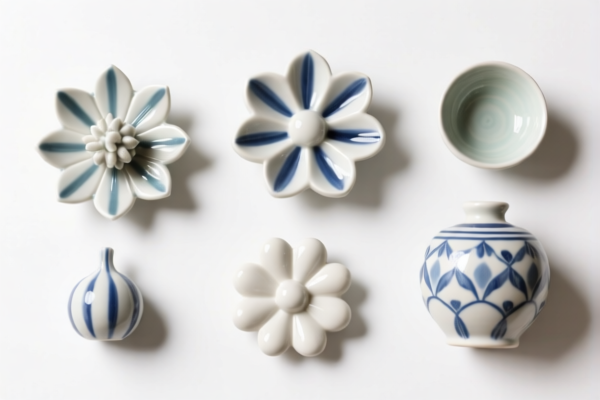
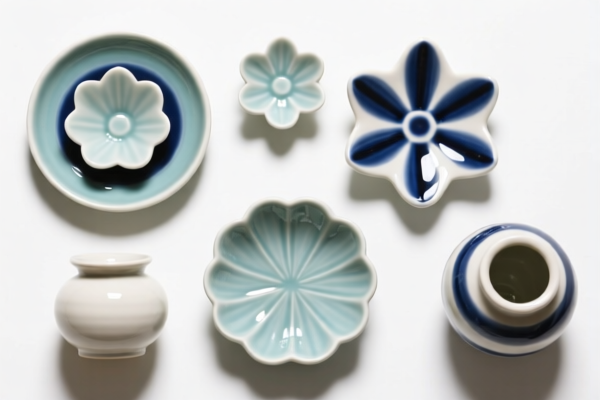
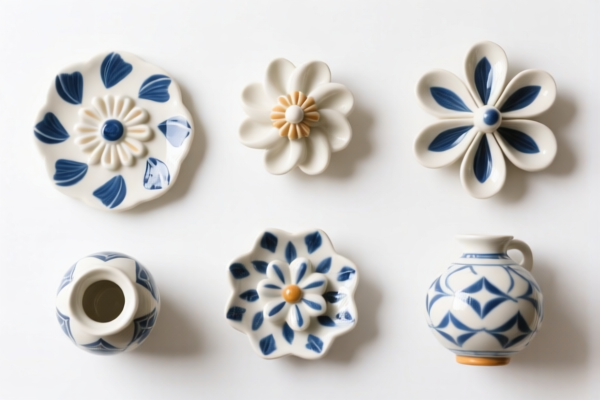

AI Analysis
🏺 Ceramic Statues and Decorations (Ceramic Decorative Articles)
🌐 HS Code Reference & Customs Clearance Guide | 2026 Latest Tariff Analysis | Professional Clearance Strategy
📌 I. Product Definition & Classification: Do You Truly Understand "Ceramic Decorations"?
Ceramic statues and decorations fall under the broad category of Ceramic Articles of a kind used for domestic, toilet, or decorative purposes. In international trade, they are primarily classified based on their specific shape, intended use (purely decorative vs. general utility), and material composition. The key distinction lies in whether the item is a statue/decorative figurine or a general ceramic article.
⚠️ Key Distinction Point:
- If the item is a statue, figurine, or purely decorative ornament → Generally falls under 6913 or 6914 (depending on material and specific design).
- If it is a general ceramic decoration not specifically a statue → Falls under residual categories like 6914.90 or 6913.90.
- Material Matters: Porcelain vs. Other Ceramics can lead to different sub-headings.
📦 II. HS Code Classification Details (2026 Latest Tariff Authority Match)
Based on the provided , here are the specific HS Codes applicable to Ceramic Statues and Decorations, along with their tax implications.
| HS Code | Product Description | Applicable Scenario | Total Tax Rate | Tax Breakdown |
|---|---|---|---|---|
6914.10.80.00 |
Ceramic decorative articles, fitting the category of porcelain or other ceramic statues | Porcelain statues, high-end decorative figurines | 44.0% | Base: 9.0% + Section 301: 25.0% + Section 122: 10% |
6913.10.50.00 |
Ceramic decorative articles, matching ceramic material and decorative use | Standard ceramic statues/ornaments (non-porcelain or specific sub-category) | 17.5% | Base: 0.0% + Section 301: 7.5% + Section 122: 10% |
6914.90.80.00 |
Other ceramic articles, residual category for ceramic materials with decorative use | General ceramic decorations not specifically classified as statues or other defined items | 40.6% | Base: 5.6% + Section 301: 25.0% + Section 122: 10% |
6913.90.50.00 |
Ceramic decorative articles, material and use match classification requirements | Decorative ceramic items where material/use is confirmed but not a statue | 23.5% | Base: 6.0% + Section 301: 7.5% + Section 122: 10% |
🔍 Important Note:
- Section 122 Tariff (10%): Applies to all Chinese-origin ceramic articles imported into the US, effective from recent policy updates.
- Section 301 Tariff (25% or 7.5%): Varies by HS Code. Higher rates apply to 6914 (Porcelain/Other Ceramics) and 6914.90. Lower rates apply to 6913 (Statues/Figurines) in some sub-headings.
- Base Tariff: Ranges from 0% to 9%, depending on the specific sub-heading.
💰 III. 2026 Latest Tariff Rate Details (Including Additional Taxes)
✅ Applicable Country: United States (US)
✅ Origin: China (CN)
✅ Effective Date: Ongoing (Check latest IEEPA and USITC updates)
🎯 1. 6914.10.80.00 — Ceramic Statues (Porcelain/High-End)
| Item | Detail |
|---|---|
| Base Tariff | 9.0% |
| Section 301 Tariff | +25.0% |
| Section 122 Tariff | +10.0% |
| Total Tax Rate | 44.0% |
| Tax Calculation | CIF Value × 44.0% |
| De Minimis Exemption | ❌ Not Applicable (Ceramics are not eligible for $800 de minimis if classified under these specific high-tax codes) |
| Legal Basis | USITC:6914.10.80.00 → Section 301 → Section 122 |
📌 Explanation:
- This code attracts the highest tariff burden among the listed options.
- Section 301 (25%) is the standard additional duty on most Chinese ceramics.
- Section 122 (10%) is a new layer added to specific ceramic imports.
- Total 44% significantly impacts profit margins. Consider if the product can be reclassified to a lower-tax code.
🎯 2. 6913.10.50.00 — Ceramic Statues/Decorations (Lower Tax Bracket)
| Item | Detail |
|---|---|
| Base Tariff | 0.0% |
| Section 301 Tariff | +7.5% |
| Section 122 Tariff | +10.0% |
| Total Tax Rate | 17.5% |
| Tax Calculation | CIF Value × 17.5% |
| De Minimis Exemption | ❌ Not Applicable |
| Legal Basis | USITC:6913.10.50.00 → Section 301 → Section 122 |
📌 Note:
- This is the most cost-effective option if the product qualifies.
- Base tariff is 0%, which is rare for ceramics.
- Section 301 is only 7.5%, not 25%. This suggests a specific exemption or lower-risk classification for this sub-heading.
- Total 17.5% is significantly lower than 44%, saving 26.5 percentage points.
🎯 3. 6914.90.80.00 — Other Ceramic Decorations (Residual)
| Item | Detail |
|---|---|
| Base Tariff | 5.6% |
| Section 301 Tariff | +25.0% |
| Section 122 Tariff | +10.0% |
| Total Tax Rate | 40.6% |
| Tax Calculation | CIF Value × 40.6% |
| De Minimis Exemption | ❌ Not Applicable |
| Legal Basis | USITC:6914.90.80.00 → Section 301 → Section 122 |
📌 Explanation:
- This is a residual category for ceramics that don’t fit other specific definitions.
- High tax burden due to 25% Section 301 tariff.
- Avoid this code if possible; try to classify under 6913 if the item is a statue or decorative figurine.
🎯 4. 6913.90.50.00 — Ceramic Decorations (Material/Use Match)
| Item | Detail |
|---|---|
| Base Tariff | 6.0% |
| Section 301 Tariff | +7.5% |
| Section 122 Tariff | +10.0% |
| Total Tax Rate | 23.5% |
| Tax Calculation | CIF Value × 23.5% |
| De Minimis Exemption | ❌ Not Applicable |
| Legal Basis | USITC:6913.90.50.00 → Section 301 → Section 122 |
📌 Note:
- Moderate tax rate.
- Suitable for ceramic decorations that are not statues but still fall under Chapter 6913.
- Section 301 is 7.5%, making it more favorable than 6914 codes.
🛠️ IV. Customs Clearance Practical Advice (Real-World Pitfall Avoidance)
✅ 1. Required Documentation Checklist (Non-Negotiable)
| Document | Mandatory? | Explanation |
|---|---|---|
| ✅ Product Specification Sheet | ✔️ | Must detail material (porcelain, stoneware, etc.), dimensions, weight, and intended use (decorative/statue). |
| ✅ Product Photos | ✔️ | Clear images showing the item from all angles, including base, any markings, and packaging. |
| ✅ Commercial Invoice | ✔️ | Must accurately describe the item as "Ceramic Statue" or "Ceramic Decoration" and specify origin (China). |
| ✅ Packing List | ✔️ | Details gross/net weight, number of pieces, and packaging type. |
| ✅ Certificate of Origin (CO) | ✔️ | Required to prove Chinese origin for Section 301 and Section 122 assessment. |
| ✅ Declaration of Material | ✔️ | Explicitly state if the item is "Porcelain" (6914) or "Other Ceramic" (6913/6914). |
✅ 2. Declaration Tips (Critical Mnemonics)
🔥 “Statue vs. Decoration: Code Choice is Key! Low Tax, High Clarity!”
| Scenario | Correct Declaration | Incorrect Practice |
|---|---|---|
| Porcelain Statue | 6914.10.80.00 |
Misclassify as general decoration → Higher tax |
| Standard Ceramic Statue | 6913.10.50.00 |
Misclassify as 6914 → 44% vs 17.5% |
| General Ceramic Ornament | 6913.90.50.00 |
Misclassify as 6914.90.80.00 → 23.5% vs 40.6% |
| Vase or Pot (Not Decorative) | Not in scope | Do not use decorative codes |
📌 Key Advice:
- Be Specific: Use terms like "Porcelain Statue" or "Ceramic Figurine" to trigger the correct HS Code.
- Avoid Vague Terms: "Ceramic Item" is too vague and may lead to classification under residual codes with higher taxes.
- Material Matters: If the item is made of porcelain, it likely falls under 6914. If it’s stoneware or earthenware, it may fall under 6913 or 6914.90.
✅ 3. Special Circumstances
| Scenario | Handling Advice |
|---|---|
| OEM Custom Statues | Provide design drawings and client orders to prove intended use and material. |
| Mixed Materials | If the statue has metal bases or paint, ensure the primary material is ceramic. |
| Gift Sets | If shipped as a set with other items, ensure the ceramic item is declared separately to avoid incorrect classification. |
| Small Quantities | Even small shipments are subject to these tariffs; no de minimis exemption for these HS Codes. |
🌍 V. Global Market Comparison (2026 Latest)
| Country/Region | Recommended HS Code | Tariff Rate | Certification | Remarks |
|---|---|---|---|---|
| 🇺🇸 USA | 6913.10.50.00 |
17.5% | No specific | Lowest US tariff if qualified |
| 🇺🇸 USA | 6914.10.80.00 |
44.0% | No specific | Highest US tariff |
| 🇨🇳 China | 6913.10.50.00 |
~13% | CCC (if applicable) | No Section 122/301 |
| 🇪🇺 EU | 6913.90.91 |
0-6.5% | CE (if applicable) | No Section 122/301 |
| 🇬🇧 UK | 6913.90.90 |
0-6.5% | UKCA (if applicable) | No Section 122/301 |
📌 Conclusion:
- The US is the most challenging market for ceramic imports due to Section 301 and Section 122 tariffs.
- China and EU tariffs are significantly lower.
- US Importers must carefully select the correct HS Code to minimize costs.
📌 VI. Common Errors & Pitfall Avoidance (Lessons Learned)
❌ Error 1: Misclassifying a porcelain statue as a general ceramic decoration
👉 Consequence: Higher tariff (44% vs 17.5%) → Increased cost
❌ Error 2: Using vague descriptions like "Ceramic Item"
👉 Consequence: Customs may assign residual codes with higher taxes → Delay and fines
❌ Error 3: Ignoring Section 122 Tariff
👉 Consequence: Unexpected 10% additional duty → Profit erosion
❌ Error 4: Not providing material specifications
👉 Consequence: Customs may reclassify to a higher-tax code → Audit risk
✅ Correct Practice:
“Porcelain Statue, Decorative, Height 10cm, Model XYZ, Made in China”
🎯 VII. Conclusion: Professional Declaration, Cost Optimization!
🎯 Remember the Mnemonic:
🔹 “Statue is Key, Porcelain High Tax, Ceramics Low Tax, Section 122 Adds Ten!”
🔹 “HS Code Saves Money, Wrong Code Costs Double!”
📌 Pro Tip:
If your ceramic decorations are made in Vietnam, Mexico, or Thailand, you may qualify for Section 301 exemptions or lower tariffs.
Apply for Advance Rulings before shipment to avoid customs disputes.
📣 Take Action Now:
📞 Contact a professional customs broker + Provide product images + Apply for HS Code Advance Ruling
🚀 Ensure smooth customs clearance, reduce costs, and maximize profits!
✨ Professional Clearance Starts with Accurate Classification!
💼 Every cent counts in international trade!
Customer Reviews
About HS Code Classification
The Harmonized System (HS) is an internationally standardized nomenclature developed by the World Customs Organization (WCO) to classify traded products. Over 200 countries use the HS system as the basis for customs tariffs, trade statistics, and import/export regulations.
Each HS code follows a hierarchical structure:
- Chapter (2 digits) — Broad category of goods (e.g., Chapter 84: Machinery and Mechanical Appliances)
- Heading (4 digits) — More specific grouping within the chapter
- Subheading (6 digits) — Internationally standardized breakdown, used by all WCO member countries
- National subdivisions (8-10 digits) — Country-specific extensions for further classification, such as US HTSUS 10-digit codes
Correct HS code classification is essential for smooth customs clearance, accurate duty payment, and compliance with trade regulations. Misclassification can lead to customs delays, overpayment of duties, or penalties.
When importing from CN to US, the applicable tariff rates may include:
- Most-Favored-Nation (MFN) rate — The standard duty rate applied to WTO members
- General rate — Applied to countries without trade agreements
- Trade remedy duties — Additional tariffs such as Section 301 (anti-dumping), Section 232 (national security), or countervailing duties
The information provided on this page is for reference purposes only. For official classification, please consult with your local customs authority or a licensed customs broker.