Cervical Traction Device
CN → US| HS Code | Tariff Rate | Origin | Destination | Doc |
|---|---|---|---|---|
| 9021100050 | 10.0% | CN | US | Official Doc |
| 9021100090 | 10.0% | CN | US | Official Doc |
| 9021908100 | 10.0% | CN | US | Official Doc |
| 9019102045 | 10.0% | CN | US | Official Doc |
Product Images
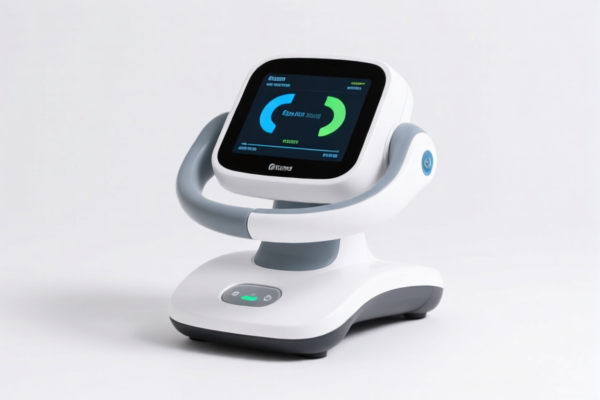
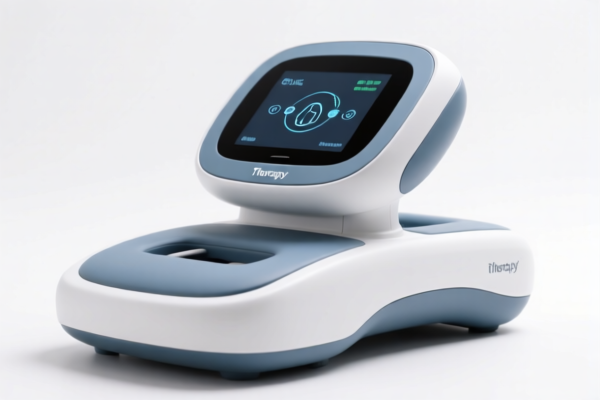
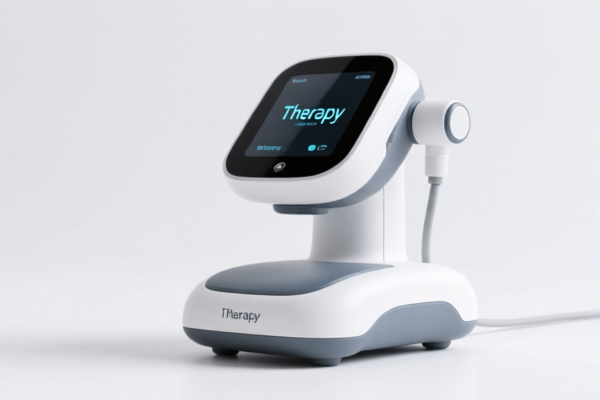
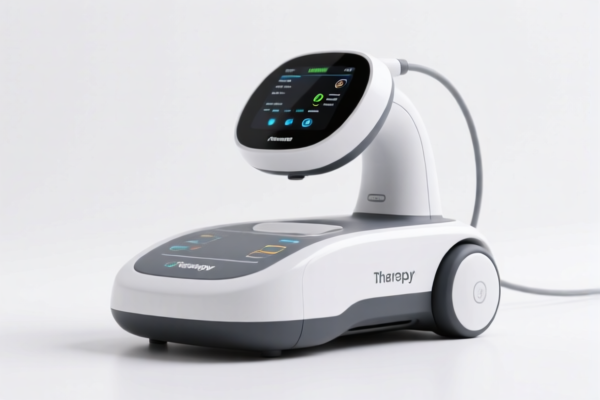
AI Analysis
🦴 Cervical Traction Device: Medical Orthopedic Classification & Customs Guide
🌐 HS Code Reference & Clearance Guide | 2026 Latest Tariff Analysis | Professional Clearance Strategy
📌 I. Product Definition & Classification: Is it a "Medical Device" or "Orthopedic Appliance"?
A Cervical Traction Device is a mechanical apparatus used to gently pull on the neck to relieve pain, reduce pressure on spinal discs, or immobilize the cervical spine. In international trade, these devices fall under Chapter 90 (Optical, photographic, cinematographic, measuring, checking, precision, medical or surgical instruments).
Crucial Distinction:
- External Wearable/Carried Devices: Devices worn around the neck (e.g., inflatable collars, mechanical pulley systems for home use) are classified as Orthopedic Appliances.
- Implanted Devices: If the device involves internal fixation (e.g., metal plates, screws, or nails implanted inside the body during surgery), it is NOT a traction device but an Internal Fixation Device.
⚠️ Key Differentiator:
- If it is worn on the body to compensate for a defect/disability or provide support → HS Code 9021 (Orthopedic).
- If it is surgically implanted to fix a bone fracture → HS Code 9021.10.00.50 (Internal Fixation).
- If it is implanted to compensate for a defect (e.g., hearing aids, pacemakers) → HS Code 9021.10.00.90 or 9021.90.81.00.
📦 II. HS Code Classification Details (2026 Latest Tariff Authority Comparison)
Based on the provided <DATA>, here are the applicable HS Codes for Cervical Traction Devices and related orthopedic items:
| HS Code | Product Description | Applicable Scenario | Classification Logic |
|---|---|---|---|
9021.10.00.50 |
Orthopedic or fracture appliances, and parts and accessories thereof: Bone plates, screws and nails, and other internal fixation devices or appliances | Implanted surgical devices (e.g., cervical plates/screws for spinal fusion) | ❌ NOT for external traction devices. For internal implants. |
9021.10.00.90 |
Orthopedic or fracture appliances, and parts and accessories thereof: Other | External cervical traction devices (e.g., inflatable collars, mechanical traction halos) | ✅ Primary Choice for wearable traction aids. |
9021.90.81.00 |
Other: Other | Parts, accessories, or non-standard orthopedic appliances not covered above | ✅ Alternative for specific components or niche devices. |
9019.10.20.45 |
Mechano-therapy appliances; massage apparatus...: Massage apparatus: Electrically operated: Other: Other | Electrically operated cervical massagers with traction functions | ⚠️ Only if the primary function is massage/mechano-therapy, not pure orthopedic support. |
🔍 Critical Clarification:
- True Cervical Traction Devices (external, worn/carrying) are generally classified under9021.10.00.90("Other" orthopedic appliances) because they are worn to compensate for disability or provide support.
- Implanted Devices (surgical plates/screws) go to9021.10.00.50.
- Massage/Traction Hybrids (electric neck massagers) may go to9019.10.20.45.
💰 III. 2026 Latest Tariff Rate Details (Detailed Tax Clauses)
✅ Applicable Market: General International Trade (Based on provided data)
✅ Tax Structure: All listed HS Codes have 0% Total Tax
✅ Effective Time: As per provided data (2026 context)
🎯 1. 9021.10.00.90 – Orthopedic Appliances (Other) – Most Likely for External Traction Devices
| Item | Content |
|---|---|
| Basic Tariff | 0.0% |
| Additional Tariff (Retaliatory/Section 301) | 0.0% |
| Total Tax Rate | 0.0% |
| Tax Detail | "基础关税: 0.0%, 加征关税: 0.0%" |
| Legal Basis | HS Code 9021.10.00.90 |
📌 Explanation:
- Orthopedic appliances are often classified with low or zero tariffs to promote medical accessibility.
- No additional duties are applied in the provided dataset.
- This is the most cost-effective classification for external cervical traction devices.
🎯 2. 9021.10.00.50 – Internal Fixation Devices (Bone Plates, Screws, Nails)
| Item | Content |
|---|---|
| Basic Tariff | 0.0% |
| Additional Tariff | 0.0% |
| Total Tax Rate | 0.0% |
| Tax Detail | "基础关税: 0.0%, 加征关税: 0.0%" |
📌 Note:
- This code is strictly for implanted surgical devices.
- Do NOT use this for external traction devices; misclassification can lead to customs delays.
🎯 3. 9021.90.81.00 – Other Orthopedic Appliances/Parts
| Item | Content |
|---|---|
| Basic Tariff | 0.0% |
| Additional Tariff | 0.0% |
| Total Tax Rate | 0.0% |
| Tax Detail | "基础关税: 0.0%, 加征关税: 0.0%" |
📌 Note:
- Suitable for parts and accessories of orthopedic devices.
- If your traction device is modular, ensure the main unit is classified under9021.10.00.90and parts separately if needed.
🎯 4. 9019.10.20.45 – Electrically Operated Massage Apparatus (with Traction Function)
| Item | Content |
|---|---|
| Basic Tariff | 0.0% |
| Additional Tariff | 0.0% |
| Total Tax Rate | 0.0% |
| Tax Detail | "基础关税: 0.0%, 加征关税: 0.0%" |
📌 Note:
- Only applicable if the device is primarily marketed as a massage apparatus with therapeutic electrical functions.
- Pure mechanical traction devices should not be classified here.
🛠️ IV. Clearance Practical Advice (Real-World Pitfall Guide)
✅ 1. Document Preparation Checklist (Must-Haves)
| Document | Required | Notes |
|---|---|---|
| ✅ Product Specification Sheet | ✔️ | Must clearly state: "Cervical Traction Device," "External Wearable," "Mechanical/Electric." |
| ✅ User Manual | ✔️ | Should show how the device is worn/carryied. |
| ✅ Product Photos | ✔️ | Clear images of the device in use (on the neck) to prove it is external. |
| ✅ Declaration Statement | ✔️ | Explicitly state: "Not an implanted device. Not for internal fixation." |
| ✅ CE/FDA Clearance (if applicable) | ✔️ | For medical device markets (US/EU). |
✅ 2. Declaration Tips (Key Mnemonics)
🔥 "External Wearable = 9021.10.00.90, Internal Implant = 9021.10.00.50, Massage Hybrid = 9019.10.20.45"
| Scenario | Correct HS Code | Wrong Approach |
|---|---|---|
| External Cervical Traction Collar | 9021.10.00.90 |
Misclassifying as medical equipment (8543) → Delay |
| Cervical Plate/Screw (Implanted) | 9021.10.00.50 |
Misclassifying as orthopedic appliance → Misdeclaration |
| Electric Neck Massager with Traction | 9019.10.20.45 |
Misclassifying as orthopedic appliance → Possible reclassification |
| Parts of Traction Device | 9021.90.81.00 |
Declaring as main unit → Valuation issues |
✅ 3. Special Cases
| Case | Handling Advice |
|---|---|
| OEM Custom Traction Devices | Provide design specs to prove external wearability. |
| Combined Massage + Traction | Declare based on primary function. If medical support dominates → 9021.10.00.90. If massage dominates → 9019.10.20.45. |
| Used/Refurbished Devices | May require additional hygiene certificates or be restricted. |
🌍 V. Global Market Clearance Comparison (2026 Latest)
| Country/Region | Recommended HS Code | Tariff | Certification | Notes |
|---|---|---|---|---|
| 🇺🇸 USA | 9021.10.00.90 |
0% | FDA (if Class II/III medical device) | Ensure FDA registration for medical use. |
| 🇨🇳 China | 9021.10.00.90 |
0% | NMPA (if medical) | No additional duties. |
| 🇪🇺 EU | 9021.10.00.90 |
0% | CE Mark (MDR) | Must comply with Medical Device Regulation. |
| 🇯🇵 Japan | 9021.10.00.90 |
0% | PMDA Approval | Medical device classification required. |
📌 Conclusion:
- Zero tariff across all provided codes for these orthopedic/medical devices.
- Compliance (FDA/CE) is the real hurdle, not tariffs.
📌 VI. Common Mistakes & Pitfall Guide (Lessons Learned)
❌ Mistake 1: Classifying external traction devices as 9021.10.00.50 (Internal Fixation)
👉 Consequence: Customs may reject as "import of surgical implants" without proper licensing → Seizure.
❌ Mistake 2: Declaring electric neck massagers as 9021.10.00.90 without proving medical nature
👉 Consequence: Customs may reclassify as consumer goods → Potential tariffs if not medical.
❌ Mistake 3: Omitting "External Wearable" in description
👉 Consequence: Ambiguity leads to customs inspection → Delays.
✅ Correct Declaration Example:
"Cervical Traction Device, External Wearable, Mechanical, For Relief of Neck Pain, Model XYZ, Not for Internal Use"
🎯 VII. Conclusion: Precise Classification Saves Time and Money!
🎯 Remember Mnemonics:
🔹 "External Wearable = 9021.10.00.90 (0% Tax)"
🔹 "Internal Implant = 9021.10.00.50 (0% Tax)"
🔹 "Massage Hybrid = 9019.10.20.45 (0% Tax)"
🔹 "Always prove 'External' to avoid 9021.10.00.50 trap!"
📌 Pro Tip:
- If your device is electric, ensure it meets EMC standards (FCC/CE) for customs clearance.
- If it is a medical device, obtain FDA/CE clearance before shipping to avoid regulatory holds.
- Pre-classification: Apply for an Advance Ruling if unsure about hybrid functions (massage + traction).
📣 Immediate Action:
📞 Consult with a customs broker + Provide product photos + Declare "External Wearable Orthopedic Appliance"
🚀 Ensure smooth clearance with 0% Tariff and Regulatory Compliance!
✨ Professional Clearance Starts with Accurate Classification!
💼 Your Every Cent of Cost Deserves Precision Calculation!
Customer Reviews
About HS Code Classification
The Harmonized System (HS) is an internationally standardized nomenclature developed by the World Customs Organization (WCO) to classify traded products. Over 200 countries use the HS system as the basis for customs tariffs, trade statistics, and import/export regulations.
Each HS code follows a hierarchical structure:
- Chapter (2 digits) — Broad category of goods (e.g., Chapter 84: Machinery and Mechanical Appliances)
- Heading (4 digits) — More specific grouping within the chapter
- Subheading (6 digits) — Internationally standardized breakdown, used by all WCO member countries
- National subdivisions (8-10 digits) — Country-specific extensions for further classification, such as US HTSUS 10-digit codes
Correct HS code classification is essential for smooth customs clearance, accurate duty payment, and compliance with trade regulations. Misclassification can lead to customs delays, overpayment of duties, or penalties.
When importing from CN to US, the applicable tariff rates may include:
- Most-Favored-Nation (MFN) rate — The standard duty rate applied to WTO members
- General rate — Applied to countries without trade agreements
- Trade remedy duties — Additional tariffs such as Section 301 (anti-dumping), Section 232 (national security), or countervailing duties
The information provided on this page is for reference purposes only. For official classification, please consult with your local customs authority or a licensed customs broker.