Chain (HS Code 7315825000)
CN → US| HS Code | Tariff Rate | Origin | Destination | Doc |
|---|---|---|---|---|
| 7315821000 | 85.0% | CN | US | Official Doc |
| 7315825000 | 85.0% | CN | US | Official Doc |
| 7315120020 | 85.0% | CN | US | Official Doc |
| 7315120040 | 85.0% | CN | US | Official Doc |
| 7315110010 | 85.0% | CN | US | Official Doc |
Product Images
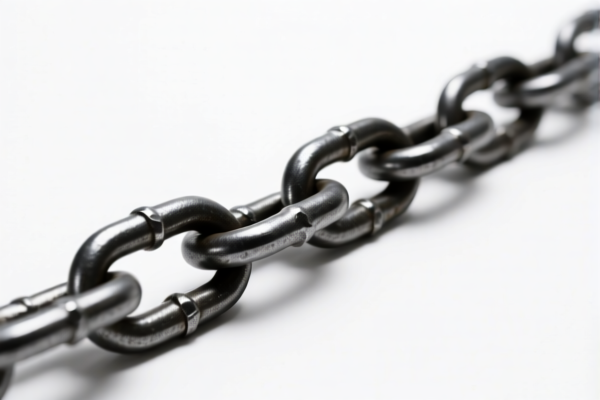
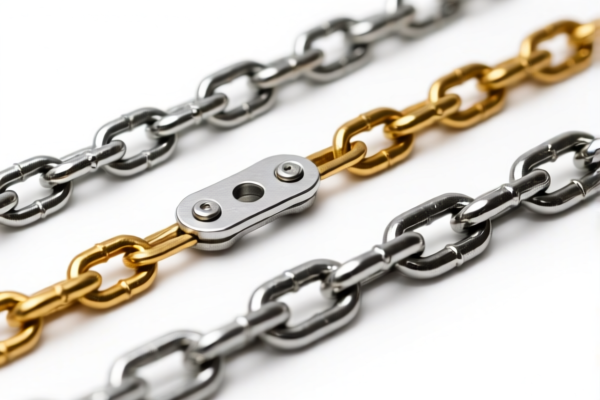
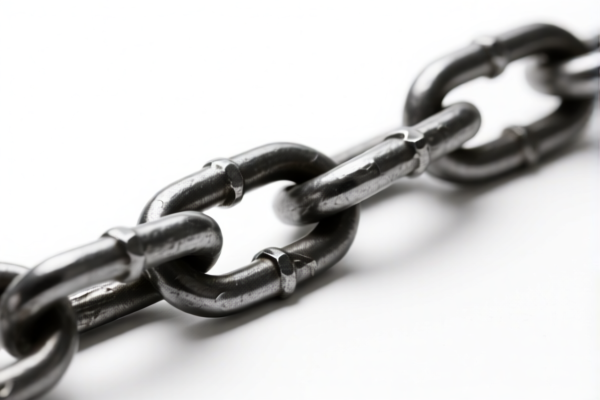
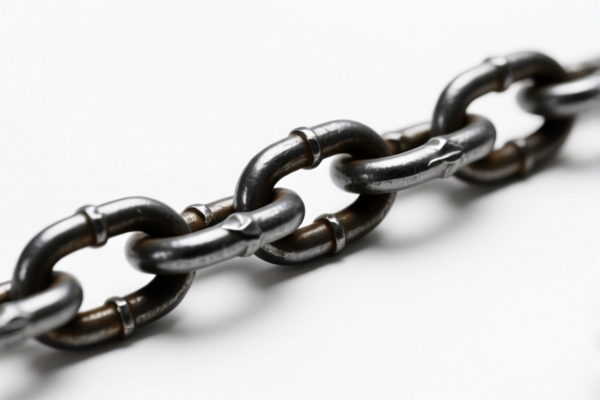
AI Analysis
⛓️ Chains & Link Assemblies (HS Code 7315.82.50.00 & Related)
🌐 HS Code Reference & Customs Clearance Guide | 2026 Latest Tariff Analysis | Professional Clearance Strategy
📌 I. Product Definition & Classification: Do You Really Understand "Chains"?
In international trade, "Chains" are not a single uniform category. They are classified based on material, structure, and link type. For imports from China to the US, the distinction between Welded Ring Chains, Pin Chains, and Leaf Chains determines whether you face standard duties or punitive tariffs.
The core challenge lies in distinguishing between: 1. Welded Steel Chains (often used for lifting, mooring, or construction) – High scrutiny. 2. Pin/Plated Steel Chains (used for machinery, conveyors, or bicycles) – Moderate scrutiny. 3. Iron/Steel Links (general purpose) – Broad categorization.
⚠️ Key Distinction Point:
- If the chain is welded ring structure, made of alloy steel, and diameter ≤ 10mm → Likely 7315.82.10.00 (High Risk).
- If the chain is pin/leaf type, made of iron or steel, generic use → Likely 7315.82.50.00.
- If it is a simple link/chain of iron/steel not specified elsewhere → 7315.12.00.xx.
📦 II. HS Code Classification Details (2026 Latest Tariff Authority Match)
Based on the provided data, here is the precise mapping for Chain products:
| HS Code | Product Description | Material/Structure | Applicable Scenario | Risk Level |
|---|---|---|---|---|
7315.82.50.00 |
Chains, of iron or steel; not elsewhere specified | Iron or Steel; Pin/Leaf/General Type | Conveyor chains, bicycle chains, general industrial chains | ⭐⭐⭐ High Tariff |
7315.82.10.00 |
Chains, of alloy steel; welded ring structure; diameter ≤ 10mm | Alloy Steel; Welded Ring | Lifting slings, mooring chains, heavy-duty small-diameter chains | ⭐⭐⭐⭐ Very High Tariff |
7315.12.00.20 |
Links and chain, of iron or steel; unspecified type | Iron or Steel | General iron/steel links, simple chain accessories | ⭐⭐⭐ High Tariff |
7315.12.00.40 |
Links and chain, of iron or steel; unspecified type | Iron or Steel | Generic iron/steel chain links | ⭐⭐⭐ High Tariff |
7315.11.00.10 |
Links and chain, of iron; unspecified type | Iron (not steel) | Lower-grade iron chains, agricultural ties | ⭐⭐⭐ High Tariff |
🔍 Critical Note:
- All listed HS Codes fall under Section VII (Plastics and Articles Thereof; Rubber and Articles Thereof... No, Section XV (Base Metals)). Specifically, Heading 73.15: Chains and parts thereof, of iron or steel.
- Material Matters: "Iron" vs. "Steel" vs. "Alloy Steel" changes the subheading.
- Structure Matters: "Welded Ring" is a specific subcategory often triggering additional scrutiny under US trade remedies.
💰 III. 2026 Latest Tariff Rate Breakdown (Including Surcharges & Policy Add-ons)
✅ Applicable Country: United States (US)
✅ Country of Origin: China (CN)
✅ Effective Date: 2025/2026 Tariff Regime
🎯 1. General Tariff Structure for Chains (7315.82.50.00, 7315.82.10.00, 7315.12.xx, 7315.11.xx)
For all HS codes listed in the provided data (7315.82.50.00, 7315.82.10.00, 7315.12.00.20, 7315.12.00.40, 7315.11.00.10), the tax calculation is identical according to the source data.
| Item | Content |
|---|---|
| Base Tariff (MFN) | 0.0% (ad valorem) |
| Section 301 Surcharge | +25.0% (Additional Duties under USITC Footnotes) |
| Section 122 / Section 232 Extension (Steel/Aluminum/Copper) | +50.0% (Specific surcharge for steel products under certain conditions/trade actions) |
| Total Effective Tax Rate | 85.0% |
| Tax Calculation | CIF Value × 85% |
| De Minimis Exemption | ❌ Not Applicable (Deny De Minimis for Section 301/122 goods) |
| Legal Basis Path | USITC:7315.82.50.00 → SECTION_301:25% → SECTION_122/232_EXT:50% → TOTAL:85% |
📌 Explanation of the 85% Rate:
- 0% Base: Standard Most Favored Nation (MFN) duty for chains of iron/steel is often 0% or low.
- 25% Section 301: Standard retaliatory tariff on many Chinese steel products.
- 50% Section 122/Steel Surcharge: This is a critical component. The data explicitly mentions "122条款关税10%钢,铝铜制品加征关税: 50%". This suggests an additional punitive tariff specifically targeting steel/aluminum/copper products from China, bringing the total to 85%.
- Result: An $10,000 shipment will incur $8,500 in duties. This is an extremely high barrier to entry.
🛠️ IV. Customs Clearance Practical Advice (Real-World Pitfall Avoidance)
✅ 1. Documentation Checklist (Non-Negotiable)
| Document | Required? | Purpose |
|---|---|---|
| ✅ Product Specification Sheet | ✔️ | Must detail: Material (Iron vs. Steel vs. Alloy), Diameter, Link Type (Welded, Pin, Leaf), Strength Grade. |
| ✅ Composition Analysis Report | ✔️ | To prove if it's "Alloy Steel" (triggers 7315.82.10) or generic "Steel/Iron". |
| ✅ Product Photos (Links Close-up) | ✔️ | To visually confirm welding method (welded ring vs. pin-linked). |
| ✅ Commercial Invoice | ✔️ | Must clearly state "Chain, Steel, [Specific Type]" – vague descriptions like "Metal Links" are rejected. |
| ✅ Packing List | ✔️ | Weight per box, total gross weight. |
| ✅ Origin Certificate | ✔️ | Confirm China origin to validate 85% tariff applicability (no free trade agreement benefits for these codes). |
✅ 2. Classification Strategy (Crucial for Cost Control)
🔥 "Clarify Material, Define Structure, Justify Use!"
| Scenario | Recommended HS Code | Why? |
|---|---|---|
| Bicycle/Motorcycle Chain | 7315.82.50.00 |
Standard pin-type chain, iron/steel. |
| Lifting Lugs/Welded Slings | 7315.82.10.00 |
Alloy steel, welded ring, ≤10mm. High scrutiny. |
| General Iron Chain (Garden/Agriculture) | 7315.11.00.10 |
If made of pure iron (not steel), may have slight classification difference, but tariff remains 85%. |
| Steel Chain for Machinery | 7315.12.00.40 |
Generic steel link/chain. |
⚠️ Warning:
- Do NOT try to classify a "Steel Chain" as "Aluminum" or "Plastic" to avoid tariffs. Customs will test material composition. Falsification leads to seizures and fines.
- "Iron" vs. "Steel": If your product is technically "Steel" but declared as "Iron" to fit7315.11, it is misclassification. However, the data shows the same 85% tax rate for all these codes, so the financial impact is the same. The risk is legal/penal, not just fiscal.
✅ 3. Special Case Handling
| Situation | Advice |
|---|---|
| Small Sample Shipments | ❌ Do Not Use De Minimis (Section 321). US Customs now explicitly denies de minimis for goods subject to Section 301/122 tariffs. Even $800 shipments will be assessed $680 in duties. |
| Mixed Containers (Chains + Non-Tariff Goods) | ❌ Cannot Split. If the primary purpose is the chain, the whole shipment is subject to the chain's tariff. |
| Alloy Steel vs. Carbon Steel | Both fall under high tariffs. Ensure the specification sheet distinguishes them correctly for the right subheading, even if tax is same. |
🌍 V. Global Market Comparison (2026)
| Country/Region | Recommended HS Code | Tariff Rate | Notes |
|---|---|---|---|
| 🇺🇸 USA | 7315.82.50.00 etc. |
85% | Includes 25% Sec 301 + 50% Steel Surcharge. Highest barrier. |
| 🇨🇳 China | 7315.82.50.00 |
~5-10% | Import duty for Chinese domestic production (not applicable for export). |
| 🇪🇺 EU | 7315.82.50.00 |
0% | No additional punitive tariffs for standard steel chains. |
| 🇬🇧 UK | 7315.82.50.00 |
0% | Post-Brexit standard rate. |
| 🇨🇦 Canada | 7315.82.50.00 |
0% | USMCA does not apply to China origin. MFN rate may be low, but no 85% surcharge. |
📌 Conclusion:
- The US market is the most hostile for Chinese-origin chains due to the unique 85% combined tariff.
- EU, UK, and Canada offer significantly lower duty rates (often 0-5%).
- Strategy: If targeting the US, consider supplier diversification (e.g., Vietnam, Thailand, India) to avoid China-origin tariffs.
📌 VI. Common Mistakes & Pitfalls (Lessons Learned)
❌ Mistake 1: Declaring "Steel Chain" as "Hardware Parts" (e.g., HS 7318) to avoid Section 301.
👉 Consequence: Customs reclassifies to 7315. Charges 85% + penalties.
✅ Correct: Declare correctly as Chain (7315).
❌ Mistake 2: Assuming small shipments ($500) are duty-free.
👉 Consequence: Seizure at border. Section 301/122 goods are excluded from $800 de minimis exemption.
✅ Correct: Pay duties on all shipments.
❌ Mistake 3: Ignoring the "Alloy Steel" distinction.
👉 Consequence: While tax is same, wrong classification leads to audit flags for "Welded Ring" chains.
✅ Correct: Specify material composition in invoice.
🎯 VII. Conclusion: Professional Clearance, Cost Efficiency
🎯 Remember the Mantra:
🔹 "Chains from China = 85% Tariff in USA."
🔹 "No De Minimis. No Workarounds. Full Declaration Required."
🔹 "Material Matters: Iron vs. Steel vs. Alloy, but Tax is Same."
📌 Tips:
- If your chain is critical for US market entry, calculate the landed cost including the 85% duty. It may render the business model unprofitable.
- Consider reshoring or nearshoring supply chains to avoid these punitive tariffs.
- Always pre-classify with a US customs broker to confirm the specific subheading (7315.82.10 vs 7315.82.50) based on exact product specs.
📣 Immediate Action:
📞 Consult a Customs Broker for Advance Ruling on your specific chain type.
📉 Recalculate Profit Margins to account for 85% duty.
🌏 Explore Alternative Markets (EU/Canada) if US tariffs are prohibitive.
✨ Professional clearance starts with accurate classification!
💼 Every dollar of duty saved starts with the right HS Code strategy!
Customer Reviews
About HS Code Classification
The Harmonized System (HS) is an internationally standardized nomenclature developed by the World Customs Organization (WCO) to classify traded products. Over 200 countries use the HS system as the basis for customs tariffs, trade statistics, and import/export regulations.
Each HS code follows a hierarchical structure:
- Chapter (2 digits) — Broad category of goods (e.g., Chapter 84: Machinery and Mechanical Appliances)
- Heading (4 digits) — More specific grouping within the chapter
- Subheading (6 digits) — Internationally standardized breakdown, used by all WCO member countries
- National subdivisions (8-10 digits) — Country-specific extensions for further classification, such as US HTSUS 10-digit codes
Correct HS code classification is essential for smooth customs clearance, accurate duty payment, and compliance with trade regulations. Misclassification can lead to customs delays, overpayment of duties, or penalties.
When importing from CN to US, the applicable tariff rates may include:
- Most-Favored-Nation (MFN) rate — The standard duty rate applied to WTO members
- General rate — Applied to countries without trade agreements
- Trade remedy duties — Additional tariffs such as Section 301 (anti-dumping), Section 232 (national security), or countervailing duties
The information provided on this page is for reference purposes only. For official classification, please consult with your local customs authority or a licensed customs broker.