Chain Buckle
CN → US| HS Code | Tariff Rate | Origin | Destination | Doc |
|---|---|---|---|---|
| 8301106080 | 23.6% | CN | US | Official Doc |
| 3926909989 | 22.8% | CN | US | Official Doc |
| 7315891000 | 86.5% | CN | US | Official Doc |
| 7315893000 | 85.0% | CN | US | Official Doc |
Product Images
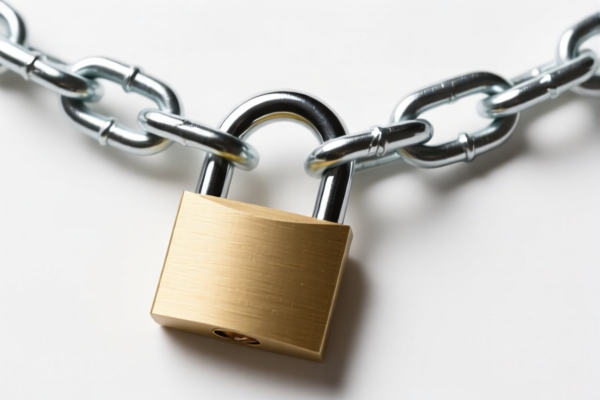
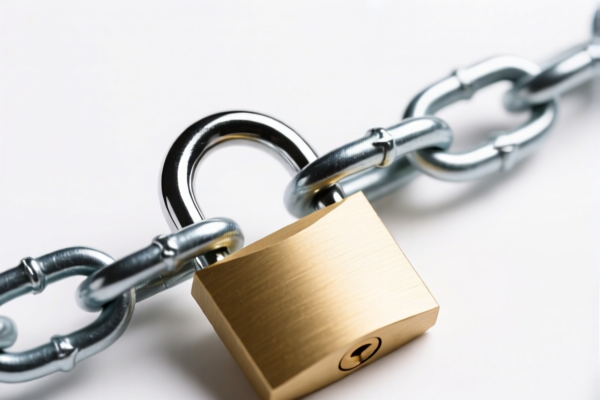
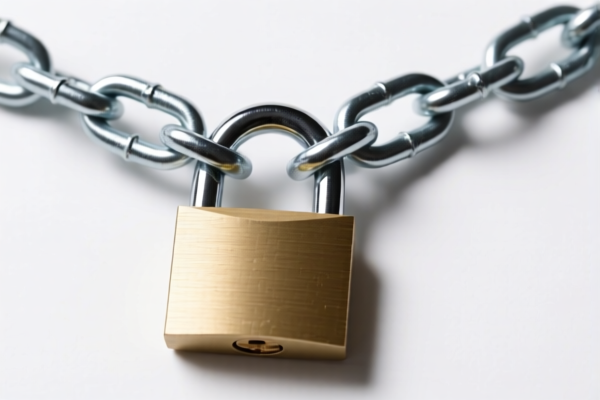
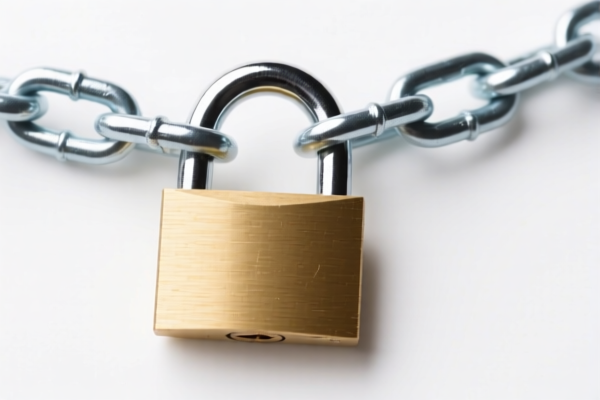
AI Analysis
🔐 Chain Buckles (Chain Locks)
🌐 HS Code Reference & Customs Clearance Guide | 2026 Latest Tariff Analysis | Professional Clearance Strategy
📌 1. Product Definition & Classification: Do You Really Understand "Chain Locks"?
A Chain Buckle (commonly referred to as a Chain Lock) is a security device consisting of interlinked metal or plastic rings, often equipped with a locking mechanism (padlock, key, or combination). In international trade, the classification depends heavily on the primary material and the structural design of the chain links.
Key Distinction Points: - Base Metal Locks: If the chain is made of ferrous/non-ferrous metal and functions primarily as a lock, it may be classified under 8301. - Plastic Components: If the casing or significant parts are plastic, it might fall under 3926. - Iron/Steel Chains: If the item is primarily viewed as a "chain" made of iron or steel (even if used as a lock), it falls under 7315.
⚠️ Critical Classification Note:
- If the chain is metallic and structured as a "link chain" (circular cross-section), it is highly likely classified under 7315.89, which carries significantly higher tariffs due to steel/aluminum/copper surcharges. - If the chain is categorized as a padlock/lock extension, it falls under 8301.10, which has lower tariffs. - If the chain involves plastic materials, it may fall under 3926.90.
📦 2. HS Code Classification Details (2026 Latest Tariff Authority Comparison)
| HS Code | Product Description | Application Scenario | Material |
|---|---|---|---|
8301.10.60.80 |
Chain locks classified as extensions of padlocks, made of base metal | Standard metal chain locks, bike locks, luggage locks | Base Metal |
3926.90.99.89 |
Other articles of plastic and other materials, chains with plastic components | Locks with plastic casings or composite materials | Plastic/Composite |
7315.89.10.00 |
Iron or steel chain locks, classified as "other chains" | Industrial steel chains, heavy-duty security chains | Iron/Steel |
7315.89.30.00 |
Link chains with circular cross-sections, metal material | Circular metal link chains used as locks | Metal (Iron/Steel) |
🔍 Important Reminder:
- 8301.10.60.80 is generally the most favorable for standard chain locks due to lower tariff rates. - 7315.89 categories carry extremely high tariffs (up to 86.5%) due to steel/aluminum/copper surcharges. Avoid misclassifying chain locks as "chains" under 7315 unless necessary. - 3926.90.99.89 applies only if plastic is a defining material.
💰 3. 2026 Latest Tariff Rate Details (Including Surcharges & Policy Add-ons)
✅ Applicable Country: United States (US)
✅ Origin: China (CN)
✅ Effective Date: From November 10, 2025 (including subsequent imports)
🎯 1. 8301.10.60.80 —— Chain Locks (Padlock Extensions, Base Metal)
| Item | Details |
|---|---|
| Base Tariff | 6.1% (ad valorem) |
| Section 301 Surcharge | 7.5% |
| Section 122 Surcharge | 10% |
| Total Tariff Rate | 23.6% |
| Tax Calculation | CIF Value × 23.6% |
| De Minimis Exemption | ❌ Not Applicable (deny_de_minimis) |
| Legal Basis Path | Section 122: 10% → Section 301: 7.5% → USITC: 8301.10.60.80 |
📌 Explanation:
- This classification benefits from a relatively lower total tariff rate compared to steel chain classifications. - Section 301 (7.5%) and Section 122 (10%) are mandatory for Chinese-origin goods. - No steel/aluminum/copper surcharge applies here, making it a cost-effective option for metal chain locks.
🎯 2. 3926.90.99.89 —— Other Plastic & Material Articles
| Item | Details |
|---|---|
| Base Tariff | 5.3% |
| Section 301 Surcharge | 7.5% |
| Section 122 Surcharge | 10% |
| Total Tariff Rate | 22.8% |
| Tax Calculation | CIF Value × 22.8% |
| De Minimis Exemption | ❌ Not Applicable (deny_de_minimis) |
| Legal Basis Path | Section 122: 10% → Section 301: 7.5% → USITC: 3926.90.99.89 |
📌 Note:
- Applicable only if the chain lock contains significant plastic components. - Slightly lower tariff than base metal locks, but not recommended if the primary material is metal.
🎯 3. 7315.89.10.00 —— Iron or Steel Chain Locks (Other Chains)
| Item | Details |
|---|---|
| Base Tariff | 1.5% |
| Section 301 Surcharge | 25.0% |
| Section 122 Surcharge | 10% |
| Steel/Aluminum/Copper Surcharge | 50% |
| Total Tariff Rate | 86.5% |
| Tax Calculation | CIF Value × 86.5% |
| De Minimis Exemption | ❌ Not Applicable (deny_de_minimis) |
| Legal Basis Path | Steel/Aluminum/Copper Surcharge: 50% → Section 301: 25% → Section 122: 10% → USITC: 7315.89.10.00 |
📌 Warning:
- Extremely High Tariff: 86.5% makes this classification prohibitively expensive. - Steel Surcharge (50%) is the primary driver. This classification treats the item as a steel chain, not a lock. - Avoid this classification for chain locks unless explicitly required by product structure.
🎯 4. 7315.89.30.00 —— Link Chains (Circular Cross-Section, Metal)
| Item | Details |
|---|---|
| Base Tariff | 0.0% |
| Section 301 Surcharge | 25.0% |
| Section 122 Surcharge | 10% |
| Steel/Aluminum/Copper Surcharge | 50% |
| Total Tariff Rate | 85.0% |
| Tax Calculation | CIF Value × 85.0% |
| De Minimis Exemption | ❌ Not Applicable (deny_de_minimis) |
| Legal Basis Path | Steel/Aluminum/Copper Surcharge: 50% → Section 301: 25% → Section 122: 10% → USITC: 7315.89.30.00 |
📌 Warning:
- High Tariff: 85.0% due to steel surcharges. - Applies to circular cross-section metal links. - Not recommended for chain locks unless they are purely structural chains without lock mechanisms.
🛠️ 4. Customs Clearance Practical Advice (Combat Pitfall Guide)
✅ 1. Required Documentation Checklist
| Document | Mandatory | Description |
|---|---|---|
| ✅ Product Specification Sheet | ✔️ | Include material composition (metal vs. plastic), dimensions, locking mechanism type |
| ✅ Product Photos (Including Label) | ✔️ | Show chain links, lock body, and any markings |
| ✅ Commercial Invoice | ✔️ | Clearly state "Chain Lock" or "Lock Assembly" rather than just "Chain" |
| ✅ Packing List | ✔️ | Detail packaging to avoid misclassification as "parts" |
| ✅ Origin Certificate (CO) | ✔️ | Required for tariff calculation |
| ✅ Third-Party Test Report | ✔️ | If plastic components are involved, provide material compliance reports |
✅ 2. Declaration Tips (Key Mantras)
🔥 "Metal Locks = 8301, Plastic Locks = 3926, Steel Chains = 7315 (High Tax!)"
| Scenario | Correct Declaration | Incorrect Practice |
|---|---|---|
| Standard Metal Chain Lock | 8301.10.60.80 (23.6%) |
Misdeclare as "Steel Chain" → 86.5% |
| Chain Lock with Plastic Housing | 3926.90.99.89 (22.8%) |
Misdeclare as "Metal Lock" → 23.6% |
| Industrial Steel Chain (No Lock) | 7315.89.10.00 (86.5%) |
Misdeclare as "Lock" → 23.6% |
| Circular Metal Link Chain | 7315.89.30.00 (85.0%) |
Misdeclare as "Lock" → 23.6% |
✅ 3. Special Cases Handling
| Scenario | Recommendation |
|---|---|
| OEM Custom Chain Locks | Provide design drawings to prove it is a "lock" not a "chain" |
| Composite Material Locks | If >50% plastic, consider 3926.90.99.89 |
| Heavy-Duty Steel Chain Locks | Even if it has a lock, if it's primarily a steel chain, 7315 may apply, but argue for 8301 if the lock function is primary |
| Mixed Shipments | Ensure each item is correctly classified to avoid penalties |
🌍 5. Global Market Comparison (2026 Latest)
| Country/Region | Recommended HS Code | Tariff | Certification Requirements | Notes |
|---|---|---|---|---|
| 🇺🇸 United States | 8301.10.60.80 |
23.6% (CN) | None Specific | 86.5% for 7315 |
| 🇨🇳 China | 8301.10.60.80 |
Low (5-10%) | CCC (if applicable) | No surcharges |
| 🇪🇺 European Union | 8301.10.60.80 |
0-2% | CE | No surcharges |
| 🇬🇧 United Kingdom | 8301.10.60.80 |
0-2% | UKCA | No surcharges |
| 🇦🇺 Australia | 8301.10.60.80 |
5% | RCM | No surcharges |
📌 Conclusion:
- The US is the only market with significant surcharges (Section 301, Section 122, Steel Surcharge). - Correct classification under8301.10.60.80is crucial to save up to 63% in tariffs compared to misclassification under7315. - China-origin goods face high tariffs in the US, so accurate declaration is essential.
📌 6. Common Mistakes & Pitfall Avoidance (Lessons Learned)
❌ Mistake 1: Misclassifying metal chain locks as "steel chains" under 7315
👉 Consequence: Tariff jumps from 23.6% to 86.5% → Massive cost increase!
❌ Mistake 2: Declaring chain locks as "other goods" without specifying material
👉 Consequence: Customs may assign a higher default rate or hold shipment for review.
❌ Mistake 3: Not providing material composition for composite locks
👉 Consequence: Misclassification under 7315 or 3926 leading to disputes.
❌ Mistake 4: Using vague terms like "Chain" instead of "Chain Lock"
👉 Consequence: Customs may interpret it as a structural chain → 7315 classification.
✅ Correct Practice:
"Chain Lock, Padlock Type, Base Metal Construction, with Key, Model XYZ, Origin China"
🎯 7. Conclusion: Professional Declaration, Save Costs, Avoid Risks!
🎯 Remember the Mantra:
🔹 "Metal Locks = 8301 (23.6%), Steel Chains = 7315 (86.5%), Plastic = 3926 (22.8%)"
🔹 "One HS Code Difference, 60% Tariff Gap! Declare Accurately, Save Big!"
📌 Pro Tip:
- If your chain locks are originally from Vietnam, Mexico, Thailand, or Malaysia, you may be eligible for IEEPA exemptions, reducing tariffs to 0-5%.
- Consider Advance Ruling from US Customs to confirm the correct HS Code before shipment.
📣 Act Now:
📞 Contact a professional customs broker + Provide product details + Apply for HS Code Advance Ruling
🚀 Ensure smooth clearance, maximize profits, and minimize risks!
✨ Professional clearance starts with accurate classification!
💼 Every dollar saved is a dollar earned!
Customer Reviews
About HS Code Classification
The Harmonized System (HS) is an internationally standardized nomenclature developed by the World Customs Organization (WCO) to classify traded products. Over 200 countries use the HS system as the basis for customs tariffs, trade statistics, and import/export regulations.
Each HS code follows a hierarchical structure:
- Chapter (2 digits) — Broad category of goods (e.g., Chapter 84: Machinery and Mechanical Appliances)
- Heading (4 digits) — More specific grouping within the chapter
- Subheading (6 digits) — Internationally standardized breakdown, used by all WCO member countries
- National subdivisions (8-10 digits) — Country-specific extensions for further classification, such as US HTSUS 10-digit codes
Correct HS code classification is essential for smooth customs clearance, accurate duty payment, and compliance with trade regulations. Misclassification can lead to customs delays, overpayment of duties, or penalties.
When importing from CN to US, the applicable tariff rates may include:
- Most-Favored-Nation (MFN) rate — The standard duty rate applied to WTO members
- General rate — Applied to countries without trade agreements
- Trade remedy duties — Additional tariffs such as Section 301 (anti-dumping), Section 232 (national security), or countervailing duties
The information provided on this page is for reference purposes only. For official classification, please consult with your local customs authority or a licensed customs broker.