Chain Disassembler
CN → US| HS Code | Tariff Rate | Origin | Destination | Doc |
|---|---|---|---|---|
| 8205595560 | 40.3% | CN | US | Official Doc |
| 8203202000 | 39.0% | CN | US | Official Doc |
| 8205598000 | 38.7% | CN | US | Official Doc |
| 8203206030 | 0.0% | CN | US | Official Doc |
| 8205595560 | 40.3% | CN | US | Official Doc |
Product Images
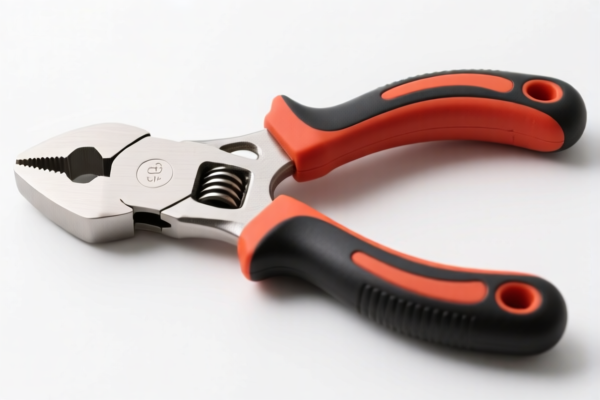
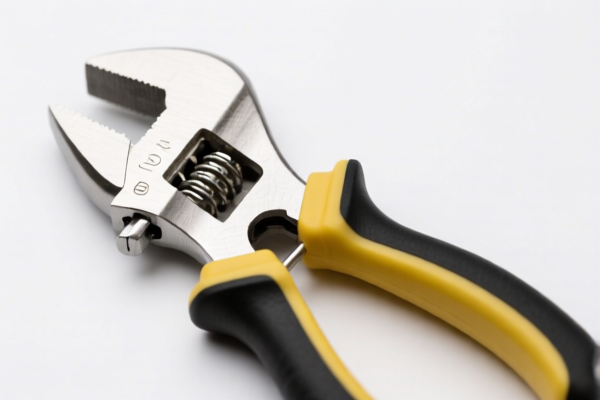
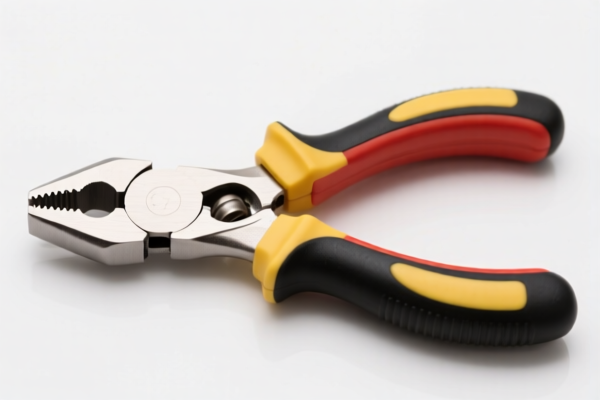
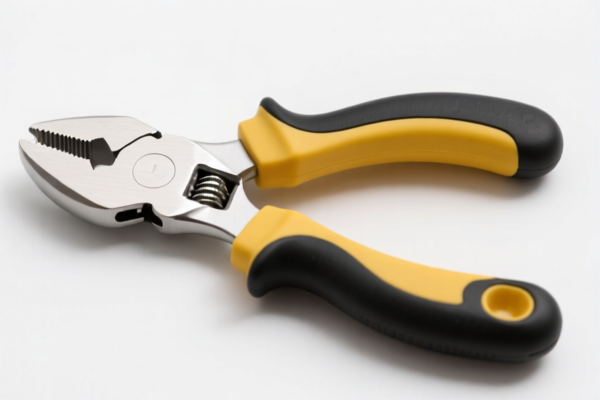
AI Analysis
⛓️ Chain Disassembler / Bike Repair Tool (Chain Breaker)
🌐 HS Code Reference & Customs Clearance Guide | 2026 Latest Tariff Analysis | Professional Compliance Strategy
📌 I. Product Definition & Classification: What Exactly is a "Chain Disassembler"?
A Chain Disassembler (commonly known as a Chain Tool, Chain Breaker, or Chain Pusher) is a specialized hand tool used primarily in bicycle, motorcycle, and industrial chain maintenance to push pins out of chain links for removal or re-assembly.
In international trade, it is categorized under Hand Tools. The classification logic hinges on: 1. Function: Manual manipulation (pushing pins). 2. Material: Typically metal (steel/iron), sometimes with plastic handles. 3. Form: Non-cutting, non-sawing, distinct from general pliers but similar in utility.
⚠️ Key Distinction:
- If it is a manual tool for pushing chain pins → Falls under HS Chapter 82 (Miscellaneous Articles of Iron or Steel).
- It is NOT classified as a "part of machinery" unless it is an integrated hydraulic tool for heavy industry (which is rare for standard "Chain Disassemblers").
- Avoid confusion with cutting tools (e.g., tin snips), which have higher tariff risks.
📦 II. HS Code Classification Details (2026 Latest Tariff Alignment)
Based on the provided data, there are five potential HS Codes, falling into two main categories: "Other Hand Tools" (8205) and "Pliers, Tweezers & Similar Tools" (8203).
| HS Code | Product Description | Logical Basis for Classification | Tax Profile |
|---|---|---|---|
8205.59.55.60 |
Other Hand Tools & Parts | Shape falls under "Hand Tools". Compatible with "Other Hand Tools" logic. No conflict with cutting tools. | 40.3% Total |
8205.59.80.00 |
Other Hand Tools | Function aligns with "Manual Tools". Material has no conflict. Broad category for miscellaneous hand tools. | 38.7% Total |
8203.20.20.00 |
Tweezers & Similar Tools | Disassembly tools share functional similarity with "tweezers/similar tools" in manual precision handling. | 39.0% Total |
8203.20.60.30 |
Pliers, Tweezers & Similar Tools | Form and use fit the category of "Pliers, Tweezers & Similar Tools". Based on default inclination. | 12¢/doz. + 5.5% + 35.0% |
8205.59.55.60 |
Other Hand Tools & Parts (Duplicate) | Reiteration: Form is hand-tool class. "Other Hand Tools" logic prevails. | 40.3% Total |
🔍 Analysis:
- The most common classification for standard bicycle/motorcycle chain tools is 8205.59 (Other Hand Tools) or 8203.20 (Pliers/Tweezers).
- 8205.59.55.60 is heavily cited in the data for "Chain Disassemblers" due to its "Other Hand Tools" logic.
- 8203.20.60.30 has a complex tariff structure (specific duty + ad valorem).
💰 III. 2026 Latest Tariff Rate Breakdown (Including Surcharge & Policy Additions)
✅ Applicable Country: United States (US)
✅ Origin: China (CN)
✅ Effective Date: Post-2025 policies (Section 301 & IEEPA)
🎯 1. 8205.59.55.60 – Other Hand Tools
| Item | Content |
|---|---|
| Base Tariff | 5.3% (Ad Valorem) |
| Section 301 Surcharge | +25.0% (USITC Footnote 9903.88.01) |
| IEEPA Surcharge | +10.0% (Targeting China/HK products, effective Nov 10, 2025) |
| 122 Clause Tariff | +10.0% (Specific clause application) |
| Total Tariff | 40.3% |
| Tax Calculation | CIF Value × 40.3% |
| De Minimis Exemption | ❌ Not Eligible |
| Legal Basis Path | IEEPA:9903.01.25 → USITC:8205.59.55.60 → FOOTNOTE:9903.88.01 |
📌 Explanation:
- The 5.3% base rate is standard for miscellaneous iron/steel tools.
- The 25% Section 301 and 10% IEEPA are the primary cost drivers.
- The 10% 122 Clause is an additional punitive tariff layer.
- Total: 40.3% is a significant cost impact.
🎯 2. 8203.20.20.00 – Tweezers & Similar Tools
| Item | Content |
|---|---|
| Base Tariff | 4.0% (Ad Valorem) |
| Section 301 Surcharge | +25.0% |
| IEEPA Surcharge | +10.0% |
| 122 Clause Tariff | +10.0% |
| Total Tariff | 39.0% |
| Tax Calculation | CIF Value × 39.0% |
| De Minimis Exemption | ❌ Not Eligible |
| Legal Basis Path | IEEPA:9903.01.25 → USITC:8203.20.20.00 → FOOTNOTE:9903.88.01 |
📌 Note:
- Slightly lower base rate (4.0% vs 5.3%) but same surcharges.
- Classification as "Tweezers/Similar" is debatable but functional.
🎯 3. 8205.59.80.00 – Other Hand Tools
| Item | Content |
|---|---|
| Base Tariff | 3.7% (Ad Valorem) |
| Section 301 Surcharge | +25.0% |
| IEEPA Surcharge | +10.0% |
| 122 Clause Tariff | +10.0% |
| Total Tariff | 38.7% |
| Tax Calculation | CIF Value × 38.7% |
| De Minimis Exemption | ❌ Not Eligible |
| Legal Basis Path | IEEPA:9903.01.25 → USITC:8205.59.80.00 → FOOTNOTE:9903.88.01 |
📌 Note:
- Lowest total tariff (38.7%) among the ad-valorem options.
- "Other Hand Tools" is a broad catch-all, making it a safe but competitive classification.
🎯 4. 8203.20.60.30 – Pliers, Tweezers & Similar Tools
| Item | Content |
|---|---|
| Base Tariff | 12¢ per dozen + 5.5% |
| Section 301 Surcharge | +25.0% |
| IEEPA Surcharge | +10.0% |
| 122 Clause Tariff | +10.0% |
| Total Tariff | 12¢/doz. + 5.5% + 25% + 10% |
| Tax Calculation | Complex: Specific duty + Ad valorem on CIF |
| De Minimis Exemption | ❌ Not Eligible |
| Legal Basis Path | IEEPA:9903.01.25 → USITC:8203.20.60.30 → FOOTNOTE:9903.88.01 |
📌 Warning:
- This classification has a specific duty (12¢/doz), which can be disproportionately high for low-value items.
- Total effective rate may exceed 40% depending on unit value.
🛠️ IV. Customs Clearance Practical Advice (Real-World Pitfall Guide)
✅ 1. Required Documentation Checklist (Non-Negotiable)
| Document | Mandatory | Explanation |
|---|---|---|
| ✅ Product Specification Sheet | ✔️ | Detail material (e.g., "Chromium-Vanadium Steel"), dimensions, handle type. |
| ✅ Product Photos (Clear) | ✔️ | Show the tool in use or isolated, highlighting no "cutting blades" (to avoid 8202/8207). |
| ✅ Commercial Invoice | ✔️ | Clearly state "Hand Tool, Chain Disassembler, Model XYZ". Avoid vague terms like "Bike Part". |
| ✅ Packing List | ✔️ | Indicate quantity per carton. |
| ✅ Country of Origin | ✔️ | Must be China to confirm surcharge applicability. |
✅ 2. Declaration Strategy (Key Mantra)
🔥 "Classify as Hand Tool, Not Bike Part; Specify Material, Avoid 'Blade'"
| Scenario | Correct Declaration | Wrong Action |
|---|---|---|
| Standard Bike Chain Tool | 8205.59.55.60 or 8205.59.80.00 |
Misclassify as "Bicycle Accessory" → Potential 0% but high audit risk |
| Hydraulic Chain Cutter | 8207 or 8466 |
Misclassify as manual tool → Wrong tariff |
| Tool with Plastic Handle | Still 8205 or 8203 |
Overcomplicate classification |
| High-Value Industrial Tool | Check 8207 (Interchangeable Tools) |
Assume all chain tools are 8205 |
⚠️ Critical Note:
- Do NOT describe it as a "Cutting Tool" unless it actively cuts (like pliers with cutting edges). Chain disassemblers push pins; they do not cut. This avoids the higher-risk "Cutting Tool" categories.
✅ 3. Special Circumstances Handling
| Situation | Handling Advice |
|---|---|
| OEM Custom Tools | Provide design drawings to prove it is a "Hand Tool" and not a "Machine Part". |
| Set with Other Tools | If sold in a kit with wrenches, declare as "Hand Tool Set" under 8205.59 if hand tools are predominant. |
| Low-Value Shipments | ❌ No De Minimis: Despite low value, the 301/IEEPA tariffs apply fully. Small parcels are NOT exempt. |
| Multiple HS Codes | If unsure, 8205.59.80.00 (38.7%) offers the lowest ad-valorem total among the 8205 options. 8205.59.55.60 (40.3%) is also widely accepted for this specific item. |
🌍 V. Global Market Comparison (2026 Latest)
| Country/Region | Recommended HS Code | Estimated Tariff | Certification | Notes |
|---|---|---|---|---|
| 🇺🇸 USA | 8205.59.55.60 / 8203.20.20.00 |
38.7% - 40.3% | No specific, but durable goods standard | High Tariff Risk due to 301/IEEPA |
| 🇨🇳 China | 8205.59.55.60 |
5.3% - 8% | N/A | Low import tariff, but check for anti-dumping if applicable |
| 🇪🇺 EU | 8205.59 / 8203.20 |
0% - 2.7% | CE (if power-assisted), RoHS | Generally low tariffs; no Section 301 equivalent |
| 🇬🇧 UK | 8205.59 |
0% - 2.7% | UKCA | Post-Brexit rules may vary slightly |
| 🇨🇦 Canada | 8205.59 |
0% - 5% | N/A | NAFTA/USMCA may allow 0% if manufactured in origin |
📌 Conclusion:
- USA is the hardest market for Chain Disassemblers due to Section 301 + IEEPA surcharges.
- EU/UK/Canada offer significant tariff advantages (0-5%).
- Consider supply chain diversification (e.g., manufacturing in Vietnam/Mexico) to mitigate US tariffs if targeting the North American market.
📌 VI. Common Mistakes & Pitfall Guide (Lessons Learned)
❌ Mistake 1: Declaring as "Bicycle Part" (HS 8714)
👉 Consequence: If audited, customs may reclassify as Hand Tool (8205), leading to back taxes + penalties (301/IEEPA apply to tools, not always to bike parts).
❌ Mistake 2: Ignoring the 122 Clause
👉 Consequence: The 10% 122 Clause is often missed in standard calculators. Always verify if your HS code is subject to this specific punitive tariff.
❌ Mistake 3: Assuming "De Minimis" Exemption for Low-Value Items
👉 Consequence: Even for a $10 chain tool, the 40% tariff applies. $4 tax on $10 is significant for margin.
❌ Mistake 4: Describing as "Cutting Tool"
👉 Consequence: Triggers higher scrutiny and potentially different, harsher tariffs under cutting tool categories.
✅ Correct Practice:
"Manual Chain Disassembler, Iron/Steel, for Bicycle Maintenance, Model ABC"
🎯 VII. Conclusion: Precise Classification Saves Costs!
🎯 Remember the Mantra:
🔹 "Hand Tool, Not Bike Part; 301 & IEEPA are Real; 40% Tax is High!"
🔹 "Check the 122 Clause; Don't Miss the 10%; Opt for 8205 if Possible!"
📌 Pro Tip:
If your product is originating from Vietnam, Mexico, or Malaysia, you may be eligible to avoid IEEPA/301 surcharges, reducing tariffs to 0-5%.
Consider Advance Ruling (US CBP) to lock in the HS Code (8205.59.55.60vs8203.20.20.00) before shipping large volumes.
📣 Immediate Action:
📞 Consult a Licensed Customs Broker + Provide Product Photos + Apply for Pre-Ruling
🚀 Ensure your Chain Disassemblers clear US Customs smoothly and protect your margins!
✨ Professional Clearance Starts with Accurate Classification!
💼 Every Percentage Point of Tax Savings Adds Directly to Your Profit!
Customer Reviews
About HS Code Classification
The Harmonized System (HS) is an internationally standardized nomenclature developed by the World Customs Organization (WCO) to classify traded products. Over 200 countries use the HS system as the basis for customs tariffs, trade statistics, and import/export regulations.
Each HS code follows a hierarchical structure:
- Chapter (2 digits) — Broad category of goods (e.g., Chapter 84: Machinery and Mechanical Appliances)
- Heading (4 digits) — More specific grouping within the chapter
- Subheading (6 digits) — Internationally standardized breakdown, used by all WCO member countries
- National subdivisions (8-10 digits) — Country-specific extensions for further classification, such as US HTSUS 10-digit codes
Correct HS code classification is essential for smooth customs clearance, accurate duty payment, and compliance with trade regulations. Misclassification can lead to customs delays, overpayment of duties, or penalties.
When importing from CN to US, the applicable tariff rates may include:
- Most-Favored-Nation (MFN) rate — The standard duty rate applied to WTO members
- General rate — Applied to countries without trade agreements
- Trade remedy duties — Additional tariffs such as Section 301 (anti-dumping), Section 232 (national security), or countervailing duties
The information provided on this page is for reference purposes only. For official classification, please consult with your local customs authority or a licensed customs broker.