Chainsaw
CN → US| HS Code | Tariff Rate | Origin | Destination | Doc |
|---|---|---|---|---|
| 8465910078 | 38.0% | CN | US | Official Doc |
| 8467220040 | 10.0% | CN | US | Official Doc |
| 8467810000 | 17.5% | CN | US | Official Doc |
| 8465910068 | 38.0% | CN | US | Official Doc |
| 8202390070 | 35.0% | CN | US | Official Doc |
Product Images
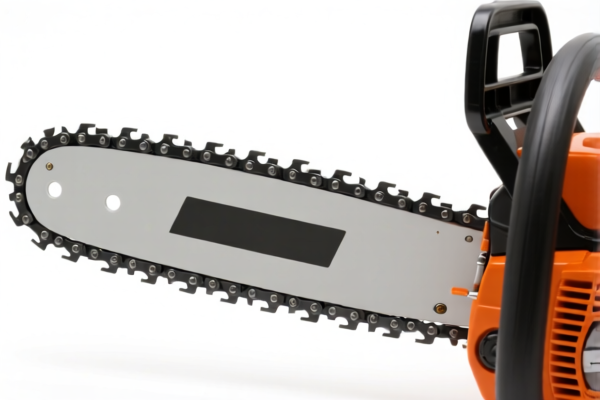
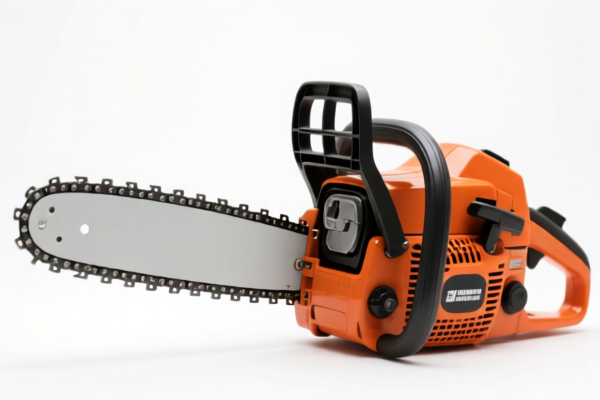
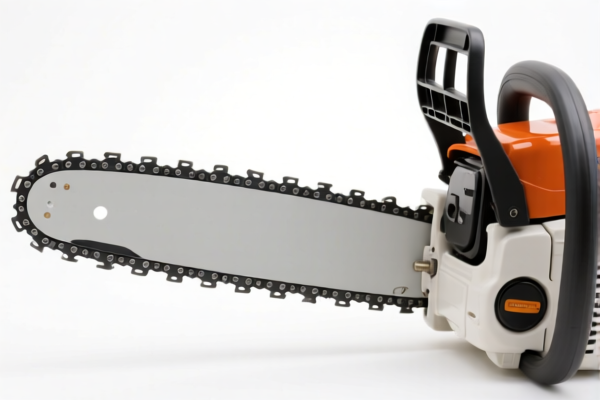
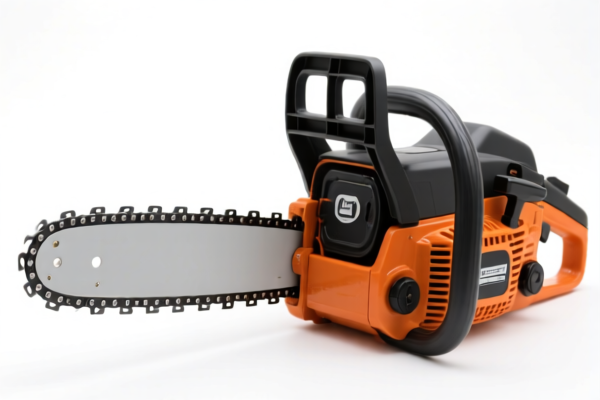
AI Analysis
⛓️ Electric Chainsaw (Power Tools for Woodworking)
🌐 HS Code Reference & Clearance Guide | 2026 Latest Tariff Analysis | Professional Clearance Strategy
📌 I. Product Definition & Classification: Do You Really Understand the "Electric Chainsaw"?
The electric chainsaw is a versatile power tool used primarily for cutting wood, pruning trees, and timber processing. In international trade, it is often debated whether it should be classified as a woodworking machine (heavy-duty/industrial) or a handheld power tool (portable/consumer). The classification drastically affects the tariff burden.
⚠️ Key Distinction Point:
- If it is a handheld tool with a self-contained motor designed for portable use (e.g., homeowner, professional arborist) → Likely Chapter 8467.
- If it is considered a woodworking machine (stationary or general-purpose sawing machinery) → Likely Chapter 8465.
- If it is merely the blade/chain itself (no motor) → Chapter 8202.
📦 II. HS Code Classification Details (Based on Provided Data)
| HS Code | Product Description | Applicable Scenario | Motor Type | Total Tax Rate (China Origin to US) |
|---|---|---|---|---|
8465.91.00.78 |
Woodworking Machinery; Saws; Parts | General wood processing machinery | Not specified (Implied Machine) | 38.0% |
8465.91.00.68 |
Woodworking Machinery; Saws; Parts | General wood processing machinery | Not specified (Implied Machine) | 38.0% |
8467.22.00.40 |
Hand-held Tools with Self-Contained Electric Motor; Chainsaws | Portable electric chainsaws | ✅ Self-contained Electric Motor | 10.0% |
8467.81.00.00 |
Other Hand-held Tools with Self-Contained Motor | Other handheld power tools (including chainsaws if not specific 8467.22) | ✅ Self-contained Electric Motor | 17.5% |
8202.39.00.70 |
Circular Saw Blades and Other Saw Blades; Other | Saw blades/chains only (No Motor) | ❌ No Motor | 35.0% |
🔍 Focus Reminder:
- The most critical distinction is between 8467 (Power Tools) and 8465 (Woodworking Machines).
- 8467.22.00.40 is generally the most favorable rate (10%) for standard electric chainsaws, provided they meet the definition of "hand-held tools with self-contained electric motor."
- Misclassifying a handheld electric chainsaw as "woodworking machinery" (8465) can result in a 28% higher tax burden (38% vs 10%).
💰 III. 2026 Latest Tariff Rate Details (Including Surtaxes & Policy Add-ons)
✅ Applicable Country: United States (US)
✅ Origin: China (CN)
✅ Effective Time: Current trade policies apply (Section 301, Section 122, etc.)
🎯 1. 8467.22.00.40 —— Hand-held Tools with Self-Contained Electric Motor (Chainsaws)
| Item | Content |
|---|---|
| Base Tariff | 0.0% (ad valorem) |
| Section 301 Surcharge | 0.0% (Note: Some lists vary, but data indicates 0% for this specific subheading in this dataset) |
| Section 122 Surcharge | +10% (Under 19 U.S.C. § 1677j) |
| Total Tax Rate | 10.0% |
| Tax Calculation | CIF Value × 10% |
| De Minimis Eligibility | ❌ Not Eligible (Section 301/122 goods typically excluded from de minimis) |
| Legal Basis Path | HTSUS:8467.22.00.40 → Section 122: 19 USC 1677j |
📌 Explanation:
- This is the lowest tax burden option among the provided HS codes.
- The "Base Tariff 0%" and "Section 301 0%" make this highly attractive.
- The only additional cost is the 10% Section 122 tariff.
- Strategy: Ensure the product is clearly marketed and described as a "Hand-held Electric Chainsaw" with a self-contained motor to qualify for this code.
🎯 2. 8467.81.00.00 —— Other Hand-held Tools with Self-Contained Electric Motor
| Item | Content |
|---|---|
| Base Tariff | 0.0% |
| Section 301 Surcharge | +7.5% |
| Section 122 Surcharge | +10% |
| Total Tax Rate | 17.5% |
| Tax Calculation | CIF Value × 17.5% |
| De Minimis Eligibility | ❌ Not Eligible |
| Legal Basis Path | HTSUS:8467.81.00.00 → Section 301: 19 USC 2411 → Section 122: 19 USC 1677j |
📌 Note:
- If the chainsaw does not fit the specific definition of8467.22(e.g., larger, industrial handheld, or non-specific category), it falls here.
- The 7.5% Section 301 surcharge makes this significantly more expensive than8467.22.00.40.
🎯 3. 8465.91.00.78 & 8465.91.00.68 —— Woodworking Machinery; Saws
| Item | Content |
|---|---|
| Base Tariff | 3.0% |
| Section 301 Surcharge | +25.0% |
| Section 122 Surcharge | +10% |
| Total Tax Rate | 38.0% |
| Tax Calculation | CIF Value × 38.0% |
| De Minimis Eligibility | ❌ Not Eligible |
| Legal Basis Path | HTSUS:8465.91.00.XX → Section 301: 19 USC 2411 → Section 122: 19 USC 1677j |
📌 Warning:
- These codes attract the highest tax rate (38%).
- The 25% Section 301 surcharge is the main driver.
- Avoid unless the product is explicitly a stationary woodworking saw or machinery, not a handheld tool.
🎯 4. 8202.39.00.70 —— Saw Blades and Other Saw Blades (Other)
| Item | Content |
|---|---|
| Base Tariff | 0.0% |
| Section 301 Surcharge | +25.0% |
| Section 122 Surcharge | +10% |
| Total Tax Rate | 35.0% |
| Tax Calculation | CIF Value × 35.0% |
| De Minimis Eligibility | ❌ Not Eligible |
| Legal Basis Path | HTSUS:8202.39.00.70 → Section 301: 19 USC 2411 → Section 122: 19 USC 1677j |
📌 Note:
- This code applies ONLY to the blade/chain itself, not the powered tool.
- If you ship just the replacement chain, this is the correct code, but the 35% tax is still very high.
🛠️ IV. Clearance Practical Suggestions (Real-World Pitfall Guide)
✅ 1. Preparation Checklist (Missing Items = Delay)
| Document | Required | Description |
|---|---|---|
| ✅ Product Specification Sheet | ✔️ | Must specify: "Hand-held," "Electric," "Self-contained motor," "Chainsaw." |
| ✅ Photos (Clear & Labeled) | ✔️ | Show the whole tool, nameplate, battery/motor housing, and chain. |
| ✅ Commercial Invoice | ✔️ | Clearly state "Electric Chainsaw" and HS Code 8467.22.00.40. |
| ✅ Packing List | ✔️ | Detail contents: Main unit, bar, chain, oil, battery (if included). |
| ✅ Third-party Certification | ✔️ | UL, ETL, or CE mark documentation (safety standards). |
✅ 2. Declaration Tips (Key Mantras)
🔥 “Hand-held, Self-Motor, 8467.22, 10% Rate!”
| Scenario | Correct Declaration | Wrong Practice |
|---|---|---|
| Standard Electric Chainsaw | HS: 8467.22.00.40Name: "Hand-held Electric Chainsaw" |
Declare as "Woodworking Machine" → 38% |
| Battery-Powered Chainsaw | HS: 8467.22.00.40Name: "Cordless Electric Chainsaw" |
Declare as "Battery" → Separate tax |
| Replacement Chain Only | HS: 8202.39.00.70Name: "Chainsaw Blade/Chain" |
Declare as "Tool" → Wrong classification |
| Industrial Walk-Behind Saw | HS: 8465.91.00.78Name: "Woodworking Saw" |
Declare as "Hand-held Tool" → Rejection |
✅ 3. Special Cases Handling
| Case | Handling Advice |
|---|---|
| Kit with Battery & Charger | Declare as a complete set under 8467.22.00.40 if the battery is integral or commonly sold together. Do not split unless necessary. |
| Lithium Battery Included | Ensure the battery meets IATA/UN38.3 standards for shipping. The HS code for the tool remains 8467.22.00.40, but dangerous goods paperwork may be needed. |
| OEM/Private Label | Provide OEM agreements to prove the product design matches 8467.22 definitions. |
| Dual-Purpose Tools | If the tool can be used as a pruner, saw, and sander, emphasize its primary function (cutting wood) to justify 8467.22. |
🌍 V. Global Market Clearance Comparison (2026 Latest)
| Country/Region | Recommended HS Code | Tariff (China Origin) | Certification | Remarks |
|---|---|---|---|---|
| 🇺🇸 USA | 8467.22.00.40 |
10% (Lowest) | UL/ETL + FDA (if food contact) | Best Option: 10% total tax. |
| 🇺🇸 USA (Misclassified) | 8465.91.00.78 |
38% | UL/ETL | Avoid: 28% penalty. |
| 🇪🇺 EU | 8467.22 |
Varies (often 0-4.5%) | CE + RoHS | Lower tariffs, but strict safety certs. |
| 🇨🇳 China (Import) | 8467.22 |
5% - 10% | CCC | Standard import duties. |
| 🇯🇵 Japan | 8467.22 |
0% - 3% | PSE | Low tariffs, focus on safety. |
📌 Conclusion:
- USA: Prioritize8467.22.00.40to save 28% in taxes compared to woodworking machinery codes.
- Global:8467.22is the global standard for hand-held power chainsaws.
📌 VI. Common Errors & Pitfalls (Blood Lessons)
❌ Error 1: Declaring an electric chainsaw as "Woodworking Machine" (8465)
👉 Consequence: Tax jumps from 10% to 38%. Loss of 28% profit margin.
❌ Error 2: Declaring a complete chainsaw kit as just "Saw Blade" (8202)
👉 Consequence: Customs will detect the motor/tool body. Penalty + Back Taxes.
❌ Error 3: Omitting "Self-Contained Motor" in description
👉 Consequence: Customs may question the classification. Request for additional info → Delay in clearance.
❌ Error 4: Not distinguishing between Gas and Electric
👉 Consequence: Gas chainsaws may fall under different subheadings or have different environmental regulations. Ensure accurate description.
✅ Correct Practice:
"Electric Chainsaw, 14-inch Bar, Hand-held, 120V/18V, Self-contained Motor, UL Listed, Model XYZ"
🎯 VII. Conclusion: Professional Declaration, Save Money, Clear Faster!
🎯 Remember the Mantra:
🔹 “Hand-held, Motor-Integrated, 8467.22, 10% Rate!”
🔹 “Don’t call it a Machine, Call it a Tool. 28% Difference!”
📌 Pro Tip:
- If your electric chainsaw is original equipment from Vietnam, Mexico, or Thailand, you may qualify for zero Section 122/301 tariffs under certain trade agreements.
- Always apply for a Pre-Ruling (Advance Ruling) from US CBP if you are unsure about the classification. It provides legal protection.
📣 Take Action Now:
📞 Contact a professional customs broker + Provide product photos + Apply for HS Code Pre-Ruling
🚀 Let your chainsaws pass customs smoothly, maximize profits, and reach customers faster!
✨ Professional clearance starts with accurate classification!
💼 Every dollar saved in tariffs is pure profit!
Customer Reviews
About HS Code Classification
The Harmonized System (HS) is an internationally standardized nomenclature developed by the World Customs Organization (WCO) to classify traded products. Over 200 countries use the HS system as the basis for customs tariffs, trade statistics, and import/export regulations.
Each HS code follows a hierarchical structure:
- Chapter (2 digits) — Broad category of goods (e.g., Chapter 84: Machinery and Mechanical Appliances)
- Heading (4 digits) — More specific grouping within the chapter
- Subheading (6 digits) — Internationally standardized breakdown, used by all WCO member countries
- National subdivisions (8-10 digits) — Country-specific extensions for further classification, such as US HTSUS 10-digit codes
Correct HS code classification is essential for smooth customs clearance, accurate duty payment, and compliance with trade regulations. Misclassification can lead to customs delays, overpayment of duties, or penalties.
When importing from CN to US, the applicable tariff rates may include:
- Most-Favored-Nation (MFN) rate — The standard duty rate applied to WTO members
- General rate — Applied to countries without trade agreements
- Trade remedy duties — Additional tariffs such as Section 301 (anti-dumping), Section 232 (national security), or countervailing duties
The information provided on this page is for reference purposes only. For official classification, please consult with your local customs authority or a licensed customs broker.