Chainsaw Sharpening Kit
CN → US| HS Code | Tariff Rate | Origin | Destination | Doc |
|---|---|---|---|---|
| 8467910100 | 17.5% | CN | US | Official Doc |
| 8202406030 | 35.0% | CN | US | Official Doc |
| 8467990190 | 35.0% | CN | US | Official Doc |
| 8205595510 | 40.3% | CN | US | Official Doc |
| 8205595505 | 40.3% | CN | US | Official Doc |
Product Images
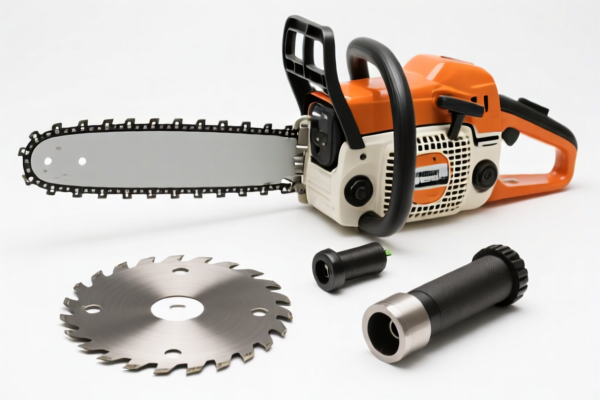
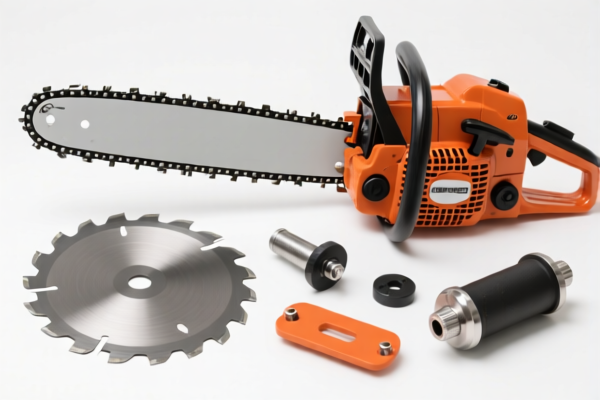
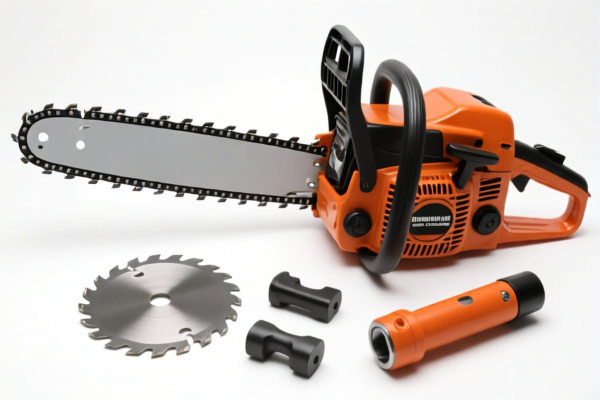
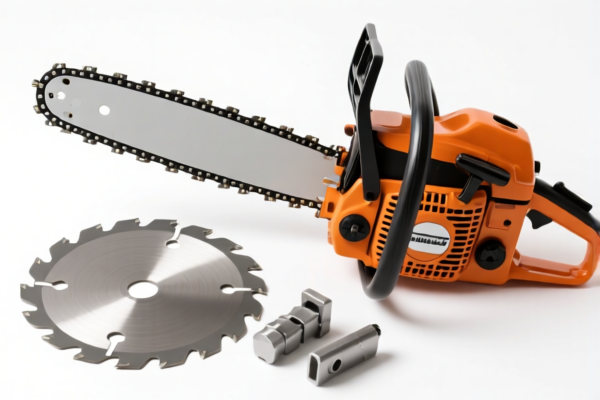
AI Analysis
🪚 Chainsaw Sharpening Kit (Chain Maintenance & Accessories)
🌐 HS Code Reference & Customs Clearance Guide | 2026 Latest Tariff Analysis | Professional Clearance Strategy
📌 I. Product Definition & Classification: Do You Know Your "Chainsaw Parts"?
A Chainsaw Sharpening Kit typically includes files, guide rods, dressing stones, and sometimes specific wrenches. In international trade, the classification depends heavily on the primary material, specific function, and whether it is a dedicated part for a power tool or a generic hand tool accessory.
⚠️ Key Distinction Point:
- If the kit contains dedicated mechanical parts for a chainsaw (e.g., specific sprockets, guide rails) or is marketed exclusively as a "Chainsaw Part" → It falls under Chainsaw Accessories (8467).
- If the kit consists of generic metal files, stones, or blades used for sharpening → It falls under Hand Tools/Metalwork (8202/8205).
- If the kit is a mixed bag of general tool accessories without a specific machine function → It may fall under a Fallback/Other Category (8467.99 or 8205.59).
📦 II. HS Code Classification Details (2026 Latest Tariff Authority Comparison)
| HS Code | Product Description | Application Scenario | Material/Attribute | Tax Rate |
|---|---|---|---|---|
8467.91.01.00 |
Chainsaw Parts/Accessories (Dedicated to Chainsaws) |
Specific replacement parts, guide bars, or kits explicitly labeled as "Chainsaw Parts" | No material conflict; dedicated power tool part | 17.5% |
8202.40.60.30 |
Chainsaw Blades & Related Parts (Metal Cutting Tools) |
Chainsaw chains (the cutting teeth themselves) or specialized cutting segments | Metal/Cutting Tool Attribute | 35.0% |
8467.99.01.90 |
Hand Tool Accessories/Tool Kits (Fallback Category) |
General accessory kits that don't fit specific power tool subheadings | "Other" parts/accessories for hand/power tools | 35.0% |
8205.59.55.10 |
Metal Hand Tool Spares (With Cutting Edge) |
Files, rasps, or sharpening stones made of iron/steel | Iron or Steel; Has a cutting/sharpening edge | 40.3% |
8205.59.55.05 |
Sharpening Tools (Hand Tool Fallback) |
General sharpening stones or files for hand tools | Iron or Steel; Sharpening attribute | 40.3% |
🔍 Key Reminder:
-8467.91.01.00is the most favorable if the product is strictly defined as a "Chainsaw Part" (e.g., a specific guide bar or chain guide) and not a generic file.
- If the "Kit" is primarily files and stones (generic tools), customs will likely classify it under 8205, leading to a 40.3% tax rate.
-8202.40.60.30applies specifically to the cutting chain/blade itself, not necessarily the sharpening file, unless the kit is sold only as replacement blades.
💰 III. 2026 Latest Tariff Rate Breakdown (Including Surcharges & Policy Add-ons)
✅ Applicable Country: United States (US)
✅ Origin: China (CN)
✅ Effective Time: November 10, 2025 onwards (including subsequent imports)
🎯 1. 8467.91.01.00 —— Chainsaw Parts (Lowest Risk/Lowest Tax)
| Item | Content |
|---|---|
| Base Tariff | 0% (ad valorem) |
| USITC Surcharge (Section 301) | +7.5% |
| IEEPA Surcharge (Section 122/Emergency) | +10% |
| Total Tax Rate | 17.5% |
| Tax Calculation | CIF Value × 17.5% |
| De Minimis Eligibility | ❌ Not Eligible (denied_de_minimis) |
| Legal Basis Path | IEEPA:9903.01.24 → USITC:8467.91.01.00 → FOOTNOTE:9903.88.01 |
📌 Explanation:
- This is the preferred classification for "Chainsaw Parts" because the base rate is 0%, and the surcharges are lower than other categories.
- Crucial: The product description must clearly state "Chainsaw Parts" or "Chainsaw Accessory." If described as "Sharpening File," it may be reclassified to 8205.
🎯 2. 8202.40.60.30 & 8467.99.01.90 —— Intermediate Category
| Item | Content |
|---|---|
| Base Tariff | 0% |
| USITC Surcharge | +25% |
| IEEPA Surcharge | +10% |
| Total Tax Rate | 35.0% |
| Tax Calculation | CIF × 35% |
| De Minimis Eligibility | ❌ Not Eligible |
| Legal Basis Path | IEEPA:9901.25 → USITC:8202.40.60.30 / 8467.99.01.90 |
📌 Note:
- Applies if the item is viewed as a cutting tool component (8202) or a generic tool kit (8467.99).
- 35% is significantly higher than the 17.5% for dedicated chainsaw parts. Avoid this classification if possible by providing clear "Chainsaw Part" documentation.
🎯 3. 8205.59.55.10 & 8205.59.55.05 —— High-Risk Category (Metal Files/Stones)
| Item | Content |
|---|---|
| Base Tariff | 5.3% |
| USITC Surcharge | +25% |
| IEEPA Surcharge | +10% |
| Total Tax Rate | 40.3% |
| Tax Calculation | CIF × 40.3% |
| De Minimis Eligibility | ❌ Not Eligible |
| Legal Basis Path | IEEPA:9903.01.25 → USITC:8205.59.55.10 |
📌 Warning:
- If the kit is described as "Files," "Rasps," or "Sharpening Stones," customs will likely apply 8205.
- The 5.3% base tariff makes the total cost highest.
- Even if marketed for chainsaws, if the primary component is a generic steel file, it may be misclassified here.
🛠️ IV. Customs Clearance Practical Advice (Battle-Tested Pitfall Avoidance)
✅ 1. Required Documentation Checklist (Non-Negotiable)
| Document | Mandatory? | Explanation |
|---|---|---|
| ✅ Product Spec Sheet | ✔️ | Must list contents: "1x Guide Bar, 1x Chain" vs. "1x File, 1x Stone." |
| ✅ Clear Product Name | ✔️ | Use "Chainsaw Parts" or "Chainsaw Accessory" instead of generic "Sharpening Tool." |
| ✅ Material Composition | ✔️ | Specify if it is a steel file (8205) or a proprietary chainsaw part (8467). |
| ✅ Usage Declaration | ✔️ | "For use exclusively with Model XYZ Chainsaw" supports 8467.91. |
| ✅ Commercial Invoice | ✔️ | Must match the HS Code exactly. Do not leave blank. |
| ✅ Packing List | ✔️ | Show if items are bundled as a "Kit" or separate. Bundled kits are harder to classify as dedicated parts. |
✅ 2. Declaration Strategy (The Golden Rule)
🔥 “Declare Parts, Not Files; Claim 17.5%, Not 40.3%!”
| Scenario | Correct Declaration | Wrong Declaration |
|---|---|---|
| Dedicated Guide Bar/Chain | HS 8467.91.01.00 "Chainsaw Part" |
"Metal Saw Blade" → 35% |
| Mixed Kit (Files + Parts) | HS 8467.91.01.00 (If primary function is part) |
"Sharpening Kit" → 40.3% |
| Only Files/Stones | HS 8205.59.55.10 ("Steel Sharpening File") |
"Chainsaw Accessory" → Risk of Re-classification & Penalty |
| Generic Tool Set | HS 8467.99.01.90 ("Hand Tool Accessory Kit") |
N/A |
⚠️ Critical Tip:
If you sell a "Sharpening Kit" containing only files and stones, you cannot declare it as 8467.91.01.00 without significant risk of audit. In this case, the 40.3% rate is unavoidable. To mitigate, ensure the invoice highlights any proprietary non-standard tools that might argue for a specific tool accessory classification.
✅ 3. Special Case Handling
| Situation | Handling Advice |
|---|---|
| OEM Custom Kits | Provide a breakdown: "60% Parts, 40% Files." If parts dominate, argue for 8467.91. |
| Electronic Sharpeners | If the kit includes a battery-powered grinder, it falls under 8467.89 (Power Tool Parts), potentially avoiding 8205. |
| Bundled with Chainsaw | If shipped with the chainsaw, declare as 8467.89.10.00 (Chainsaw itself) or parts. Never split if not necessary. |
| Origin Marking | Ensure "Made in China" is clearly marked. Any ambiguity can trigger higher scrutiny on surcharges. |
🌍 V. Global Market Comparison (2026 Latest)
| Country/Region | Recommended HS Code | Tariff (China Origin) | Certification | Notes |
|---|---|---|---|---|
| 🇺🇸 USA | 8467.91.01.00 |
17.5% | None specific | Best outcome for "Parts." Avoid 8205. |
| 🇨🇳 China | 8467.91.01.00 |
0% - 5% | CCC (if power tool) | Domestic trade may differ. |
| 🇪🇺 EU | 8467.91.01.00 |
2.7% | CE (if power tool parts) | No Section 301/IEEPA equivalent. |
| 🇨🇦 Canada | 8467.91.01.00 |
0% (CUSMA) | None | Preferential if Canadian content. |
| 🇲🇽 Mexico | 8467.91.01.00 |
0% (USMCA) | None | Check local rules. |
📌 Conclusion:
- USA is the most critical market due to the Section 301 and IEEPA surcharges.
- Misclassification from 8467 (17.5%) to 8205 (40.3%) results in a 22.8% cost increase.
- Strategy: If the kit contains any proprietary or specific chainsaw component, label it as "Chainsaw Parts" to secure the 17.5% rate. If it is purely generic files, prepare for 40.3%.
📌 VI. Common Mistakes & Pitfalls (Blood-Teaching Lessons)
❌ Mistake 1: Labeling a "File Kit" as "Chainsaw Part"
👉 Consequence: Customs audit, reclassification to 8205, back-tariff of 22.8% + penalties.
👉 Fix: Be honest. If it's just a file, declare as 8205.59.55.10.
❌ Mistake 2: Splitting "Guide Bar" and "Chain" into different packages with different HS Codes
👉 Consequence: Administrative delays, potential error in tax calculation.
👉 Fix: Keep compatible parts together and declare as a unified "Chainsaw Assembly/Part."
❌ Mistake 3: Using "Sharpening Tool" as the primary description
👉 Consequence: Triggers 8205 classification (40.3%).
👉 Fix: Use "Chainsaw Maintenance Kit" or "Chainsaw Replacement Parts" in the commercial invoice, provided the items justify it.
✅ Correct Approach:
"Chainsaw Replacement Guide Bar & Sprocket Kit, Model XYZ, For Use with [Brand] Chainsaws. Made of Steel. HS 8467.91.01.00."
🎯 VII. Conclusion: Professional Declaration Saves Money!
🎯 Remember the Rule:
🔹 "Parts = 17.5% | Files = 40.3% | Be Specific or Pay More!"
🔹 "If it’s a generic file, don’t fake it as a part. Risk is too high."
🔹 "HS Code determines your profit margin. Choose wisely."
📌 Pro Tip:
If your kit contains proprietary tools (e.g., a special gauge made specifically for your brand), highlight this in the technical specs to argue for 8467.99 (Tool Accessory) instead of generic 8205 (Hand Tools), though 8467.91 remains the gold standard if parts are involved.
📣 Immediate Action:
📞 Contact a Customs Broker + Provide Detailed Product Photos + Request Advance Ruling for large shipments.
🚀 Ensure your commercial invoice uses "Chainsaw Parts" if applicable to lock in the 17.5% rate!
✨ Professional Clearance Starts with Accurate Classification!
💼 Every 1% of Tax Saved is 1% of Profit Earned!
Customer Reviews
About HS Code Classification
The Harmonized System (HS) is an internationally standardized nomenclature developed by the World Customs Organization (WCO) to classify traded products. Over 200 countries use the HS system as the basis for customs tariffs, trade statistics, and import/export regulations.
Each HS code follows a hierarchical structure:
- Chapter (2 digits) — Broad category of goods (e.g., Chapter 84: Machinery and Mechanical Appliances)
- Heading (4 digits) — More specific grouping within the chapter
- Subheading (6 digits) — Internationally standardized breakdown, used by all WCO member countries
- National subdivisions (8-10 digits) — Country-specific extensions for further classification, such as US HTSUS 10-digit codes
Correct HS code classification is essential for smooth customs clearance, accurate duty payment, and compliance with trade regulations. Misclassification can lead to customs delays, overpayment of duties, or penalties.
When importing from CN to US, the applicable tariff rates may include:
- Most-Favored-Nation (MFN) rate — The standard duty rate applied to WTO members
- General rate — Applied to countries without trade agreements
- Trade remedy duties — Additional tariffs such as Section 301 (anti-dumping), Section 232 (national security), or countervailing duties
The information provided on this page is for reference purposes only. For official classification, please consult with your local customs authority or a licensed customs broker.