Chair Cover
CN → US| HS Code | Tariff Rate | Origin | Destination | Doc |
|---|---|---|---|---|
| 6304920000 | 23.8% | CN | US | Official Doc |
| 6304910170 | 23.3% | CN | US | Official Doc |
| 6304996040 | 20.7% | CN | US | Official Doc |
| 3926305000 | 22.8% | CN | US | Official Doc |
| 6304910170 | 23.3% | CN | US | Official Doc |
Product Images
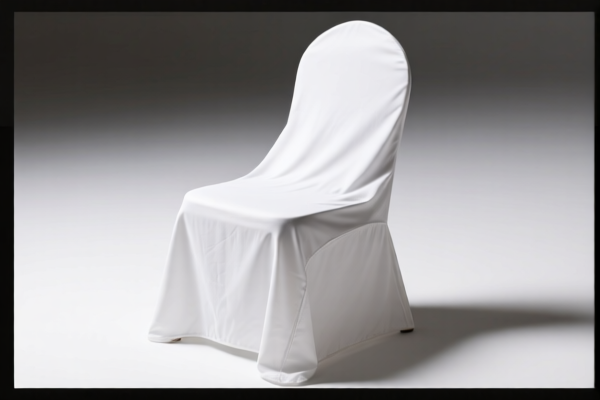
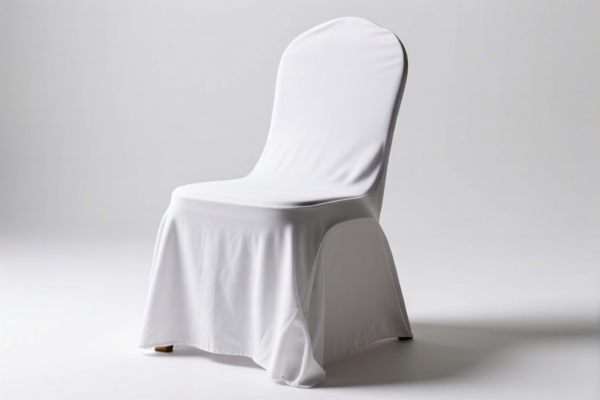
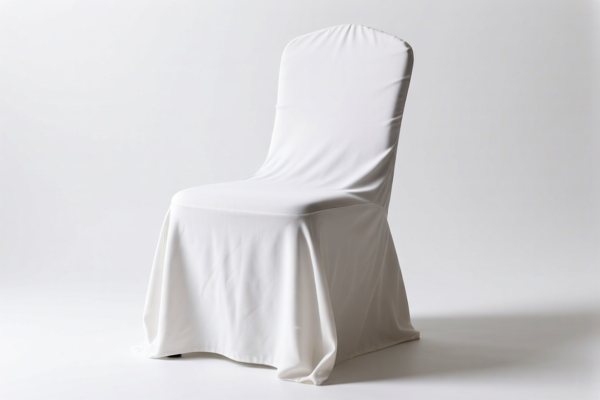

AI Analysis
🪑 Chair Covers & Tablecloths: Navigating US Customs & Tariffs (2026 Guide)
🌐 HS Code Reference & Clearance Strategy | 2026 Latest Tariff Analysis | Professional Clearance Guide
📌 I. Product Definition: What Exactly Is a "Chair Cover"?
Chair covers, often bundled with tablecloths or used as standalone furniture accessories, fall under the category of Household Textiles or Furniture Accessories. In international trade, their classification depends heavily on two factors:
1. Material Composition: Is it fabric (cotton, polyester, linen) or plastic (vinyl, PVC)?
2. Construction Method: Is it knitted/hooked (like a sweater) or woven/non-knitted (like a fitted sheet)?
⚠️ Key Distinction:
- Fabric Covers (Non-knitted): Usually归类 under Chapter 63 (Other made-up textile articles).
- Fabric Covers (Knitted/Hooked): Usually归类 under Chapter 63 but different subheadings due to construction.
- Plastic Covers: Classified under Chapter 39 (Articles of plastics).
📦 II. HS Code Classification Matrix (Based on Provided Data)
Based on the specific data provided in your dataset, here are the four potential HS Codes and their logical justifications:
| HS Code | Product Description | Logical Basis for Classification | Total Tax Rate |
|---|---|---|---|
| 6304.92.00.00 | Table/Chair Sets (Non-Knitted) | Summary: Matches use (furniture accessory) and form (non-knitted, inferred as fabric based on "other" rules). Material Logic: Since the name doesn't specify material, it is reasonably inferred to contain cotton or common textiles, fitting the "other" textile category without conflicting with wool/silk exclusions. |
23.8% |
| 6304.91.01.70 | Knitted/Hooked Chair/Table Covers | Summary: Matches use (chair/table cover) and form (inferred as knitted or hooked). Logic: Fits the "other" category's fallback logic for knitted/hooked household textiles. No material conflict noted. |
23.3% |
| 6304.99.60.40 | Stool/Chair Covers (Other Textiles) | Summary: Form matches (stool/chair cover is a household textile). Material Logic: Inferred as non-knitted/hooked textile material. No obvious conflict with wool, synthetic fibers, or silk specified in the classification notes. |
20.7% |
| 3926.30.50.00 | Plastic Chair/Stool Covers | Summary: Matches use (furniture accessory). Material Logic: If the cover is made of plastic (e.g., vinyl, PVC, plastic mesh), it falls under "Other plastic articles" or "furniture fittings." This is a fallback for non-textile covers. |
22.8% |
🔍 Critical Observation:
- Textile vs. Plastic: The biggest risk is misclassifying a vinyl/plastic cover as textile (63xx) or vice versa (39xx).
- Knitted vs. Non-Knitted: For textiles, the construction method (knitted vs. woven) significantly impacts the HS Code subheading and tax rate.
💰 III. 2026 Tariff Rate Breakdown (Detailed Analysis)
✅ Applicable Country: USA (US)
✅ Origin: China (CN) (Implied by "122 Clause" and specific tax details)
✅ Effective Date: Current 2026 Tariff Structure
🎯 1. 6304.92.00.00 — Non-Knitted Chair/Table Sets (Fabric)
| Item | Detail |
|---|---|
| Base Tariff | 6.3% (Ad Valorem) |
| Additional Tariff (Section 301) | +7.5% |
| 122 Clause Tariff | +10% |
| Total Effective Rate | 23.8% |
| Tax Calculation | CIF Value × 23.8% |
| De Minimis Eligibility | ❌ No (High tariff rate usually excludes Section 321 eligibility for valuable shipments, check specific value limits) |
| Legal Path | USITC:6304.92.00.00 → FOOTNOTE:Section301 + 122Clause |
📌 Explanation:
- This is the standard rate for woven/non-knitted textile furniture covers.
- The 10% "122 Clause" refers to specific US trade measures (often related to specific textile/furniture imports from China).
- Total 23.8% is moderate for textiles but significant for low-margin items.
🎯 2. 6304.91.01.70 — Knitted/Hooked Chair Covers
| Item | Detail |
|---|---|
| Base Tariff | 5.8% (Ad Valorem) |
| Additional Tariff (Section 301) | +7.5% |
| 122 Clause Tariff | +10% |
| Total Effective Rate | 23.3% |
| Tax Calculation | CIF Value × 23.3% |
| De Minimis Eligibility | ❌ No |
| Legal Path | USITC:6304.91.01.70 → FOOTNOTE:Section301 + 122Clause |
📌 Explanation:
- Slightly 0.5% lower than non-knitted items due to a lower base rate (5.8% vs 6.3%).
- Applies to sweater-like chair covers, crochet covers, or knitted mesh covers.
🎯 3. 6304.99.60.40 — Other Textile Chair/Stool Covers
| Item | Detail |
|---|---|
| Base Tariff | 3.2% (Ad Valorem) |
| Additional Tariff (Section 301) | +7.5% |
| 122 Clause Tariff | +10% |
| Total Effective Rate | 20.7% |
| Tax Calculation | CIF Value × 20.7% |
| De Minimis Eligibility | ❌ No |
| Legal Path | USITC:6304.99.60.40 → FOOTNOTE:Section301 + 122Clause |
📌 Explanation:
- Lowest textile rate in the dataset (20.7%).
- This "catch-all" for other textiles (non-woven, non-knitted, not elsewhere specified) offers the best tax efficiency if your product fits this "other" category.
- Caution: Ensure it doesn't fit better into 6304.92 (sets) or 6304.91 (knitted).
🎯 4. 3926.30.50.00 — Plastic Chair Covers
| Item | Detail |
|---|---|
| Base Tariff | 5.3% (Ad Valorem) |
| Additional Tariff (Section 301) | +7.5% |
| 122 Clause Tariff | +10% |
| Total Effective Rate | 22.8% |
| Tax Calculation | CIF Value × 22.8% |
| De Minimis Eligibility | ❌ No |
| Legal Path | USITC:3926.30.50.00 → FOOTNOTE:Section301 + 122Clause |
📌 Explanation:
- Applies if the cover is made of plastic (e.g., clear vinyl, plastic mesh).
- Rate (22.8%) is between the knitted textile (23.3%) and the "other textile" (20.7%).
- Misclassification Risk: If you ship a vinyl cover but declare it as textile, you face penalty risks. If you ship a cotton cover but declare as plastic, you underpay duty and face back-tariffs.
🛠️ IV. Customs Clearance Practical Advice
✅ 1. Documentation Checklist (Mandatory)
| Document | Required | Purpose |
|---|---|---|
| Product Specification Sheet | ✅ Yes | Must detail Material Composition (% Cotton, % Polyester, etc.) and Construction (Woven vs. Knitted). |
| Product Photos | ✅ Yes | Clear images of the item, tags, and labels showing material content. |
| Commercial Invoice | ✅ Yes | Must clearly state: "Chair Cover, Made of [Material], [Knitted/Non-Knitted]". Avoid vague terms like "Furniture Accessory" only. |
| Packing List | ✅ Yes | Detail quantities, weights, and dimensions. |
| Material Test Report | ❓ Optional but Recommended | If the material is ambiguous, a lab report can prove it is NOT wool/silk, supporting the "other textile" classification. |
✅ 2. Classification Strategy & Pitfalls
| Scenario | Correct HS Code | Risk of Error |
|---|---|---|
| Cotton Chair Cover, Woven | 6304.92.00.00 (23.8%) |
⚠️ Medium: Ensure it's not part of a "set" with tablecloths which might change classification. |
| Knitted Acrylic Cover | 6304.91.01.70 (23.3%) |
✅ Low: Clear construction method. |
| Mixed Fabric Cover (e.g., Polyester Blend) | 6304.99.60.40 (20.7%) |
⚠️ High: Must justify why it doesn't fit 6304.92 or 6304.91. |
| Plastic/Vinyl Cover | 3926.30.50.00 (22.8%) |
✅ Low: Material is obvious. |
| "Chair Set" (Cover + Tablecloth) | 6304.92.00.00 (23.8%) |
⚠️ High: Do NOT split the shipment. The whole set must be declared under the primary item's code. |
✅ 3. Pro-Tips for Cost Savings
- Maximize "Other" Textile Classification: If your fabric is a non-standard blend that doesn't clearly fall into "Woven Sets" or "Knitted," argue for
6304.99.60.40(20.7%) vs6304.92.00.00(23.8%). The 3.1% difference adds up on large volumes. - Avoid "Set" Language if Possible: If you ship chair covers alone, declare them as individual items. If shipped with tablecloths, they become a "set," potentially forcing the higher
6304.92.00.00rate even if the covers themselves might qualify for a lower rate. - Material Declaration is Key: Always declare the exact material percentage. Vague terms like "Textile" can trigger Customs holds for further inspection.
🌍 V. Global Market Context (2026)
| Market | Recommended HS Code | Est. Duty (China Origin) | Notes |
|---|---|---|---|
| 🇺🇸 USA | See Table Above | 20.7% - 23.8% | Includes 301 Tariffs + 122 Clause. High scrutiny on textile/furniture imports. |
| 🇨🇳 China | 6304.99.60.40 | ~5-10% | Lower base rates. |
| 🇪🇺 EU | 6304.99.60.40 | 0-6% | Generally lower duties for textiles. |
| 🇬🇧 UK | 6304.99.60.40 | 0-6% | Post-Brexit tariffs may vary. |
📌 Note: The data provided focuses on US Import Duties with specific US trade clauses (122 Clause). Always verify with local customs brokers for other countries.
📌 VI. Common Errors & How to Avoid Them
❌ Error 1: Misidentifying Knitted vs. Woven
👉 Consequence: Wrong HS Code → Penalty & Back Duties.
✅ Fix: Inspect the fabric texture. If it looks like a sweater (loops), it's knitted (6304.91). If it looks like fabric (woven threads), it's non-knitted (6304.92 or 99).
❌ Error 2: Ignoring the "122 Clause"
👉 Consequence: Underpaying taxes by 10%.
✅ Fix: Ensure your tariff calculation includes the +10% for all eligible textile/plastic furniture imports from China.
❌ Error 3: Vague Invoice Description
👉 Consequence: Customs detention for "Insufficient Information."
✅ Fix: Use specific descriptions: "Chair Cover, 100% Polyester, Woven, Non-Knitted, Household Use."
🎯 VII. Conclusion: Smart Classification Saves Money
🎯 Key Takeaway:
- Cheapest Option: 6304.99.60.40 (20.7%) — if your product qualifies as "Other Textiles."
- Most Common: 6304.92.00.00 (23.8%) — for standard woven chair/table sets.
- Plastic Alternative: 3926.30.50.00 (22.8%) — if using vinyl/plastic.
💡 Pro Tip:
"Material + Construction = Correct HS Code."
Don't guess. Verify the fabric type and weave. A 3% difference in duty can be the difference between profit and loss in low-margin furniture accessory trades.
📣 Action Item:
1. Inspect your samples for material and construction.
2. Update your invoice with precise material percentages.
3. Apply the correct HS Code from the table above.
4. Calculate total landed cost including the 20.7%-23.8% duty + shipping.
✨ Professional clearance starts with accurate classification!
💼 Don't let misclassification cost you 24% of your product value!
Customer Reviews
About HS Code Classification
The Harmonized System (HS) is an internationally standardized nomenclature developed by the World Customs Organization (WCO) to classify traded products. Over 200 countries use the HS system as the basis for customs tariffs, trade statistics, and import/export regulations.
Each HS code follows a hierarchical structure:
- Chapter (2 digits) — Broad category of goods (e.g., Chapter 84: Machinery and Mechanical Appliances)
- Heading (4 digits) — More specific grouping within the chapter
- Subheading (6 digits) — Internationally standardized breakdown, used by all WCO member countries
- National subdivisions (8-10 digits) — Country-specific extensions for further classification, such as US HTSUS 10-digit codes
Correct HS code classification is essential for smooth customs clearance, accurate duty payment, and compliance with trade regulations. Misclassification can lead to customs delays, overpayment of duties, or penalties.
When importing from CN to US, the applicable tariff rates may include:
- Most-Favored-Nation (MFN) rate — The standard duty rate applied to WTO members
- General rate — Applied to countries without trade agreements
- Trade remedy duties — Additional tariffs such as Section 301 (anti-dumping), Section 232 (national security), or countervailing duties
The information provided on this page is for reference purposes only. For official classification, please consult with your local customs authority or a licensed customs broker.