Chair Leg Cap
CN → US| HS Code | Tariff Rate | Origin | Destination | Doc |
|---|---|---|---|---|
| 4016990500 | 20.9% | CN | US | Official Doc |
| 4016996050 | 37.5% | CN | US | Official Doc |
| 9404909670 | 17.3% | CN | US | Official Doc |
| 9404902060 | 23.5% | CN | US | Official Doc |
| 4016990500 | 20.9% | CN | US | Official Doc |
Product Images
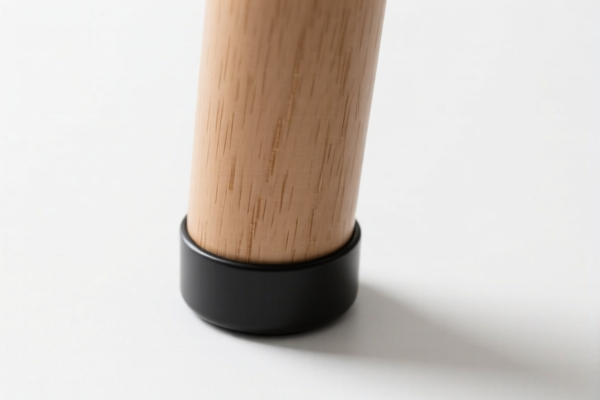
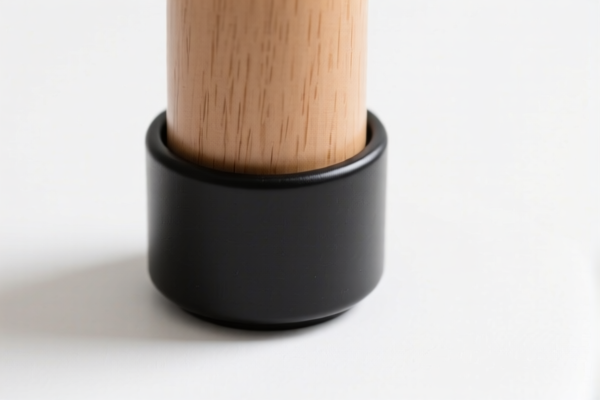
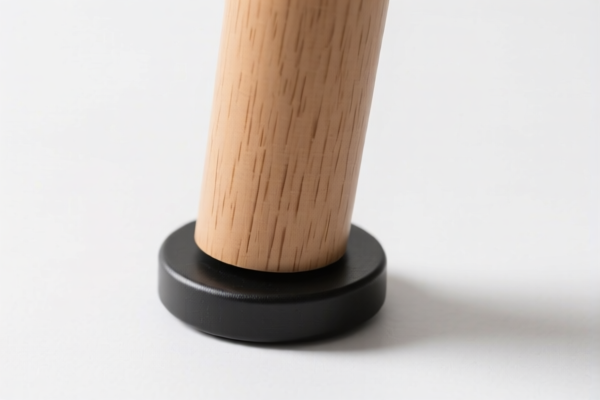
AI Analysis
🪑 Chair Leg Caps & Table Foot Pads (Protective Rubber Accessories)
🌐 HS Code Reference & Customs Clearance Guide | 2026 Latest Tariff Analysis | Strategic Clearance Strategy
📌 I. Product Definition & Classification: Do You Truly Understand "Leg Caps"?
Chair leg caps and table foot pads are small but critical protective accessories used in furniture. In international trade, they are primarily classified based on material composition and functional form. However, for products originating from China and imported into the US, the classification dramatically affects the tariff burden due to specific trade restrictions.
Based on the provided data, there are four potential HS Codes, falling into two main categories: 1. Rubber Products (Section 40): Classified as "Other vulcanized rubber articles." 2. Bedding/Furniture Accessories (Section 94): Classified as "Other parts of furniture" or "Cushions/Supports."
⚠️ Key Distinction Point:
- If the product is strictly rubber and serves as a plug/pad/block, it may fall under 4016 (Vulcanized Rubber).
- If the product is considered a furniture part or upholstery support, it may fall under 9404 (Furniture Parts/Bedding).
- Crucial Warning: The "Section 301" and "IEEPA" additional tariffs vary significantly between these codes, leading to tax differences ranging from 17.3% to 37.5%.
📦 II. HS Code Classification Details (2026 Latest Tariff Authority Comparison)
| HS Code | Product Description | Application Scenario | Total Tax Rate (US/CN) |
|---|---|---|---|
4016.99.05.00 |
Other vulcanized rubber articles; Other (Household items accessories) | Table leg caps, rubber protectors for household items | 20.9% |
4016.99.60.50 |
Other vulcanized rubber articles; Other (Rubber gaskets/blocks) | Chair leg caps, rubber pads/blocks | 37.5% |
9404.90.96.70 |
Other bedding furnishings; Other (Support fillings for cushions/bedding) | Chair/table leg pads classified as furniture/cushion supports | 17.3% |
9404.90.20.60 |
Other fillings or similar stuffed materials; Other (Furniture accessories) | Leg pads classified as furniture attachments/fillings | 23.5% |
🔍 Important Note:
-4016.99.60.50carries the highest tax burden (37.5%). Avoid this if possible unless the product is strictly defined as a "rubber block/gasket." -9404.90.96.70offers the lowest tax burden (17.3%). This is often the most cost-effective classification for chair leg caps if they can be described as furniture parts/cushion supports. -4016.99.05.00is a middle-ground option for table leg caps specifically, at 20.9%.
💰 III. 2026 Latest Tariff Rate Breakdown (Including Additional Taxes & Policies)
✅ Applicable Country: United States (US)
✅ Origin: China (CN)
✅ Effective Date: From November 10, 2025 (Including subsequent imports)
🎯 1. 4016.99.60.50 —— Other Vulcanized Rubber Articles (Highest Risk)
| Item | Content |
|---|---|
| Base Duty | 2.5% (ad valorem) |
| Section 301 Additional Tariff | +25.0% |
| IEEPA Additional Tariff (Section 122/301 related) | +10.0% |
| Total Tax Rate | 37.5% |
| Tax Calculation | CIF Value × 37.5% |
| De Minimis Eligibility | ❌ Not Eligible (High risk of seizure or high duty assessment) |
| Legal Basis Path | USITC:4016.99.60.50 → Footnote:301/122 → IEEPA:9903.01.24 |
📌 Explanation:
- The 25% is the standard Section 301 tariff for Chinese rubber goods in this subheading. - The 10% is an additional punitive tariff (often referred to as Section 122 or specific IEEPA measures). - Total 37.5% makes this the most expensive option. Only use if the product is indisputably a "rubber block/gasket" and cannot be classified as a furniture part.
🎯 2. 9404.90.96.70 —— Other Bedding Furnishings / Furniture Supports (Optimal Choice?)
| Item | Content |
|---|---|
| Base Duty | 7.3% (ad valorem) |
| Section 301 Additional Tariff | +0.0% |
| IEEPA Additional Tariff | +10.0% |
| Total Tax Rate | 17.3% |
| Tax Calculation | CIF Value × 17.3% |
| De Minimis Eligibility | ❌ Not Eligible (Check specific de minimis rules for HS 9404) |
| Legal Basis Path | USITC:9404.90.96.70 → IEEPA:9903.01.24 |
📌 Explanation:
- Base Duty 7.3%: Standard duty for furniture parts/bedding accessories. - Section 301 0%: Critical Advantage! Many furniture parts under 9404 may be exempt from the 25% Section 301 tariff, depending on specific exclusions or HTSUS annotations. - IEEPA 10%: The additional 10% tariff still applies. - Total 17.3% is significantly lower than the rubber classification. This is often the recommended classification for chair leg caps if they are viewed as "furniture accessories" or "cushion supports."
🎯 3. 9404.90.20.60 —— Other Fillings / Furniture Attachments
| Item | Content |
|---|---|
| Base Duty | 6.0% (ad valorem) |
| Section 301 Additional Tariff | +7.5% |
| IEEPA Additional Tariff | +10.0% |
| Total Tax Rate | 23.5% |
| Tax Calculation | CIF Value × 23.5% |
| De Minimis Eligibility | ❌ Not Eligible |
| Legal Basis Path | USITC:9404.90.20.60 → Footnote:301/122 → IEEPA:9903.01.24 |
📌 Explanation:
- Base Duty 6.0%: Lower base than the other 9404 code. - Section 301 7.5%: Unlike9404.90.96.70, this subheading attracts a 7.5% additional tariff. - IEEPA 10%: Applies. - Total 23.5%: Higher than9404.90.96.70but lower than rubber codes.
🎯 4. 4016.99.05.00 —— Other Vulcanized Rubber Articles (Household Items)
| Item | Content |
|---|---|
| Base Duty | 3.4% (ad valorem) |
| Section 301 Additional Tariff | +7.5% |
| IEEPA Additional Tariff | +10.0% |
| Total Tax Rate | 20.9% |
| Tax Calculation | CIF Value × 20.9% |
| De Minimis Eligibility | ❌ Not Eligible |
| Legal Basis Path | USITC:4016.99.05.00 → Footnote:301/122 → IEEPA:9903.01.24 |
📌 Explanation:
- Base Duty 3.4%: Very low base duty. - Section 301 7.5%: Lower than the standard 25%. - IEEPA 10%: Applies. - Total 20.9%: A moderate option. Suitable for table leg caps specifically described as "household item accessories."
🛠️ IV. Customs Clearance Practical Advice (Battle-Tested Pitfall Avoidance)
✅ 1. Preparation Checklist (Mandatory)
| Document | Required | Explanation |
|---|---|---|
| ✅ Product Specifications | ✔️ | Material (100% Rubber? TPE? Silicone?), Hardness (Shore A), Dimensions |
| ✅ Product Photos | ✔️ | Clear images showing the item on a chair leg vs. standalone. |
| ✅ Function Description | ✔️ | "Protective cap to prevent floor scratching" vs. "Rubber block for machinery." |
| ✅ Invoice | ✔️ | Must clearly state "Chair Leg Cap" or "Table Foot Pad." Avoid vague terms like "Rubber Part." |
| ✅ Material Declaration | ✔️ | Explicitly state "Vulcanized Rubber" or "Polymer Material" to support HS Code selection. |
| ✅ Packing List | ✔️ | Ensure quantities match invoice. |
✅ 2. Declaration Strategy (Key Mnemonics)
🔥 “Furniture Part for Low Tax, Rubber Block for High Tax!”
| Scenario | Recommended HS Code | Tax Rate | Why? |
|---|---|---|---|
| Chair/Table Leg Caps (General) | 9404.90.96.70 |
17.3% | Classified as furniture part/cushion support. Lowest Tax. |
| Table Leg Caps (Specific) | 4016.99.05.00 |
20.9% | Classified as household rubber accessory. |
| Pure Rubber Blocks/Gaskets | 4016.99.60.50 |
37.5% | Classified as general rubber article. Highest Tax. Avoid if possible. |
| Mixed Materials / Fillings | 9404.90.20.60 |
23.5% | If not purely rubber or not clearly furniture part. |
📌 Critical Advice:
- Avoid4016.99.60.50unless your product is literally a "rubber block" used in industrial machinery, not a "cap" for furniture. - Fight for9404.90.96.70by emphasizing the product's role as a furniture accessory or cushion/floor protector. Use terms like "Furniture Part," "Floor Protector," "Cushion Support."
✅ 3. Special Cases Handling
| Situation | Handling Advice |
|---|---|
| TPE/Soft Plastic Material | If not vulcanized rubber, it may fall under 3926 (Other plastic articles). Check for similar tariffs. |
| Mixed Packaging (Cap + Glue) | Declare as "Set" or separate items. Glue may have different duties. |
| Custom/Colored Caps | Ensure material composition is identical to the declared HS Code. Color does not change HS Code. |
| Sample Shipments | Even for samples, high tariffs apply. Ensure correct classification to avoid overpayment. |
🌍 V. Global Market Comparison (2026 Latest)
| Country/Region | Recommended HS Code | Tax Rate (China Origin) | Certification | Notes |
|---|---|---|---|---|
| 🇺🇸 USA | 9404.90.96.70 |
17.3% | None specific | Best option for China origin. |
| 🇺🇸 USA | 4016.99.60.50 |
37.5% | None specific | Avoid due to high tax. |
| 🇪🇺 EU | 4016.99.95 |
~4-6% | None specific | No Section 301/IEEPA taxes. |
| 🇨🇳 China | 4016.99.95 |
4-6% | None specific | Import duty into China. |
| 🇬🇧 UK | 4016.99.90 |
~3-5% | None specific | Post-Brexit tariffs. |
📌 Conclusion:
- The US market is the most complex due to Section 301 and IEEPA tariffs. -9404.90.96.70is the strategic winner for chair leg caps, offering a 17.3% total tax vs. 37.5% for rubber classifications. - EU/UK markets are much more favorable with no additional punitive tariffs.
📌 VI. Common Mistakes & Pitfalls (Lessons Learned)
❌ Mistake 1: Declaring Chair Leg Caps as 4016.99.60.50 (Rubber Blocks)
👉 Consequence: 37.5% tax instead of 17.3%. Losing $20.2 on every $100 of value!
❌ Mistake 2: Not declaring Material Composition
👉 Consequence: Customs may classify as "Miscellaneous Rubber" with higher duties or require additional testing.
❌ Mistake 3: Using "Rubber Pad" instead of "Furniture Accessory"
👉 Consequence: May push classification towards 4016 (Rubber) instead of 9404 (Furniture). Use "Furniture Part" in description.
❌ Mistake 4: Ignoring IEEPA 10% Tariff
👉 Consequence: Underestimating total cost. All these codes carry the 10% IEEPA tax.
✅ Correct Approach:
"Chair Leg Cap, TPE/Rubber, Protective, for Furniture, Model XYZ, 50mm Diameter, Floor Protector"
🎯 VII. Conclusion: Professional Declaration Saves Money!
🎯 Remember the Mnemonic:
🔹 "Furniture Part (9404) Wins! Rubber Block (4016) Loses! 17.3% vs 37.5%!"
🔹 "Always include IEEPA 10% in your cost calculation!"
🔹 "HS Code determines profit margin. Choose wisely."
📌 Pro Tip:
If your chair leg caps are made of TPE (Thermoplastic Elastomer) and not vulcanized rubber, they may qualify for 3926 (Plastic Articles), which might have different tax implications. Consult a customs broker to confirm material classification.
📣 Immediate Action:
📞 Contact a Professional Customs Broker
📝 Provide Product Photos + Material Specs
🚀 Request HS Code Pre-Ruling for9404.90.96.70
💡 Maximize Profit, Minimize Tax, Clear Customs Smoothly!
✨ Professional Clearance Starts with Precise Classification!
💼 Every Cent Counts in International Trade!
Customer Reviews
About HS Code Classification
The Harmonized System (HS) is an internationally standardized nomenclature developed by the World Customs Organization (WCO) to classify traded products. Over 200 countries use the HS system as the basis for customs tariffs, trade statistics, and import/export regulations.
Each HS code follows a hierarchical structure:
- Chapter (2 digits) — Broad category of goods (e.g., Chapter 84: Machinery and Mechanical Appliances)
- Heading (4 digits) — More specific grouping within the chapter
- Subheading (6 digits) — Internationally standardized breakdown, used by all WCO member countries
- National subdivisions (8-10 digits) — Country-specific extensions for further classification, such as US HTSUS 10-digit codes
Correct HS code classification is essential for smooth customs clearance, accurate duty payment, and compliance with trade regulations. Misclassification can lead to customs delays, overpayment of duties, or penalties.
When importing from CN to US, the applicable tariff rates may include:
- Most-Favored-Nation (MFN) rate — The standard duty rate applied to WTO members
- General rate — Applied to countries without trade agreements
- Trade remedy duties — Additional tariffs such as Section 301 (anti-dumping), Section 232 (national security), or countervailing duties
The information provided on this page is for reference purposes only. For official classification, please consult with your local customs authority or a licensed customs broker.