Chalcedony Stone Loose Beads
CN → US| HS Code | Tariff Rate | Origin | Destination | Doc |
|---|---|---|---|---|
| 7116203500 | 22.0% | CN | US | Official Doc |
Product Images


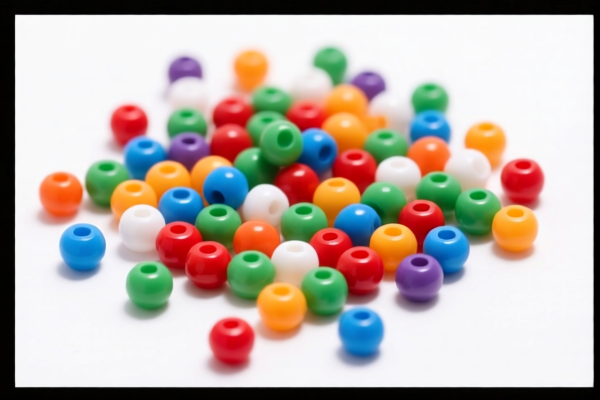

AI Analysis
🌿 chalcedony Stone Loose Beads (Chalcedony)
🌐 HS Code Reference & Customs Clearance Guide | 2026 Latest Tariff Analysis | Professional Clearance Strategy 📌 I. Product Definition & Classification: Do You Really Understand "Chalcedony Beads"?
Chalcedony is a microcrystalline variety of quartz, often used in jewelry making, crafting, and decorative arts. In international trade, it is classified under Chapter 71 (Natural or Cultured Pearls, Precious or Semi-Precious Stones). Specifically, loose beads made of chalcedony are considered semi-precious stones that are not rock crystal.
Key Distinction: * Loose Beads (Unstrung/Temporarily Strung): These are raw materials for jewelry manufacturing. They fall under 7116.20.30.00 or 7116.20.35.00 depending on the specific presentation (e.g., graded for transport). * Finished Jewelry: If the beads are already strung into necklaces, bracelets, or set in metal, they would fall under different headings (e.g., 7117.19). This guide focuses on loose beads as raw materials.
⚠️ Critical Point:
- Chalcedony is a semi-precious stone (not precious like diamond/ruby/gold).
- It is not rock crystal (clear quartz). Therefore, it falls under the "semiprecious stones (except rock crystal)" sub-category.
- The HS code 7116.20.35.00 specifically refers to "Graded semiprecious stones strung temporarily for convenience of transport," which is a common form for chalcedony beads.
📦 II. HS Code Classification Details (2026 Latest Tariff Authority Comparison)
| HS Code | Product Description | Application Scenario | Contains Precious Stones? |
|---|---|---|---|
7116.20.30.00 |
Articles of semiprecious stones (except rock crystal): Figurines | Carved statues, decorative figurines made of chalcedony | ❌ No (Semi-precious) |
7116.20.35.00 |
Graded semiprecious stones strung temporarily for convenience of transport | Loose chalcedony beads, graded by size/color, strung for shipping | ❌ No (Semi-precious) |
7116.10.00.00 |
Articles of natural or cultured pearls | Pearl necklaces, pendants | ✅ Yes (Pearls) |
7116.90.00.00 |
Other articles of precious or semiprecious stones | Other miscellaneous stone items not specified above | ❌ Depends |
🔍 Focus on
7116.20.35.00:
- This code is ideal for chalcedony loose beads because they are often "graded" (sorted by quality/size) and "strung temporarily" (on elastic or thread) to prevent tangling during transport.
- Even if not strung, they may still fall under 7116.20.30.00 as "other articles," but 7116.20.35.00 is more precise for prepared bead strings.
💰 III. 2026 Latest Tariff Rate Details (Detailed Tax Breakdown)
✅ Applicable Country: United States (US)
✅ Origin: China (CN)
✅ HS Code:7116.20.35.00
✅ Effective Date: 2026 Tariff Schedule
🎯 1. 7116.20.35.00 — Graded Semiprecious Stones (Chalcedony Beads)
| Item | Content |
|---|---|
| Base Tariff | 4.5% (Ad Valorem) |
| Additional Tariff (Section 301/Trade War) | +7.5% |
| Total Tax Rate | 12.0% |
| Tax Calculation | CIF Value × 12.0% |
| De Minimis Eligibility | ❌ No (Deny de minimis for goods under Section 301) |
| Legal Basis Path | HTSUS:7116.20.35.00 → Section 301: 7.5% Additional Duty |
📌 Explanation:
- Base Tariff (4.5%): This is the standard Most Favored Nation (MFN) duty rate for semi-precious stone articles not classified elsewhere.
- Additional Tariff (7.5%): Under U.S. Trade Policy (Section 301), many Chinese-origin goods face additional duties. For HS Code7116.20.35.00, the specific additional duty is 7.5%.
- Total Duty (12.0%): The sum of base and additional tariffs. This is a moderate-to-high rate compared to base tariffs, but significantly lower than the 45% applied to electronics.
- No De Minimis Exemption: Goods valued under $800 (Section 321) do not qualify for duty-free entry if they are subject to Section 301 tariffs. This is a critical compliance point for small packages.
🛠️ IV. Customs Clearance Practical Advice (Battle-Tested Pitfall Avoidance)
✅ 1. Required Documentation Checklist (Must-Haves)
| Document | Mandatory? | Description |
|---|---|---|
| ✅ Commercial Invoice | ✔️ | Must clearly state "Chalcedony Stone Loose Beads," grade, weight, and value. |
| ✅ Packing List | ✔️ | Detail the number of strands, beads per strand, and total weight. |
| ✅ Certificate of Origin | ✔️ | Proof of Chinese origin (if claiming preferential rates, though none apply here). |
| ✅ Product Photos | ✔️ | Show the beads in their temporary stringing form (if applicable). |
| ✅ Harmonized Tariff Schedule Reference | ✔️ | Cite 7116.20.35.00 and justify why it fits (e.g., "graded for transport"). |
✅ 2. Declaration Tips (Key Mnemonics)
🔥 "String for Transport, Grade for Quality, Don't Split!"
| Scenario | Correct Declaration | Wrong Approach |
|---|---|---|
| Beads on elastic thread | 7116.20.35.00 (Graded, temporarily strung) |
Declare as "Jewelry" → Wrong code, higher scrutiny |
| Beads in a bag (unstrung) | 7116.20.30.00 (Other articles) |
Declare as 7116.20.35.00 → Risk of misclassification |
| Finished Chalcedony Necklace | 7117.19.00.00 (Other jewelry) |
Declare as loose beads → Evading duty on finished goods |
| Mixed Stone Beads | Separate HS codes per stone type | Lump into one code → Customs delay, penalties |
📌 Note:
- If the beads are not strung and not prepared for immediate sale as jewelry strands, use7116.20.30.00.
- The 12.0% total duty applies regardless of whether they are strung or not, but the code precision affects customs examination.
✅ 3. Special Circumstances Handling
| Situation | Handling Advice |
|---|---|
| Small Package (<$800) | Do NOT rely on De Minimis. Section 301 tariffs apply. Declare and pay the 12% duty. |
| Mixed Stones | If chalcedony is mixed with other semi-precious stones, declare each type separately to avoid incorrect valuation. |
| Synthetic Chalcedony | If synthetic, the HS code may differ (Chapter 71 still applies, but sub-heading changes). Ensure you are declaring natural chalcedony. |
| Value Declaration | Ensure the declared value includes the cost of stringing if claimed under 7116.20.35.00. |
🌍 V. Global Market Customs Comparison (2026 Latest)
| Country/Region | Recommended HS Code | Duty Rate | Certification | Notes |
|---|---|---|---|---|
| 🇺🇸 USA | 7116.20.35.00 |
12.0% | None required | Section 301 applies. No de minimis. |
| 🇨🇳 China | 7116.20.35.00 |
~0-5% | None | Low import duty for raw materials. |
| 🇪🇺 EU | 7116.20.90 |
~2.7% | CE (if jewelry) | Lower duty than US. |
| 🇬🇧 UK | 7116.20.90 |
~2.5% | None | Post-Brexit tariffs may vary. |
| 🇦🇺 Australia | 7116.20.90 |
~5.0% | None | Standard GST applies. |
📌 Conclusion:
- The US has the highest duty (12.0%) for this product due to Section 301 tariffs.
- EU and UK offer lower duties (~2-3%), making them more cost-effective for export.
- No special certifications are required for raw stone beads, but accurate description is key.
📌 VI. Common Mistakes & Pitfalls (Blood & Tears Lessons)
❌ Mistake 1: Declaring Chalcedony Beads as "Jewelry" (7117)
👉 Consequence: Misclassification. If declared as jewelry, it might attract different duties or scrutiny. If declared as beads but actually jewelry, it’s fraud.
👉 Fix: Use 7116 for raw/semi-prepared beads.
❌ Mistake 2: Assuming De Minimis ($800) Exemption Applies
👉 Consequence: Package seized, penalties, and back payment of 12% duty + interest.
👉 Fix: Always declare Section 301 goods even if under $800.
❌ Mistake 3: Incorrectly Identifying Stone Type
👉 Consequence: If declared as "precious stone" (e.g., Ruby), duty rates change. Chalcedony is semi-precious.
👉 Fix: Confirm material composition. Chalcedony = Semi-precious Quartz.
❌ Mistake 4: Ignoring "Temporary Stringing"
👉 Consequence: If beads are strung but not "graded for transport," they may fall under 7116.20.30.00.
👉 Fix: Be consistent. If they are graded and strung, use 7116.20.35.00.
✅ Correct Declaration Example:
"Chalcedony Stone Loose Beads, Natural, Semi-Precious, Graded by Size, Temporarily Strung for Transport, HS Code 7116.20.35.00, Origin: China, Value: $X, Duty: 12.0%"
🎯 VII. Conclusion: Professional Declaration, Save Time & Money!
🎯 Remember Mnemonics:
🔹 "Semi-Precious Chalcedony, Code 7116.20.35.00, Total Duty 12%!"
🔹 "No De Minimis for Section 301, Declare All Packages!"
🔹 "Beads for Transport, Graded & Strung, Avoid Classifying as Jewelry!"
📌 Pro Tip:
If your chalcedony beads are sourced from Vietnam, India, or Thailand, you may avoid the 7.5% Section 301 additional duty, reducing the total rate to 4.5% (Base Tariff only).
✅ Recommendation:
- Pre-clearance: Apply for an Advance Ruling from US Customs if your shipment volume is high.
- Supplier Verification: Confirm the origin of materials. Even if assembled in the US, if the stones are Chinese, Section 301 applies.
📣 Immediate Action:
📞 Contact a licensed customs broker + Provide product photos + Verify Origin Certificate
🚀 Let your chalcedony beads clear smoothly, avoid penalties, and maximize profit!
✨ Professional Clearance Starts with Accurate Classification!
💼 Every cent counts in international trade!
Customer Reviews
About HS Code Classification
The Harmonized System (HS) is an internationally standardized nomenclature developed by the World Customs Organization (WCO) to classify traded products. Over 200 countries use the HS system as the basis for customs tariffs, trade statistics, and import/export regulations.
Each HS code follows a hierarchical structure:
- Chapter (2 digits) — Broad category of goods (e.g., Chapter 84: Machinery and Mechanical Appliances)
- Heading (4 digits) — More specific grouping within the chapter
- Subheading (6 digits) — Internationally standardized breakdown, used by all WCO member countries
- National subdivisions (8-10 digits) — Country-specific extensions for further classification, such as US HTSUS 10-digit codes
Correct HS code classification is essential for smooth customs clearance, accurate duty payment, and compliance with trade regulations. Misclassification can lead to customs delays, overpayment of duties, or penalties.
When importing from CN to US, the applicable tariff rates may include:
- Most-Favored-Nation (MFN) rate — The standard duty rate applied to WTO members
- General rate — Applied to countries without trade agreements
- Trade remedy duties — Additional tariffs such as Section 301 (anti-dumping), Section 232 (national security), or countervailing duties
The information provided on this page is for reference purposes only. For official classification, please consult with your local customs authority or a licensed customs broker.