Chamfering Tool
CN → US| HS Code | Tariff Rate | Origin | Destination | Doc |
|---|---|---|---|---|
| 8207903085 | 40.0% | CN | US | Official Doc |
| 8207706060 | 37.9% | CN | US | Official Doc |
| 8205595560 | 40.3% | CN | US | Official Doc |
| 8205598000 | 38.7% | CN | US | Official Doc |
| 8208100060 | 35.0% | CN | US | Official Doc |
| 8208906000 | 35.0% | CN | US | Official Doc |
Product Images
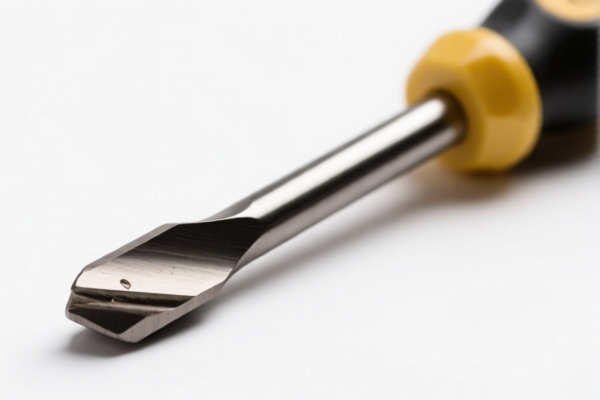
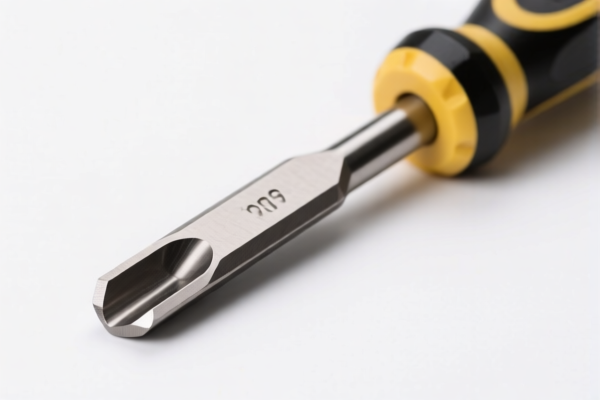
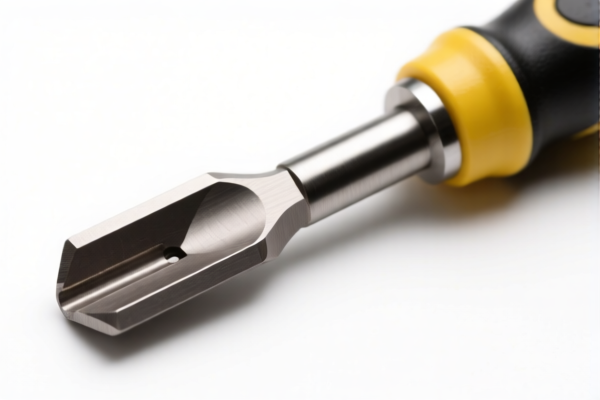
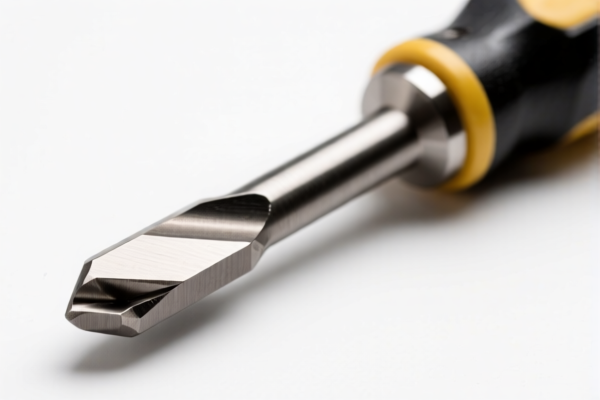
AI Analysis
🔧 Chamfering Tool (Beveling Tools for Machining and Metalworking)
🌐 HS Code Reference & Customs Clearance Guide | 2026 Updated Tariff Analysis | Professional Import Strategy
📌 One, Product Definition & Classification: What Exactly Is a Chamfering Tool?
A chamfering tool is a precision cutting tool used in machining, metalworking, and mechanical fabrication to create a beveled edge (chamfer) on a workpiece—typically to remove sharp burrs, improve fit, or prepare for assembly. These tools are essential in manufacturing, automotive, aerospace, and industrial equipment sectors.
In international trade, chamfering tools fall under interchangeable cutting tools for machine tools, especially those used in milling, turning, drilling, or broaching operations. They are not hand tools unless explicitly designed for manual use.
⚠️ Key Distinction:
- If it's mechanically driven, designed for lathes, mills, or CNC machines → HS Code: 8207.90.30.85
- If it's a handheld, non-powered tool (e.g., hand file or chisel-like tool) → May fall under 8205.59.55.60 or 8205.59.80.00
- If it contains high alloy content (Cr, Mo, W, V) → Higher tariff applies due to material composition
📦 Two, HS Code Classification Details (2026 Updated Tariff Authority)
| HS Code | Product Description | Applicable Use Case | Material/Feature Highlight |
|---|---|---|---|
8207.90.30.85 |
Interchangeable cutting tools: Other, with cutting part containing >0.2% Cr, Mo, W or >0.1% V | High-performance chamfering tools for metalworking, CNC machining, aerospace components | High-alloy steel, heat-resistant, wear-resistant |
8207.70.60.60 |
Milling tools and parts: Other (including parts) | General-purpose milling tools, including chamfer cutters used in milling machines | Non-high-alloy, standard steel |
8205.59.55.60 |
Other hand tools (including glass cutters): Of iron or steel | Manual chamfering tools, such as hand files, chisels, or hand-held beveling tools | Iron/steel, not machine-powered |
8205.59.80.00 |
Other hand tools: Other (non-iron/steel or unspecified) | Non-ferrous or mixed-material hand chamfering tools | Aluminum, brass, or composite materials |
🔍 Critical Note:
- Machine-driven chamfering tools (e.g., end mills, face mills with chamfering edges) → Must be declared under 8207.90.30.85 if they meet the alloy threshold
- Handheld, non-powered chamfering tools → Can fall under 8205.59.55.60 or 8205.59.80.00, depending on material
- Do NOT classify machine tools as hand tools — this leads to misclassification, penalties, and delays
💰 Three, 2026 Latest Tariff Rate Breakdown (With附加 Taxes & Policy Triggers)
✅ Applicable Country: United States (US)
✅ Origin: China (CN)
✅ Effective Date: November 10, 2025 (including subsequent imports)
🎯 1. 8207.90.30.85 — High-Alloy Interchangeable Chamfering Tools
| Item | Detail |
|---|---|
| Base Tariff | 5.0% (ad valorem) |
| USITC Section 301 Additional Duty | +25.0% (from US Trade Act 301) |
| IEEPA Emergency Economic Powers Act Duty | +10.0% (applies to goods from China/HK) |
| Total Effective Duty | 30.0% |
| Tax Calculation | CIF Value × 30.0% |
| De Minimis Threshold | ❌ Not applicable (denied under US law) |
| Legal Basis Path | IEEPA:9903.01.25 → IEEPA:9903.01.24 → USITC:8207.90.30.85 → FOOTNOTE:9903.88.01 |
📌 Explanation:
- This code applies only if the cutting part contains >0.2% Cr, Mo, W, or >0.1% V — common in high-speed steel (HSS), cobalt steel, or carbide-tipped tools
- The 25% USITC tariff comes from the ongoing China Section 301 investigation
- The 10% IEEPA tariff is a separate emergency measure targeting Chinese-origin goods
- Total: 30% — significant cost impact on high-performance tools
🎯 2. 8207.70.60.60 — Milling Tools (General, Non-High-Alloy)
| Item | Detail |
|---|---|
| Base Tariff | 0.0% |
| USITC Additional Duty | +0.0% (not subject to 301 tariffs) |
| IEEPA Additional Duty | +0.0% (not triggered) |
| Total Effective Duty | 0.0% |
| Tax Calculation | CIF Value × 0.0% |
| De Minimis Threshold | ✅ Applicable (if value ≤ $800, no duty) |
| Legal Basis Path | 8207.70.60.60 (no footnotes applied) |
📌 Note:
- This code applies to standard milling tools without high alloy content
- No additional tariffs — ideal for cost-sensitive buyers
- Highly recommended for non-critical, low-alloy chamfering tools
🎯 3. 8205.59.55.60 — Hand Tools (Of Iron or Steel)
| Item | Detail |
|---|---|
| Base Tariff | 0.0% |
| USITC Additional Duty | +0.0% |
| IEEPA Additional Duty | +0.0% |
| Total Effective Duty | 0.0% |
| Tax Calculation | CIF Value × 0.0% |
| De Minimis Threshold | ✅ Applicable |
| Legal Basis Path | 8205.59.55.60 (no footnotes) |
📌 Use Case:
- Manual chamfering tools used by machinists or in workshops
- Examples: Hand files, chisels, hand-held beveling tools
- No additional duties — very favorable for small-batch or artisanal imports
🎯 4. 8205.59.80.00 — Other Hand Tools (Other Materials)
| Item | Detail |
|---|---|
| Base Tariff | 0.0% |
| USITC Additional Duty | +0.0% |
| IEEPA Additional Duty | +0.0% |
| Total Effective Duty | 0.0% |
| Tax Calculation | CIF Value × 0.0% |
| De Minimis Threshold | ✅ Applicable |
| Legal Basis Path | 8205.59.80.00 |
📌 Note:
- Applies to non-iron/steel hand tools (e.g., aluminum or brass chamfering tools)
- No tariffs — ideal for lightweight, non-ferrous tools
- Must prove material composition to avoid reclassification
🛠️ Four, Customs Clearance Best Practices (Real-World Tips)
✅ 1. Required Documentation (MUST Provide)
| Document | Required? | Notes |
|---|---|---|
| ✅ Product Specification Sheet | ✔️ | Include material type, alloy composition, cutting edge specs |
| ✅ Technical Drawings / CAD Files | ✔️ | Prove tool type (machine vs. hand) |
| ✅ Product Photos (with label/model) | ✔️ | Show tool shape, handle, cutting edge |
| ✅ Third-Party Test Report | ✔️ | RoHS, CE, ISO 9001 (if applicable) |
| ✅ Commercial Invoice | ✔️ | Clearly state "Chamfering Tool for CNC Machine" or "Hand Beveling Tool" |
| ✅ Certificate of Origin (CO) | ✔️ | Critical for tariff eligibility |
| ✅ Packing List | ✔️ | Show tool vs. part vs. set |
✅ 2.申报技巧 (Key Pro Tips)
🔥 "Alloy Check, Machine Check, Name Right — Tax Drops 30%!"
| Scenario | Correct HS Code | Wrong Code | Risk |
|---|---|---|---|
| CNC chamfering tool with 0.3% tungsten | 8207.90.30.85 |
8207.70.60.60 |
+30% duty |
| Manual hand file for chamfering | 8205.59.55.60 |
8207.90.30.85 |
Wrong category, delay & penalty |
| Tool made of aluminum (non-steel) | 8205.59.80.00 |
8205.59.55.60 |
Incorrect material classification |
| Tool set with multiple chisels | Declare as set | Split into parts | Each part taxed separately → up to 89.5% |
✅ 3. Special Cases & Solutions
| Situation | Recommended Action |
|---|---|
| Tool contains high alloy but used manually | Still classify under 8207.90.30.85 if it’s interchangeable and designed for machine use |
| Tool is part of a larger machine | If it’s interchangeable and detachable, treat as tool — not machine part |
| OEM custom chamfering tools | Provide design specs + order letter — avoid “non-standard” classification |
| Tool used in military/aerospace | Apply for special-use exemption — may qualify for reduced duty |
| Tool imported from Vietnam/Mexico | Can qualify for IEEPA exemption — duty drops to 0–5% |
🌍 Five, Global Market Comparison (2026 Updated)
| Country/Region | Recommended HS Code | Tariff Rate | Certification Required | Notes |
|---|---|---|---|---|
| 🇺🇸 United States | 8207.90.30.85 |
30% (if alloyed) | FCC, RoHS | High risk for misclassification |
| 🇨🇳 China | 8207.90.30.85 |
5% | CCC, RoHS | No additional tariffs |
| 🇪🇺 European Union | 8207.90.30.85 |
0% (if CE compliant) | CE, ErP | No 301/IEEPA tariffs |
| 🇦🇺 Australia | 8207.90.30.85 |
5% | RCM | No extra duties |
| 🇯🇵 Japan | 8207.90.30.85 |
0% | PSE | No additional taxes |
📌 Insight:
- The U.S. is the only market imposing 30%+ tariffs on high-alloy chamfering tools
- China, EU, Japan, and Australia offer favorable rates — ideal for re-export or regional hubs
📌 Six, Common Mistakes & Pitfalls (Learn from Others’ Errors)
❌ Mistake 1: Declaring a CNC chamfering tool as a "hand tool"
👉 Result: Wrong HS Code → 30% duty penalty + back taxes
❌ Mistake 2: Splitting a tool set into individual parts
👉 Result: Each part taxed at up to 89.5% → total tax >268%
❌ Mistake 3: Not disclosing alloy content on invoice
👉 Result: Customs may reclassify → delay, seizure, or fines
❌ Mistake 4: Using generic term "cutting tool" without specification
👉 Result: No proof of material → default to highest tariff
✅ Correct Declaration Example:
“High-Alloy Chamfering Milling Tool, HSS, 0.3% Tungsten, for CNC Lathe, 12mm Diameter, Model XYZ, RoHS & ISO 9001 Certified”
🎯 Seven, Conclusion: Precision Matters — Your Tax Rate Depends on the Details!
🎯 Remember the Golden Rule:
🔹 "Alloy? → 30%
🔹 Standard Steel? → 0%
🔹 Hand Tool? → 0%
🔹 Splitting? → 89.5%
🔹 Wrong Name? → Penalty + Delay
📌 Pro Tip:
If your chamfering tool is originated in Vietnam, Mexico, Thailand, or Malaysia, you may qualify for IEEPA exemption — 0% duty on imports to the U.S.
✅ Action Step:
📞 Contact a licensed customs broker + Submit product photos + Request HS Code Pre-Ruling (Advance Ruling)
🚀 Ensure smooth clearance, avoid penalties, and protect your profit margin!
📣 Take Action Now:
🛠️ Accurate classification = lower tax = faster clearance = higher profit!
✨ Your next shipment shouldn’t be held up by a mislabeled tool!
💼 Professional Customs, Start with the Right HS Code!
🔍 One wrong label can cost thousands — get it right the first time!
Customer Reviews
About HS Code Classification
The Harmonized System (HS) is an internationally standardized nomenclature developed by the World Customs Organization (WCO) to classify traded products. Over 200 countries use the HS system as the basis for customs tariffs, trade statistics, and import/export regulations.
Each HS code follows a hierarchical structure:
- Chapter (2 digits) — Broad category of goods (e.g., Chapter 84: Machinery and Mechanical Appliances)
- Heading (4 digits) — More specific grouping within the chapter
- Subheading (6 digits) — Internationally standardized breakdown, used by all WCO member countries
- National subdivisions (8-10 digits) — Country-specific extensions for further classification, such as US HTSUS 10-digit codes
Correct HS code classification is essential for smooth customs clearance, accurate duty payment, and compliance with trade regulations. Misclassification can lead to customs delays, overpayment of duties, or penalties.
When importing from CN to US, the applicable tariff rates may include:
- Most-Favored-Nation (MFN) rate — The standard duty rate applied to WTO members
- General rate — Applied to countries without trade agreements
- Trade remedy duties — Additional tariffs such as Section 301 (anti-dumping), Section 232 (national security), or countervailing duties
The information provided on this page is for reference purposes only. For official classification, please consult with your local customs authority or a licensed customs broker.