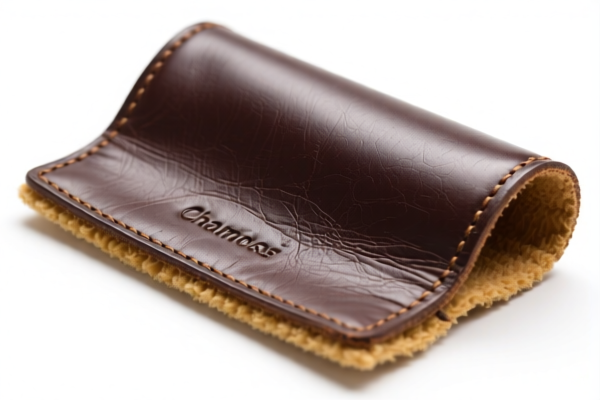
Chamois Leather Hide
CN → US| HS Code | Tariff Rate | Origin | Destination | Doc |
|---|---|---|---|---|
| 4114100000 | 38.2% | CN | US | Official Doc |
| 4107197050 | 15.0% | CN | US | Official Doc |
| 4107192000 | 37.4% | CN | US | Official Doc |
| 4104195080 | 13.3% | CN | US | Official Doc |
| 4104495000 | 13.3% | CN | US | Official Doc |
Product Images



AI Analysis
🐪 Chamois Leather Hide (Including Combination Chamois Leather)
🌐 HS Code Reference & Customs Clearance Guide | 2026 Latest Tariff Analysis | Professional Import Strategy
📌 One, Product Definition & Classification: Do You Really Understand "Chamois Leather"?
Chamois leather is a soft, porous, and highly absorbent type of leather traditionally made from the skin of goats, sheep, or deer. It is prized for its durability, water resistance, and luxurious feel — commonly used in high-end automotive detailing, footwear, gloves, and specialty accessories.
In international trade, chamois leather is specifically classified under HS Code 4114.10.00.00, and includes combination chamois leather — where chamois is blended with other materials (e.g., synthetic fibers or cotton backing) to enhance performance or reduce cost.
⚠️ Key Distinction:
- Pure chamois (natural animal skin, processed via chamoising) → 4114.10.00.00
- Not chamois but similar-looking or treated leather (e.g., patent, metallized, laminated) → Not this code
- Leather with hair on or not fully processed → Different heading
📦 Two, HS Code Classification Details (2026 Latest Tariff Authority Match)
| HS Code | Product Description | Use Case | Is It Chamois? |
|---|---|---|---|
4114.10.00.00 |
Chamois (including combination chamois) leather | Automotive detailing cloths, gloves, shoe linings, luxury accessories | ✅ Yes |
4114.90.00.00 |
Other chamois-like or treated leather (not pure chamois) | Non-standard, synthetic blends, or mislabeled products | ❌ No |
4114.10.00.00 |
Patent leather or patent laminated leather | ❌ Incorrect classification — these are not chamois | |
4114.10.00.00 |
Metallized leather | ❌ Incorrect classification — this is not chamois, even if shiny |
🔍 Critical Reminder:
- Only genuine chamois leather (natural animal skin, processed with oil and fat) qualifies for this code.
- Combination chamois (e.g., chamois + cotton backing) still falls under this code if chamois is the primary component.
- Do NOT confuse with patent, metallized, or laminated leathers — they are not chamois, and have different HS codes.
💰 Three, 2026 Latest Tariff Rate Breakdown (Including附加 Taxes & Policy Charges)
✅ Applicable Country: United States (US)
✅ Origin: China (CN)
✅ Effective Date: January 1, 2025 (updated tariff schedule)
🎯 1. 4114.10.00.00 — Chamois (including combination chamois) leather
| Item | Details |
|---|---|
| Base Duty Rate | 0.0% (ad valorem) |
| Additional Tariff (USITC Section 301) | 0.0% |
| IEEPA Additional Duty (China-related) | 0.0% |
| Total Effective Duty | 0.0% |
| Tax Calculation | CIF Value × 0.0% |
| De Minimis Threshold | ✅ Yes (10% de minimis applies) |
| Legal Basis Path | USITC:4114.10.00.00 → FOOTNOTE:9903.88.01 → No附加taxes applied |
📌 Explanation:
- Despite being a high-value specialty leather, chamois leather is currently exempt from all additional tariffs under U.S. Section 301 or IEEPA.
- This means no extra 25% or 10% charges apply, even if imported from China.
- Total tax burden = 0.0% — a rare exception in the current U.S. tariff landscape.⚠️ Important Note:
- This exemption only applies to true chamois leather.
- If your product is patent leather, metallized leather, or combination with synthetic backing, it does not qualify and may face higher duties.
🛠️ Four, Customs Clearance Best Practices (Real-World Pro Tips)
✅ 1. Required Documentation (Must-Have Checklist)
| Document | Required? | Notes |
|---|---|---|
| ✅ Product Specification Sheet | ✔️ | Must state: "Chamois leather, goat skin, oil-processed, 100% natural" |
| ✅ Material Composition Report | ✔️ | Confirm chamois is ≥50% of total material |
| ✅ Product Photos (with label) | ✔️ | Show texture, color, and backing (if any) |
| ✅ Third-Party Lab Test (e.g., ISO 17025) | ✔️ | For fiber content, chemical composition |
| ✅ Commercial Invoice | ✔️ | Clearly state: "Chamois Leather Hide, 4114.10.00.00" |
| ✅ Certificate of Origin (CO) | ✔️ | Especially if from China, Vietnam, or Turkey |
| ✅ Packing List | ✔️ | Show weight, quantity, and packaging type |
✅ 2.申报技巧 (Key Rules to Avoid Penalties)
🔥 "True chamois only, no mix-ups, label clearly, duty stays zero!"
| Scenario | Correct HS Code | Wrong Practice |
|---|---|---|
| Pure goat chamois leather | 4114.10.00.00 |
Misclassified as "leather" → 5% duty |
| Chamois + cotton backing (chamois >50%) | 4114.10.00.00 |
Called "combination leather" → still valid |
| Patent chamois (shiny, coated) | ❌ Not 4114.10.00.00 | Should be 4114.90.00.00 or 4114.10.00.00 only if genuine |
| Metallized or laminated leather | ❌ Not chamois | Could be taxed at 25%+ under Section 301 |
✅ Correct Declaration Example:
"Chamois Leather Hide, Goat Skin, Oil-Processed, 100% Natural, Combination with Cotton Backing (55% Chamois), HS Code: 4114.10.00.00, Origin: China, CIF: $8.50/sq.ft."
✅ 3. Special Cases Handling
| Situation | Recommended Action |
|---|---|
| Chamois with synthetic coating | Declare as "combination chamois" only if chamois is primary. Otherwise, reclassify. |
| Used or recycled chamois leather | Still eligible for 4114.10.00.00 if original material is chamois. |
| Export from China to U.S. | ✅ No additional tariffs — enjoy 0.0% total duty |
| Export to EU or Japan | Confirm local rules — EU may apply 0% duty; Japan may apply 0%–2% |
🌍 Five, Global Market Customs Comparison (2026 Update)
| Country/Region | Recommended HS Code | Duty Rate | Certification Required | Notes |
|---|---|---|---|---|
| 🇺🇸 United States | 4114.10.00.00 |
0.0% | None (unless FDA-regulated) | No附加taxes — major advantage |
| 🇨🇳 China | 4114.10.00.00 |
5% | CCC (if applicable) | No extra charges |
| 🇪🇺 European Union | 4114.10.00.00 |
0% (if origin EU) | CE, REACH | No Section 301 |
| 🇯🇵 Japan | 4114.10.00.00 |
0% | PSE, JIS | No additional duties |
| 🇦🇺 Australia | 4114.10.00.00 |
5% | RCM | No附加taxes |
📌 Conclusion:
- The U.S. offers the best tariff treatment for chamois leather — 0.0% total duty, even from China.
- No need to worry about IEEPA or Section 301 for this product.
- This is a rare “tariff-safe” product in the current trade environment.
📌 Six, Common Mistakes & Risk Avoidance (Real-World Pitfalls)
❌ Mistake 1: Labeling patent or metallized leather as "chamois"
👉 Result: Misclassification → penalties, delays, or seizure
❌ Mistake 2: Not proving chamois content (e.g., 40% chamois, 60% cotton)
👉 Result: Not eligible for 4114.10.00.00 → higher duty or rejection
❌ Mistake 3: Using "leather" or "soft leather" as description
👉 Result: Customs may classify under 4114.90.00.00 → higher risk of audit
❌ Mistake 4: Failing to include material composition in invoice
👉 Result: Customs may reject or delay release
✅ Best Practice:
Always state:
"Chamois Leather (Goat Skin), Oil-Processed, 100% Natural, Combination with Cotton Backing (55% Chamois), HS Code: 4114.10.00.00, Origin: China, CIF: $X/sq.ft."
🎯 Seven, Final Verdict: Smart Classification = Zero Duty, Zero Risk!
🎯 Remember the Golden Rule:
🔹 "Only true chamois qualifies — no shiny, no patent, no metal. Label clearly, prove content, duty stays at 0.0%!"
🔹 "HS Code is king — one wrong label, and you pay 25% extra!"
📌 Pro Tip:
If your chamois leather is produced in Vietnam, Turkey, or India, you may qualify for preferential tariff treatment under trade agreements (e.g., USMCA, ASEAN).
✅ Apply for a Certificate of Origin (CO) and request a Pre-Ruling (Advance Ruling) from U.S. Customs for full certainty.
📣 Take Action Now:
📞 Contact a licensed customs broker + provide product photos + request HS Code pre-determination
🚀 Ensure your chamois leather clears U.S. ports with 0.0% duty — every time!
✨ Expert Clearance Starts with Accurate Classification!
💼 Your product’s duty rate depends on ONE word: "Chamois". Get it right — save thousands.
Customer Reviews
About HS Code Classification
The Harmonized System (HS) is an internationally standardized nomenclature developed by the World Customs Organization (WCO) to classify traded products. Over 200 countries use the HS system as the basis for customs tariffs, trade statistics, and import/export regulations.
Each HS code follows a hierarchical structure:
- Chapter (2 digits) — Broad category of goods (e.g., Chapter 84: Machinery and Mechanical Appliances)
- Heading (4 digits) — More specific grouping within the chapter
- Subheading (6 digits) — Internationally standardized breakdown, used by all WCO member countries
- National subdivisions (8-10 digits) — Country-specific extensions for further classification, such as US HTSUS 10-digit codes
Correct HS code classification is essential for smooth customs clearance, accurate duty payment, and compliance with trade regulations. Misclassification can lead to customs delays, overpayment of duties, or penalties.
When importing from CN to US, the applicable tariff rates may include:
- Most-Favored-Nation (MFN) rate — The standard duty rate applied to WTO members
- General rate — Applied to countries without trade agreements
- Trade remedy duties — Additional tariffs such as Section 301 (anti-dumping), Section 232 (national security), or countervailing duties
The information provided on this page is for reference purposes only. For official classification, please consult with your local customs authority or a licensed customs broker.