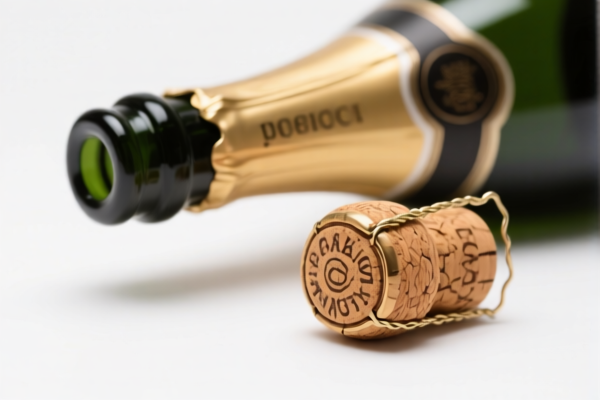
Champagne Bottle Natural Cork
CN → US| HS Code | Tariff Rate | Origin | Destination | Doc |
|---|---|---|---|---|
| 4504104500 | 35.0% | CN | US | Official Doc |
| 4504104700 | 35.0% | CN | US | Official Doc |
| 4503106000 | 35.0% | CN | US | Official Doc |
| 4502000000 | 35.0% | CN | US | Official Doc |
| 4503102000 | 35.0% | CN | US | Official Doc |
Product Images



AI Analysis
🍾 Champagne Bottle Natural Cork (Natural Cork Stoppers)
🌐 HS Code Reference & Customs Clearance Guide | 2026 Latest Tariff Analysis | Professional Clearance Strategy
📌 I. Product Definition & Classification: Do You Understand "Natural Cork Stoppers"?
Natural cork stoppers, primarily used for sealing wine and champagne bottles, are made from the bark of the Quercus suber (cork oak) tree. In international trade, these products are strictly classified under Chapter 45 (Cork and Articles of Cork). The classification depends heavily on the specific form (e.g., molded stoppers vs. raw plugs) and material composition (100% natural vs. composite).
Key Distinction:
- Natural Cork Stoppers (Molded/Pressed): Even if pressed from granules, if they meet the criteria for "cork articles" intended for closure, they fall under 4504.
- Solid Natural Cork Stoppers: Pure natural cork plugs are often classified under 4503 or 4502 depending on processing level.
- Composite/Agglomerated Cork: If bonded with food-safe glue, it is typically 4504.
⚠️ Critical Note for US Imports:
All natural cork products imported from China are subject to significant Section 301 Additional Duties and Section 122 Tariffs, resulting in a high total tax burden. Misclassification here can lead to severe penalties and delayed clearance.
📦 II. HS Code Classification Details (2026 Latest Tariff Authority Match)
| HS Code | Product Description | Applicable Scenario | Material/Form |
|---|---|---|---|
4504.10.45.00 |
Natural cork stoppers, material: natural cork, form: stopper | Standard champagne/wine stoppers, often agglomerated or molded from natural cork particles | ✅ Natural Cork (Molded/Agglomerated) |
4504.10.47.00 |
Natural cork stoppers, material: natural cork, form: plug | Similar to above, specific sub-classification for plug-type stoppers | ✅ Natural Cork (Plug) |
4503.10.60.00 |
Natural cork articles, material: natural cork, form: stopper | Solid natural cork stoppers, less processed than 4504 items | ✅ Solid Natural Cork |
4502.00.00.00 |
Natural cork and articles of natural cork, material: natural cork, form: stopper | General category for natural cork articles not specified elsewhere | ✅ Solid Natural Cork |
4503.10.20.00 |
Natural cork articles, material: natural cork, form: stopper | Other solid natural cork stoppers/articles | ✅ Solid Natural Cork |
🔍 Key Reminder:
- 4504.10.45.00 / 4504.10.47.00: These are the most common HS codes for commercial champagne stoppers, which are often made from agglomerated natural cork (granules pressed together).
- 4503/4502 Series: Typically for 100% solid natural cork stoppers (crown corks or premium wines).
- Do NOT misclassify as "Plugs" under other chapters; cork is unique to Chapter 45.
💰 III. 2026 Latest Tariff Rate Breakdown (Including Additional Taxes)
✅ Applicable Country: United States (US)
✅ Origin: China (CN)
✅ Effective Date: 2025 onwards (including subsequent imports)
🎯 1. 4504.10.45.00 & 4504.10.47.00 —— Natural Cork Stoppers (Agglomerated/Molded)
| Item | Content |
|---|---|
| Base Tariff Rate | 0% (Ad Valorem) |
| Additional Duty (Section 301) | +25% |
| Section 122 Tariff | +10% |
| Total Tax Rate | 35.0% |
| Tax Calculation | CIF Value × 35% |
| De Minimis Exemption Eligible? | ❌ NO (Strictly denied for Section 301/122 goods) |
| Legal Authority Path | Section 301: 4504.10.45/47 → Section 122: 4504.10.45/47 |
📌 Explanation:
- The 25% is the standard Section 301 additional duty on Chinese goods.
- The 10% is the Section 122 tariff, often applied to certain industrial and consumer goods from China.
- Total 35% is a fixed high rate. There is no de minimis exemption (under $800) for these goods if they are from China and subject to Section 301.
🎯 2. 4503.10.60.00, 4502.00.00.00, 4503.10.20.00 —— Solid Natural Cork Stoppers
| Item | Content |
|---|---|
| Base Tariff Rate | 0% (Ad Valorem) |
| Additional Duty (Section 301) | +25% |
| Section 122 Tariff | +10% |
| Total Tax Rate | 35.0% |
| Tax Calculation | CIF Value × 35% |
| De Minimis Exemption Eligible? | ❌ NO (Strictly denied for Section 301/122 goods) |
| Legal Authority Path | Section 301: 4503/4502 → Section 122: 4503/4502 |
📌 Note:
- All natural cork products from China, whether agglomerated (4504) or solid (4503/4502), face the same 35% total tax rate.
- The distinction in HS codes is primarily for statistical and regulatory tracking, not for tariff savings in this context.
🛠️ IV. Customs Clearance Practical Advice (Pitfall Avoidance Guide)
✅ 1. Required Documentation Checklist (None Missing)
| Document | Mandatory | Description |
|---|---|---|
| ✅ Commercial Invoice | ✔️ | Must clearly state "Natural Cork Stoppers," HS Code, and Country of Origin (China). |
| ✅ Packing List | ✔️ | Detail weight, volume, and number of stoppers per carton. |
| ✅ Product Specification Sheet | ✔️ | Confirm material is 100% Natural Cork (not synthetic rubber). |
| ✅ Certificate of Origin (CO) | ✔️ | Essential for proving origin; if not from China, different tariffs may apply. |
| ✅ Fumigation Certificate | ✔️ | Cork is a natural product; ISPM 15 compliance may be required if wooden pallets are used. |
| ✅ FDA Compliance Statement | ✔️ | Since cork contacts food/beverage, state compliance with 21 CFR for food contact materials. |
✅ 2. Declaration Tips (Key Mantra)
🔥 "Accurate HS, Transparent Origin, 35% Tax Ready!"
| Scenario | Correct Declaration | Wrong Practice |
|---|---|---|
| Chinese-Made Cork | HS: 4504.10.45.00, Origin: China, Tax: 35% |
Hide origin → Smuggling/Seizure |
| EU-Made Cork (Spain/Portugal) | HS: 4504.10.45.00, Origin: EU, Tax: 0% (GSP/Free Trade) |
Declare as China → Overpay Tax |
| Agglomerated vs. Solid | Specify "Agglomerated Natural Cork" vs. "Solid Natural Cork" | Vague description → Customs Audit |
| Sample Shipment | Declare as "Commercial Sample" but still pay 35% | Assume de minimis → Detention |
✅ 3. Special Case Handling
| Situation | Handling Advice |
|---|---|
| OEM Branding | Ensure invoices show brand owner, but origin remains China. |
| Composite Corks (Glass/Plastic Base) | If >50% cork by value, still Chapter 45. If cork is minor, may be 7000/7326. Consult a broker. |
| Non-Chinese Origin | If cork is from Spain, Portugal, or Algeria, apply for MFN Rate (0%) with proper CO. |
| Small Batches (<$800) | Still subject to 35% duty due to Section 301/122. Do not use de minimis. |
🌍 V. Global Market Comparison (2026 Latest)
| Country/Region | Recommended HS Code | Tariff (China Origin) | Certification | Note |
|---|---|---|---|---|
| 🇺🇸 USA | 4504.10.45.00 |
35% | FDA Compliance | High tariff; avoid de minimis |
| 🇨🇳 China | 4504.10.45.00 |
0% (Export) / 13% (Import) | CCC (if applicable) | Domestic trade differs |
| 🇪🇺 EU | 4503.10.60.00 |
0% (MFN) | CE (if applicable) | Spain/Portugal are major producers |
| 🇬🇧 UK | 4503.10.60.00 |
0% (MFN) | UKCA | Post-Brexit tariffs may vary |
| 🇯🇵 Japan | 4504.10.45.00 |
0% (MFN) | JIS | No additional duties |
📌 Conclusion:
- USA is the most expensive market for Chinese cork due to 35% total tax.
- EU, UK, Japan offer 0% MFN tariffs for natural cork.
- Strategy: If importing to the US, consider sourcing cork from Spain or Portugal to avoid the 35% tax.
📌 VI. Common Errors & Pitfall Guide (Lessons Learned)
❌ Error 1: Assuming "Under $800" means No Tax
👉 Consequence: 35% Duty + Penalties for Section 301 goods.
❌ Error 2: Declaring as "Plastic Stoppers"
👉 Consequence: Wrong HS Code (3926.90) → 25% vs 35% discrepancy → Audit.
❌ Error 3: Not specifying "Natural Cork"
👉 Consequence: Customs may classify as synthetic → Different Duty & FDA Issues.
❌ Error 4: Ignoring Section 122
👉 Consequence: Underpaying 10% → Back Taxes + Interest.
✅ Correct Practice:
"Natural Cork Stoppers, Agglomerated, 24mm x 42mm, For Champagne Bottles, HS 4504.10.45.00, Origin: China, Tax Rate: 35%"
🎯 VII. Conclusion: Professional Declaration, Cost Control!
🎯 Remember the Mantra:
🔹 "Cork from China? 35% Tax. De Minimis? NO WAY!"
🔹 "HS Code 4504, 4503, or 4502? All 35% for US Imports!"
🔹 "Think EU? 0% Tax. Just Get the Certificate of Origin!"
📌 Pro Tip:
If your cork is not from China (e.g., from Spain, Portugal, Algeria), you can apply for MFN Tariff (0%).
👉 Action: Always request a Certificate of Origin from your supplier. If it says "Made in Spain," your tax drops from 35% to 0%.
📣 Immediate Action:
📞 Contact your customs broker + Verify Origin + Prepare FDA Docs
🚀 Ensure smooth clearance, avoid 35% shock, maximize profit margins!
✨ Professional Clearance Starts with Accurate Classification!
💼 Every Percent Matters in International Trade!
Customer Reviews
About HS Code Classification
The Harmonized System (HS) is an internationally standardized nomenclature developed by the World Customs Organization (WCO) to classify traded products. Over 200 countries use the HS system as the basis for customs tariffs, trade statistics, and import/export regulations.
Each HS code follows a hierarchical structure:
- Chapter (2 digits) — Broad category of goods (e.g., Chapter 84: Machinery and Mechanical Appliances)
- Heading (4 digits) — More specific grouping within the chapter
- Subheading (6 digits) — Internationally standardized breakdown, used by all WCO member countries
- National subdivisions (8-10 digits) — Country-specific extensions for further classification, such as US HTSUS 10-digit codes
Correct HS code classification is essential for smooth customs clearance, accurate duty payment, and compliance with trade regulations. Misclassification can lead to customs delays, overpayment of duties, or penalties.
When importing from CN to US, the applicable tariff rates may include:
- Most-Favored-Nation (MFN) rate — The standard duty rate applied to WTO members
- General rate — Applied to countries without trade agreements
- Trade remedy duties — Additional tariffs such as Section 301 (anti-dumping), Section 232 (national security), or countervailing duties
The information provided on this page is for reference purposes only. For official classification, please consult with your local customs authority or a licensed customs broker.