Charcoal
CN → US| HS Code | Tariff Rate | Origin | Destination | Doc |
|---|---|---|---|---|
| 2704000000 | 0.0% | CN | US | Official Doc |
| 2703000000 | 35.0% | CN | US | Official Doc |
Product Images
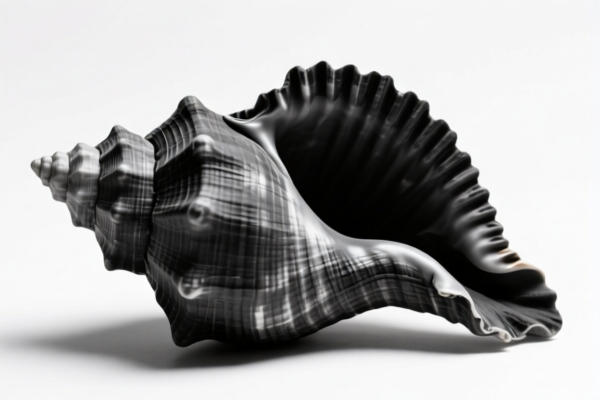
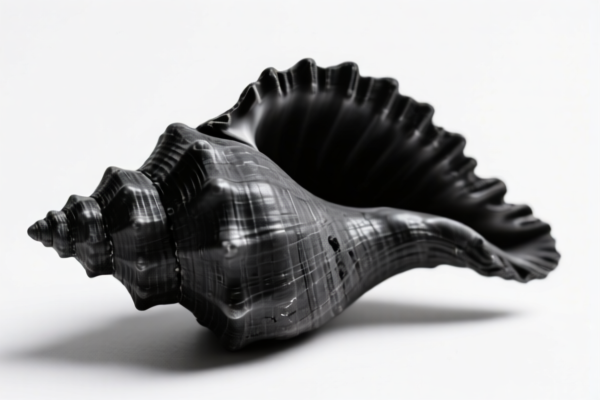

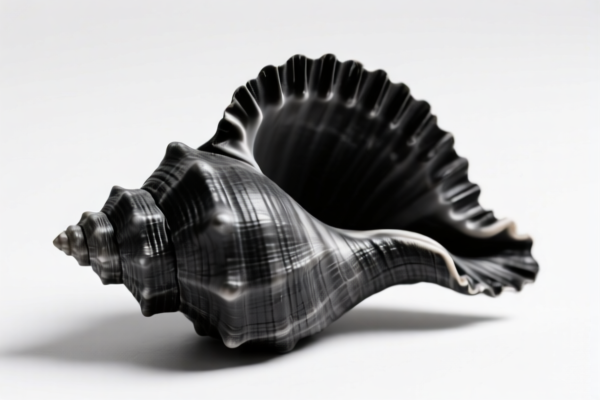
AI Analysis
🔥 Charcoal (Charcoal, whether or not in the form of briquettes or other solid forms)
🌐 HS Code Reference & Customs Clearance Guide | 2026 Latest Tariff Analysis | Professional Clearance Strategy
📌 1. Product Definition and Classification: Do You Really Know "Charcoal"?
Charcoal, a porous black carbonaceous material obtained by heating wood or other organic substances in the absence of air, is a versatile commodity used in metallurgy, fuel, filtration, and culinary applications. In international trade, it is strictly categorized under Chapter 27 (Mineral Fuels, Mineral Oils and Products of Their Distillation).
Key Distinction: - Charcoal (Natural or Manufactured): Produced by the pyrolysis of organic material (wood, coconut shells, bamboo, etc.). It is classified under 2704. - Peat (Turf): Degraded organic matter accumulated in bogs, not subjected to the same high-temperature pyrolysis process as charcoal. It is classified under 2703.
⚠️ Critical Classification Point:
- If the product is derived from wood/biomass through carbonization/pyrolysis → It is Charcoal → HS Code 2704.00.00.00.
- If the product is raw or agglomerated peat (moss/turf) → It is Peat → HS Code 2703.00.00.00.
- Note: Briquettes made from charcoal retain the classification of charcoal. Briquettes made from peat retain the classification of peat.
📦 2. HS Code Classification Details (2026 Official Tariff Concordance)
Based strictly on the provided data :
| HS Code | Product Description | Tax Information | Applicable Form |
|---|---|---|---|
2704.00.00.00 |
Charcoal, whether or not in the form of briquettes or other solid forms | Failed to retrieve tax information (See Tax Analysis Below) | Wood charcoal, coconut shell charcoal, briquettes, etc. |
2703.00.00.00 |
Peat (including peat litter), whether or not agglomerated | Total Tax: 25.0% (Base Tariff: 0.0%, Additional Tariff: 25.0%) |
Raw peat, agglomerated peat, peat litter. |
🔍 Important Reminder:
- Do not confuse Charcoal with Peat. They are chemically and physically different.
- Briquettes: If you ship charcoal briquettes, use 2704.00.00.00. If you ship peat briquettes, use 2703.00.00.00.
- The tax treatment differs significantly: Peat has a clear additional tariff, while Charcoal's tax status is flagged as "Failed to retrieve" in the source data, requiring special attention.
💰 3. 2026 Latest Tariff Rate Detailed Explanation
✅ Source Data Constraint: The provided data contains specific tax details for Peat but explicitly states "Failed to retrieve" for Charcoal. Below is the accurate analysis based only on the provided data.
🎯 1. 2704.00.00.00 —— Charcoal (Wood Charcoal, Briquettes, etc.)
| Item | Content |
|---|---|
| Product Description | Charcoal, whether or not in the form of briquettes or other solid forms |
| Tax Detail | Failed to retrieve tax information |
| Total Tax | Error (Specific rate not available in current data set) |
| Implication | ⚠️ High Risk/Uncertainty |
| Action Required | Since the tax detail is missing, this classification cannot be cleared using automated standard rates. You MUST perform the following: 1. Consult local customs broker for the current duty rate for HS 2704.00.00.00. 2. Check if any free trade agreements (FTAs) apply. 3. Verify if anti-dumping duties exist for charcoal from the specific country of origin. |
📌 Explanation:
- The data indicates a system error or missing entry for Charcoal's tax rate.
- DO NOT assume a 0% or standard rate.
- In many jurisdictions, charcoal may be subject to standard MFN tariffs (often 0-5%) or specific environmental tariffs, but without verified data, clearance is risky.
🎯 2. 2703.00.00.00 —— Peat (Comparison Reference)
| Item | Content |
|---|---|
| Product Description | Peat (including peat litter), whether or not agglomerated |
| Base Tariff | 0.0% |
| Additional Tariff | 25.0% |
| Total Tax | 25.0% |
| Tax Calculation | CIF Value × 25.0% |
| Applicability | Only for Peat, NOT Charcoal |
📌 Note:
- This 25% total tax applies only if your product is classified as Peat (2703).
- If you mistakenly declare Charcoal as Peat to avoid the "Error" status for Charcoal, you risk misclassification penalties.
- However, if your product is Peat, the 25% tariff is fixed and clear.
🛠️ 4. Customs Clearance Practical Advice (Real-World Pitfall Avoidance)
✅ 1. Documentation Checklist (Crucial for 2704 vs 2703)
| Document | Mandatory? | Purpose |
|---|---|---|
| ✅ Product Specification Sheet | ✔️ | Must specify raw material (e.g., "100% Coconut Shell" or "Hardwood") and manufacturing process (pyrolysis temperature). |
| ✅ Certificate of Origin | ✔️ | Determines eligibility for FTAs or sanctions. |
| ✅ Chemical Analysis Report | ✔️ | To prove the product is Charcoal (high carbon content, low ash) and not Peat (high organic moisture, different composition). |
| ✅ Bills of Lading / Invoice | ✔️ | Description must match HS code exactly: "Wood Charcoal Briquettes" vs "Peat Blocks". |
✅ 2. Declaration Strategy (Key Mantras)
🔥 “Charcoal is Carbon, Peat is Moss; 2704 vs 2703, Don’t Cross the Road!”
| Scenario | Correct HS Code | Incorrect Action | Consequence |
|---|---|---|---|
| Wood Charcoal / Coconut Charcoal | 2704.00.00.00 |
Declare as Peat | Misclassification. High penalty risk. Tax status unknown. |
| Charcoal Briquettes | 2704.00.00.00 |
Declare as "Fuel" or "Peat" | Rejection. Customs will demand lab test. |
| Raw Peat / Peat Litter | 2703.00.00.00 |
Declare as Charcoal | Tax Error. You might underpay if Charcoal has a higher rate, or overpay if Peat is 25%. |
| Agglomerated Peat | 2703.00.00.00 |
Declare as Charcoal Briquettes | Refusal. Different chemical properties. |
✅ 3. Special Handling for 2704.00.00.00 (Charcoal)
Since the tax information is Error/Failed to Retrieve:
- Pre-Clearance Inquiry: Submit a Binding Tariff Information (BTI) or Advance Ruling request to customs before shipping. Do not guess the rate.
- Verify Anti-Dumping: Some countries impose anti-dumping duties on charcoal (especially from Asia). Check if your origin country is targeted.
- Lab Testing: Be prepared to provide a COA (Certificate of Analysis) showing carbon content >80% and ash content <10% to prove it is not peat.
🌍 5. Global Market Comparison (General Insight)
| Country/Region | Recommended HS Code | Typical Duty (Reference) | Notes |
|---|---|---|---|
| 🇺🇸 USA | 2704.00.00.00 |
Varies (Often 0-5% MFN) | Check Section 301 tariffs if from China. Verify exact rate. |
| 🇪🇺 EU | 2704.00.00.00 |
0% (Mostly) | Ensure sustainable sourcing documentation. |
| 🇨🇳 China | 2704.00.00.00 |
0% | Major exporter. Check export duties if applicable. |
| 🇮🇳 India | 2704.00.00.00 |
5-10% | Import duties may apply. |
📌 Conclusion:
- Peat (2703.00.00.00) has a clear 25% total tax in the provided data.
- Charcoal (2704.00.00.00) has unknown/missing tax data. This is a RED FLAG.
- Never use Peat's rate for Charcoal, or vice versa.
📌 6. Common Mistakes & Pitfalls (Lessons Learned)
❌ Mistake 1: Declaring "Briquettes" without specifying the raw material.
👉 Consequence: Customs cannot distinguish between Charcoal Briquettes (2704) and Peat Briquettes (2703). Clearance Delay.
❌ Mistake 2: Assuming Charcoal has 0% tax because the data shows "Error".
👉 Consequence: Underpayment of Duty. Customs will assess the correct rate + penalties + interest.
❌ Mistake 3: Confusing "Activated Carbon" (9031/3802) with "Charcoal" (2704).
👉 Consequence: Activated carbon is processed further. If it's just standard charcoal, 2704 is correct. If it's activated, HS Code changes.
✅ Correct Action:
"100% Coconut Shell Charcoal, Briquette Form, High Carbon Content (>85%), No Additives."
HS Code:2704.00.00.00
Action: Request Official Tariff Ruling from Local Customs before shipment.
🎯 7. Conclusion: Precision in Classification Saves Costs!
🎯 Remember Mantra:
🔹 “Charcoal is 2704, Peat is 2703; Tax for Peat is 25%, Charcoal’s Tax is Mystery!”
🔹 “When Tax Data is Error, Don’t Guess, Seek Ruling First!”
📌 Pro Tip:
Since the tax information for Charcoal (2704.00.00.00) is unavailable, you MUST:
1. Contact your customs broker to verify the current duty rate for your specific country of origin.
2. Prepare lab reports to distinguish Charcoal from Peat.
3. Do not rely on the 25% rate (which applies to Peat) for Charcoal.
📣 Immediate Action:
📞 Contact Customs Broker + Provide Lab Report + Request Tariff Ruling
🚀 Avoid clearance delays by resolving the 'Error' tax status for Charcoal NOW!
✨ Professional Clearance Starts with Accurate Classification!
💼 Your every cent of duty cost deserves precise calculation!
Customer Reviews
About HS Code Classification
The Harmonized System (HS) is an internationally standardized nomenclature developed by the World Customs Organization (WCO) to classify traded products. Over 200 countries use the HS system as the basis for customs tariffs, trade statistics, and import/export regulations.
Each HS code follows a hierarchical structure:
- Chapter (2 digits) — Broad category of goods (e.g., Chapter 84: Machinery and Mechanical Appliances)
- Heading (4 digits) — More specific grouping within the chapter
- Subheading (6 digits) — Internationally standardized breakdown, used by all WCO member countries
- National subdivisions (8-10 digits) — Country-specific extensions for further classification, such as US HTSUS 10-digit codes
Correct HS code classification is essential for smooth customs clearance, accurate duty payment, and compliance with trade regulations. Misclassification can lead to customs delays, overpayment of duties, or penalties.
When importing from CN to US, the applicable tariff rates may include:
- Most-Favored-Nation (MFN) rate — The standard duty rate applied to WTO members
- General rate — Applied to countries without trade agreements
- Trade remedy duties — Additional tariffs such as Section 301 (anti-dumping), Section 232 (national security), or countervailing duties
The information provided on this page is for reference purposes only. For official classification, please consult with your local customs authority or a licensed customs broker.