Charger
CN → US| HS Code | Tariff Rate | Origin | Destination | Doc |
|---|---|---|---|---|
| 8507808200 | 38.4% | CN | US | Official Doc |
| 8504409520 | 35.0% | CN | US | Official Doc |
| 8504409510 | 35.0% | CN | US | Official Doc |
| 4202321000 | 0.0% | CN | US | Official Doc |
Product Images
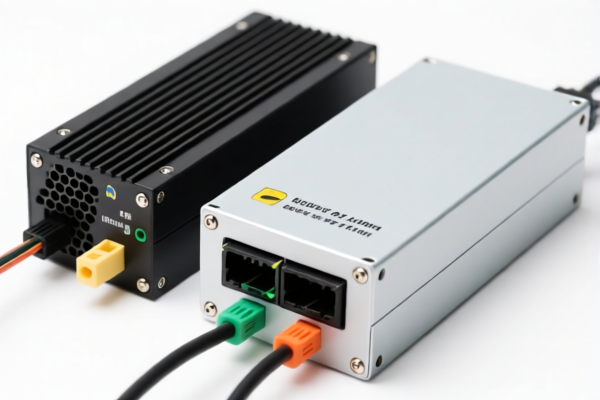
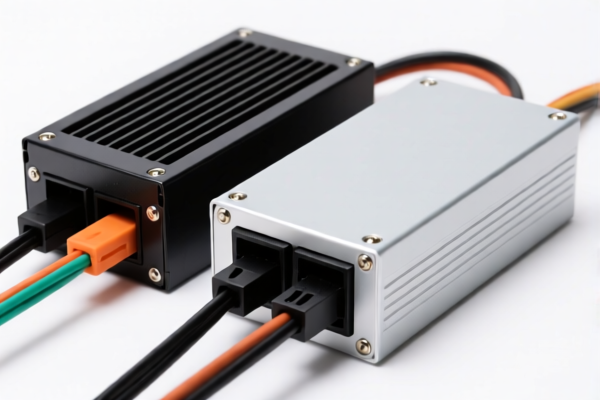
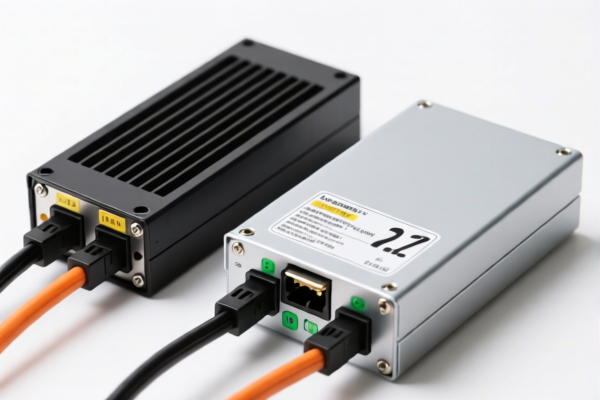
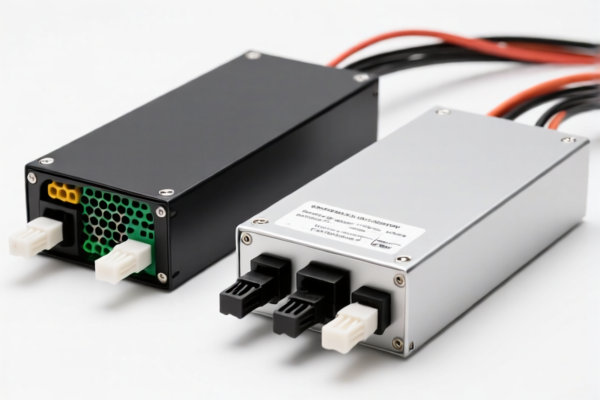
AI Analysis
🔌 Charger (Power Adapters & Portable Battery Packs)
🌐 HS Code Reference & Customs Clearance Guide | 2026 Latest Tariff Analysis | Professional Clearance Strategy
📌 I. Product Definition & Classification: What Exactly is a "Charger"?
In international trade, the term "Charger" is ambiguous and often leads to misclassification. It generally covers two distinct types of goods with different HS codes and tax implications:
- Portable Battery Packs (Power Banks): These are portable storage devices. They are fundamentally electric accumulators (batteries) capable of storing electrical energy.
- Key Characteristic: Contains cells, protection circuits, and output ports, but no external power cord/plug for direct grid connection (usually charged via USB).
- Wall Chargers/Adapters: These are static converters (rectifiers). They convert AC mains voltage into DC voltage.
- Key Characteristic: Has a plug for the wall outlet and converts energy flow.
- Charging Pouches/Bags: Accessories used to carry these items.
- Key Characteristic: A container made of plastic or textile material.
⚠️ Critical Distinction:
- If it stores energy internally (like a phone battery you carry around) → HS 8507 (Battery).
- If it converts energy (plugs into the wall) → HS 8504 (Static Converter).
- If it is a bag → HS 4202 (Articles of Apparel or Travel Goods).
📦 II. HS Code Classification Details (2026 Latest Tariff Reference)
| HS Code | Product Description | Summary | Application Scenario |
|---|---|---|---|
8507.80.82.00 |
Portable Battery (Power Bank) | Essence is a portable electric accumulator, matching the characteristics of electric batteries. | Power banks, portable battery packs for phones/laptops. |
8504.40.95.20 |
Static Converter (Rectifier) | Belongs to power supplies; specifically, rectifying equipment within static converters. | Wall chargers, AC/DC adapters that plug directly into the outlet. |
8504.40.95.10 |
Static Converter (Power Supply) | Belongs to the category of static converters, typically with power output under 50W. | Low-power adapters, small phone chargers. |
4202.32.10.00 |
Travel Goods / Pouches | A container for carrying personal items; shape is a pouch/bag, material likely plastic or textile. | Charging pouches, travel cases for chargers/power banks. |
🔍 Key Reminder:
- Do not classify a Power Bank as a Charger (8504). A Power Bank is a Battery (8507). Misclassification here can lead to significant tax discrepancies because the base duty rates differ. - For wall chargers, the distinction between8504.40.95.20and8504.40.95.10often depends on specific power output classifications (often <50W vs higher, though both are currently taxed similarly in this dataset).
💰 III. 2026 Latest Tariff Rate Breakdown (Including Surtaxes & Policy Surcharges)
✅ Applicable Country: United States (US)
✅ Origin: China (CN)
✅ Effective Time: Current rates apply (including Section 301 and 122 surcharges)
🎯 1. 8507.80.82.00 —— Portable Battery Packs (Power Banks)
| Item | Content |
|---|---|
| Base Duty | 3.4% |
| Surtax (Section 301) | +25.0% |
| Section 122 Duty | +10.0% |
| Total Tax Rate | 38.4% |
| Tax Calculation | CIF Value × 38.4% |
| De Minimis Eligibility | ❌ Denied (deny_de_minimis) |
| Legal Basis Path | USITC:8507.80.82.00 → FOOTNOTE:301 → Section 122 |
📌 Explanation:
- Power banks are treated as batteries.
- The 3.4% is the standard MFN (Most Favored Nation) duty.
- The 25% is the Section 301 tariff imposed on Chinese imports.
- The 10% is the additional Section 122 tariff (often applied to certain goods under specific trade authorities).
- Total: 38.4%. This is a high tariff category. Small packages are not exempt from de minimis.
🎯 2. 8504.40.95.20 —— Static Converters / Rectifiers (Wall Chargers)
| Item | Content |
|---|---|
| Base Duty | 0.0% |
| Surtax (Section 301) | +25.0% |
| Section 122 Duty | +10.0% |
| Total Tax Rate | 35.0% |
| Tax Calculation | CIF Value × 35.0% |
| De Minimis Eligibility | ❌ Denied (deny_de_minimis) |
| Legal Basis Path | USITC:8504.40.95.20 → FOOTNOTE:301 → Section 122 |
📌 Note:
- Wall chargers are classified as static converters.
- The base duty is 0%, which is lower than power banks.
- However, the 25% Section 301 and 10% Section 122 still apply.
- Total: 35.0%. Still a high effective rate due to surcharges.
🎯 3. 8504.40.95.10 —— Static Converters (Low Power, <50W)
| Item | Content |
|---|---|
| Base Duty | 0.0% |
| Surtax (Section 301) | +25.0% |
| Section 122 Duty | +10.0% |
| Total Tax Rate | 35.0% |
| Tax Calculation | CIF Value × 35.0% |
| De Minimis Eligibility | ❌ Denied (deny_de_minimis) |
| Legal Basis Path | USITC:8504.40.95.10 → FOOTNOTE:301 → Section 122 |
📌 Note:
- This sub-heading is for converters typically under 50W.
- The tax structure is identical to8504.40.95.20.
- Ensure your product description clearly states the power output if you wish to argue for this specific sub-heading, though the final tax impact is the same in this dataset.
🎯 4. 4202.32.10.00 —— Charging Pouches / Cases
| Item | Content |
|---|---|
| Base Duty | 12.1¢/kg + 4.6% |
| Surtax (Section 301) | +25.0% |
| Section 122 Duty | +10.0% |
| Total Tax Rate | 12.1¢/kg + 4.6% + 35.0% (Combined Calculation) |
| De Minimis Eligibility | ❌ Denied (deny_de_minimis) |
| Legal Basis Path | USITC:4202.32.10.00 → FOOTNOTE:301 → Section 122 |
📌 Explanation:
- This is a mixed duty (Specific + Ad Valorem).
- You pay 12.1 cents per kilogram PLUS 4.6% of the CIF value.
- Then, the 25% and 10% surcharges are applied on top of the total calculated duty/value.
- This is typically the cheapest component if shipped as a standalone accessory, but still subject to heavy surcharges.
🛠️ IV. Customs Clearance Practical Advice (Real-World Pitfall Guide)
✅ 1. Preparation Checklist (Missing items will cause delays)
| Document | Required | Explanation |
|---|---|---|
| ✅ Product Specs | ✔️ | Must clearly state: Is it a battery (mAh/Voltage) or adapter (Input/Output Watts)? |
| ✅ Battery Report | ✔️ | For 8507: UN38.3 test report is MANDATORY for shipping. Without it, carrier will refuse shipment. |
| ✅ FCC ID | ✔️ | For 8504/8507: Electronic devices must have FCC ID to clear US customs. |
| ✅ Photos | ✔️ | Clear images of the device, label, and any packaging showing "Lithium Battery" markings. |
| ✅ Invoice | ✔️ | Must distinguish between "Power Bank" and "Charger Adapter" if sold together. Do not bundle them under one vague term. |
✅ 2. Declaration Techniques (Key Mantras)
🔥 “Battery is Battery, Adapter is Converter. Separate them, save money!”
| Situation | Correct Declaration | Wrong Practice |
|---|---|---|
| Power Bank | 8507.80.82.00 - "Portable Lithium Ion Battery Pack" |
Misclassified as "Charger" (8504) → Potential penalty or delay. |
| Wall Charger | 8504.40.95.20 - "AC-DC Adapter, Static Converter" |
Misclassified as "Battery" → Incorrect base rate (3.4% vs 0%). |
| Charger + Power Bank in one box | Split Declaration recommended | Single line item "Charging Kit" → High risk of rejection or forced re-classification. |
| Charging Bag | 4202.32.10.00 - "Textile Pouch for Electronics" |
Labeled as "Charger" → High duty risk. |
✅ 3. Special Handling Cases
| Situation | Handling Advice |
|---|---|
| OEM Custom Chargers | Provide customer PO and technical drawings. Ensure FCC ID matches the model number. |
| Power Banks without UN38.3 | DO NOT SHIP. US Customs and CBP will seize or return these. Airlines will refuse them. |
| High-Power GaN Chargers | Ensure description mentions "Static Converter" and specific Wattage. If >50W, verify if it still fits 8504.40.95 or needs a different sub-heading. |
| Charging Cable + Adapter | Declare separately. Cable might fall under different HS (e.g., 8544), Adapter under 8504. Mixing them complicates duty calculation. |
🌍 V. Global Market Clearance Comparison (2026 Latest)
| Country/Region | Recommended HS Code | Tariff (CN Origin) | Certification Required | Notes |
|---|---|---|---|---|
| 🇺🇸 USA | 8507.80.82.00 / 8504.40.95 |
35% - 38.4% | FCC + UN38.3 (Batteries) | Highest duty burden due to 301 + 122 surcharges. |
| 🇨🇳 China | 8507.80.82.00 / 8504.40.95 |
5% - 8% | CCC | No additional surcharges. |
| 🇪🇺 EU | 8507.60.00 / 8504.40.99 |
4% - 6% | CE + WEEE + RoHS | No Section 301. Standard EU VAT applies. |
| 🇬🇧 UK | 8507.60.00 / 8504.40.99 |
4% - 6% | UKCA + CE | Post-Brexit rules apply. |
📌 Conclusion:
- The US is the most expensive market for charging products due to the cumulative effect of Base Duty + Section 301 (25%) + Section 122 (10%).
- EU and UK offer much lower tariff rates but have stricter safety and environmental certifications (CE, RoHS, WEEE).
- China remains the low-cost manufacturing base with minimal export duties.
📌 VI. Common Errors & Pitfall Guide (Lessons Learned)
❌ Error 1: Declaring a Power Bank as a "Charger" (HS 8504)
👉 Consequence: Incorrect base duty (0% vs 3.4%). Even a small difference becomes significant at scale. CBP may audit and demand back taxes.
👉 Fix: Always classify power storage devices as 8507.
❌ Error 2: Shipping Power Banks without UN38.3 Report
👉 Consequence: Seizure by CBP and return by airline. Total loss of goods.
👉 Fix: Ensure UN38.3 certification is available for all lithium-ion battery products.
❌ Error 3: Ignoring FCC ID
👉 Consequence: Goods held in customs bond until FCC ID is provided. Delays of 2-4 weeks.
👉 Fix: Ensure all electronic chargers/adapters have a valid FCC ID linked to the model.
❌ Error 4: Combining Charger and Cable in one HS Code
👉 Consequence: Misclassification. Cables are often 8544. Chargers are 8504.
👉 Fix: Declare components separately if possible, or consult a broker for the correct "set" classification.
✅ Correct Declaration Example:
"Lithium Ion Portable Battery Pack, 10,000mAh, 3.7V, Model XYZ, FCC ID: ABC123, UN38.3 Certified"
HS:8507.80.82.00
🎯 VII. Conclusion: Professional Declaration, Cost Savings, Smooth Clearance!
🎯 Remember the Mantra:
🔹 "Batteries are 8507 (38.4%), Adapters are 8504 (35%), Bags are 4202."
🔹 "No FCC? No Entry. No UN38.3? No Flight."
🔹 "Separate the parts, avoid the penalties."
📌 Pro Tip:
- If your products are shipped from Vietnam, Mexico, or Malaysia, you may qualify for IEEPA Exemptions or lower Section 301 rates.
- Consider applying for an Advance Ruling from CBP if you are unsure about the classification of complex charger-battery combos.
📣 Take Action Now:
📞 Contact a licensed customs broker.
📄 Provide your FCC ID and UN38.3 reports.
🚀 Ensure your HS codes are precise to avoid 38.4% shocks at the border.
✨ Professional clearance starts with accurate classification!
💼 Every percentage point of duty is profit lost. Protect it!
Customer Reviews
About HS Code Classification
The Harmonized System (HS) is an internationally standardized nomenclature developed by the World Customs Organization (WCO) to classify traded products. Over 200 countries use the HS system as the basis for customs tariffs, trade statistics, and import/export regulations.
Each HS code follows a hierarchical structure:
- Chapter (2 digits) — Broad category of goods (e.g., Chapter 84: Machinery and Mechanical Appliances)
- Heading (4 digits) — More specific grouping within the chapter
- Subheading (6 digits) — Internationally standardized breakdown, used by all WCO member countries
- National subdivisions (8-10 digits) — Country-specific extensions for further classification, such as US HTSUS 10-digit codes
Correct HS code classification is essential for smooth customs clearance, accurate duty payment, and compliance with trade regulations. Misclassification can lead to customs delays, overpayment of duties, or penalties.
When importing from CN to US, the applicable tariff rates may include:
- Most-Favored-Nation (MFN) rate — The standard duty rate applied to WTO members
- General rate — Applied to countries without trade agreements
- Trade remedy duties — Additional tariffs such as Section 301 (anti-dumping), Section 232 (national security), or countervailing duties
The information provided on this page is for reference purposes only. For official classification, please consult with your local customs authority or a licensed customs broker.