Charging Board
CN → US| HS Code | Tariff Rate | Origin | Destination | Doc |
|---|---|---|---|---|
| 8504907500 | 35.0% | CN | US | Official Doc |
| 8504906500 | 35.0% | CN | US | Official Doc |
| 8542390090 | 60.0% | CN | US | Official Doc |
| 8542900000 | 60.0% | CN | US | Official Doc |
| 8536694040 | 35.0% | CN | US | Official Doc |
| 8536904000 | 35.0% | CN | US | Official Doc |
Product Images
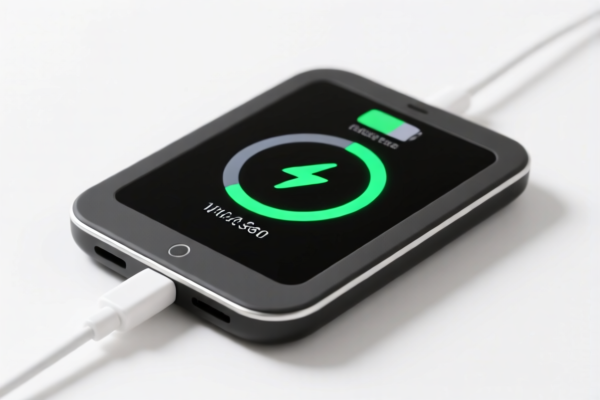

AI Analysis
⚡ Charging Board (Electronic Power Management Units)
🌐 HS Code Reference & Customs Clearance Guide | 2026 Duty Rate Breakdown | Strategic Compliance Strategy
📌 Part I: Product Definition & Classification: What Exactly is a "Charging Board"?
A Charging Board is the critical internal heart of any battery-powered device (smartphones, power banks, EVs, portable tools). In international trade, it is rarely classified as a standalone "charging device" but rather as a component or part of a larger electrical system.
Its classification hinges entirely on its function and integration: 1. The "Brain" of the System: If it contains integrated circuits (ICs) for voltage regulation, battery management, or communication protocols (e.g., USB-PD negotiation), it falls under Electronic Integrated Circuits. 2. The "Part" of a Circuit: If it is a Printed Circuit Assembly (PCA) containing the circuit but not the core ICs, or simply a connector board, it falls under Parts of Electrical Transformers/Converters or Connectors. 3. The "Switch" Unit: If it functions primarily as a protection switch or coupling device without complex IC logic, it may be classified under Switching Apparatus.
⚠️ Critical Distinction: - If the board is dominated by Integrated Circuits (ICs) for data/power logic → 8542.39 or 8542.90. - If the board is a Printed Circuit Assembly (PCA) for power conversion (Transformer/Converter parts) → 8504.90. - If the board acts as a connector/terminal → 8536.69 or 8536.90.
📦 Part II: Detailed HS Code Classification Matrix (2026 Tariff Authority)
Based on your input, here is the precise mapping for "Charging Boards":
| HS Code | Product Description | Primary Application | Tax Rate (Total) | Tax Detail Breakdown |
|---|---|---|---|---|
| 8542.39.00.90 | Electronic Integrated Circuits Other Other |
High-end charging ICs, SoC-based power management units, complex logic boards. | 50.0% | Base: 0.0% Add-on: 50.0% |
| 8542.90.00.00 | Parts of Electronic Integrated Circuits | Boards dominated by ICs but not the chip itself; logic boards containing ICs. | 50.0% | Base: 0.0% Add-on: 50.0% |
| 8504.90.75.00 | Parts of Electrical Transformers/Converters Other: Printed Circuit Assemblies |
Power supply PCAs, rectifier boards without dominant ICs. | 25.0% | Base: 0.0% Add-on: 25.0% |
| 8504.90.65.00 | PCAs for Telecommunication Apparatus For goods of subheading 8504.40/50 |
Charging boards specifically designed for telecom base stations or network equipment. | 25.0% | Base: 0.0% Add-on: 25.0% |
| 8536.69.40.40 | Electrical Connectors (Printed Circuit Connectors) | Boards functioning primarily as interconnectors or ribbon cables for power. | 25.0% | Base: 0.0% Add-on: 25.0% |
| 8536.90.40.00 | Terminals, Splices, Couplings Wafer Probers / Splicing |
Boards acting as simple terminals, electrical splices, or test interfaces. | 25.0% | Base: 0.0% Add-on: 25.0% |
🔍 Key Insight: - The 50.0% rate applies to high-tech IC boards (8542.xx). - The 25.0% rate applies to power parts, connectors, and PCBAs (8504.xx, 8536.xx). - Always verify if the board's primary value driver is the IC or the Circuit/Structure.
💰 Part III: 2026 Tax Rate Deep Dive (US Market Focus)
✅ Applicable Market: United States (US)
✅ Origin: China (CN)
✅ Status: Active (High Risk)
🎯 Scenario A: High-Tech Charging IC Board (8542.39.00.90 & 8542.90.00.00)
| Item | Content |
|---|---|
| Base Tariff | 0.0% (Most Favored Nation) |
| Section 301 / "Add-on" Tariff | +50.0% (Aggressive US Trade Policy) |
| Total Effective Duty | 50.0% |
| Calculation | CIF Value × 50% |
| De Minimis Exemption | ❌ NO (High-value commercial goods) |
| Legal Path | USITC 301 Actions targeting Advanced Electronics/ICs |
📌 Explanation: This is the highest penalty tier for Chinese electronics. If your charging board contains a custom Power Management IC (PMIC) or a complex processor, it is automatically hit with the 50% surcharge. There is no 10% or 25% compromise here; it is binary: IC = 50%.
🎯 Scenario B: Standard Power PCA or Connector Board (8504.90.x, 8536.69, 8536.90)
| Item | Content |
|---|---|
| Base Tariff | 0.0% |
| Section 301 / "Add-on" Tariff | +25.0% |
| Total Effective Duty | 25.0% |
| Calculation | CIF Value × 25% |
| De Minimis Exemption | ❌ NO (Generally) |
| Legal Path | USITC 301 Actions targeting Electrical Machinery/Parts |
📌 Explanation: If the board is essentially a PCB with discrete components (resistors, capacitors, diodes) or simple connectors, without a dominant "Other IC", the duty drops to 25%. This is the sweet spot for standard power adapters and charging PCBAs.
🛠️ Part IV: Customs Clearance & Operational Strategy (The "Anti-Audit" Guide)
✅ 1. Documentation Checklist (Critical for 50% vs 25% Decision)
| Document | Mandatory? | Why It Matters |
|---|---|---|
| Detailed BOM (Bill of Materials) | ✔️ YES | Must list every IC. If a specific "Power IC" is listed, Customs will likely push for 8542 (50%). |
| Functional Schematics | ✔️ YES | To prove if the board is a "Logic Board" (IC-heavy) or a "Power Conversion Board" (Transformer/Part). |
| Product Photos (Internal & External) | ✔️ YES | Show the form factor. Is it a tiny chip? A large PCB? |
| Declaration of "No IC" | ✔️ YES | If claiming 25%, you must prove the absence of complex ICs. |
| Commercial Invoice | ✔️ YES | Must NOT say "Charging Board" alone. Use specific terms (e.g., "Printed Circuit Assembly"). |
✅ 2. Declaration Strategy (The "Name Game")
🔥 Golden Rule: "Don't call it an IC if it's a Part. Don't call it a Part if it's an IC."
| Situation | Correct Classification | Declaration Term | Risk if Wrong |
|---|---|---|---|
| Board contains a PMIC/SoC | 8542.39.00.90 |
"Power Management IC Assembly" | Under-declaration: 50% Duty + Penalties |
| Board is a raw PCB for Power | 8504.90.75.00 |
"Printed Circuit Assembly for Converters" | Over-declaration: Missed savings (25% vs 50%) |
| Board is a Connector Hub | 8536.69.40.40 |
"Printed Circuit Connector Assembly" | Misclassification: 25% vs 50% or 40% |
✅ 3. Special Circumstances & Loopholes
| Scenario | Strategy |
|---|---|
| "Charging Board" with Telecomm Function | If the board is for telecommunication apparatus, check 8504.90.65.00. Still 25%, but easier to justify as a "Part" rather than "IC". |
| Mixed Components | If the board has both ICs and Power Parts, the Principal Characteristic rule applies. If the IC defines the function, it's 50%. If the circuit structure defines it, it's 25%. |
| OEM/ODM Customization | Provide the customer's design file. If the customer bought the ICs and you just assembled the board, you might argue it's a "Part" (25%), but this is high-risk and requires strong proof of ownership of the IC. |
🌍 Part V: Global Market Comparison (2026 Outlook)
| Region | Likely HS Code | Duty Rate (China Origin) | Note |
|---|---|---|---|
| 🇺🇸 USA | 8542 or 8504/8536 |
25% or 50% | Highest Risk. Aggressive "Tech War" tariffs. |
| 🇪🇺 EU | 8542 or 8504 |
Varies (0-10%) | Generally lower than US, but strict CE/RoHS. No Section 301. |
| 🇨🇳 China (Import) | 8542 or 8504 |
Varies (0-5%) | Low duty, strict environmental checks. |
| 🇯🇵 Japan | 8542 or 8504 |
0-3% | Very favorable for electronics parts. |
📌 Conclusion: The US market is the hardest for Charging Boards. A misclassification of just one line item (IC vs Part) can double your duty cost (25% → 50%).
📌 Part VI: Common Pitfalls & "Blood and Tears" Lessons
❌ Pitfall 1: The "Universal" Declaration
Action: Writing "Charging Board" on the invoice. Consequence: Customs doesn't know if it's an IC or a PCB. They often default to the highest tariff (
8542= 50%) to be safe. Fix: Be specific: "PCBA for Power Supply, No Integrated Circuit" or "Power Management IC Module".
❌ Pitfall 2: Ignoring the BOM
Action: Shipping a board with a $5 Power IC but declaring it as a $2 PCB. Consequence: Customs audits the BOM, detects the IC, and charges 50% + Back Taxes + 100% Penalty. Fix: Align Invoice Value with BOM Value. If the IC is the value driver, declare
8542.
❌ Pitfall 3: Splitting the Shipment
Action: Sending "Chips" (50%) and "Boards" (25%) separately to save tax. Consequence: Customs views this as "Circumvention". They combine them or penalize you for false declaration. Fix: Declare the complete unit. If it's a single product, classify as a single entity based on its primary function.
✅ Best Practice:
"Precision over Generality" Use terms like: - "Printed Circuit Assembly (PCA) for Rectifier" (
8504.90.75.00) - "Electronic Integrated Circuit, Power Management" (8542.39.00.90) - "Printed Circuit Connector for Data Lines" (8536.69.40.40)
🎯 Part VII: Final Verdict & Action Plan
🎯 The Bottom Line: Your "Charging Board" is a 50.0% tariff trap if it contains Integrated Circuits. It is a 25.0% opportunity if it is a pure Printed Circuit Assembly or Connector.
🔹 Strategy: "IC = 50%, PCB = 25%. Know the difference!" 🔹 Risk: "One wrong word = 25% difference. On $1M goods = $250k lost!"
📌 Pro Tip:
If you can redesign your board to move the IC logic to a separate module (sold as a chip) and the "Charging Board" becomes just a passive power distribution PCB, you MIGHT shift from
8542(50%) to8504(25%). Consult a customs lawyer before redesigning!
📣 Immediate Action Required:
- Audit your BOM: List every chip.
- Classify: Is the IC the main feature?
- Document: Prepare "No IC" or "IC" specific declarations.
- File: Submit with the correct HS Code (
8542or8504/8536).
✨ Expert Customs, Smart Logistics!
💼 Don't let a 25% rate gap destroy your margin!
Customer Reviews
About HS Code Classification
The Harmonized System (HS) is an internationally standardized nomenclature developed by the World Customs Organization (WCO) to classify traded products. Over 200 countries use the HS system as the basis for customs tariffs, trade statistics, and import/export regulations.
Each HS code follows a hierarchical structure:
- Chapter (2 digits) — Broad category of goods (e.g., Chapter 84: Machinery and Mechanical Appliances)
- Heading (4 digits) — More specific grouping within the chapter
- Subheading (6 digits) — Internationally standardized breakdown, used by all WCO member countries
- National subdivisions (8-10 digits) — Country-specific extensions for further classification, such as US HTSUS 10-digit codes
Correct HS code classification is essential for smooth customs clearance, accurate duty payment, and compliance with trade regulations. Misclassification can lead to customs delays, overpayment of duties, or penalties.
When importing from CN to US, the applicable tariff rates may include:
- Most-Favored-Nation (MFN) rate — The standard duty rate applied to WTO members
- General rate — Applied to countries without trade agreements
- Trade remedy duties — Additional tariffs such as Section 301 (anti-dumping), Section 232 (national security), or countervailing duties
The information provided on this page is for reference purposes only. For official classification, please consult with your local customs authority or a licensed customs broker.