Charging Data Cable
CN → US| HS Code | Tariff Rate | Origin | Destination | Doc |
|---|---|---|---|---|
| 8544422000 | 85.0% | CN | US | Official Doc |
| 8544429090 | 87.6% | CN | US | Official Doc |
| 8544429010 | 87.6% | CN | US | Official Doc |
| 8544429090 | 87.6% | CN | US | Official Doc |
| 8473309100 | 35.0% | CN | US | Official Doc |
Product Images
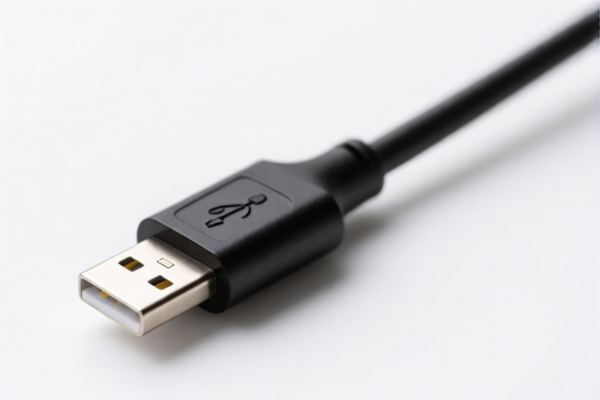
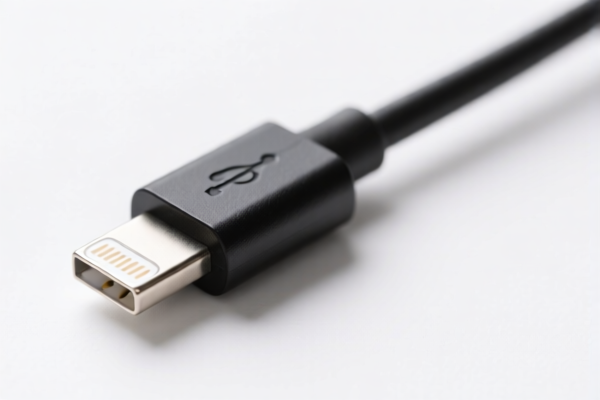
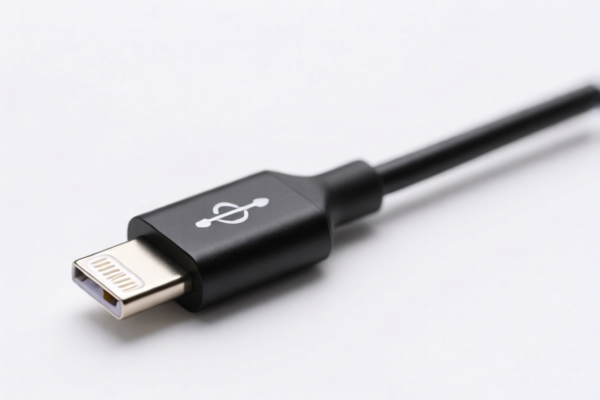
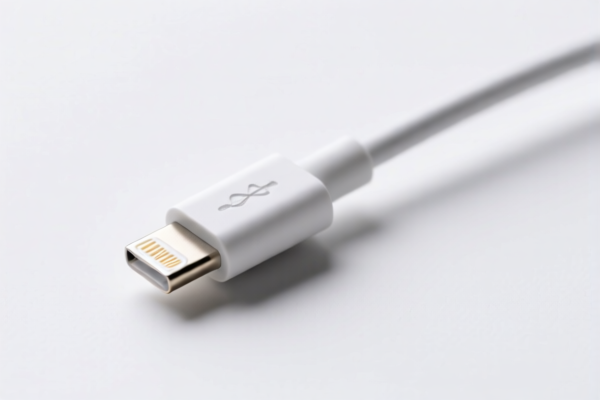
AI Analysis
🔌 Charging & Data Cables: HS Code Master Guide | 2026 Customs Clearance Strategy
🌐 HS Code Reference & Customs Clearance Guide | 2026 Latest Tariff Analysis | Professional Strategy
📌 Part 1: Product Definition – What is a "Charging Data Cable"?
A Charging Data Cable is a versatile accessory used for both power transmission and data synchronization between electronic devices (smartphones, tablets, laptops, IoT devices) and power sources or computing equipment.
In international trade, the classification depends heavily on: 1. Function: Is it primarily for telecommunications/data (8544) or is it considered an accessory to a specific machine like a computer (8473)? 2. Voltage: Typically operates below 1,000V. 3. Construction: Insulated conductors, often with connectors.
⚠️ Key Distinction Point:
- If the cable is primarily for data transmission/telecommunications purposes → Classify under Chapter 85 (Electrical machinery and equipment).
- If explicitly marketed as a spare part/accessory for Automatic Data Processing Machines (ADPMs/Computers) → Classify under Chapter 84.
📦 Part 2: HS Code Classification Details (2026 Latest Tariff Authority)
Based on the provided data, here are the four possible classifications, ranging from high-tariff telecom cables to lower-tariff computer accessories.
| HS Code | Product Description | Summary/Justification | Total Tax Rate (China-Origin to US) |
|---|---|---|---|
| 8544.42.20.00 | Telecommunication Cables | Justification: "Charging Data Cable" implies material is an electrical conductor, shape is for telecom/data transmission. Matches "Electrical conductors for telecommunications." | 85.0% |
| 8544.42.90.90 | Other Insulated Conductors (<1000V) | Justification: Cable is an electrical conductor with connectors. Inferred as insulated conductor with voltage ≤1,000V. Falls under "Other" category for these specific cables. | 87.6% |
| 8544.42.90.10 | Extension Cables | Justification: Inferred material is electrical conductor. Shape is an extension with connectors. Matches definition of "Extension cable." | 87.6% |
| 8473.30.91.00 | Parts/Accessories for ADPMs | Justification: Inferred material is Copper/Plastic. Shape is an electronic connector cable. Classified as an accessory/parts for 8471 machines (Computers/Data Processing Equipment). No conflict with material/usage. | 35.0% |
🔍 Critical Note:
- 8544.42.20.00 and 8544.42.90.xx carry significantly higher tariffs (85-87.6%).
- 8473.30.91.00 offers the most favorable tax rate (35%) but requires strict justification as a computer accessory.
💰 Part 3: 2026 Latest Tariff Rate Breakdown (Including Additional Taxes)
✅ Applicable Country: United States (US)
✅ Country of Origin: China (CN)
✅ Effective Time: Post-2025 policies (Section 301 & IEEPA)
🎯 1. 8544.42.20.00 —— Telecommunication Cables
| Item | Detail |
|---|---|
| Base Tariff | 0.0% |
| Section 301 (Additional) | +25.0% |
| IEEPA (China Specific) | +10.0% |
| Section 122 (Steel/Aluminum/Copper Products) | +50.0% |
| Total Effective Rate | 85.0% |
| Tax Calculation | CIF Value × 85.0% |
| De Minimis Exemption | ❌ Not Applicable |
| Legal Path | Base: 0% → Sec 301: 25% → IEEPA: 10% → Sec 122: 50% |
📌 Explanation:
- The 50% Section 122 tariff applies specifically to products made of steel, aluminum, or copper. Since most charging cables contain copper conductors, this heavy surcharge is triggered. - Total 85% makes this classification extremely expensive.
🎯 2. 8544.42.90.90 & 8544.42.90.10 —— Other Conductors / Extension Cables
| Item | Detail |
|---|---|
| Base Tariff | 2.6% |
| Section 301 (Additional) | +25.0% |
| IEEPA (China Specific) | +10.0% |
| Section 122 (Steel/Aluminum/Copper Products) | +50.0% |
| Total Effective Rate | 87.6% |
| Tax Calculation | CIF Value × 87.6% |
| De Minimis Exemption | ❌ Not Applicable |
| Legal Path | Base: 2.6% → Sec 301: 25% → IEEPA: 10% → Sec 122: 50% |
📌 Warning:
- The Section 122 50% surcharge is the dominant factor here. Even though the base rate is slightly higher (2.6%) than code 20, the total cost is higher due to the cumulative effect. - Whether classified as "Other" (90.90) or "Extension" (90.10), the tariff burden is nearly identical and prohibitive.
🎯 3. 8473.30.91.00 —— Parts/Accessories for Automatic Data Processing Machines
| Item | Detail |
|---|---|
| Base Tariff | 0.0% |
| Section 301 (Additional) | +25.0% |
| IEEPA (China Specific) | +10.0% |
| Section 122 (Steel/Aluminum/Copper Products) | ❌ Not Applicable |
| Total Effective Rate | 35.0% |
| Tax Calculation | CIF Value × 35.0% |
| De Minimis Exemption | ❌ Not Applicable |
| Legal Path | Base: 0% → Sec 301: 25% → IEEPA: 10% |
📌 Strategic Advantage:
- This classification avoids the 50% Section 122 copper surcharge. - It assumes the cable is an integral part of a computer/data processing system. - Savings: Compared to the 85%+ rates, this saves 50 percentage points in taxes. - Risk: Customs may challenge this if the cable is generic (e.g., standard USB-C phone charger) and not specifically designed for a computer. However, "Data Cable" often supports data processing, making this a defensible position if documented correctly.
🛠️ Part 4: Customs Clearance Practical Advice (Real-World Pitfall Guide)
✅ 1. Documentation Checklist (Essential)
| Document | Required | Purpose |
|---|---|---|
| ✅ Product Specification Sheet | ✔️ | Must define usage: "For data synchronization with computers/smartphones." |
| ✅ Technical Diagram | ✔️ | Show internal conductors (copper) and insulation. |
| ✅ Product Photos | ✔️ | Clear view of connectors (USB-A, USB-C, Lightning, etc.). |
| ✅ Commercial Invoice | ✔️ | Description should match HS Code intent (e.g., "Computer Data Cable" vs "Telecom Cable"). |
| ✅ Origin Certificate | ✔️ | Required for tariff calculation. |
✅ 2. Classification Strategy & Tips
🔥 Golden Rule: "Avoid Copper Surcharge via 8473, or Accept 85% Tax!"
| Scenario | Recommended HS Code | Why? |
|---|---|---|
| Generic Phone Charger Cable | 8544.42.20.00 or 8544.42.90.90 | If sold primarily for mobile devices, customs may view it as telecom/data cable. Expect 85-87.6%. |
| Cable Sold with Computer/Laptop | 8473.30.91.00 | If bundled as a "Computer Accessory" or marketed for data processing, this is the low-tax option (35%). |
| Specialized Industrial Data Cable | 8544.42.20.00 | If used for network infrastructure/telecom, this is the correct fit. High tax is unavoidable. |
| Extension Cord for Power | 8544.42.90.10 | If it's purely for power extension (not data), this applies. High tax due to copper. |
📌 Critical Tip:
- To justify 8473.30.91.00, ensure your product description emphasizes "Data Processing" and "Computer Accessory".
- Avoid terms like "Telecommunications Network Cable" if aiming for the lower 35% rate.
- Be prepared to explain that the copper content is incidental to its function as a computer part, not a "copper product" per se.
✅ 3. Special Circumstances
| Situation | Advice |
|---|---|
| OEM Custom Cables for Computers | Provide OEM contracts stating the cable is designed for specific computer models. Strengthens 8473 case. |
| Mixed Shipments (Cables + Devices) | Declare devices separately. Cables must be declared accurately based on their primary use. |
| Small Parcels (De Minimis) | Note: Despite low-value goods often being exempt, these specific HS codes with Section 301/IEEPA/122 taxes do not enjoy de minimis exemption for Chinese origin. Taxes still apply. |
🌍 Part 5: Global Market Comparison (2026)
| Country/Region | Recommended HS Code | Approx. Tariff (China Origin) | Notes |
|---|---|---|---|
| 🇺🇸 USA | 8473.30.91.00 |
35.0% | Best option. Avoids Section 122 copper tax. |
| 🇺🇸 USA | 8544.42.20.00 |
85.0% | High risk if misclassified. |
| 🇪🇺 EU | 8544.42.90 |
~4.5% - 8% | No Section 301/IEEPA. Standard EU tariffs apply. |
| 🇨🇳 China | 8544.42.20 |
Varies | Domestic trade rules differ. |
📌 Conclusion:
- USA is the critical market for tariff strategy.
- The 35% vs 85% difference is massive.
- Recommendation: Attempt to classify as 8473.30.91.00 (Computer Accessory) if the cable supports data processing functions. Provide strong technical documentation to defend this classification if audited.
📌 Part 6: Common Mistakes & Pitfalls (Lessons Learned)
❌ Mistake 1: Classifying all cables as 8544 to be "safe."
👉 Consequence: You pay 85-87.6% tax. Unnecessary cost!
❌ Mistake 2: Claiming 8473 for a simple power-only cable.
👉 Consequence: Customs may reject it if no data transmission capability is proven. Risk of penalty.
❌ Mistake 3: Ignoring Section 122 Copper Surcharge.
👉 Consequence: If your HS Code triggers the 50% surcharge and you didn't budget for it, your profit margin will be wiped out.
✅ Correct Approach:
"USB Data Cable, Model XYZ, Supports Data Sync and Charging, For Use with Computers/Smartphones, FCC Certified."
Aim for 8473.30.91.00 to save 50% in taxes.
🎯 Part 7: Conclusion – Professional Classification Saves Money!
🎯 Key Takeaway:
🔹 "Data Cable" can be a "Computer Part" (35%) or a "Copper Telecom Cable" (85%). Choose wisely!
🔹 Section 122 (50%) is the killer. Avoid it by classifying under 8473 if possible.
🔹 Documentation is key. Prove the "Data Processing" link.
📌 Pro Tip:
If you are exporting large volumes, consider applying for an Advance Ruling from US Customs (CBP) to lock in the 35% rate for your specific cable design. This provides legal certainty and avoids surprise audits.
📣 Action Required:
📞 Consult a licensed customs broker.
📄 Provide technical specs highlighting data transmission capabilities.
🚀 Optimize your tariff burden from 85% → 35% today!
✨ Precise Classification, Maximum Profit.
💼 Don't let copper tariffs cost you your margin!
Customer Reviews
About HS Code Classification
The Harmonized System (HS) is an internationally standardized nomenclature developed by the World Customs Organization (WCO) to classify traded products. Over 200 countries use the HS system as the basis for customs tariffs, trade statistics, and import/export regulations.
Each HS code follows a hierarchical structure:
- Chapter (2 digits) — Broad category of goods (e.g., Chapter 84: Machinery and Mechanical Appliances)
- Heading (4 digits) — More specific grouping within the chapter
- Subheading (6 digits) — Internationally standardized breakdown, used by all WCO member countries
- National subdivisions (8-10 digits) — Country-specific extensions for further classification, such as US HTSUS 10-digit codes
Correct HS code classification is essential for smooth customs clearance, accurate duty payment, and compliance with trade regulations. Misclassification can lead to customs delays, overpayment of duties, or penalties.
When importing from CN to US, the applicable tariff rates may include:
- Most-Favored-Nation (MFN) rate — The standard duty rate applied to WTO members
- General rate — Applied to countries without trade agreements
- Trade remedy duties — Additional tariffs such as Section 301 (anti-dumping), Section 232 (national security), or countervailing duties
The information provided on this page is for reference purposes only. For official classification, please consult with your local customs authority or a licensed customs broker.