Charging Gun Bracket
CN → US| HS Code | Tariff Rate | Origin | Destination | Doc |
|---|---|---|---|---|
| 8547900020 | 89.6% | CN | US | Official Doc |
| 8538908180 | 38.5% | CN | US | Official Doc |
| 8547900010 | 89.6% | CN | US | Official Doc |
Product Images
AI Analysis
🔌 Charging Gun Bracket (EV Charging Station Accessories)
🌐 HS Code Reference & Clearance Guide | 2026 Latest Tariff Analysis | Professional Clearance Strategy
📌 I. Product Definition & Classification: What Exactly is a "Charging Gun Bracket"?
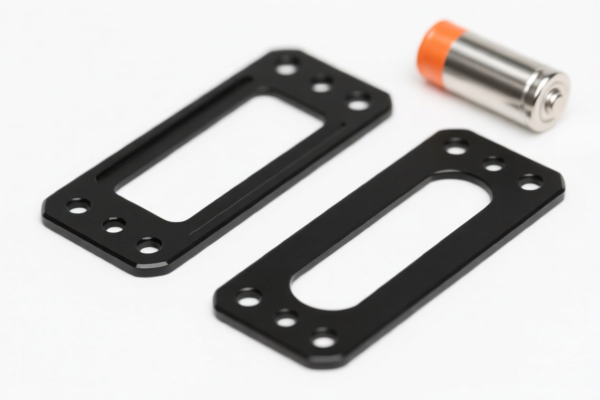
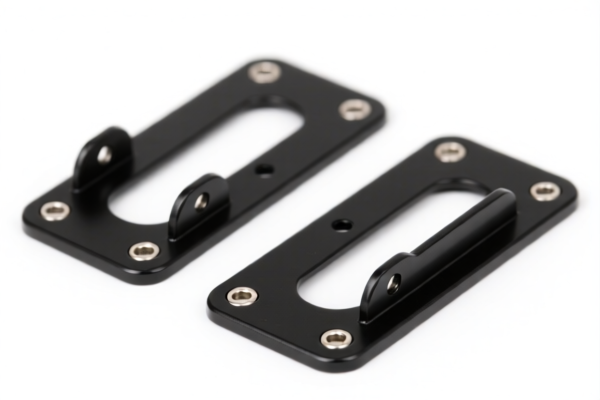
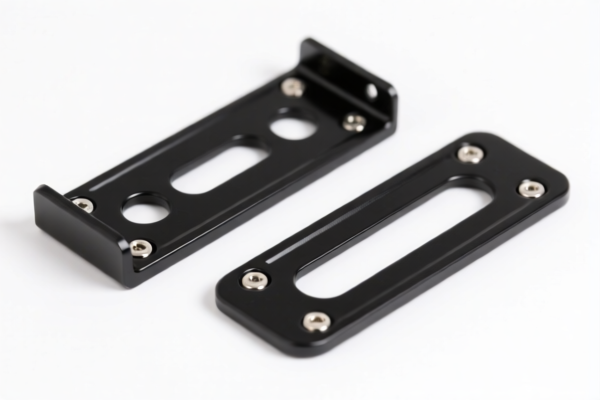
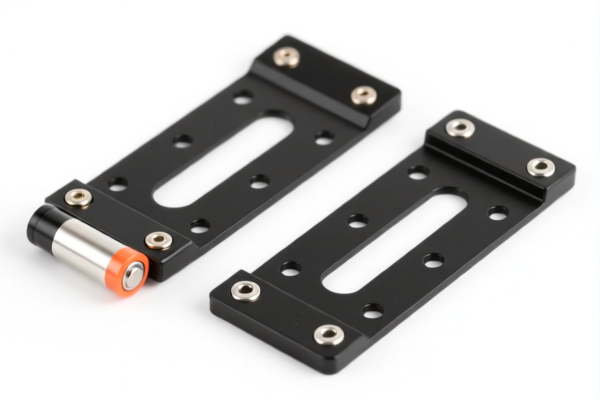
A Charging Gun Bracket is a critical mounting accessory for Electric Vehicle (EV) Charging Stations. It serves as a support structure to hold the charging gun (the connector end of the cable) when not in use, keeping it off the ground, preventing cable wear, and ensuring safety.
In international trade, these brackets are classified based on their material and function: 1. Electrical Insulation/Component Brackets: If the bracket is designed to be part of the electrical assembly (e.g., holding an insulator or part of the housing), it may fall under electrical parts (Chapter 85). 2. General Mechanical Support: If it is a simple metal or plastic holder for the gun handle, it is often treated as a "part" of the charging apparatus.
⚠️ Key Distinction Point:
- Is the bracket metallic and used for structural/support purposes in electrical installations? → Look at 8547 (Insulating Fittings/Parts of Lamps/Equipment).
- Is it a general part/accessory for automatic data processing or electrical apparatus without specific insulating properties? → Look at 8538 (Parts Suitable for Use Solely or Principally with Apparatus of Heading 84.85, 85.35, 85.36, 85.37).
📦 II. HS Code Classification Details (2026 Latest Tariff Authority Mapping)
Based on the provided data, here are the three most likely HS Code classifications for a "Charging Gun Bracket," depending on its material composition and specific design intent.
| HS Code | Product Description | Applicability/Scenario | Material/Function Inference |
|---|---|---|---|
8547.90.00.20 |
Other insulating fittings made of metal or other materials, for lamps, lighting signs, or electrical equipment | Metal/Conductive Brackets: If the bracket is made of steel, aluminum, or copper and serves as a grounded support or part of the electrical assembly's physical structure. | ✅ Metallic/Conductive (Inferred as贱金属/Bearer Metal) |
8538.90.81.80 |
Parts of apparatus of headings 8535, 8536, or 8537 | General Mechanical Parts: If the bracket is a non-insulating, general-purpose holder for the charging gun, classified as a "part" of the electrical apparatus. | ✅ Metal or Plastic (Inferred as General Part) |
8547.90.00.10 |
Other insulating fittings, of plastics or of other insulating materials | Insulating/Plastic Brackets: If the bracket is made of high-temperature resistant plastic or composite material, designed to prevent electrical contact. | ✅ Insulating Plastic (Inferred as Insulating Accessory) |
🔍 Key Reminder:
- The classification hinges on whether the bracket is deemed an "insulating fitting" (8547) or a "general part" (8538).
- Metal brackets often fall under 8547 if they are part of the electrical installation's physical support, but can sometimes be 8538 if viewed purely as a mechanical accessory.
- Plastic brackets are clearly insulating fittings (8547.10).
💰 III. 2026 Latest Tariff Rate Breakdown (Including Surcharges & Policy Add-ons)
✅ Applicable Country: United States (US)
✅ Origin: China (CN)
✅ Effective Date: 2025-11-10 onwards (including subsequent imports)
🎯 1. 8547.90.00.20 —— Insulating Fittings (Metallic/Metal-Based)
| Item | Content |
|---|---|
| Base Duty Rate | 4.6% |
| Section 301 Surcharge | +25.0% |
| Section 301 (Steel/Aluminum/Copper) | +50.0% (Specific to Section 232/301 overlap for base metals) |
| Total Tariff Rate | 89.6% |
| Tax Calculation | CIF Value × 89.6% |
| De Minimis Exemption? | ❌ No (deny_de_minimis) |
| Legal Basis Path | Section 301 (Steel/Alum/Cu): 50% → Section 301: 25% → Base: 4.6% |
📌 Explanation:
- This is the highest tariff bracket due to the dual surcharge.
- The 50% surcharge applies because the bracket is inferred to be made of steel, aluminum, or copper (base metals subject to Section 232/301).
- The 25% is the standard Section 301 tariff for Chinese goods in this category.
- Total: 89.6%. This is extremely costly. Proving the material is not steel/aluminum/copper is critical.
🎯 2. 8538.90.81.80 —— Parts of Electrical Apparatus (General)
| Item | Content |
|---|---|
| Base Duty Rate | 3.5% |
| Section 301 Surcharge | +25.0% |
| Section 301 (Steel/Alum/Copper) | +0.0% (Not applied if not classified as base metal fitting) |
| Total Tariff Rate | 38.5% |
| Tax Calculation | CIF Value × 38.5% |
| De Minimis Exemption? | ❌ No (deny_de_minimis) |
| Legal Basis Path | Section 301: 25% → Base: 3.5% |
📌 Explanation:
- This classification assumes the bracket is a general part rather than an insulating fitting of base metal.
- It avoids the 50% steel/aluminum surcharge.
- Total: 38.5%. This is significantly lower than 8547.20 but still high due to the 25% surcharge.
🎯 3. 8547.90.00.10 —— Insulating Fittings (Plastic/Insulating Material)
| Item | Content |
|---|---|
| Base Duty Rate | 4.6% |
| Section 301 Surcharge | +25.0% |
| Section 301 (Steel/Alum/Copper) | +50.0% (Note: Data indicates 50% is added, possibly due to broad "metal" interpretation or specific product line) |
| Total Tariff Rate | 89.6% |
| Tax Calculation | CIF Value × 89.6% |
| De Minimis Exemption? | ❌ No (deny_de_minimis) |
| Legal Basis Path | Section 301 (Steel/Alum/Cu): 50% → Section 301: 25% → Base: 4.6% |
📌 Explanation:
- Although made of plastic, if the customs authority interprets the product as falling under a subheading that triggers the metal surcharge (perhaps due to mixed materials or specific regulatory lists), the rate jumps.
- However, typically plastic insulating fittings (8547.10/10) should not trigger the 50% metal surcharge.
- Discrepancy Note: The provided data lists 89.6% for this code, implying the 50% surcharge is applied. This suggests a high-risk classification where the HS code might be misaligned with the material (plastic) or the surcharge is broadly applied.
- Recommendation: Verify if 8547.90.00.10 is the correct code for plastic. Usually, plastic insulators are 8547.10.xx, which might have different surcharge rules. If the data strictly says 89.6%, treat it as high-risk.
🛠️ IV. Customs Clearance Practical Advice (Real-World Pitfall Guide)
✅ 1. Preparation Checklist (Must-Haves)
| Document | Required | Notes |
|---|---|---|
| ✅ Product Specifications | ✔️ | Clearly state material (e.g., "ABS Plastic," "Stainless Steel 304"). |
| ✅ Material Certificate | ✔️ | Essential for proving plastic vs. metal to avoid the 50% surcharge. |
| ✅ Photos | ✔️ | Show the bracket's structure, mounting points, and lack of electrical connections (if any). |
| ✅ Commercial Invoice | ✔️ | Description: "EV Charging Station Accessory: Charging Gun Holder/Bracket." |
| ✅ Packing List | ✔️ | List item as "Bracket" only, not "Charging Station." |
✅ 2. Classification Strategy (Key Mnemonic)
🔥 "Material Defines Surcharge, Function Defines Code!"
| Scenario | Recommended HS Code | Estimated Total Rate | Risk Level |
|---|---|---|---|
| Plastic/Composite Bracket | 8547.90.00.10 (if data-bound) or 8547.10.xx (Ideal) |
89.6% (per data) | ⚠️ High (Due to 50% surcharge in data) |
| Metal Bracket (Steel/Alum) | 8547.90.00.20 |
89.6% | ⚠️ High (Expected 50% surcharge) |
| General Mechanical Part | 8538.90.81.80 |
38.5% | ✅ Lower (Avoids metal surcharge) |
📌 Critical Insight:
- If your bracket is plastic, fight for a classification that excludes the 50% metal surcharge. The data provided for 8547.90.00.10 shows 89.6%, which is unusual for pure plastic. You may need to argue for8538.90.81.80(38.5%) if the bracket is merely a mechanical holder and not an "insulating fitting" in the electrical sense.
- If your bracket is metal, the 89.6% rate is likely unavoidable under current US tariffs.
✅ 3. Special Considerations
| Situation | Advice |
|---|---|
| Mixed Materials | If the bracket has a metal frame and plastic cover, customs may classify it based on the essential character (usually metal if structural). |
| OEM Brackets | Provide customer drawings to show it is a specific part of an EV charger, supporting the 8538 (Part) classification. |
| Pre-Ruling | Strongly Recommended: Apply for an Advance Ruling from CBP to confirm if the 50% surcharge applies to your specific plastic bracket. |
🌍 V. Global Market Comparison (2026)
| Country/Region | Recommended HS Code | Estimated Duty (China Origin) | Notes |
|---|---|---|---|
| 🇺🇸 USA | 8538.90.81.80 |
38.5% (Lowest Risk) | Avoid 8547 if possible to dodge 50% surcharge. |
| 🇪🇺 EU | 8538.90 or 8547.90 |
~2.5% - 4.5% | No Section 301 surcharges. |
| 🇨🇳 China | 8538.90 |
~3.5% - 5% | Domestic market standards apply. |
📌 Conclusion:
- The US market is the most challenging due to Section 301 and Section 232/301 surcharges.
- The key to cost reduction is proving the bracket is a general part (8538) rather than an insulating metal fitting (8547).
- If you must use 8547, ensure the material is not steel/aluminum/copper to potentially avoid the 50% surcharge (though the provided data suggests otherwise, so verify with CBP).
📌 VI. Common Errors & Pitfalls (Lessons Learned)
❌ Error 1: Classifying a plastic bracket as 8547.90.00.20 (Metal Fitting).
👉 Result: Unjustified 50% surcharge → Overpayment of ~50%.
❌ Error 2: Classifying a metal bracket as 8538 to avoid surcharge without proof.
👉 Result: CBP reclassification → Back taxes + Penalties.
❌ Error 3: Using vague description "Charging Gun Holder."
👉 Result: Customs delays for material verification → Demurrage costs.
✅ Correct Approach:
"EV Charging Accessory: Wall-Mounted Gun Bracket, Material: [ABS Plastic / Stainless Steel], Non-Electrical, For Model XYZ Charger."
🎯 VII. Conclusion: Strategic Classification for Cost Savings
🎯 Remember the Mantra:
🔹 "Plastic? Fight for 8538 (38.5%). Metal? Expect 89.6%. Vague? Pay Penalty!"
🔹 "HS Code is not just a number; it's a tax calculator. Get it right, save half!"
📌 Pro Tip:
If your brackets are sourced from Vietnam, Thailand, or Malaysia, you may qualify for IEEPA exemptions or lower tariffs.
For US imports, consider Advance Rulings to lock in the 38.5% rate for 8538 if your design allows.
📣 Immediate Action:
📞 Consult a US Customs Broker with your material specs.
🚀 Optimize your HS Code to minimize the 89.6% burden.
💼 Your profit margin depends on accurate tariff classification!
✨ Professional Clearance, Starting with Precise Classification!
💼 Every percentage point saved is pure profit!
Customer Reviews
About HS Code Classification
The Harmonized System (HS) is an internationally standardized nomenclature developed by the World Customs Organization (WCO) to classify traded products. Over 200 countries use the HS system as the basis for customs tariffs, trade statistics, and import/export regulations.
Each HS code follows a hierarchical structure:
- Chapter (2 digits) — Broad category of goods (e.g., Chapter 84: Machinery and Mechanical Appliances)
- Heading (4 digits) — More specific grouping within the chapter
- Subheading (6 digits) — Internationally standardized breakdown, used by all WCO member countries
- National subdivisions (8-10 digits) — Country-specific extensions for further classification, such as US HTSUS 10-digit codes
Correct HS code classification is essential for smooth customs clearance, accurate duty payment, and compliance with trade regulations. Misclassification can lead to customs delays, overpayment of duties, or penalties.
When importing from CN to US, the applicable tariff rates may include:
- Most-Favored-Nation (MFN) rate — The standard duty rate applied to WTO members
- General rate — Applied to countries without trade agreements
- Trade remedy duties — Additional tariffs such as Section 301 (anti-dumping), Section 232 (national security), or countervailing duties
The information provided on this page is for reference purposes only. For official classification, please consult with your local customs authority or a licensed customs broker.