Charging Head
CN → US| HS Code | Tariff Rate | Origin | Destination | Doc |
|---|---|---|---|---|
| 8536698000 | 37.7% | CN | US | Official Doc |
| 8504409520 | 35.0% | CN | US | Official Doc |
| 8504407001 | 35.0% | CN | US | Official Doc |
| 8536904000 | 35.0% | CN | US | Official Doc |
| 8504409510 | 35.0% | CN | US | Official Doc |
Product Images
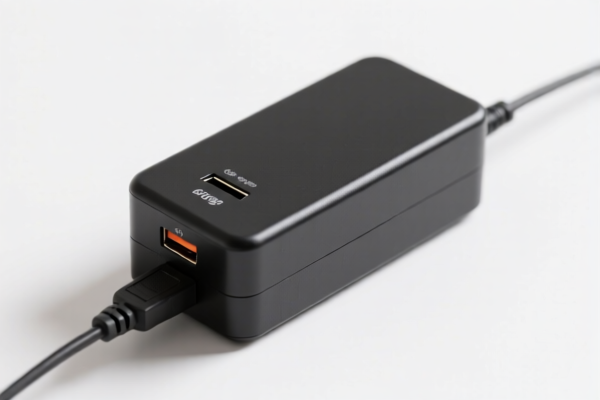
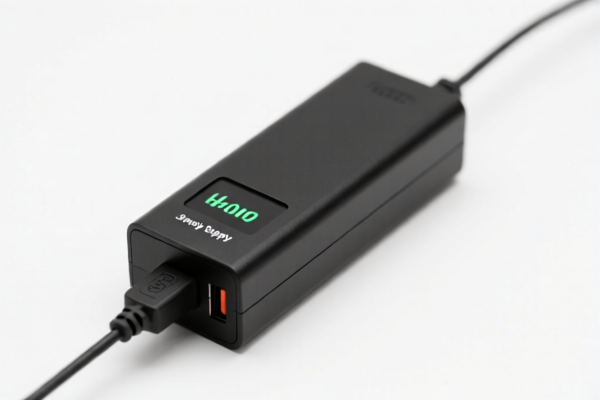
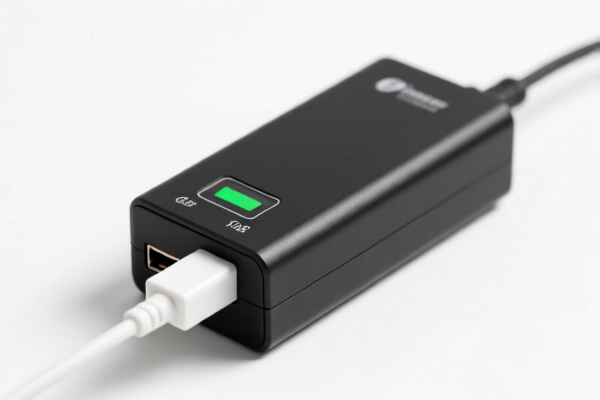
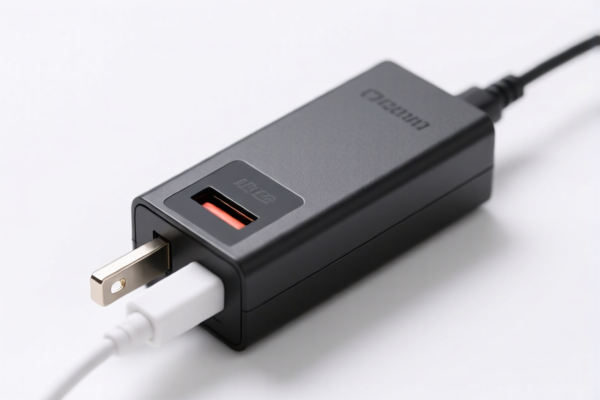
AI Analysis
🔌 Charging Head (Power Adapters / Chargers)
🌐 HS Code Reference & Customs Clearance Guide | 2026 Latest Tariff Analysis | Professional Clearance Strategy
📌 I. Product Definition & Classification: Do You Really Understand "Charging Heads"?
A "Charging Head" (commonly known as a power adapter, charger, or plug-in converter) is an electrical device that converts alternating current (AC) from a mains outlet into direct current (DC) at a specific voltage and current suitable for electronic devices (e.g., smartphones, tablets). In international trade, its classification depends heavily on its function (connection vs. conversion) and power output.
Two Main Interpretations in Customs: 1. As a Circuit Connector/Adapter: If viewed primarily as a plug/adaptor for connecting circuits under 1,000V →归入 8536. 2. As a Static Converter/Power Supply: If viewed primarily as a device converting AC to DC (rectifier/power supply) →归入 8504.
⚠️ Key Distinction Point:
- If the device is labeled/emphasized as a "Plug," "Adapter," or "Connector" for circuit connection → HS 8536.69.80.00.
- If the device is labeled/emphasized as a "Power Supply," "Converter," or "Charger" (AC/DC converter) → HS 8504.40.xx.xx.
- Note: The power rating (Wattage) significantly impacts the sub-heading within HS 8504.
📦 II. HS Code Classification Details (2026 Latest Tariff Authority Comparison)
| HS Code | Product Description | Applicable Scenario | Total Tax Rate (US/CN Origin) |
|---|---|---|---|
8536.69.80.00 |
Circuit Switches, Protectors & Other Circuit Connection/Conversion Apparatus; Plugs & Adapters; Voltage ≤ 1,000V | Generic charging heads classified primarily as "Plugs/Adapters" for circuit connection | 37.7% |
8504.40.95.20 |
Static Converters (e.g., Power Supplies); Power Range: 50W – 150W | High-power fast chargers (50W-150W), laptop/tablet chargers | 35.0% |
8504.40.70.01 |
Static Converters (Power Adapters); For Mobile Terminal Devices; Output Power ≤ 50W | Standard smartphone chargers (≤50W), low-power mobile accessories | 35.0% |
8536.90.40.00 |
Other Apparatus for Circuit Connection/Conversion; Voltage ≤ 1,000V; No Material Conflict | Generic electrical apparatus for connecting circuits or providing power, not specifically defined as converters | 35.0% |
8504.40.95.10 |
Static Converters (Power Supply); AC to DC Conversion; Output Power Typically < 50W | General AC/DC power supplies for low-power electronics | 35.0% |
🔍 Key Reminder:
- HS 8536 codes often carry a slightly higher total tax rate (37.7%) due to a higher Basic Tariff (2.7%) compared to HS 8504 (0.0% Basic).
- HS 8504 is generally preferred for "Power Adapters/Converters" because it has 0% Basic Tariff, resulting in a lower overall burden despite identical surcharges.
- Power Threshold: The cutoff at 50W is critical for differentiating sub-headings within HS 8504.
💰 III. 2026 Latest Tariff Rate Breakdown (Including Surcharges & Policy Add-ons)
✅ Applicable Country: United States (US)
✅ Origin: China (CN)
✅ Effective Date: 2025+ (Including subsequent imports)
🎯 1. 8536.69.80.00 —— Circuit Connection Apparatus / Plugs & Adapters
| Item | Details |
|---|---|
| Basic Tariff | 2.7% (ad valorem) |
| USITC Surcharge (Section 301) | +25.0% |
| IEEPA Surcharge (122 Clause) | +10.0% |
| Total Tax Rate | 37.7% |
| Tax Calculation | CIF Value × 37.7% |
| De Minimis Eligibility | ❌ No (Deny_de_minimis) |
| Legal Basis Path | IEEPA:122 Clause → USITC:8536.69.80.00 |
📌 Explanation:
- This code treats the charging head as a plug/adaptor.
- The 2.7% basic tariff makes it more expensive than HS 8504 codes.
- Subject to both Section 301 (25%) and IEEPA (10%) surcharges.
- Total: 37.7%. This is the highest rate among the provided options.
🎯 2. 8504.40.95.20 —— Static Converters (50W-150W)
| Item | Details |
|---|---|
| Basic Tariff | 0.0% |
| USITC Surcharge (Section 301) | +25.0% |
| IEEPA Surcharge (122 Clause) | +10.0% |
| Total Tax Rate | 35.0% |
| Tax Calculation | CIF Value × 35.0% |
| De Minimis Eligibility | ❌ No (Deny_de_minimis) |
| Legal Basis Path | IEEPA:122 Clause → USITC:8504.40.95.20 |
📌 Explanation:
- Applies to high-power charging heads (50W–150W).
- 0% Basic Tariff saves 2.7% compared to HS 8536.
- Subject to Section 301 (25%) and IEEPA (10%).
- Total: 35.0%.
🎯 3. 8504.40.70.01 —— Static Converters (Mobile Terminals, ≤50W)
| Item | Details |
|---|---|
| Basic Tariff | 0.0% |
| USITC Surcharge (Section 301) | +25.0% |
| IEEPA Surcharge (122 Clause) | +10.0% |
| Total Tax Rate | 35.0% |
| Tax Calculation | CIF Value × 35.0% |
| De Minimis Eligibility | ❌ No (Deny_de_minimis) |
| Legal Basis Path | IEEPA:122 Clause → USITC:8504.40.70.01 |
📌 Explanation:
- Specifically for mobile terminal chargers with output ≤50W (e.g., standard phone chargers).
- 0% Basic Tariff.
- Subject to Section 301 (25%) and IEEPA (10%).
- Total: 35.0%.
🎯 4. 8536.90.40.00 —— Other Circuit Connection/Conversion Apparatus
| Item | Details |
|---|---|
| Basic Tariff | 0.0% |
| USITC Surcharge (Section 301) | +25.0% |
| IEEPA Surcharge (122 Clause) | +10.0% |
| Total Tax Rate | 35.0% |
| Tax Calculation | CIF Value × 35.0% |
| De Minimis Eligibility | ❌ No (Deny_de_minimis) |
| Legal Basis Path | IEEPA:122 Clause → USITC:8536.90.40.00 |
📌 Explanation:
- A "catch-all" for electrical apparatus ≤1,000V not covered by specific connector codes.
- 0% Basic Tariff.
- Subject to Section 301 (25%) and IEEPA (10%).
- Total: 35.0%.
🎯 5. 8504.40.95.10 —— Static Converters (AC to DC, <50W)
| Item | Details |
|---|---|
| Basic Tariff | 0.0% |
| USITC Surcharge (Section 301) | +25.0% |
| IEEPA Surcharge (122 Clause) | +10.0% |
| Total Tax Rate | 35.0% |
| Tax Calculation | CIF Value × 35.0% |
| De Minimis Eligibility | ❌ No (Deny_de_minimis) |
| Legal Basis Path | IEEPA:122 Clause → USITC:8504.40.95.10 |
📌 Explanation:
- General AC/DC static converters for low power (<50W).
- 0% Basic Tariff.
- Subject to Section 301 (25%) and IEEPA (10%).
- Total: 35.0%.
🛠️ IV. Customs Clearance Practical Advice (Battle-Tested Pitfall Guide)
✅ 1. Documentation Checklist (Mandatory)
| Document | Must Provide | Explanation |
|---|---|---|
| ✅ Product Specification Sheet | ✔️ | Must clearly state Input (AC) and Output (DC) voltage/current, and Power (Wattage). |
| ✅ Internal Circuit Diagram / Structure | ✔️ | Proves it is a Static Converter (HS 8504) rather than just a plug (HS 8536). |
| ✅ Product Photos (with Nameplate) | ✔️ | Must show model number, brand, input/output parameters. |
| ✅ Third-Party Test Reports | ✔️ | FCC, CE, RoHS, UL (if applicable for US market). |
| ✅ Commercial Invoice | ✔️ | Describe as "AC/DC Power Adapter" or "Static Converter" rather than just "Plug". |
| ✅ Certificate of Origin (CO) | ✔️ | Essential for determining applicability of surcharges. |
| ✅ Packing List | ✔️ | Specify units, weight, and dimensions. |
✅ 2. Declaration Strategy (Key Mantras)
🔥 "Power Supply is Key, Wattage Matters, Avoid 'Plug' Label for Converters!"
| Scenario | Correct HS Code | Incorrect Action |
|---|---|---|
| Standard Phone Charger (≤50W) | 8504.40.70.01 or 8504.40.95.10 |
Using 8536.69.80.00 → Higher tax (37.7%) |
| Laptop/Fast Charger (50W-150W) | 8504.40.95.20 |
Using 8536.69.80.00 → Higher tax (37.7%) |
| Generic Electrical Connector | 8536.90.40.00 |
Using 8504 codes if it lacks conversion function |
| Charging Cable Only (No Adapter) | 8544.42.xx.xx (Not in data) |
Declaring as "Charging Head" → Wrong classification |
✅ 3. Special Circumstances Handling
| Scenario | Handling Advice |
|---|---|
| OEM Custom Chargers | Provide customer order + design specs to prove it is a "Converter" not just a "Plug". |
| High-Power GaN Chargers | Ensure documentation explicitly states Wattage. If >50W, must use 8504.40.95.20. |
| Charger + Cable Bundled | Declare as a set if sold together, but ensure the primary function (power conversion) dictates HS. |
| Military/Aerospace Use | May require special licensing; standard consumer HS codes may not apply. |
🌍 V. Global Market Customs Comparison (2026 Latest)
| Country/Region | Recommended HS Code | Tariff (China Origin) | Certification Req. | Notes |
|---|---|---|---|---|
| 🇺🇸 USA | 8504.40.70.01 / 8504.40.95.20 |
35.0% | FCC + UL | Avoid 8536 due to 37.7% rate |
| 🇨🇳 China | 8504.40.70.01 |
0%~13% (Varies) | CCC | Lower import duty for Chinese goods |
| 🇪🇺 EU | 8504.40.95 |
0%~4% | CE + ENEC | No Section 301/IEEPA surcharges |
| 🇬🇧 UK | 8504.40.95 |
0%~4% | UKCA | Post-Brexit standards apply |
| 🇦🇺 Australia | 8504.40.95 |
5%~10% | RCM | No major surcharges |
📌 Conclusion:
- USA imposes 35% or 37.7% depending on classification.
- EU/UK/AU are significantly cheaper, with no Section 301/IEEPA surcharges.
- Strategy: For US exports, ensure classification as HS 8504 (Static Converter) to save 2.7% vs. HS 8536.
📌 VI. Common Errors & Pitfall Guide (Lessons Learned)
❌ Error 1: Classifying a Power Adapter as a "Plug/Socket" (8536.69.80.00)
👉 Consequence: Pay 37.7% instead of 35.0% → Unnecessary cost increase.
❌ Error 2: Ignoring Wattage in HS 8504 Sub-headings
👉 Consequence: Using 8504.40.95.10 (<50W) for a 65W charger → Misclassification risk, potential audits.
❌ Error 3: Declaring as "Charging Cable" for a Brick Adapter
👉 Consequence: Wrong HS Code (likely 8544), leading to rejection or retroactive duties.
❌ Error 4: Omitting "AC/DC Converter" in Description
👉 Consequence: Customs may classify under "Electrical Parts" broadly, leading to higher scrutiny or different rates.
✅ Correct Practice:
"AC/DC Power Adapter, Model XYZ, Input: 100-240V~ 50/60Hz, Output: 20V=3.25A (65W), FCC Certified"
🎯 VII. Conclusion: Precise Classification Saves Money!
🎯 Remember the Mantra:
🔹 "Converter is Better than Plug: 35% vs 37.7%!"
🔹 "Check Wattage: ≤50W or 50-150W determines the Sub-Code!"
🔹 "No De Minimis for China Origin: Budget 35%+ for US Imports!"
📌 Pro Tip:
If your charging heads are originating from Vietnam, Mexico, or Malaysia, you may qualify for IEEPA Exemptions, reducing tariffs to 0%~5%.
Recommend applying for an Advance Ruling from US Customs (CBP) to confirm HS Code and tax liability before shipment.
📣 Immediate Action:
📞 Contact a professional customs broker + Provide Product Specs + Apply for HS Code Pre-Ruling
🚀 Ensure your charging heads pass customs smoothly, minimize costs, and maximize profit!
✨ Professional Customs Clearance Starts with Accurate Classification!
💼 Every cent of your cost deserves to be calculated precisely!
Customer Reviews
About HS Code Classification
The Harmonized System (HS) is an internationally standardized nomenclature developed by the World Customs Organization (WCO) to classify traded products. Over 200 countries use the HS system as the basis for customs tariffs, trade statistics, and import/export regulations.
Each HS code follows a hierarchical structure:
- Chapter (2 digits) — Broad category of goods (e.g., Chapter 84: Machinery and Mechanical Appliances)
- Heading (4 digits) — More specific grouping within the chapter
- Subheading (6 digits) — Internationally standardized breakdown, used by all WCO member countries
- National subdivisions (8-10 digits) — Country-specific extensions for further classification, such as US HTSUS 10-digit codes
Correct HS code classification is essential for smooth customs clearance, accurate duty payment, and compliance with trade regulations. Misclassification can lead to customs delays, overpayment of duties, or penalties.
When importing from CN to US, the applicable tariff rates may include:
- Most-Favored-Nation (MFN) rate — The standard duty rate applied to WTO members
- General rate — Applied to countries without trade agreements
- Trade remedy duties — Additional tariffs such as Section 301 (anti-dumping), Section 232 (national security), or countervailing duties
The information provided on this page is for reference purposes only. For official classification, please consult with your local customs authority or a licensed customs broker.