Charging Module
CN → US| HS Code | Tariff Rate | Origin | Destination | Doc |
|---|---|---|---|---|
| 8542390090 | 60.0% | CN | US | Official Doc |
| 8543709860 | 37.6% | CN | US | Official Doc |
| 8543906800 | 35.0% | CN | US | Official Doc |
| 8504409540 | 35.0% | CN | US | Official Doc |
| 8504409580 | 35.0% | CN | US | Official Doc |
| 8542900000 | 60.0% | CN | US | Official Doc |
Product Images
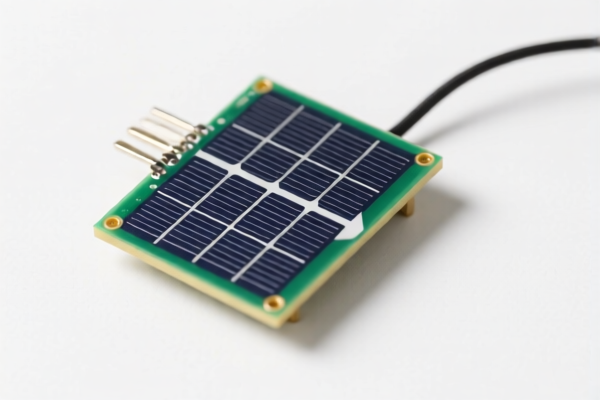
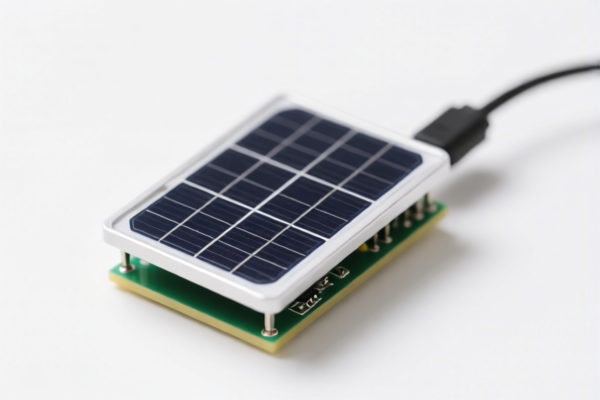
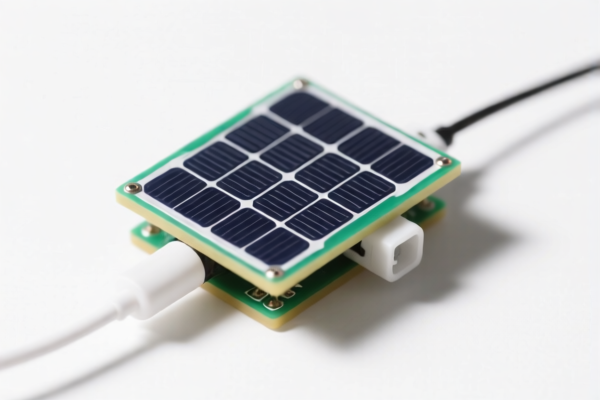
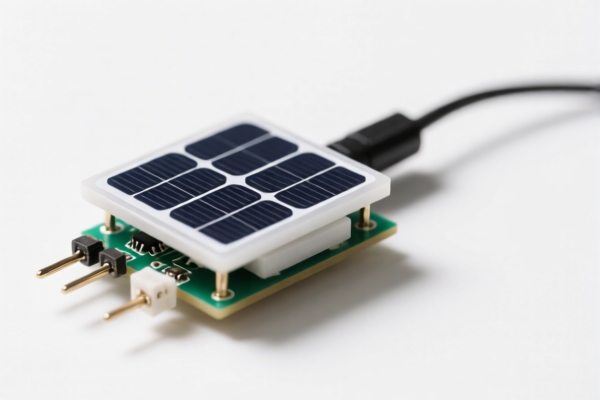
AI Analysis
🔌 Charging Modules (Power Supplies & Adapters)
🌐 HS Code Reference & Customs Clearance Guide | 2026 Latest Tariff Analysis | Professional Clearance Strategy
📌 I. Product Definition & Classification: Do You Really Understand "Charging Modules"?
Charging Modules are core components in modern electronics, serving as the bridge between AC/DC power sources and battery systems or direct-load devices. In international trade, they are often misclassified due to ambiguity between electronic components and electrical apparatus.
Key Distinctions for Classification: 1. Integrated Circuit Components (Parts): If the module is primarily a part of a larger semiconductor assembly or lacks independent function outside a specific IC package. 2. Independent Electrical Apparatus: If the module has a distinct casing, connectors, and performs a specific conversion function (AC to DC, or Voltage Regulation) independently. 3. Static Converters: If the module’s primary function is converting electrical energy without moving parts (the most common classification for standard power supplies).
⚠️ Critical Classification Trap:
- If classified as a part of an integrated circuit → High Tariff (60%).
- If classified as a static converter (power supply) → Lower Tariff (35%).
- The difference is massive. Correct classification is vital for cost control.
📦 II. HS Code Classification Details (2026 Latest Tariff Authority)
| HS Code | Product Description | Classification Logic | Total Tax Rate* |
|---|---|---|---|
| 8542.39.00.90 | Parts of Integrated Circuits | Classified as a component falling under "Other" categories of electronic IC assemblies. | 60.0% |
| 8543.70.98.60 | Independent Electrical Apparatus | Classified as an electrical apparatus with independent functions, falling under "Other Machines & Apparatus". | 37.6% |
| 8543.90.68.00 | Parts of Electrical Apparatus | Classified as a component with independent function, inferred as "Printed Circuit Assemblies". | 35.0% |
| 8504.40.95.40 | Static Converters (Power Supplies) | Classified as a stationary converter (power supply), falling under "Other" categories. | 35.0% |
| 8504.40.95.80 | Static Converters (Power Supplies) | Classified as a stationary converter based on functional logic, falling under "Other" categories. | 35.0% |
| 8542.90.00.00 | Parts of Integrated Circuits | Classified as a part of an IC circuit, meeting the definition of "Parts" for use in ICs. | 60.0% |
🔍 Key Insight:
- Group A (High Cost):8542.39.00.90&8542.90.00.00→ 60% Total Tax. These treat the charging module as a sub-component of semiconductor chips.
- Group B (Medium Cost):8543.70.98.60→ 37.6% Total Tax. Treats it as a standalone machine/apparatus.
- Group C (Low Cost):8504.40.95.40/.80&8543.90.68.00→ 35.0% Total Tax. Treats it as a standard power converter or electrical part.
Note: "Total Tax" includes Base Duty + Section 301 Additions + Section 122 Duties.
💰 III. 2026 Latest Tariff Rate Breakdown (Including Surcharges & Policy Add-ons)
✅ Applicable Country: United States (US)
✅ Origin: China (CN)
✅ Effective Date: Post-2025 Importations
🎯 1. The "High-Tariff" Track: HS Codes 8542.39.00.90 & 8542.90.00.00
| Item | Detail |
|---|---|
| Base Duty Rate | 0.0% (ad valorem) |
| Section 301 Additional Duty | +50.0% |
| Section 122 Duty | +10.0% |
| Total Effective Tax Rate | 60.0% |
| Tax Calculation | CIF Value × 60% |
| De Minimis Exemption? | ❌ NO (Denied) |
| Legal Basis Path | USITC:8542.39.00.90 / 8542.90.00.00 → Section 301: 50% → Section 122: 10% |
📌 Explanation:
- The 50% Section 301 duty is applied because these codes are categorized under high-tech electronic components subject to strict US-China trade restrictions.
- The 10% Section 122 duty is an additional penalty tariff on specific Chinese-origin electronics.
- Result: A $1,000 shipment incurs $600 in duties. This is extremely expensive and erodes margins significantly.
🎯 2. The "Medium-Tariff" Track: HS Code 8543.70.98.60
| Item | Detail |
|---|---|
| Base Duty Rate | 2.6% |
| Section 301 Additional Duty | +25.0% |
| Section 122 Duty | +10.0% |
| Total Effective Tax Rate | 37.6% |
| Tax Calculation | CIF Value × 37.6% |
| De Minimis Exemption? | ❌ NO (Denied) |
| Legal Basis Path | USITC:8543.70.98.60 → Section 301: 25% → Section 122: 10% |
📌 Explanation:
- The 2.6% base duty reflects its classification as a general "electrical apparatus."
- The 25% Section 301 duty is lower than the 50% tier, recognizing it as machinery/apparatus rather than pure semiconductor parts.
- Result: A $1,000 shipment incurs $376 in duties. A significant saving compared to Group A.
🎯 3. The "Low-Tariff" Track: HS Codes 8504.40.95.40, 8504.40.95.80, 8543.90.68.00
| Item | Detail |
|---|---|
| Base Duty Rate | 0.0% |
| Section 301 Additional Duty | +25.0% |
| Section 122 Duty | +10.0% |
| Total Effective Tax Rate | 35.0% |
| Tax Calculation | CIF Value × 35.0% |
| De Minimis Exemption? | ❌ NO (Denied) |
| Legal Basis Path | USITC:8504.40.95.40 / .80 / 8543.90.68.00 → Section 301: 25% → Section 122: 10% |
📌 Explanation:
- 0% Base Duty: Standard power supplies (static converters) often enjoy zero base duty if not restricted.
- 25% Section 301 Duty: Applies to general electrical machinery.
- Result: A $1,000 shipment incurs $350 in duties. This is the most cost-effective classification for standard charging modules.
🛠️ IV. Customs Clearance Practical Advice (Battle-Tested Pitfall Avoidance)
✅ 1. Document Checklist (Non-Negotiable)
| Document | Required? | Description |
|---|---|---|
| ✅ Product Specification Sheet | ✔️ | Must include input/output voltage, current, frequency, efficiency, and form factor. |
| ✅ Circuit Diagram/Block Diagram | ✔️ | Crucial: Prove it is a "Static Converter" (8504) or "Apparatus" (8543), NOT a part of an IC (8542). |
| ✅ Product Photos (Including Label) | ✔️ | Clear view of model number, brand, and input/output ratings. |
| ✅ Third-Party Test Reports | ✔️ | FCC, CE, RoHS, UL (if applicable). Required for electrical safety compliance. |
| ✅ Commercial Invoice | ✔️ | Must clearly state "Charging Module" or "DC Power Supply," NOT "IC Part." |
| ✅ Packing List | ✔️ | Detailed itemization to avoid suspicion of shipment splitting. |
✅ 2. Declaration Strategy (Key Mantra)
🔥 "Define Function, Not Just Form! Power Supply = 35%, IC Part = 60%!"
| Scenario | Correct Declaration | Incorrect Declaration | Risk |
|---|---|---|---|
| Standard Charger | "Static DC Power Supply, AC-DC Converter" | "Electronic Component for Phone" | High risk of reclassification to 8542 (60%) |
| Modular Power Unit | "Independent Electrical Apparatus" | "Part of Integrated Circuit" | Avoids 50% Section 301 duty |
| Car Charger Module | "Charging Apparatus, 8543 or 8504" | "Automotive Electronic Part" | May face different rules, but 8543/8504 is safer |
✅ 3. Special Handling Cases
| Case | Advice |
|---|---|
| OEM Custom Modules | Provide customer PO + design specs. Proves independent function if designed for specific end-use. |
| Integrated in Larger Device | If shipped inside a laptop/phone, declare as part of the main device. If shipped loose, declare as Charging Module. |
| High-Power Industrial Chargers | Leverage 8504.40 classification. Emphasize "Static Converter" function in description. |
| Low-Power USB-C Modules | Still 8504 or 8543. Do NOT let customs officer mistake it for a microcontroller part. |
🌍 V. Global Market Comparison (2026 Update)
| Country/Region | Recommended HS Code | Est. Tax Rate | Certification | Note |
|---|---|---|---|---|
| 🇺🇸 USA | 8504.40.95.40 |
35.0% | FCC + UL | Avoid 8542 codes to save 25% |
| 🇨🇳 China | 8504.40 |
5-10% | CCC | Low base duty, no Section 301 |
| 🇪🇺 EU | 8504.40 |
0-4% | CE + ErP | No major surcharges if RoHS compliant |
| 🇬🇧 UK | 8504.40 |
0-4% | UKCA | Post-Brexit standards apply |
| 🇯🇵 Japan | 8504.40 |
0% | PSE | Very favorable for power supplies |
📌 Conclusion:
- The USA is the most challenging market due to Section 301 and 122 tariffs.
- Classification Strategy: Always argue for 8504 (Static Converters) or 8543 (Apparatus) over 8542 (IC Parts).
- Savings Potential: Moving from 8542 (60%) to 8504 (35%) saves 25% on the CIF value. On a $100,000 shipment, that’s $25,000 saved.
📌 VI. Common Errors & Pitfalls (Lessons Learned)
❌ Error 1: Describing a charger as "Part for Mobile Phone"
👉 Consequence: Customs may reclassify to 8542 → 60% Tax.
✅ Fix: Describe as "AC-DC Power Supply" or "Charging Apparatus."
❌ Error 2: Ignoring Section 122 Duty
👉 Consequence: Even if Section 301 is low, 10% Section 122 still applies to most electronics.
✅ Fix: Factor in the 10% flat penalty in all calculations.
❌ Error 3: Assuming "De Minimis" Applies
👉 Consequence: Packages under $800 are NOT exempt for these HS codes from Section 301/122.
✅ Fix: Plan for full duty payment regardless of package size.
🎯 VII. Conclusion: Professional Declaration for Cost Efficiency
🎯 Remember the Mantra:
🔹 "Power Supply = 35%, IC Part = 60%. Don't let 'Electronica' fool you!"
🔹 "Base 0% + Sec301 25% + Sec122 10% = 35%. That’s the Target!"
🔹 "Wrong Code = Wrong Price. Save $25k per $100k!"
📌 Pro Tip:
- If your modules are shipped in high volumes, apply for a Customs Ruling to lock in the 8504.40 classification.
- Ensure your commercial invoices explicitly state "Static Converter" or "Power Supply" to guide the customs broker correctly.
- Avoid vague terms like "Electronic Component" or "PCB Assembly" without context.
📣 Immediate Action:
📞 Consult a licensed customs broker + Provide technical datasheets
📊 Calculate duty savings: (Current Tariff - 35%) × Shipment Value
🚀 Optimize Your Supply Chain for the US Market!
✨ Precision in Classification, Profit in your Pocket!
💼 Your Bottom Line Depends on These Digits!
Customer Reviews
About HS Code Classification
The Harmonized System (HS) is an internationally standardized nomenclature developed by the World Customs Organization (WCO) to classify traded products. Over 200 countries use the HS system as the basis for customs tariffs, trade statistics, and import/export regulations.
Each HS code follows a hierarchical structure:
- Chapter (2 digits) — Broad category of goods (e.g., Chapter 84: Machinery and Mechanical Appliances)
- Heading (4 digits) — More specific grouping within the chapter
- Subheading (6 digits) — Internationally standardized breakdown, used by all WCO member countries
- National subdivisions (8-10 digits) — Country-specific extensions for further classification, such as US HTSUS 10-digit codes
Correct HS code classification is essential for smooth customs clearance, accurate duty payment, and compliance with trade regulations. Misclassification can lead to customs delays, overpayment of duties, or penalties.
When importing from CN to US, the applicable tariff rates may include:
- Most-Favored-Nation (MFN) rate — The standard duty rate applied to WTO members
- General rate — Applied to countries without trade agreements
- Trade remedy duties — Additional tariffs such as Section 301 (anti-dumping), Section 232 (national security), or countervailing duties
The information provided on this page is for reference purposes only. For official classification, please consult with your local customs authority or a licensed customs broker.