Chasen (Bamboo Whisk)
CN → USProduct Images
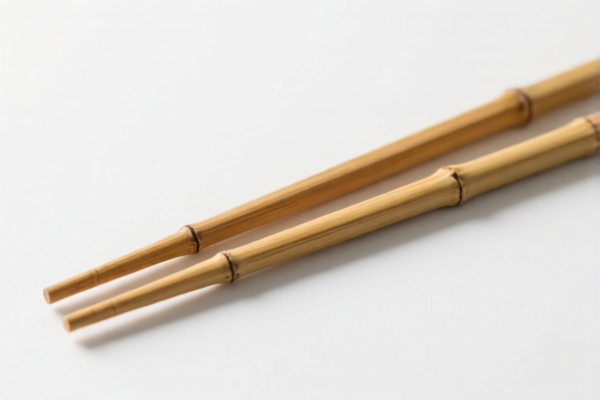
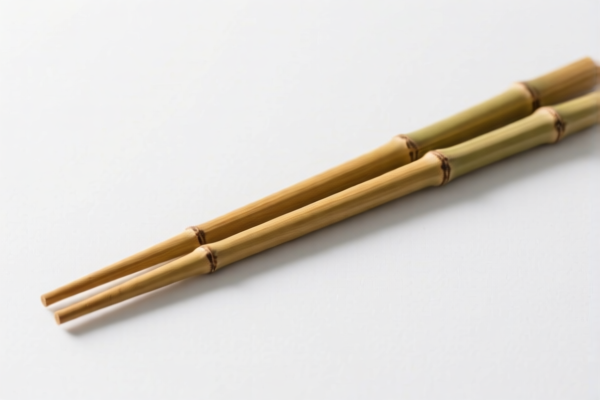
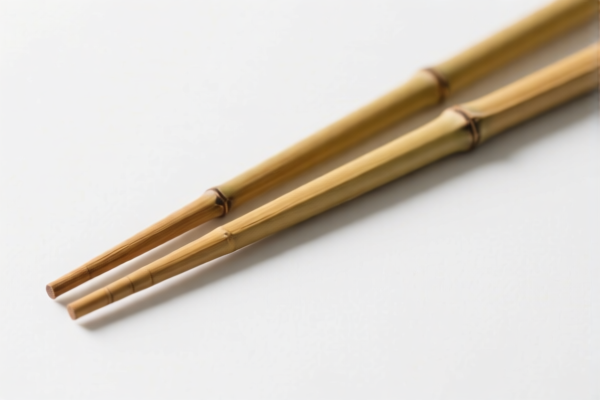
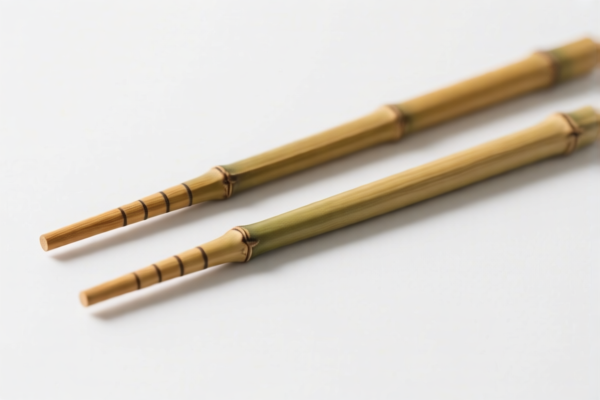
AI Analysis
🍵 Chasen (Bamboo Whisk)
🌐 HS Code Reference & Customs Clearance Guide | 2026 Latest Tariff Analysis | Professional Strategy for Tea Ware
📌 Part I: Product Definition & Classification: What Exactly Is a "Chasen"?
The Chasen (茶筅) is a traditional Japanese tool used specifically for whisking matcha (powdered green tea) into a frothy consistency. It is not a generic "kitchen utensil" or "broom." In international trade, its classification hinges on its material (bamboo) and its specific use (tea preparation).
Key Distinction: * Handmade/Artisanal Chasen: Carved from a single piece of bamboo root or stem, often with hundreds of fine tines. These are treated as handicrafts or tea accessories. * Mass-Produced Bamboo Utensils: Simpler bamboo whisks used for general kitchen whipping (e.g., egg whites) or cleaning. These may fall under generic bamboo articles.
⚠️ Critical Classification Point:
- If the item is specifically designed for matcha whisking and made of bamboo → Chapter 96 (Miscellaneous Manufactured Articles) or Chapter 46 (Basketry) depending on structure.
- Most common commercial classification: 9603.90 (Other brushes) or 9603.90.80 (Other hand brushes).
- Alternative (if considered a bamboo article): 4602.12 (Basketry articles).
- However, for precise customs duties (especially US/China), 9603.90.80.00 is the standard for "other brushes/whisks not elsewhere specified."
📦 Part II: HS Code Classification Details (2026 Latest Tariff Authority)
| HS Code | Product Description | Application Scenario | Material/Structure |
|---|---|---|---|
9603.90.80.00 |
Other brushes (incl. brushes constituting parts of machines) | Standard Chasen for matcha, cleaning brushes, art brushes | Bamboo/Kenaf fiber |
4602.12.00.00 |
Basketry articles woven of bamboo | Handmade, woven bamboo crafts (rare for functional chasen) | Woven Bamboo |
8215.99.00.00 |
Other cutlery (knives, forks, spoons) | Incorrect – Whisks are not cutlery | – |
3924.90.00.00 |
Tableware/Kitchenware of plastic | Incorrect – Chasen is bamboo | – |
🔍 Key Reminder:
- Most functional Chasen (whether mass-produced or artisanal) are classified under 9603.90.80.00 ("Other brushes") because they are bristled tools made of natural fibers (bamboo tines).
- If a Chasen is purely a decorative woven basket with no whisking function, it may fall under 4602.12.00.00 (Basketry).
- Do not classify under Chapter 82 (Cutlery) or Chapter 39 (Plastics).
💰 Part III: 2026 Latest Tariff Rate Breakdown (Including Surtaxes & Policy Add-ons)
✅ Applicable Country: United States (US)
✅ Country of Origin: China (CN)
✅ Effective Date: From November 10, 2025 (including subsequent imports)
🎯 1. 9603.90.80.00 —— Other Brushes (Including Bamboo Chasen)
| Item | Content |
|---|---|
| Base Duty Rate | 0% (ad valorem) |
| USITC Surcharge (Section 301) | +25% (from USITC Footnote 9903.90.80) |
| IEEPA Surcharge | +10% (For China/Hong Kong products, from Nov 10, 2025) |
| Total Duty Rate | 45% |
| Tax Calculation | CIF Value × 45% |
| De Minimis Eligibility | ❌ Not Eligible (deny_de_minimis) |
| Legal Reference Path | IEEPA:9903.01.25 → IEEPA:9903.01.24 → USITC:9603.90.80.00 → FOOTNOTE:9903.88.01 |
📌 Explanation:
- The "25% USITC Surcharge" is imposed under Section 301 of the Trade Act of 1974.
- The "10% IEEPA Surcharge" is an additional levy under the International Emergency Economic Powers Act targeting Chinese goods.
- Total 45% is significant. This means a $100 Chasen incurs $45 in duties.
- No de minimis exemption (e.g., under $800) applies to Chinese-origin goods under current IEEPA rules.
🎯 2. 4602.12.00.00 —— Basketry Articles (Woven Bamboo)
| Item | Content |
|---|---|
| Base Duty Rate | 0% |
| USITC Surcharge | +25% |
| IEEPA Surcharge | +10% |
| Total Duty Rate | 45% |
| De Minimis Eligibility | ❌ Not Eligible |
| Legal Reference Path | IEEPA:9903.01.25 → IEEPA:9903.01.24 → USITC:4602.12.00.00 → FOOTNOTE:9903.88.01 |
📌 Note:
- If customs classifies your Chasen as a "basketry article" (e.g., if it's a decorative woven piece rather than a whisk), the tariff is also 45%.
- No advantage in choosing this classification unless you can prove it is not a "brush."
🛠️ Part IV: Customs Clearance Practical Advice (Battle-Tested Pitfall Avoidance)
✅ 1. Document Checklist (All Required)
| Document | Required | Notes |
|---|---|---|
| ✅ Product Specifications | ✔️ | Diameter, number of tines, material (Bamboo Root vs. Stem) |
| ✅ Function Description | ✔️ | Must specify "Matcha Whisk" not "Broom" or "Cleaning Tool" |
| ✅ Product Photos | ✔️ | Clear images of the bristles/tines and handle |
| ✅ Commercial Invoice | ✔️ | Must state "Bamboo Whisk for Tea Preparation" |
| ✅ Packing List | ✔️ | Include any packaging materials (e.g., paper sleeve) |
| ✅ Certificate of Origin | ✔️ | If not from China, to potentially claim lower rates |
✅ 2. Declaration Tips (Key Mantras)
🔥 "Material is Bamboo, Use is Tea, Classify as Brush, Avoid 82!"
| Scenario | Correct Declaration | Wrong Practice |
|---|---|---|
| Matcha Chasen | 9603.90.80.00 |
Misclassify as "Cutlery" (8215) → 5-10% base + 25-55% surtax |
| Bamboo Cleaning Brush | 9603.90.80.00 |
Same HS Code, but different description |
| Decorative Bamboo Weaving | 4602.12.00.00 |
Only if no whisking function exists |
| Plastic Whisk | 3924.90.00.00 |
Different HS Code, different tariff |
✅ 3. Special Cases
| Case | Handling Advice |
|---|---|
| Artisanal/Handmade Chasen | Provide a description emphasizing "hand-carved," "single piece of bamboo root." This may help in proving it's not a generic mass-produced item, though tariff remains similar. |
| Chasen + Matcha Set | Declare as "Tea Set" if combined. May allow for different classification if marketed as a kit, but individual components are still subject to their own duties. |
| Origin Shift (Vietnam/Thailand) | If manufactured in Vietnam or Thailand, you may avoid the 10% IEEPA surcharge, resulting in only 25% duty. Verify Certificate of Origin carefully. |
🌍 Part V: Global Market Comparison (2026 Latest)
| Country/Region | Recommended HS Code | Duty Rate | Certification Req. | Notes |
|---|---|---|---|---|
| 🇺🇸 USA | 9603.90.80.00 |
45% (CN) | – | High duty due to Section 301 + IEEPA |
| 🇨🇳 China | 9603.90.80.00 |
12% | – | No surtaxes |
| 🇪🇺 EU | 9603.90.80.00 |
0-3% | CE (if applicable) | No major surtaxes |
| 🇦🇺 Australia | 9603.90.80.00 |
5% | – | No surtaxes |
| 🇯🇵 Japan | 9603.90.80.00 |
10% | – | No surtaxes |
📌 Conclusion:
- USA is the most expensive market for Chinese-made Chasen due to cumulative surcharges.
- Diversify supply chain to Vietnam, Thailand, or Japan to reduce tariff burden in the US.
- EU, Australia, and Japan offer significantly lower total duty rates.
📌 Part VI: Common Mistakes & Pitfall Guide (Lessons Learned)
❌ Mistake 1: Classifying Chasen under 8215.99.00.00 (Cutlery)
👉 Consequence: Customs may reject it, or apply a 5% base + 25-55% surtax = 30-60%. Plus, audit risk.
❌ Mistake 2: Declaring as "Bamboo Broom"
👉 Consequence: If the product is clearly for tea, this is misdeclaration. Risk of penalties and seizure.
❌ Mistake 3: Ignoring IEEPA Surcharge
👉 Consequence: Calculating only 25% Section 301 duty, but actually owing 45%. Profit margin collapse!
❌ Mistake 4: Using "Kitchen Utensil" as a generic term
👉 Consequence: Vague description leads to customs reclassification and delays.
✅ Correct Practice:
"Bamboo Matcha Whisk (Chasen), Handmade, Single-Piece Bamboo Root, 80 Tines, Model XYZ"
🎯 Part VII: Conclusion: Precision in Classification, Profit in Clearance
🎯 Remember the Mantra:
🔹 "Bamboo Whisk, Brush Chapter, 45% Duty in USA, 0-5% in EU/AU!"
🔹 "HS Code Determines Fate, Tariff Differs by Origin, Declare Accurately to Avoid Penalty!"
📌 Pro Tip:
If your Chasen is originally from Vietnam, Thailand, or Indonesia, apply for non-China origin Certificate of Origin. You can reduce the US duty from 45% to 25% (Section 301 only), saving 10% on every shipment.
Consider Advance Ruling from US Customs and Border Protection (CBP) for large shipments to ensure correct classification.
📣 Immediate Action:
📞 Consult a licensed customs broker + Provide Product Specs + Apply for Advance Ruling if volume is high
🚀 Ensure your Chasen clears smoothly, avoids surprises, and maximizes profit!
✨ Professional Customs Clearance Begins with Accurate Classification!
💼 Every Dollar of Duty Saved is Pure Profit!
Customer Reviews
About HS Code Classification
The Harmonized System (HS) is an internationally standardized nomenclature developed by the World Customs Organization (WCO) to classify traded products. Over 200 countries use the HS system as the basis for customs tariffs, trade statistics, and import/export regulations.
Each HS code follows a hierarchical structure:
- Chapter (2 digits) — Broad category of goods (e.g., Chapter 84: Machinery and Mechanical Appliances)
- Heading (4 digits) — More specific grouping within the chapter
- Subheading (6 digits) — Internationally standardized breakdown, used by all WCO member countries
- National subdivisions (8-10 digits) — Country-specific extensions for further classification, such as US HTSUS 10-digit codes
Correct HS code classification is essential for smooth customs clearance, accurate duty payment, and compliance with trade regulations. Misclassification can lead to customs delays, overpayment of duties, or penalties.
When importing from CN to US, the applicable tariff rates may include:
- Most-Favored-Nation (MFN) rate — The standard duty rate applied to WTO members
- General rate — Applied to countries without trade agreements
- Trade remedy duties — Additional tariffs such as Section 301 (anti-dumping), Section 232 (national security), or countervailing duties
The information provided on this page is for reference purposes only. For official classification, please consult with your local customs authority or a licensed customs broker.