Cheese Filtering Cloth
CN → US| HS Code | Tariff Rate | Origin | Destination | Doc |
|---|---|---|---|---|
| 5911400100 | 43.0% | CN | US | Official Doc |
| 5911900080 | 38.8% | CN | US | Official Doc |
| 5907008090 | 35.0% | CN | US | Official Doc |
| 5603930090 | 35.0% | CN | US | Official Doc |
| 5907003500 | 43.0% | CN | US | Official Doc |
| 5603949090 | 35.0% | CN | US | Official Doc |
Product Images
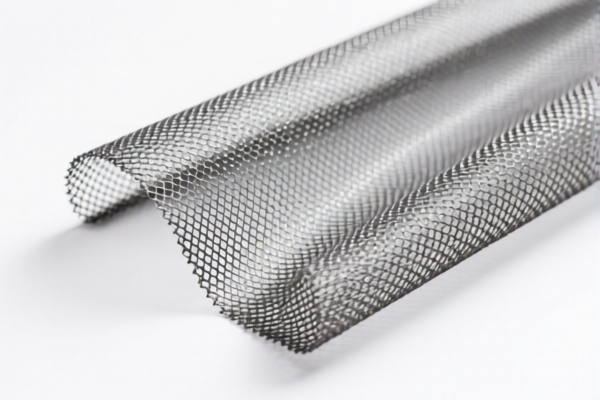
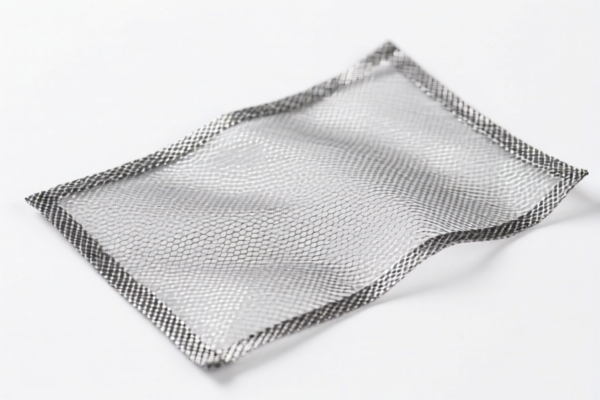
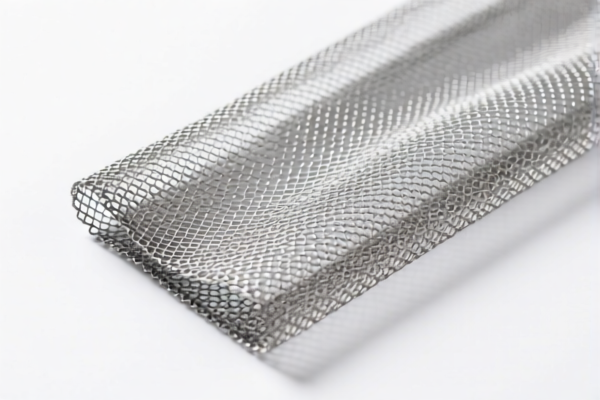
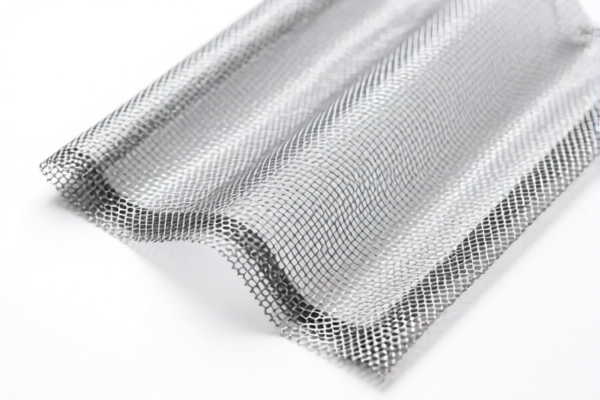
AI Analysis
🧀 Cheese Filtering Cloth (Industrial Textile Filtration Media)
🌐 HS Code Reference & Customs Clearance Guide | 2026 Latest Tariff Analysis | Professional Clearance Strategy
📌 1. Product Definition & Classification: What exactly is a "Cheese Filtering Cloth"?
Cheese filtering cloth is a specialized textile product used in the dairy industry to separate curds from whey. In international trade, it is classified not by its end-use (dairy processing), but by its material composition and physical form (woven, non-woven, or treated fabric).
Based on the provided data, the product falls under Chapter 59 (Impregnated, coated, covered or layered textile fabrics) or Chapter 56 (Wadding, felt and nonwoven fabrics). The correct HS Code depends on whether it is a standard woven/non-woven fabric or a treated/impregnated technical textile.
⚠️ Key Classification Distinction: - Treated/Impregnated Fabric: If the cloth has a specific coating, impregnation, or is designed for high-tech filtration, it likely falls under Heading 5911. - Standard Non-Woven/Woven Fabric: If it is a simple textile without significant technical treatment, it may fall under Heading 5603 or 5907. - Other Technical Textiles: If it doesn't fit the above, it may be classified under general technical textile headings.
📦 2. HS Code Classification Details (Latest 2026 Tariff对照)
The following table outlines the 6 possible HS Codes derived from the input data, along with their corresponding tax rates and logic.
| HS Code | Product Description | Tax Logic / Summary | Total Tax Rate |
|---|---|---|---|
| 5911.40.01.00 | Filtered Cloth (Technical Textile) | Directly matches the form of "filtering cloth" for technical use. | 43.0% |
| 5911.90.00.80 | Other Technical Textile Products | Classified as a textile product for technical use; inferred as textile filtration media. | 38.8% |
| 5907.00.80.90 | Other Impregnated/Coated Textiles | Material inferred as textile fiber; form is cloth-like, fitting "impregnated/coated" category. | 35.0% |
| 5603.93.00.90 | Other Non-Woven Fabrics (Weight > 700g/m²) | Form is cloth-like, composed of non-woven or woven fibers, fitting non-woven product characteristics. | 35.0% |
| 5907.00.35.00 | Impregnated/Covered Textile Fabrics | Material is textile; form falls under covered/impregnated fabrics. | 43.0% |
| 5603.94.90.90 | Other Non-Woven Articles | Belongs to non-woven cloth form; fits material attributes of other non-wovens. | 35.0% |
🔍 Key Insight:
- The highest tax rate (43.0%) applies to codes 5911.40.01.00 and 5907.00.35.00.
- The lowest tax rate (35.0%) applies to codes 5907.00.80.90, 5603.93.00.90, and 5603.94.90.90.
- 5911.90.00.80 sits in the middle at 38.8%.
💰 3. 2026 Latest Tariff Rate Breakdown (Including Surtaxes & Policy Add-ons)
✅ Applicable Country: United States (US)
✅ Origin: China (CN)
✅ Effective Date: 2025-11-10 (Including subsequent imports)
🎯 1. 5911.40.01.00 – Filtered Cloth (Technical Textile)
Highest priority if product is explicitly a "filtering cloth"
| Item | Details |
|---|---|
| Base Duty | 8.0% |
| Surtax (Section 301) | +25.0% |
| IEEPA Surtax (Section 122/China-specific) | +10.0% |
| Total Tax Rate | 43.0% |
| Tax Calculation | CIF Value × 43.0% |
| De Minimis Exemption | ❌ Not Applicable |
| Legal Basis Path | Base:8% → 301:25% → 122:10% |
📌 Explanation:
- This code is the most direct fit for "Cheese Filtering Cloth" if it is a technical filtration fabric.
- The 8% base duty is significantly higher than other textile codes, leading to the 43% total.
- Warning: High tariff impact. Must be prepared for full duty payment.
🎯 2. 5911.90.00.80 – Other Technical Textile Products
Alternative if not classified as "filtered cloth" but still "technical textile"
| Item | Details |
|---|---|
| Base Duty | 3.8% |
| Surtax (Section 301) | +25.0% |
| IEEPA Surtax (Section 122/China-specific) | +10.0% |
| Total Tax Rate | 38.8% |
| Tax Calculation | CIF Value × 38.8% |
| De Minimis Exemption | ❌ Not Applicable |
| Legal Basis Path | Base:3.8% → 301:25% → 122:10% |
📌 Explanation:
- Lower base duty (3.8%) results in a 38.8% total, saving 4.2% compared to 5911.40.01.00.
- Suitable if the cloth is a general technical textile rather than a specific "filtering cloth" category.
🎯 3. 5907.00.80.90 – Other Impregnated/Coated Textiles
If the cloth is coated/impregnated for filtration
| Item | Details |
|---|---|
| Base Duty | 0.0% |
| Surtax (Section 301) | +25.0% |
| IEEPA Surtax (Section 122/China-specific) | +10.0% |
| Total Tax Rate | 35.0% |
| Tax Calculation | CIF Value × 35.0% |
| De Minimis Exemption | ❌ Not Applicable |
| Legal Basis Path | Base:0% → 301:25% → 122:10% |
📌 Explanation:
- Zero base duty makes this the most cost-effective option among treated fabrics.
- Total tax is 35.0%, the lowest among the 59xx codes.
- Note: Requires proof of impregnation/coating.
🎯 4. 5603.93.00.90 – Other Non-Woven Fabrics (Heavy)
If the cloth is non-woven and weighs >700g/m²
| Item | Details |
|---|---|
| Base Duty | 0.0% |
| Surtax (Section 301) | +25.0% |
| IEEPA Surtax (Section 122/China-specific) | +10.0% |
| Total Tax Rate | 35.0% |
| Tax Calculation | CIF Value × 35.0% |
| De Minimis Exemption | ❌ Not Applicable |
| Legal Basis Path | Base:0% → 301:25% → 122:10% |
📌 Explanation:
- Fits if the product is a non-woven fabric with high basis weight.
- Same tax rate as 5907.00.80.90 (35.0%).
🎯 5. 5907.00.35.00 – Impregnated/Covered Textile Fabrics
Specific sub-category for impregnated fabrics
| Item | Details |
|---|---|
| Base Duty | 8.0% |
| Surtax (Section 301) | +25.0% |
| IEEPA Surtax (Section 122/China-specific) | +10.0% |
| Total Tax Rate | 43.0% |
| Tax Calculation | CIF Value × 43.0% |
| De Minimis Exemption | ❌ Not Applicable |
| Legal Basis Path | Base:8% → 301:25% → 122:10% |
📌 Explanation:
- Matches the logic of 5911.40.01.00 in terms of tax burden (43.0%).
- Use if the impregnation type specifically falls under this sub-heading.
🎯 6. 5603.94.90.90 – Other Non-Woven Articles
General non-woven category
| Item | Details |
|---|---|
| Base Duty | 0.0% |
| Surtax (Section 301) | +25.0% |
| IEEPA Surtax (Section 122/China-specific) | +10.0% |
| Total Tax Rate | 35.0% |
| Tax Calculation | CIF Value × 35.0% |
| De Minimis Exemption | ❌ Not Applicable |
| Legal Basis Path | Base:0% → 301:25% → 122:10% |
📌 Explanation:
- Simplest non-woven classification.
- 35.0% total tax, same as other 0% base duty codes.
🛠️ 4. Customs Clearance Practical Advice (Pitfall Avoidance Guide)
✅ 1. Documentation Checklist (Must-Haves)
| Document | Required | Notes |
|---|---|---|
| ✅ Product Specification Sheet | ✔️ | Must detail material (cotton, polyester, etc.), weave/non-woven, weight, and treatment (impregnated/coated). |
| ✅ Composition & Structure Diagram | ✔️ | Crucial for distinguishing between 5911 (technical) vs. 5603/5907 (general textile). |
| ✅ Product Photos | ✔️ | Clear images showing texture, edges, and any labels/coatings. |
| ✅ Commercial Invoice | ✔️ | Must accurately describe the product as "Cheese Filtering Cloth" or "Technical Textile Filter". |
| ✅ Packing List | ✔️ | Itemize units, weight, and dimensions. |
| ✅ Origin Certificate | ✔️ | Required to confirm China origin (subject to surtaxes). |
✅ 2. Declaration Strategy (Key Tips)
🔥 "Declare Accurately, Avoid Misclassification, Save on Duties!"
| Scenario | Recommended HS Code | Risk of Misclassification |
|---|---|---|
| Explicitly a Filtering Cloth | 5911.40.01.00 |
Low risk, but 43% tax. |
| Technical Textile for Filtration | 5911.90.00.80 |
Moderate risk, 38.8% tax. |
| Coated/Impregnated Fabric | 5907.00.80.90 or 5907.00.35.00 |
Risk depends on coating type. 35% or 43%. |
| Non-Woven Fabric | 5603.93.00.90 or 5603.94.90.90 |
Risk if not truly non-woven. 35% tax. |
📌 Critical Note:
- Do not misdeclare a technical textile as a simple household textile to avoid tariffs. US Customs (CBP) strictly enforces Chapter 59 and 56 classifications for technical fabrics.
- If the product is non-woven, ensure the weight and manufacturing process match 5603 definitions.
✅ 3. Special Circumstances
| Situation | Advice |
|---|---|
| Multiple Coatings | If the cloth has multiple layers or treatments, provide detailed technical specs to justify the best-fit code (e.g., 5907 vs. 5911). |
| Sample Submission | Submit a physical sample to CBP for a Binding Ruling to confirm the correct HS Code before bulk shipment. |
| Origin Verification | Ensure the cotton/polyester material origin is documented, as some surtaxes may vary by material source. |
🌍 5. Global Market Comparison (2026 Latest)
| Country/Region | Recommended HS Code | Est. Total Tax (China Origin) | Notes |
|---|---|---|---|
| 🇺🇸 USA | 5911.40.01.00 / 5603.93.00.90 |
35% - 43% | High surtaxes (301 + 122) apply. |
| 🇨🇳 China | 5911.40.01.00 |
~5-10% (Import Duty) | Lower base duty, no US surtaxes. |
| 🇪🇺 EU | 5911.40.00 |
~6.5% | No Section 301/122 equivalent. |
| 🇬🇧 UK | 5911.40.00 |
~6.5% | Post-Brexit tariff structure similar to EU. |
📌 Conclusion:
- The US market has the highest tariff burden due to Section 301 (25%) and IEEPA (10%) surtaxes.
- Total taxes range from 35% to 43%, significantly impacting profitability.
- Consider supply chain diversification or tariff engineering (e.g., changing material to non-woven if applicable) to reduce duty.
📌 6. Common Mistakes & Pitfalls (Lessons Learned)
❌ Mistake 1: Declaring as "Cotton Cloth" (Chapter 52)
👉 Result: Incorrect classification, potential penalty. Cheese filtering cloths are technical textiles, not general apparel fabrics.
❌ Mistake 2: Ignoring "Impregnated/Coated" Status
👉 Result: If coated, should be under 5907/5911, not 5603. Misclassification leads to back taxes + fines.
❌ Mistake 3: Assuming "De Minimis" Exemption Applies
👉 Result: No exemption for these HS codes under current US policy. Full duty must be paid.
❌ Mistake 4: Inaccurate Product Description
👉 Result: CBP may reclassify the item, leading to delayed clearance and higher duties.
✅ Correct Practice:
"Technical Textile Filtering Cloth, Non-Woven, Impregnated, for Dairy Use, Model XYZ, China Origin"
🎯 7. Conclusion: Professional Declaration for Cost Efficiency
🎯 Remember the Golden Rules:
🔹 "Technical Textile, Chapter 59/56, No Exemption"
🔹 "Base Duty + 301 (25%) + 122 (10%) = Total Tax"
🔹 "Accurate Description Saves Money and Time"
📌 Pro Tip:
If your product is non-woven, consider classifying under 5603 to achieve the 35% tax rate instead of 43% for some technical textiles. Always verify with a Customs Broker or request a Binding Ruling from CBP.
📣 Immediate Action:
📞 Consult with a licensed Customs Broker
📄 Prepare detailed technical specs
🚀 Ensure compliance to avoid delays and unexpected costs
✨ Professional Clearance, Starting with Precise Classification!
💼 Every Dollar Counts in International Trade!
Customer Reviews
About HS Code Classification
The Harmonized System (HS) is an internationally standardized nomenclature developed by the World Customs Organization (WCO) to classify traded products. Over 200 countries use the HS system as the basis for customs tariffs, trade statistics, and import/export regulations.
Each HS code follows a hierarchical structure:
- Chapter (2 digits) — Broad category of goods (e.g., Chapter 84: Machinery and Mechanical Appliances)
- Heading (4 digits) — More specific grouping within the chapter
- Subheading (6 digits) — Internationally standardized breakdown, used by all WCO member countries
- National subdivisions (8-10 digits) — Country-specific extensions for further classification, such as US HTSUS 10-digit codes
Correct HS code classification is essential for smooth customs clearance, accurate duty payment, and compliance with trade regulations. Misclassification can lead to customs delays, overpayment of duties, or penalties.
When importing from CN to US, the applicable tariff rates may include:
- Most-Favored-Nation (MFN) rate — The standard duty rate applied to WTO members
- General rate — Applied to countries without trade agreements
- Trade remedy duties — Additional tariffs such as Section 301 (anti-dumping), Section 232 (national security), or countervailing duties
The information provided on this page is for reference purposes only. For official classification, please consult with your local customs authority or a licensed customs broker.