Cheese Fine Grinder
CN → US| HS Code | Tariff Rate | Origin | Destination | Doc |
|---|---|---|---|---|
| 8205513030 | 38.7% | CN | US | Official Doc |
| 8205516000 | 0.0% | CN | US | Official Doc |
| 8509400040 | 14.2% | CN | US | Official Doc |
| 8509400015 | 14.2% | CN | US | Official Doc |
| 8438500090 | 37.8% | CN | US | Official Doc |
| 8438909090 | 37.8% | CN | US | Official Doc |
Product Images
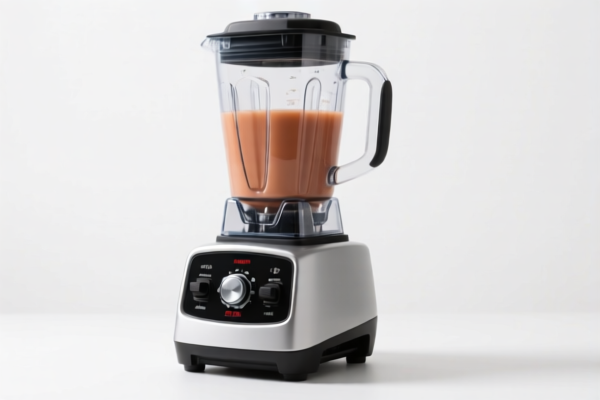
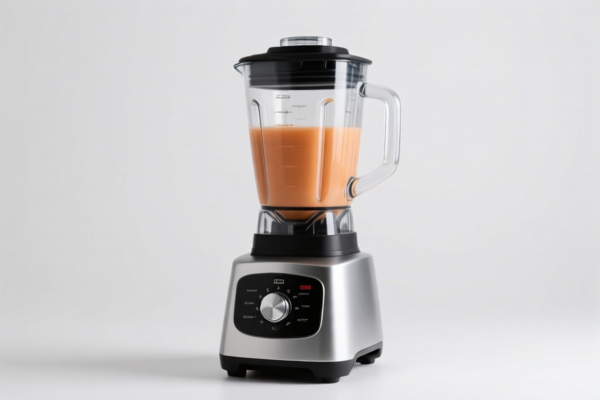


AI Analysis
🧀 Cheese Fine Grinder (Industrial Food Processing Machinery)
🌐 HS Code Reference & Customs Clearance Guide | 2026 Latest Tariff Analysis | Professional Clearance Strategy
📌 I. Product Definition & Classification: Do You Really Understand "Cheese Fine Grinder"?
A Cheese Fine Grinder is a specialized electromechanical appliance designed for the industrial preparation of food. It is distinct from household mixers or blenders because it is built for high-volume, continuous processing of solid dairy products (cheese) into fine shreds, powders, or pastes.
In international trade, the classification depends heavily on: 1. Power Source & Motor: Is it self-contained? 2. Function: Is it a household appliance (Heading 8509) or industrial machinery (Heading 8438)? 3. Capacity & Design: Is it designed for home kitchen use or factory/restaurant line integration?
⚠️ Key Distinction:
- If it is a small, countertop unit with a self-contained motor for household/small business use → It may fall under 8509.
- If it is a large, stationary industrial unit for manufacturing food/drink → It falls under 8438.
- Parts are classified separately under 8438.90.
📦 II. HS Code Classification Details (2026 Latest Tariff Authority Comparison)
| HS Code | Product Description | Applicable Scenario | Motor Type |
|---|---|---|---|
8509.40.00.40 |
Food grinders, processors and mixers; Food grinders and processors | Small-scale commercial or large household units; Self-contained electric motor | ✅ Self-contained |
8438.50.00.90 |
Machinery for the preparation of meat or poultry - Other | Industrial cheese grinders; Large capacity; Integrated into production lines | ✅ Industrial Grade |
8438.90.90.90 |
Parts of machinery for the preparation of food or drink - Other | Spare parts for industrial cheese grinders (e.g., blades, drums, motors) | N/A (Parts Only) |
🔍 Critical Reminder:
- Do not confuse with Household Blenders (8509.40.00.15): Cheese grinders are often heavier, use different cutting mechanisms (drums/shredders vs. blades), and are classified separately even if both are under 8509.40. - Industrial vs. Domestic: If the machine is intended for industrial food manufacture (e.g., cheese factory), it must be classified under 8438.50.00.90. Misclassifying an industrial machine as a domestic appliance (8509) can lead to customs delays or penalties.
💰 III. 2026 Latest Tariff Rate Breakdown (Including Additional Taxes & Policy Add-ons)
✅ Applicable Country: United States (US)
✅ Country of Origin: China (CN)
✅ Effective Date: November 10, 2025 onwards (and subsequent imports)
🎯 1. 8509.40.00.40 —— Food Grinders & Processors (Domestic/Small Commercial)
| Item | Details |
|---|---|
| Base Tariff | 0.0% (Ad Valorem) |
| Additional Tariff | 0.0% |
| Total Tax Rate | 0.0% |
| Tax Calculation | CIF Value × 0% = $0 |
| De Minimis Eligibility | ✅ Yes (if value < $800) |
| Legal Basis Path | No 301 or IEEPA additions apply to this specific subheading for China-origin goods in 2026. |
📌 Explanation:
- This code benefits from a 0% total tariff.
- It is not subject to the 25% Section 301 tariffs or the 10% IEEPA tariffs that apply to many other electronics and machinery.
- Advantage: Low customs cost, fast clearance, eligible for de minimis if shipping individual units under $800.
🎯 2. 8438.50.00.90 —— Industrial Machinery for Food Preparation (Other)
| Item | Details |
|---|---|
| Base Tariff | 0.0% (Ad Valorem) |
| Additional Tariff | 0.0% |
| Total Tax Rate | 0.0% |
| Tax Calculation | CIF Value × 0% = $0 |
| De Minimis Eligibility | ❌ No (Industrial machinery typically exceeds $800 or is excluded) |
| Legal Basis Path | No 301 or IEEPA additions apply to this specific subheading for China-origin goods in 2026. |
📌 Explanation:
- Despite being "industrial," this specific machinery code for food preparation also enjoys a 0% total tariff.
- Advantage: Competitive duty-free entry.
- Note: Ensure the product description clearly states "Industrial Machinery for Food Preparation" to justify this classification and avoid being misrouted to other machinery codes that might have higher tariffs.
🎯 3. 8438.90.90.90 —— Parts for Industrial Food Machinery
| Item | Details |
|---|---|
| Base Tariff | 0.0% (Ad Valorem) |
| Additional Tariff | 0.0% |
| Total Tax Rate | 0.0% |
| Tax Calculation | CIF Value × 0% = $0 |
| De Minimis Eligibility | ❌ No |
| Legal Basis Path | No 301 or IEEPA additions apply to this specific subheading for China-origin goods in 2026. |
📌 Explanation:
- Spare parts for industrial food machinery are also duty-free.
- Crucial: Must be declared as "Parts" and clearly linked to the machinery type.
🛠️ IV. Customs Clearance Practical Advice (Combat Pitfalls Guide)
✅ 1. Required Documentation Checklist (Non-negotiable)
| Document | Must Provide | Description |
|---|---|---|
| ✅ Product Specification Sheet | ✔️ | Details: Motor power, capacity (kg/hr), cutting mechanism type, material (stainless steel 304/316) |
| ✅ Product Photos (Front/Side/Rear) | ✔️ | Clear view of label, model number, electrical plate |
| ✅ Electrical Certificate | ✔️ | UL/ETL/CE certificate for the motor and electrical components |
| ✅ Commercial Invoice | ✔️ | Must state: "Cheese Grinder, Industrial/Domestic, Model XYZ, HS Code 8438.50.00.90/8509.40.00.40" |
| ✅ Packing List | ✔️ | Weight, dimensions, and itemization (machine vs. spare parts) |
| ✅ Country of Origin Certificate | ✔️ | If claiming preferential treatment or proving origin |
✅ 2. Declaration Tips (Key Mantras)
🔥 “Specify Industrial vs. Domestic, Label Clearly, Avoid ‘General’ Terms!”
| Scenario | Correct Declaration | Incorrect Practice |
|---|---|---|
| Industrial Cheese Shredder | 8438.50.00.90 - "Industrial Machinery for Food Preparation: Cheese Grinder" |
Generic "Food Processor" → Risk of reclassification |
| Countertop Cheese Grater | 8509.40.00.40 - "Electromechanical Domestic Appliance: Food Grinder" |
"Industrial Machine" → Over-declaration |
| Spare Blades/Drums | 8438.90.90.90 - "Parts of Food Machinery" |
Declared as "Tools" or "Appliances" |
| Mixed Shipment (Machine + Parts) | Separate Line Items | Combine into one line → Confusion, potential delay |
✅ 3. Special Cases & Handling
| Case | Handling Advice |
|---|---|
| OEM Custom Grinders | Provide customer design specs to prove industrial vs. domestic intent. |
| Hybrid Machines | If it can be used both ways, classify based on primary design and intended use. For customs, lean towards the more specific industrial code if used in factories. |
| Electrical Compliance | Ensure UL/ETL certification is up-to-date. Non-compliant electrical parts can cause seizure. |
| Food Contact Materials | Ensure all parts touching cheese are made of food-grade stainless steel (304/316). Provide material certificates if requested. |
🌍 V. Global Market Clearance Comparison (2026 Latest)
| Country/Region | Recommended HS Code | Tariff (China Origin) | Certification Requirements | Notes |
|---|---|---|---|---|
| 🇺🇸 USA | 8438.50.00.90 (Industrial) / 8509.40.00.40 (Domestic) |
0% | UL/ETL, NSF (if food contact) | No additional tariffs for these codes |
| 🇨🇳 China | 8438.50.00.90 |
0-5% (depends on treaty) | CCC, Food Safety License | Domestic trade may have different standards |
| 🇪🇺 EU | 8438.50.00 |
0-2.7% | CE, RoHS, FDA-equivalent | Strict food contact material rules |
| 🇬🇧 UK | 8438.50.00 |
0-2.7% | UKCA, RoHS | Post-Brexit rules apply |
| 🇯🇵 Japan | 8438.50.00 |
0% | JIS, Food Sanitation Law | Detailed labeling required |
📌 Conclusion:
- USA is highly favorable for cheese grinders with 0% total tariffs.
- EU and UK may require stricter food contact material certifications.
- No significant additional tariffs (like 25% or 10%) apply to these specific HS codes for China-origin goods in 2026.
📌 VI. Common Errors & Pitfall Guide (Blood Lessons)
❌ Mistake 1: Classifying an industrial machine as 8509.40.00.15 (Blender)
👉 Consequence: Customs may reject due to functional mismatch → Delay or penalty.
👉 Fix: Use 8509.40.00.40 for grinders, not blenders.
❌ Mistake 2: Ignoring electrical safety certifications
👉 Consequence: Product held at port until UL/ETL certificate is provided → Storage fees.
👉 Fix: Include UL/ETL certificates with every shipment.
❌ Mistake 3: Vague Description "Kitchen Appliance"
👉 Consequence: Customs officer may assign higher duty code or reject.
👉 Fix: Use precise language: "Industrial Cheese Grinder, Electric, Stainless Steel, Model XYZ."
❌ Mistake 4: Mixing Parts and Main Machine in One Line Item
👉 Consequence: Confusion in valuation and classification.
👉 Fix: List machine and parts on separate lines.
✅ Correct Declaration Example:
"INDUSTRIAL CHEESE GRINDER, ELECTRIC MOTOR, STAINLESS STEEL CONSTRUCTION, FOOD GRADE COMPONENTS, MODEL CG-2000, UL LISTED, HS CODE 8438.50.00.90"
🎯 VII. Conclusion: Professional Declaration, Save Time, Reduce Costs!
🎯 Remember the Mantra:
🔹 "Industrial or Domestic? Classify Right!"
🔹 "0% Duty for Grinders – Don’t Miss Out!"
🔹 "Electrical Cert is King – No UL, No Entry!"
📌 Pro Tip:
If you are shipping mixed containers (e.g., cheese grinders + unrelated items), ensure each item is properly separated in the packing list and invoice. This avoids cross-contamination of classifications and ensures smooth customs clearance.
📣 Immediate Action:
📞 Contact a Licensed Customs Broker + Provide Product Specs + Verify UL/ETL Certificates
🚀 Ensure your Cheese Grinders clear customs smoothly, duty-free, and on time!
✨ Professional Clearance Starts with Accurate Classification!
💼 Every dollar saved in duties is profit earned!
Customer Reviews
About HS Code Classification
The Harmonized System (HS) is an internationally standardized nomenclature developed by the World Customs Organization (WCO) to classify traded products. Over 200 countries use the HS system as the basis for customs tariffs, trade statistics, and import/export regulations.
Each HS code follows a hierarchical structure:
- Chapter (2 digits) — Broad category of goods (e.g., Chapter 84: Machinery and Mechanical Appliances)
- Heading (4 digits) — More specific grouping within the chapter
- Subheading (6 digits) — Internationally standardized breakdown, used by all WCO member countries
- National subdivisions (8-10 digits) — Country-specific extensions for further classification, such as US HTSUS 10-digit codes
Correct HS code classification is essential for smooth customs clearance, accurate duty payment, and compliance with trade regulations. Misclassification can lead to customs delays, overpayment of duties, or penalties.
When importing from CN to US, the applicable tariff rates may include:
- Most-Favored-Nation (MFN) rate — The standard duty rate applied to WTO members
- General rate — Applied to countries without trade agreements
- Trade remedy duties — Additional tariffs such as Section 301 (anti-dumping), Section 232 (national security), or countervailing duties
The information provided on this page is for reference purposes only. For official classification, please consult with your local customs authority or a licensed customs broker.