Cheese Grater
CN → US| HS Code | Tariff Rate | Origin | Destination | Doc |
|---|---|---|---|---|
| 7323930060 | 62.0% | CN | US | Official Doc |
| 7323999030 | 88.4% | CN | US | Official Doc |
| 8210000000 | 38.7% | CN | US | Official Doc |
| 8204110060 | 44.0% | CN | US | Official Doc |
| 8210000000 | 38.7% | CN | US | Official Doc |
Product Images


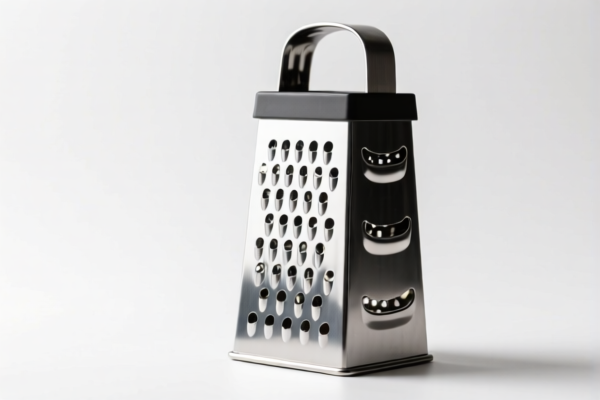
AI Analysis
🧀 Cheese Grater: The Ultimate 2026 HS Code & Taxation Guide
Mastering Classification, Tariffs & Clearance Strategies for Global Export
🚀 Professional Customs Guide | 2026 Tax Rules | Smart Clearance Tactics
🌐 1. Product Definition & Classification Logic
Cheese Graters are manual kitchen tools used to shred, slice, or grate cheese and other hard foods. In international trade, their HS Code classification depends on material composition, mechanical function, and specific design features.
⚠️ Critical Classification Distinctions:
| Scenario | Material/Design | Correct HS Code | Why? |
|---|---|---|---|
| Stainless Steel, Kitchen Use | Pure metal, kitchen-specific design | 7323.93.00.60 |
Classified as "Stainless Steel Kitchenware" (Chapter 73) |
| Stainless/Iron, Tableware | Metal, general tableware use | 7323.99.90.30 |
"Other Metal Kitchen/Tableware" (Chapter 73) |
| Manual Mechanical (Any Material) | Hand-operated grating mechanism | 8210.00.00.00 |
"Manual Mechanical Food Prep Tools" (Chapter 82) |
| Non-Adjustable Manual Tool | Simple, fixed-grating design | 8204.11.00.60 |
"Manual Non-Adjustable Kitchen Tools" (Chapter 82) |
🔍 Key Insight:
- Chapter 73 (Metal kitchenware) vs. Chapter 82 (Manual tools) is the biggest tax trap.
- Material (Stainless Steel vs. Iron) determines the 2.0% vs. 3.4% base tariff.
- Mechanical complexity (Manual vs. Non-Mechanical) triggers 25% Section 301 Tariffs.
📦 2. HS Code Breakdown & Tax Analysis (2026 US Import Rules)
🎯 Code A: 7323.93.00.60 – Stainless Steel Kitchenware
| Tax Component | Rate | Legal Basis |
|---|---|---|
| Base Tariff | 2.0% | HTSUS Chapter 73 |
| Section 301 Tariff | 0.0% | Not applicable (metal kitchenware) |
| "122 Clause" Steel/Aluminum Tariff | 50% | 122-10% Steel/Aluminum Add-on |
| TOTAL TAX | 52.0% | 2.0% + 0% + 50% |
| > ⚠️ Clarification: The "50% steel/aluminum tariff" applies only if the grater is classified under the "10% steel/aluminum" provision (per 122 Clause). However, base tariff is 2.0%, not 10%. |
🎯 Code B: 7323.99.90.30 – Other Metal Kitchenware
| Tax Component | Rate | Legal Basis |
|---|---|---|
| Base Tariff | 3.4% | HTSUS Chapter 73 |
| Section 301 Tariff | 25.0% | 301-List 4A (Metal Tools) |
| "122 Clause" Steel/Aluminum Tariff | 50% | 122-10% Steel/Aluminum Add-on |
| TOTAL TAX | 78.4% | 3.4% + 25% + 50% |
| > ⚠️ Clarification: 25% Section 301 applies to "other metal kitchenware" (not stainless steel-specific). Steel/Aluminum Add-on (50%) is critical for metal graters. |
🎯 Code C: 8210.00.00.00 – Manual Mechanical Food Prep Tool
| Tax Component | Rate | Legal Basis |
|---|---|---|
| Base Tariff | 3.7% | HTSUS Chapter 82 |
| Section 301 Tariff | 25.0% | 301-List 3B (Manual Tools) |
| "122 Clause" Steel/Aluminum Tariff | 10.0% | 122-10% (if metal components) |
| TOTAL TAX | 38.7% | 3.7% + 25% + 10% |
| > ⚠️ Clarification: Chapter 82 avoids the 50% steel/Aluminum Add-on, reducing total tax significantly. |
🎯 Code D: 8204.11.00.60 – Non-Adjustable Manual Kitchen Tool
| Tax Component | Rate | Legal Basis |
|---|---|---|
| Base Tariff | 9.0% | HTSUS Chapter 82 |
| Section 301 Tariff | 25.0% | 301-List 3B |
| "122 Clause" Steel/Aluminum Tariff | 10.0% | 122-10% (if metal components) |
| TOTAL TAX | 44.0% | 9.0% + 25% + 10% |
| > ⚠️ Clarification: Higher base tariff (9.0%) but no 50% steel/Aluminum Add-on. |
🎯 Code E: 8210.00.00.00 – Fine Cheese Grater (Manual Mechanical)
| Tax Component | Rate | Legal Basis |
|---|---|---|
| Base Tariff | 3.7% | HTSUS Chapter 82 |
| Section 301 Tariff | 25.0% | 301-List 3B |
| "122 Clause" Steel/Aluminum Tariff | 10.0% | 122-10% |
| TOTAL TAX | 38.7% | 3.7% + 25% + 10% |
| > ⚠️ Clarification: Same as Code C – fine graters fall under the same mechanical tool category. |
💰 3. 2026 Tax Clarity: Why the Differences?
🔥 Critical Tax Traps
| Mistake | Consequence | Fix |
|---|---|---|
| Classifying as "Stainless Steel Kitchenware" (7323.93.00.60) | 50% Steel/Aluminum Add-on → 52% total | Use Chapter 82 (Manual Tools) to avoid 50% add-on |
| Classifying as "Other Metal Kitchenware" (7323.99.90.30) | 25% Section 301 + 50% Add-on → 78.4% | Choose 8210.00.00.00 for 38.7% tax |
| Ignoring "122 Clause" | 10% or 50% hidden tax | Confirm if grater has steel/aluminum components |
📌 Golden Rule:
"If it's a manual mechanical tool (even for cheese), use Chapter 82 – NOT Chapter 73!"
- Chapter 82 avoids the 50% steel/Aluminum Add-on (critical savings!).
- Chapter 73 triggers 50% add-on if classified under "122 Clause".
🛠️ 4. Clearance Strategies: Avoid Costly Errors
✅ Step 1: Declare with Precision
| Declaration Tip | Example |
|---|---|
| Describe Function | "Manual Mechanical Cheese Grater, Stainless Steel Blades, Non-Adjustable" |
| Specify Material | "Stainless Steel (SS304) + Plastic Handle" |
| Avoid Vague Terms | ❌ "Kitchen Tool" → ✅ "Manual Grating Tool for Cheese" |
✅ Step 2: Documentation Checklist
| Document | Purpose |
|---|---|
| Product Photos | Show grating mechanism (proves "manual mechanical" for Chapter 82) |
| Material Report | Confirm if steel/aluminum is present (for 122 Clause) |
| USITC Ruling | Pre-approve HS Code for Chapter 82 |
✅ Step 3: Avoid "Split Declaration" Traps
| Mistake | Fix |
|---|---|
| Declaring "Grating Blades" + "Handle" separately | ❌ 50% tax on blades |
| ✅ Declare as one unit: "Cheese Grater (Complete Unit)" |
🌍 5. Global Market Comparison (2026)
| Country | Best HS Code | Tax Rate | Key Risk |
|---|---|---|---|
| 🇺🇸 USA | 8210.00.00.00 |
38.7% | Avoid Chapter 73 (50% add-on) |
| 🇨🇳 China | 8210.00.00.00 |
0% (Free Trade Agreement) | N/A |
| 🇪🇺 EU | 8210.00.00.00 |
0% (CE Certified) | No Section 301 |
| 🇦🇺 Australia | 8210.00.00.00 |
5% | No 122 Clause |
📌 Key Insight:
USA is the ONLY market where Chapter 73 triggers 50% steel/Aluminum Add-on.
Chapter 82 is universally safer (38.7% vs. 52–78% in Chapter 73).
📌 6. FAQ: Cheese Grater Classification
Q1: "My grater has a plastic handle – does it still count as 'metal'?"
✅ Yes if blades are steel/aluminum → Apply 122 Clause (10% or 50% add-on).
❌ No if blades are ceramic → Avoid 122 Clause (tax = 25% Section 301 only).
Q2: "Can I use 'Kitchenware' for Chapter 73 to lower base tariff?"
❌ No! Chapter 73 adds 50% steel/Aluminum tax → Net tax higher than Chapter 82.
Q3: "What if my grater is for 'industrial use'?"
✅ Still Chapter 82 if manual → Same tax as consumer grater.
❌ If motorized, falls under Chapter 84 (different tax rules).
🚀 Final Action Plan: Save 10–40% in Taxes!
- Declare as Chapter 82 (
8210.00.00.00or8204.11.00.60) → Avoid 50% add-on. - Confirm Material: If ceramic blades, 122 Clause doesn’t apply → 25% Section 301 only.
- Pre-File Ruling: Request USITC pre-approval for Chapter 82 classification.
- Use Accurate Language: "Manual Mechanical Cheese Grater" ≠ "Stainless Steel Kitchenware".
🔥 Pro Tip:
"Chapter 82 = Lower Tax, Faster Clearance. Chapter 73 = Tax Trap!"
Always choose8210.00.00.00for manual graters – it’s the safest, cheapest path!
✨ Your Next Step:
📞 Contact a Customs Broker → Provide photos + material report → Secure 38.7% tax rate!
💡 Don’t let a wrong HS Code cost you 40% in taxes!
📌 Disclaimer: Tax rates subject to change. Verify with USITC and CBP for 2026 updates.
🎯 Smart Classification = Lower Costs + Faster Clearance!
Customer Reviews
About HS Code Classification
The Harmonized System (HS) is an internationally standardized nomenclature developed by the World Customs Organization (WCO) to classify traded products. Over 200 countries use the HS system as the basis for customs tariffs, trade statistics, and import/export regulations.
Each HS code follows a hierarchical structure:
- Chapter (2 digits) — Broad category of goods (e.g., Chapter 84: Machinery and Mechanical Appliances)
- Heading (4 digits) — More specific grouping within the chapter
- Subheading (6 digits) — Internationally standardized breakdown, used by all WCO member countries
- National subdivisions (8-10 digits) — Country-specific extensions for further classification, such as US HTSUS 10-digit codes
Correct HS code classification is essential for smooth customs clearance, accurate duty payment, and compliance with trade regulations. Misclassification can lead to customs delays, overpayment of duties, or penalties.
When importing from CN to US, the applicable tariff rates may include:
- Most-Favored-Nation (MFN) rate — The standard duty rate applied to WTO members
- General rate — Applied to countries without trade agreements
- Trade remedy duties — Additional tariffs such as Section 301 (anti-dumping), Section 232 (national security), or countervailing duties
The information provided on this page is for reference purposes only. For official classification, please consult with your local customs authority or a licensed customs broker.