Chemical Catalyst
CN → US| HS Code | Tariff Rate | Origin | Destination | Doc |
|---|---|---|---|---|
| 7110410050 | 35.0% | CN | US | Official Doc |
| 7110490050 | 35.0% | CN | US | Official Doc |
| 3824880000 | 41.5% | CN | US | Official Doc |
| 2842909050 | 10.0% | CN | US | Official Doc |
| 3815110000 | 35.0% | CN | US | Official Doc |
Product Images
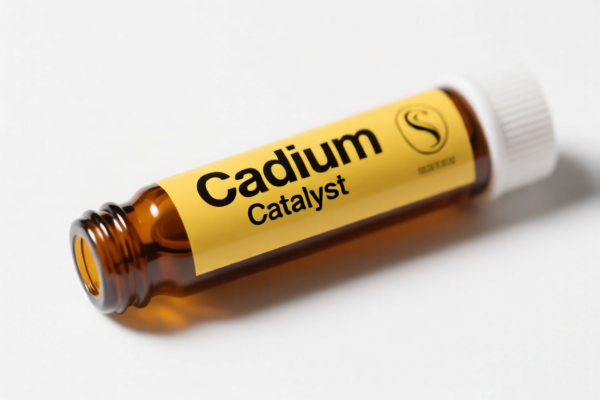
AI Analysis
🧪 Chemical Catalysts (Industrial & Laboratory Grade)
🌐 HS Code Reference & Customs Clearance Guide | 2026 Latest Tariff Analysis | Professional Entry Strategy for US Market
📌 I. Product Definition & Classification: Are You Sure You Know "Chemical Catalysts"?
Chemical catalysts are substances that accelerate chemical reactions without being consumed in the process. In international trade, they are not a single homogeneous commodity but are classified based on their chemical composition, physical form, and intended application.
Key Distinctions:
- Noble Metal Catalysts: Contain precious metals like Platinum, Iridium, or Ruthenium (typically Group 71).
- Prepared Catalysts: Complex chemical preparations, often organic or inorganic mixtures (typically Group 38 or 28).
- Inorganic Salts: Simple inorganic salts or peroxides used as catalysts (typically Group 28).
⚠️ Critical Classification Point:
- If the catalyst is a noble metal (Pt, Pd, Ir, Ru) in a basic form → HS 7110.
- If it is a complex chemical preparation (e.g., brominated, organic-based, or multi-component) → HS 3824 or HS 3815.
- If it is a simple inorganic salt/peroxide → HS 2842.
📦 II. HS Code Classification Details (2026 Latest Tariff Authority)
Based on the provided data, here are the four potential HS Code classifications for "Chemical Catalysts," depending on the specific material composition:
| HS Code | Product Description | Basis for Classification | Tax Status |
|---|---|---|---|
7110.41.00.50 |
Platinum Catalysts | Material: Contains Platinum (Pt). Form: Powder or primary shapes. | 35.0% |
7110.49.00.50 |
Other Noble Metal Catalysts | Material: Contains other Platinum Group Metals (Iridium, Osmium, Ruthenium). Form: Powder or semi-finished. | 35.0% |
3824.88.00.00 |
Prepared Brominated/Chemical Catalysts | Material: Chemical preparation (likely bromine-based or organic complex). Usage: Chemical industry additives. | 41.5% |
2842.90.90.50 |
Inorganic Salt Catalysts | Material: Inorganic salts or peroxides. Usage: Lab or industrial chemical reactions. | +10.0% |
3815.11.00.00 |
Prepared Catalysts (General) | Material: Chemical preparation (not specified as noble metal). Usage: General catalytic function. | 35.0% |
🔍 Key Insight:
- Platinum/Iridium/Ruthenium based catalysts fall under Chapter 71 (Noble Metals).
- Complex Organic/Inorganic Mixtures fall under Chapter 38 (Miscellaneous Chemical Products).
- Simple Inorganic Salts fall under Chapter 28 (Inorganic Chemicals).
💰 III. 2026 Latest Tariff Rate Breakdown (Including Surcharges)
✅ Applicable Country: United States (US)
✅ Origin: China (CN)
✅ Effective Date: 2025/2026 (Based on current trade policies)
🎯 1. 7110.41.00.50 & 7110.49.00.50 —— Noble Metal Catalysts (Platinum Group)
These codes cover catalysts containing Platinum (7110.41) or other Platinum Group Metals like Iridium/Ruthenium (7110.49).
| Item | Detail |
|---|---|
| Base Duty | 0.0% |
| Section 301 Surcharge | +25.0% |
| Section 122 Duties | +10.0% |
| Total Effective Rate | 35.0% |
| Legal Basis | Base Tariff 0% + 301 Clause (25%) + 122 Clause (10%) |
| De Minimis Exemption | ❌ NOT Eligible |
📌 Explanation:
- Although the base duty for precious metals is 0%, the Section 301 tariff (25%) and Section 122 tariffs (10%) apply strictly to Chinese-origin goods.
- Total: 35%. This is a high-cost category due to the "noble metal" designation triggering trade restrictions.
🎯 2. 3824.88.00.00 —— Prepared Brominated/Chemical Catalysts
This code is used for complex chemical preparations, often containing bromine or other organic/inorganic mixtures that don't fit into simpler categories.
| Item | Detail |
|---|---|
| Base Duty | 6.5% |
| Section 301 Surcharge | +25.0% |
| Section 122 Duties | +10.0% |
| Total Effective Rate | 41.5% |
| Legal Basis | Base Tariff 6.5% + 301 Clause (25%) + 122 Clause (10%) |
| De Minimis Exemption | ❌ NOT Eligible |
📌 Explanation:
- Unlike noble metals, these have a base tariff of 6.5%.
- When combined with the 25% and 10% surcharges, the total hits 41.5%.
- This is often the fallback for organic-based or brominated flame-retardant catalysts.
🎯 3. 2842.90.90.50 —— Inorganic Salt/Peroxide Catalysts
This code applies to simple inorganic salts (e.g., peroxides, sulfates) used as catalysts. It is the most tax-efficient option if the product fits this description.
| Item | Detail |
|---|---|
| Base Duty | 0.0% (Implied from "+10.0%" total) |
| Section 301 Surcharge | 0.0% |
| Section 122 Duties | +10.0% |
| Total Effective Rate | +10.0% |
| Legal Basis | 122 Clause (10%) only |
| De Minimis Exemption | ❌ NOT Eligible |
📌 Explanation:
- Significantly lower tax burden (10%).
- Applicable only if the catalyst is a pure inorganic salt or peroxide, not a complex mixture or noble metal.
- Strategy: If your catalyst is a simple inorganic salt, ensure your MSDS and technical data clearly state "Inorganic Salt" to qualify for this rate.
🎯 4. 3815.11.00.00 —— Prepared Catalysts (General Chemical)
This is the general "basket" code for prepared catalysts that are not noble metals (not Ch 71) and not simple salts (not Ch 28). It covers most industrial catalytic preparations.
| Item | Detail |
|---|---|
| Base Duty | 0.0% |
| Section 301 Surcharge | +25.0% |
| Section 122 Duties | +10.0% |
| Total Effective Rate | 35.0% |
| Legal Basis | Base Tariff 0% + 301 Clause (25%) + 122 Clause (10%) |
| De Minimis Exemption | ❌ NOT Eligible |
📌 Explanation:
- No base duty, but the same surcharges as noble metals.
- Used when the catalyst is a chemical preparation (e.g., supported catalysts, complex organometallics) that doesn't fall under the "brominated" or "inorganic salt" categories.
🛠️ IV. Customs Clearance Practical Advice (Pitfall Avoidance)
✅ 1. Documentation Checklist (Mandatory)
| Document | Required? | Description |
|---|---|---|
| ✅ Material Safety Data Sheet (MSDS/SDS) | ✔️ Critical | Must clearly list active ingredients (e.g., "Platinum: 5%", "Bromine-based compound"). |
| ✅ Technical Specification Sheet | ✔️ | Details the chemical form (powder, liquid, pellet) and molecular structure. |
| ✅ Product Photo (Label + Container) | ✔️ | Clear view of the label, batch number, and hazard symbols. |
| ✅ Commercial Invoice | ✔️ | Must specify "Chemical Catalyst" and the HS Code. |
| ✅ Certificate of Origin (CO) | ✔️ | Required to determine if 301/122 tariffs apply. |
✅ 2. Declaration Strategy (Key Mantra)
🔥 "Identify the Metal, Choose the Code; Simple Salt is Cheapest, Complex Mix is Highest!"
| Scenario | Correct HS Code | Tax Rate | Risk if Misclassified |
|---|---|---|---|
| Platinum-based | 7110.41.00.50 |
35% | If declared as 3815, still 35%, but audit risk high. |
| Iridium/Ruthenium-based | 7110.49.00.50 |
35% | Same as above. |
| Brominated/Organic Prep | 3824.88.00.00 |
41.5% | Highest tax rate. Justify with SDS showing bromine/organic content. |
| Inorganic Salt/Peroxide | 2842.90.90.50 |
10% | Biggest Savings! Ensure it is NOT a noble metal. |
| General Prepared Catalyst | 3815.11.00.00 |
35% | Safe fallback if composition is complex but not noble. |
✅ 3. Special Considerations
| Situation | Advice |
|---|---|
| Mixed Catalysts | If the catalyst contains both noble metals and organic binders, it is still usually classified under 7110 if the noble metal is the primary value driver. |
| Lab Scale vs. Industrial | Does not matter. Classification is based on composition, not quantity. Both are subject to 301/122 tariffs. |
| Unsupported vs. Supported | Unsupported (pure metal) → 7110. Supported (metal on alumina/silica) → Often 7110 or 3815 depending on specific USITC rulings. Verify! |
| De Minimis ($800) | ❌ NO DE MINIMIS EXEMPTION. All categories listed above are explicitly not eligible for the $800 de minimis rule. All shipments require formal entry and duty payment. |
🌍 V. Global Market Comparison (2026)
| Market | Typical HS Code | Base Duty | Surcharge (China) | Total Est. | Note |
|---|---|---|---|---|---|
| 🇺🇸 USA | 7110.49.00.50 |
0% | +35% (301+122) | 35% | High barrier for noble metals. |
| 🇺🇸 USA | 2842.90.90.50 |
0% | +10% (122 only) | 10% | Best rate if inorganic salt. |
| 🇪🇺 EU | 3815/7110 | 0-6.5% | 0% | 0-6.5% | No US-style 301 tariffs. |
| 🇨🇳 China | 3815/7110 | 5-13% | 0% | 5-13% | Lower than US rates. |
📌 Conclusion:
- The US market is the most expensive for chemical catalysts due to Section 301 and 122 tariffs.
- Inorganic salt catalysts (2842.90.90.50) offer a significant cost advantage (10%) compared to noble metals or complex preparations (35-41.5%).
- No de minimis exemption means all shipments, no matter the size, are subject to duty.
📌 VI. Common Errors & Pitfall Guide (Lessons Learned)
❌ Error 1: Declaring a Platinum Catalyst as 3815.11.00.00 to save time.
👉 Result: Customs may reclassify it as 7110.41.00.50 (35%). Same tax, but delayed clearance + penalties.
❌ Error 2: Claiming De Minimis for small lab samples.
👉 Result: Rejected. All these codes are excluded from $800 de minimis. You must file a formal entry.
❌ Error 3: Not specifying Noble Metal Content in MSDS.
👉 Result: Customs may default to the highest tax rate (41.5% for 3824) due to ambiguity.
❌ Error 4: Misidentifying Inorganic Salts as "Prepared Catalysts."
👉 Result: Paying 35% instead of 10%. If it’s a simple salt, fight for 2842.90.90.50.
✅ Correct Action:
Always provide a detailed MSDS highlighting the active chemical species. If it’s a simple inorganic salt, emphasize "Inorganic Salt" over "Catalyst" in the description to aim for
2842.
🎯 VII. Conclusion: Precision Classification = Cost Savings
🎯 Remember the Mantra:
🔹 "Noble Metals = 35%; Complex Mixes = 35-41.5%; Inorganic Salts = 10%."
🔹 "No De Minimis. No Exceptions. Documents are Key."
📌 Pro Tip:
If your catalyst is not made in China (e.g., sourced from EU, Japan, or US), Section 301 and 122 tariffs may not apply. Check the Country of Origin carefully! A non-China origin could reduce your total tax from 35% to just 0-6.5%.
📣 Immediate Action:
📞 Contact a Licensed Customs Broker to verify your specific catalyst composition.
🚀 Submit an Advance Ruling if your product is complex.
💡 Optimize your HS Code to target2842.90.90.50if possible, to save 25% in duties.
✨ Professional Clearance, Start with Accurate Classification!
💼 Every Percentage Point Counts in Chemical Trade!
Customer Reviews
About HS Code Classification
The Harmonized System (HS) is an internationally standardized nomenclature developed by the World Customs Organization (WCO) to classify traded products. Over 200 countries use the HS system as the basis for customs tariffs, trade statistics, and import/export regulations.
Each HS code follows a hierarchical structure:
- Chapter (2 digits) — Broad category of goods (e.g., Chapter 84: Machinery and Mechanical Appliances)
- Heading (4 digits) — More specific grouping within the chapter
- Subheading (6 digits) — Internationally standardized breakdown, used by all WCO member countries
- National subdivisions (8-10 digits) — Country-specific extensions for further classification, such as US HTSUS 10-digit codes
Correct HS code classification is essential for smooth customs clearance, accurate duty payment, and compliance with trade regulations. Misclassification can lead to customs delays, overpayment of duties, or penalties.
When importing from CN to US, the applicable tariff rates may include:
- Most-Favored-Nation (MFN) rate — The standard duty rate applied to WTO members
- General rate — Applied to countries without trade agreements
- Trade remedy duties — Additional tariffs such as Section 301 (anti-dumping), Section 232 (national security), or countervailing duties
The information provided on this page is for reference purposes only. For official classification, please consult with your local customs authority or a licensed customs broker.