Chemical Derivatives of Natural Rubber
CN → US| HS Code | Tariff Rate | Origin | Destination | Doc |
|---|---|---|---|---|
| 4005910000 | 35.0% | CN | US | Official Doc |
| 4005990000 | 35.0% | CN | US | Official Doc |
| 4002800000 | 35.0% | CN | US | Official Doc |
| 4002990000 | 35.0% | CN | US | Official Doc |
| 3907995050 | 41.5% | CN | US | Official Doc |
Product Images

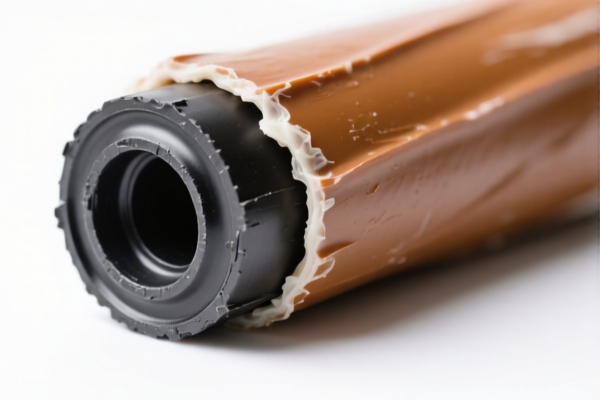


AI Analysis
🧪 Chemical Derivatives of Natural Rubber: HS Code Classification & U.S. Customs Clearance Strategy (2026)
🌐 HS Code Reference & Clearance Guide | Latest 2026 Tariff Analysis | Professional Strategy for High-Tax Items
📌 Part 1: Product Definition & Classification – Are You Identifying "Rubber Derivatives" Correctly?
Chemical Derivatives of Natural Rubber refer to processed rubber materials that have undergone chemical modification, vulcanization status changes, or physical form alterations (such as powdering or reconstituting). In international trade, these are not "raw natural rubber" but processed intermediates used for coatings, adhesives, or further manufacturing.
They are broadly categorized into: 1. Powdered/Derivative Forms: Rubber processed into powders or specific chemical shapes, often unvulcanized but modified. 2. Chemical Blends/Mixtures: Synthetic or natural rubber mixed with other chemicals (e.g., for coating applications), changing their physical or chemical identity from raw rubber. 3. Resinous/Intermediate Forms: Rubber derived materials that act as intermediates in chemical synthesis (e.g., polyester-like rubber derivatives).
⚠️ Key Distinction:
- If the material is powdered unvulcanized rubber → It is still classified under Chapter 40 (Rubber), but with specific sub-headings for derivatives.
- If the material is a chemical blend/coating intermediate (e.g., synthetic rubber with chemical additives) → It may fall under specific synthetic rubber codes or even Chapter 39 if it behaves like an organic chemical intermediate.
- Crucial Note: These items are subject to significant U.S. additional tariffs due to their origin (China) and specific trade measures.
📦 Part 2: HS Code Classification Details (2026 Latest Tariff Authority Comparison)
| HS Code | Product Description | Application Scenario | Chemical/Physical State |
|---|---|---|---|
4005.91.00.00 |
Powdered Derivatives of Natural Rubber, unvulcanized | Rubber powder for adhesives, coatings, or industrial mixing | Powder form, unvulcanized mix |
4005.99.00.00 |
Other Derivatives of Natural Rubber, unvulcanized | Raw shape derivatives, unvulcanized mixed rubber for molding | Raw/Unshaped form, unvulcanized |
4002.80.00.00 |
Chemical Derivatives for Coatings, Synthetic Rubber | Synthetic rubber blends for coating applications | Chemical mixture, synthetic base |
4002.99.00.00 |
Chemical Derivatives for Coatings, Synthetic Plasticizers | Synthetic rubber plasticizers or chemical agents | Chemical attribute, synthetic base |
3907.99.50.50 |
Chemical Derivatives (Polyester-like) | Rubbery intermediates behaving as organic chemicals/polyesters | Organic chemical intermediate, polyester category |
🔍 Critical Reminder:
- Powers of "Derivatives" (like4005.91.00.00and4005.99.00.00) are strictly for unvulcanized rubber mixes. If vulcanized, they move to Chapter 40 but different sub-headings.
- Chemical Derivatives (4002.xxxx) imply a synthetic rubber base or significant chemical modification for coatings.
-3907.99.50.50is a fallback if the product is deemed more of a polyester/organic chemical than a rubber, despite the name "rubber derivative." This requires strong chemical evidence.
💰 Part 3: 2026 Latest U.S. Tariff Rates Detailed (Including Additional Taxes)
✅ Applicable Country: United States (US)
✅ Country of Origin: China (CN)
✅ Effective Date: November 10, 2025 (and subsequent imports)
🎯 1. 4005.91.00.00 & 4005.99.00.00 – Powdered/Unshaped Unvulcanized Rubber Derivatives
| Item | Content |
|---|---|
| Base Tariff | 0.0% (ad valorem) |
| Section 301 Additional Tariff | +25% (from USITC Footnote for Chapter 40 items) |
| Section 122 Tariff | +10% (Specific tariff for certain chemical/rubber intermediates) |
| Total Tariff Rate | 35.0% |
| Tax Calculation | CIF Value × 35% |
| De Minimis Exemption | ❌ Not Eligible (High-value intermediate; typically denied de minimis) |
| Legal Authority Path | USITC:4005.91.00.00 → Section 301: 351.5.24 → Section 122: 19 CFR 122 |
📌 Explanation:
- "0% Base" is misleading; the 25% Section 301 is the dominant cost driver.
- "10% Section 122" applies to specific chemical/rubber mixes imported from China.
- Total 35% is a fixed high rate for these unvulcanized derivatives.
🎯 2. 4002.80.00.00 & 4002.99.00.00 – Synthetic Rubber Chemical Derivatives for Coatings
| Item | Content |
|---|---|
| Base Tariff | 0.0% (ad valorem) |
| Section 301 Additional Tariff | +25% |
| Section 122 Tariff | +10% |
| Total Tariff Rate | 35.0% |
| Tax Calculation | CIF Value × 35% |
| De Minimis Exemption | ❌ Not Eligible |
| Legal Authority Path | USITC:4002.80.00.00 → Section 301: 351.5.24 → Section 122: 19 CFR 122 |
📌 Note:
- These are synthetic rubber-based. The classification hinges on the chemical nature (coating vs. plasticizer).
- Same 35% rate as natural rubber derivatives due to identical trade policy treatment.
🎯 3. 3907.99.50.50 – Polyester-like Chemical Derivatives (Intermediate)
| Item | Content |
|---|---|
| Base Tariff | 6.5% (ad valorem) |
| Section 301 Additional Tariff | +25% |
| Section 122 Tariff | +10% |
| Total Tariff Rate | 41.5% |
| Tax Calculation | CIF Value × 41.5% |
| De Minimis Exemption | ❌ Not Eligible |
| Legal Authority Path | USITC:3907.99.50.50 → Section 301: 351.5.24 → Section 122: 19 CFR 122 |
📌 Warning:
- This is the highest tax rate (41.5%) in the dataset.
- It applies only if the product is chemically classified as a polyester/organic intermediate rather than a rubber.
- Misclassification Risk: If you classify as3907but it’s actually rubber, you risk penalties. If you classify as4002but it’s polyester, you pay less but risk misclassification. Chemical analysis is critical.
🛠️ Part 4: Practical Customs Clearance Advice (Avoiding Pitfalls)
✅ 1. Documentation Checklist (Mandatory)
| Document | Required | Explanation |
|---|---|---|
| ✅ Certificate of Analysis (COA) | ✔️ | Must detail chemical composition, vulcanization status, and form (powder/raw). |
| ✅ Technical Data Sheet (TDS) | ✔️ | Shows physical properties, intended use (coating/plasticizer), and chemical structure. |
| ✅ Product Photos | ✔️ | Clear images of powder, raw shape, and labeling. |
| ✅ Commercial Invoice | ✔️ | Must specify "Chemical Derivative of Rubber" or "Unvulcanized Rubber Mix." |
| ✅ Origin Certificate | ✔️ | Proves Chinese origin to apply Section 301/122 correctly. |
| ✅ Chemical Structure Diagram | ✔️ | Critical for distinguishing 4002 (rubber) from 3907 (polyester). |
✅ 2. Declaration Tips (Key Mnemonics)
🔥 “Know Your Form: Powder is 4005, Blend is 4002, Polyester is 3907!”
| Scenario | Correct HS Code | Common Error | Consequence |
|---|---|---|---|
| Unvulcanized rubber powder | 4005.91.00.00 |
Classifying as raw rubber 4001 |
Misclassification, delay |
| Unvulcanized rubber raw mix | 4005.99.00.00 |
Classifying as vulcanized rubber | Wrong tax base |
| Synthetic rubber coating agent | 4002.80.00.00 |
Classifying as 4005 |
Potential penalty if synthetic |
| Rubber plasticizer/chemical | 4002.99.00.00 |
Classifying as 3907 |
If it’s rubber, not polyester |
| Polyester-like rubber intermediate | 3907.99.50.50 |
Classifying as 4002 |
Underpaying tax if truly polyester |
✅ 3. Special Handling
| Scenario | Recommendation |
|---|---|
| Is it Vulcanized? | If yes, DO NOT use 4005. Use vulcanized rubber codes (e.g., 4008), which have different tax implications. |
| Is it Synthetic or Natural? | 4005 is for Natural Rubber Derivatives. 4002 is for Synthetic Rubber. Check the chemical origin. |
| High-Risk Item | For 3907.99.50.50, provide expert chemical opinions to justify the "polyester" classification. |
| De Minimis | Do not use Section 321 (De Minimis) for these items. They are explicitly targeted by Section 122 and 301. |
🌍 Part 5: Global Market Comparison (2026)
| Country/Region | Recommended HS Code | Tariff Rate (China Origin) | Key Requirements |
|---|---|---|---|
| 🇺🇸 USA | 4005.91.00.00 / 4002.80.00.00 |
35% | Section 301 + 122 compliance |
| 🇺🇸 USA | 3907.99.50.50 |
41.5% | Chemical justification |
| 🇨🇳 China | 4005 / 4002 |
0% – 5% | Standard import duties |
| 🇪🇺 EU | 4005 / 4002 |
~6.5% | REACH compliance |
| 🇬🇧 UK | 4005 / 4002 |
~6.5% | Post-BRExit rules |
📌 Conclusion:
- USA is the most expensive market for rubber derivatives due to Section 301 (25%) and Section 122 (10%).
- China and EU have significantly lower barriers.
- Plan for 35-41.5% tax if importing into the US.
📌 Part 6: Common Mistakes & Pitfalls (Lessons Learned)
❌ Mistake 1: Declaring "Rubber Powder" as "Raw Rubber" (4001)
👉 Result: Misclassification. 4005 is for derivatives/mixes. 4001 is for raw latex/sheets.
👉 Penalty: Customs audit, back taxes, fines.
❌ Mistake 2: Ignoring the "Synthetic" vs. "Natural" distinction
👉 Result: 4005 is for Natural rubber derivatives. If it’s synthetic, use 4002.
👉 Penalty: Incorrect tariff application.
❌ Mistake 3: Assuming De Minimis applies
👉 Result: Section 122 and 301 explicitly target these categories.
👉 Penalty: Goods held at border, forced to pay full duty.
❌ Mistake 4: Misclassifying Polyester Derivatives as Rubber
👉 Result: Paying 35% instead of 41.5% (if it’s truly polyester) or vice versa.
👉 Penalty: Underpayment or overpayment. Chemical analysis is key.
✅ Correct Approach:
"Unvulcanized? Check form: Powder → 4005.91; Raw → 4005.99.
Synthetic/Coating? → 4002.80/99.
Polyester-like? → 3907.99.50.
Always add 25% (301) + 10% (122) for US imports from China."
🎯 Part 7: Conclusion – Professional Classification Saves Money
🎯 Key Takeaway:
🔹 "Rubber Derivatives" are NOT raw rubber. They are processed, taxed heavily.
🔹 "35% is the baseline" for rubber derivatives. 41.5% for chemical/polyester types.
🔹 "Documentation is King." COA, TDS, and chemical structure diagrams are mandatory.
📌 Pro Tip:
If your product is exported to Vietnam or Mexico first, consider substantial transformation rules. However, Section 301 often still applies if Chinese content dominates. Pre-clearance rulings are highly recommended.
📣 Immediate Action:
📞 Consult a Customs Broker + Provide Chemical Analysis + Apply for Advance Ruling
🚀 Avoid 35-41.5% tax shocks with precise classification!
✨ Professional Customs Clearance Starts with Accurate Classification!
💼 Every dollar of tax saved is pure profit!
Customer Reviews
About HS Code Classification
The Harmonized System (HS) is an internationally standardized nomenclature developed by the World Customs Organization (WCO) to classify traded products. Over 200 countries use the HS system as the basis for customs tariffs, trade statistics, and import/export regulations.
Each HS code follows a hierarchical structure:
- Chapter (2 digits) — Broad category of goods (e.g., Chapter 84: Machinery and Mechanical Appliances)
- Heading (4 digits) — More specific grouping within the chapter
- Subheading (6 digits) — Internationally standardized breakdown, used by all WCO member countries
- National subdivisions (8-10 digits) — Country-specific extensions for further classification, such as US HTSUS 10-digit codes
Correct HS code classification is essential for smooth customs clearance, accurate duty payment, and compliance with trade regulations. Misclassification can lead to customs delays, overpayment of duties, or penalties.
When importing from CN to US, the applicable tariff rates may include:
- Most-Favored-Nation (MFN) rate — The standard duty rate applied to WTO members
- General rate — Applied to countries without trade agreements
- Trade remedy duties — Additional tariffs such as Section 301 (anti-dumping), Section 232 (national security), or countervailing duties
The information provided on this page is for reference purposes only. For official classification, please consult with your local customs authority or a licensed customs broker.