Chemical Mixture
CN → US| HS Code | Tariff Rate | Origin | Destination | Doc |
|---|---|---|---|---|
| 3824992900 | 41.5% | CN | US | Official Doc |
| 3824994900 | 41.5% | CN | US | Official Doc |
| 3808990800 | 41.5% | CN | US | Official Doc |
| 3506990000 | 37.1% | CN | US | Official Doc |
| 3808999501 | 40.0% | CN | US | Official Doc |
Product Images
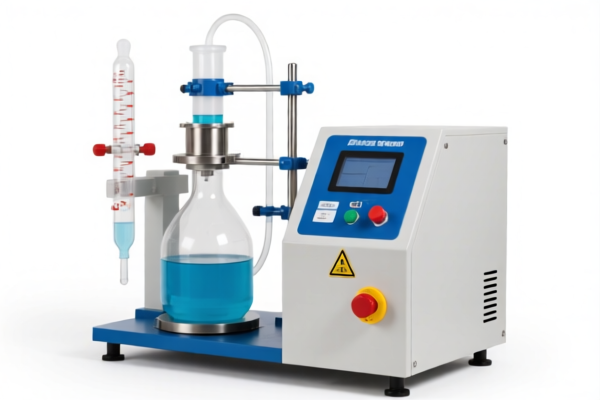
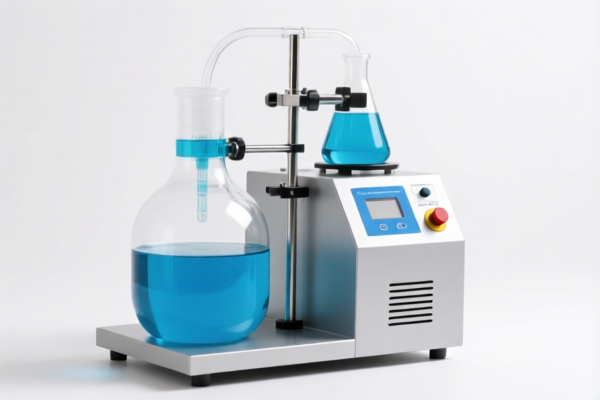
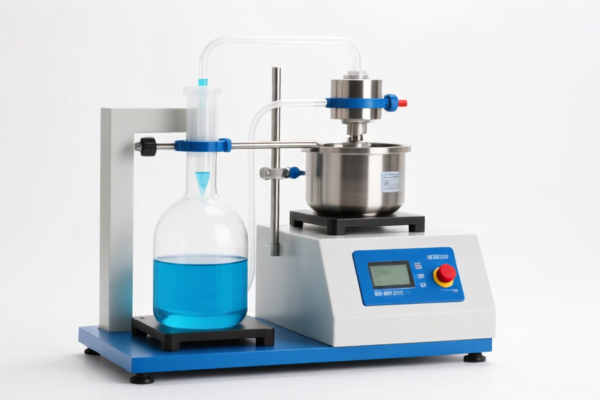
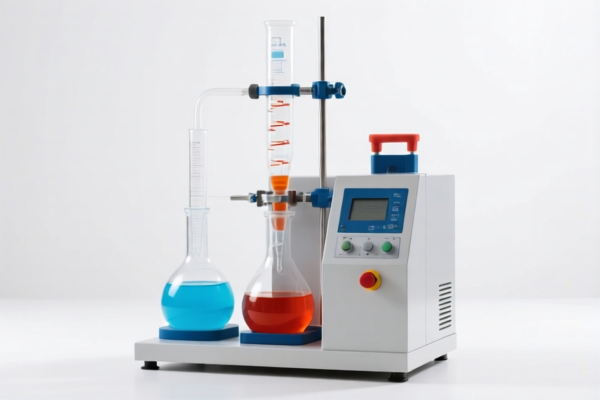
AI Analysis
🧪 Chemical Mixtures: The Ultimate HS Code Classification & US Customs Clearance Guide
🌐 HS Code Reference & Customs Clearance Guide | 2026 Latest Tariff Analysis | Professional Strategy
📌 Part 1: Product Definition – Do You Really Understand "Chemical Mixtures"?
Chemical mixtures are ubiquitous in industrial, agricultural, and commercial applications. They are not pure substances but blends of two or more chemical components. In international trade, misclassification is a major risk because "mixture" is not a single HS code. The correct classification depends entirely on the dominant function or principal constituent of the mixture.
In this guide, we analyze the specific HS codes provided in the data, focusing on US Import Tariffs (including Base, Section 301, and Section 122 tariffs).
⚠️ Key Distinction:
- Is it a general chemical product? → 3824
- Is it a pesticide/biocide? → 3808
- Is it an adhesive/glue? → 3506
📦 Part 2: HS Code Classification Matrix (Data-Driven)
Based on the provided dataset, here are the five potential HS codes for chemical mixtures, categorized by their specific application and legal status.
| HS Code | Product Description | Category Scope | Total Tax Rate* |
|---|---|---|---|
3824.99.29.00 |
General Chemical Mixture | Other chemical products/preparations (Catch-all) | 41.5% |
3824.99.49.00 |
General Chemical Mixture | Other/Unlisted mixtures (Catch-all) | 41.5% |
3808.99.08.00 |
Pest Control Mixture | Insecticides, Fungicides, Biocidal Preparations | 41.5% |
3506.99.00.00 |
Adhesive Mixture | Formulated Adhesives/Glues | 37.1% |
3808.99.95.01 |
Pest Control Mixture | Other Insecticides/Fungicides (Specific Sub-list) | 40.0% |
* Note on Taxes: All rates include Base Duty + Section 301 Additional Duty + Section 122 Additional Duty.
💰 Part 3: Detailed Tariff Breakdown (US Import)
✅ Applicable Country: United States (US)
✅ Origin: China (CN)
✅ Structure: Base Duty + Section 301 Duty (25%) + Section 122 Duty (10%)
🎯 1. 3824.99.29.00 & 3824.99.49.00 – General Chemical Mixtures
These codes serve as "Catch-All" categories for chemical mixtures that do not have a more specific heading (like pesticides or adhesives).
| Component | Rate | Legal Basis / Description |
|---|---|---|
| Base Duty | 6.5% | Standard MFN (Most Favored Nation) Rate for heading 3824 |
| Section 301 Duty | +25.0% | USITC Footnote: Trade Remedy on Chinese Goods |
| Section 122 Duty | +10.0% | Additional duty on specific Chinese chemical imports |
| Total Tax Rate | 41.5% | 6.5% + 25% + 10% |
📌 Explanation:
- 3824.99.29.00: Used for general chemical mixtures falling under "Other chemical products and preparations."
- 3824.99.49.00: Used for "Other mixtures" not elsewhere specified.
- Crucial Point: Both incur the same total tax burden. The distinction is often administrative or based on specific ingredient lists. If your product is a generic solvent blend or cleaning agent, one of these is likely correct.
🎯 2. 3808.99.08.00 & 3808.99.95.01 – Pesticide/Biocidal Mixtures
If the chemical mixture is used for pest control, disinfection, or preservation, it falls under Heading 3808. This is a sensitive category due to EPA regulations.
A. 3808.99.08.00
| Component | Rate | Legal Basis / Description |
|---|---|---|
| Base Duty | 6.5% | Standard MFN Rate |
| Section 301 Duty | +25.0% | Trade Remedy |
| Section 122 Duty | +10.0% | Additional Duty |
| Total Tax Rate | 41.5% | 6.5% + 25% + 10% |
📌 Scope: Broad category for insecticides, fungicides, and similar biocidal products.
B. 3808.99.95.01
| Component | Rate | Legal Basis / Description |
|---|---|---|
| Base Duty | 5.0% | Lower Base Rate for specific sub-category |
| Section 301 Duty | +25.0% | Trade Remedy |
| Section 122 Duty | +10.0% | Additional Duty |
| Total Tax Rate | 40.0% | 5.0% + 25% + 10% |
📌 Scope: More specific sub-category within biocides.
💡 Savings Tip: This code saves 1.5% in total tax compared to the general 3824 codes and3808.99.08.00, due to a lower base duty (5.0% vs 6.5%).
🎯 3. 3506.99.00.00 – Formulated Adhesives
If the mixture is a glue, cement, or adhesive, it falls under Heading 3506. This category has a significantly lower tax burden.
| Component | Rate | Legal Basis / Description |
|---|---|---|
| Base Duty | 2.1% | Standard MFN Rate for adhesives |
| Section 301 Duty | +25.0% | Trade Remedy |
| Section 122 Duty | +10.0% | Additional Duty |
| Total Tax Rate | 37.1% | 2.1% + 25% + 10% |
📌 Explanation:
- Adhesives are taxed more favorably than general chemicals or pesticides.
- Savings Alert: This is the lowest tax rate in the dataset (37.1%), saving 4.4% compared to general chemicals (3824) and 1.4% compared to specific pesticides (3808.99.95.01).
🛠️ Part 4: Customs Clearance Strategy & Pitfalls
✅ 1. Preparation Checklist (Documentation)
| Document | Requirement | Purpose |
|---|---|---|
| MSDS / SDS | ✅ Mandatory | Identify ingredients, hazards, and confirm if it’s a pesticide or adhesive. |
| Formula/Composition | ✅ Mandatory | % of each ingredient by weight. Critical for distinguishing between 3824 (general) and 3808 (pesticide). |
| Intended Use Statement | ✅ Mandatory | Prove if it’s for cleaning (3824), pest control (3808), or bonding (3506). |
| EPA Registration | ⚠️ If Pesticide | If classifying under 3808, EPA registration number may be required. |
| Commercial Invoice | ✅ Mandatory | Clearly describe the product (e.g., "Formulated Adhesive" vs. "Industrial Cleaning Solvent"). |
✅ 2. Classification Decision Tree
Use this logic to select the right HS Code:
-
Is it an Adhesive/Glue?
→ Yes: Classify as3506.99.00.00(Tax: 37.1%).
→ No: Go to Step 2. -
Is it a Pesticide, Fungicide, or Insecticide?
→ Yes:- Check if it fits the specific sub-list for
3808.99.95.01(Tax: 40.0%). - If not, use
3808.99.08.00(Tax: 41.5%).
→ No: Go to Step 3.
- Check if it fits the specific sub-list for
-
Is it a General Chemical Mixture (e.g., Solvents, Cleaning Agents)?
→ Yes: Use3824.99.29.00or3824.99.49.00(Tax: 41.5%).
✅ 3. Critical Warnings & Pitfalls
❌ Mistake 1: Misclassifying Pesticides as General Chemicals
👉 Consequence: If you declare a pesticide as 3824, you may avoid EPA scrutiny initially, but if detected, you face heavy fines, seizure, and potential criminal charges for violating the Federal Insecticide, Fungicide, and Rodenticide Act (FIFRA).
❌ Mistake 2: Overlooking Section 122
👉 Consequence: Many importers only calculate Base + Section 301. Forgetting the 10% Section 122 duty results in unexpected cost overruns. All codes in this dataset include this 10% surcharge.
❌ Mistake 3: Vague Product Descriptions
👉 Consequence: Declaring "Chemical Mixture" without detail leads to CBP (Customs and Border Protection) exams, delays, and potential re-classification with penalties.
✅ Correct Description: "Synthetic Adhesive Mixture, Water-Based, for Industrial Wood Bonding, HS 3506.99.00.00"
🌍 Part 5: Global Market Comparison (Contextual)
| Region | Typical HS Code for General Mixtures | Notes |
|---|---|---|
| 🇺🇸 USA | 3824.99.29.00 / 3808.99.08.00 |
High tariffs (41.5%) due to Section 301 + 122. |
| 🇨🇳 China | 3824.99.90.90 |
Import duties vary; focus on VAT (13%) and Consumption Tax if applicable. |
| 🇪🇺 EU | 3824.99.95 / 3808.94 |
No Section 301/122. Standard EU tariff applies (often 0-6.5%). REACH compliance required. |
| 🇬🇧 UK | 3824.99.90 |
Post-Brexit rules. Similar to EU but with UK-specific import licenses. |
📌 Conclusion:
- The USA imposes the highest barrier due to layered duties (Base + 301 + 122).
- Adhesives (3506) offer the best tax efficiency (37.1%) among the listed options.
- Pesticides (3808) require strict regulatory compliance (EPA) but can save 1.5% if classified under3808.99.95.01.
📌 Part 6: Common Errors & Pro Tips
❌ Error 1: Using "Chemical Mixture" as the sole description.
👉 Fix: Specify the primary function (Adhesive vs. Biocide vs. Solvent).
❌ Error 2: Ignoring Section 122.
👉 Fix: Always add 10% to your cost calculation for Chinese-origin chemicals.
❌ Error 3: Confusing 3824.99.29.00 and 3824.99.49.00.
👉 Fix: While tax is identical, consult with a customs broker. Some brokers prefer one over the other based on internal tracking or specific ingredient lists.
✅ Pro Tip:
If your product is a blend of an adhesive and a solvent, ensure it is not classified as a pesticide. If the adhesive is the principal characteristic, 3506 may still apply, but this is a complex determination requiring expert advice.
🎯 Part 7: Final Recommendations
- Audit Your Formula: Get a breakdown of all ingredients.
- Determine Principal Function: Is it bonding, killing pests, or general use?
- Select the Lowest Tax Code within Compliance:
- Adhesive? →
3506.99.00.00(37.1%) - Pesticide? →
3808.99.95.01(40.0%) - General? →
3824.99.29.00(41.5%) - Prepare EPA Docs: If classifying under
3808.
📣 Action Required:
📞 Contact a Licensed Customs Broker to pre-classify your specific product.
📄 Submit an Advance Ruling from CBP if the classification is ambiguous.
🚀 Optimize Your Supply Chain by choosing the correct HS code to avoid 41.5% surprise duties!
✨ Precision in Classification = Profit in Clearance!
💼 Don’t let a 4% tax difference eat your margin!
Customer Reviews
About HS Code Classification
The Harmonized System (HS) is an internationally standardized nomenclature developed by the World Customs Organization (WCO) to classify traded products. Over 200 countries use the HS system as the basis for customs tariffs, trade statistics, and import/export regulations.
Each HS code follows a hierarchical structure:
- Chapter (2 digits) — Broad category of goods (e.g., Chapter 84: Machinery and Mechanical Appliances)
- Heading (4 digits) — More specific grouping within the chapter
- Subheading (6 digits) — Internationally standardized breakdown, used by all WCO member countries
- National subdivisions (8-10 digits) — Country-specific extensions for further classification, such as US HTSUS 10-digit codes
Correct HS code classification is essential for smooth customs clearance, accurate duty payment, and compliance with trade regulations. Misclassification can lead to customs delays, overpayment of duties, or penalties.
When importing from CN to US, the applicable tariff rates may include:
- Most-Favored-Nation (MFN) rate — The standard duty rate applied to WTO members
- General rate — Applied to countries without trade agreements
- Trade remedy duties — Additional tariffs such as Section 301 (anti-dumping), Section 232 (national security), or countervailing duties
The information provided on this page is for reference purposes only. For official classification, please consult with your local customs authority or a licensed customs broker.