Chemical Products for Textile Industry
CN → USProduct Images

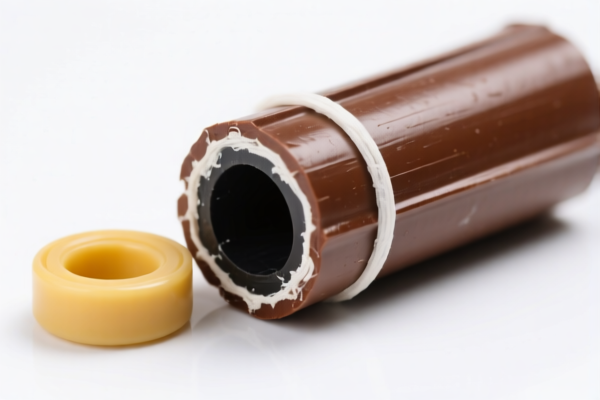
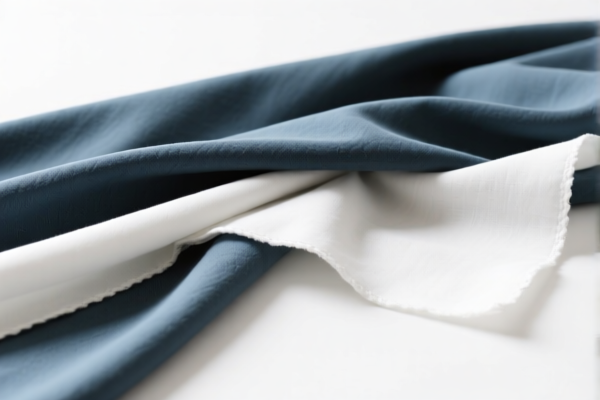
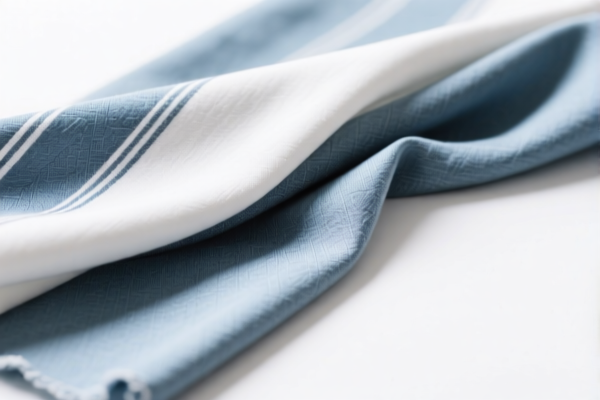
AI Analysis
🧪 Chemical Products for the Textile Industry
🌐 HS Code Reference & Customs Clearance Guide | 2026 Latest Tariff Analysis | Professional-Level Clearance Strategy
📌 I. Product Definition and Classification: Do You Truly Understand "Textile Chemicals"?
Chemical products for the textile industry are a broad category of substances used in various stages of textile manufacturing, including pretreatment, dyeing, printing, finishing, and post-processing. In international trade, they are classified based on their chemical composition, function, and state (liquid, powder, paste).
Key Distinctions:
1. Preparations vs. Pure Substances:
- Pure Chemicals (e.g., specific organic compounds): Classified by their chemical structure in Chapter 28 or 29.
- Mixtures/Preparations (e.g., dye baths, sizing agents, finishing formulations): Classified by their primary function or base ingredient in Chapters 32–38.
2. Function-Based Classification:
- Dyes & Pigments: Chapter 32 (Section XII)
- Sizing Agents (Starches, PVA, CMC): Chapter 35 or 39
- Softeners, Water Repellents, Flame Retardants: Chapter 38 (Miscellaneous Chemical Products)
- Soaps, Surface-Active Agents: Chapter 34
⚠️ Critical Distinction Point:
- If the product is a single, defined chemical compound (e.g., Sodium Alginate, Anhydrous Sodium Sulfate), it falls under Chapter 28 (Inorganic Chemicals) or Chapter 29 (Organic Chemicals).
- If the product is a mixture, emulsion, or preparation designed for a specific textile process (e.g., "Disperse Dye Paste," "Non-Ionic Surfactant Blend"), it typically falls under Chapter 32 (Dyes/Extracts), Chapter 34 (Soaps/Surfactants), or Chapter 38 (Miscellaneous Chemicals).
📦 II. HS Code Classification Details (2026 Latest Tariff Authority Reference)
| HS Code | Product Description | Application Scenario | Chemical Nature |
|---|---|---|---|
2933.39.00 |
Heterocyclic compounds with nitrogen heteroatoms only (e.g., Triazoles used as fungicides in textile finishing) | Antimicrobial finishes, fungicides | ✅ Pure Organic Chemical |
3204.17.00 |
Synthetic Organic Dyes, Disperse Dyes | Polyester dyeing, printing | ✅ Pure Dye Substance |
3204.14.00 |
Synthetic Organic Dyes, Reactive Dyes | Cotton, viscose dyeing | ✅ Pure Dye Substance |
3204.12.00 |
Synthetic Organic Dyes, Acid Dyes | Wool, nylon dyeing | ✅ Pure Dye Substance |
3402.90.00 |
Surface-active agents (prepared), other (e.g., wetting agents, leveling agents) | Dyeing assistance, scouring | ✅ Mixture/Preparation |
3809.10.00 |
Finishing agents, used in textile, paper, leather, etc. (e.g., softeners, antistatic agents) | Post-finishing, hand feel improvement | ✅ Mixture/Preparation |
3505.10.00 |
Dextrins and other modified starches (e.g., Carboxymethyl Cellulose CMC for sizing) | Yarn sizing, paper coating | ✅ Modified Natural Polymer |
3824.99.92 |
Other chemical products prepared in liquid form (non-industrial specific) | Complex finishing formulations | ✅ Complex Mixture |
🔍 Key Reminder:
- Dyes (3204): Always verify the specific type (Reactive, Disperse, Acid) as duties vary.
- Finishing Agents (3809.10): This is the most common code for "textile chemicals" that are not pure dyes. It covers softeners, waterproofing agents, and flame retardants.
- Surfactants (3402): Used for cleaning, scouring, and wetting. Often overlooked but critical for pre-treatment.
💰 III. 2026 Latest Tariff Rate Details (Including Additional Taxes & Policy Add-ons)
✅ Applicable Country: United States (US)
✅ Country of Origin: China (CN)
✅ Effective Date: November 10, 2025 (and onwards)
🎯 1. 3809.10.00 —— Textile Finishing Agents (Most Common for "Textile Chemicals")
| Item | Content |
|---|---|
| Base Tariff | 5.7% (ad valorem) |
| USITC Additional Tax | +25% (under USITC Footnote 9903.88.01, Section 301) |
| IEEPA Additional Tax | +10% (under IEEPA for China/HK origin, effective Nov 10, 2025) |
| Total Tariff Rate | 40.7% |
| Tax Calculation | CIF Value × 40.7% |
| De Minimis Eligibility | ❌ Not Eligible (deny_de_minimis) |
| Legal Pathway | IEEPA:9903.01.25 → IEEPA:9903.01.24 → USITC:3809.10.00 → FOOTNOTE:9903.88.01 |
📌 Explanation:
- The 25% USITC tax applies to most chemical preparations under Section 301.
- The 10% IEEPA tax is a new layer added in late 2025, increasing the burden on Chinese-origin textile chemicals.
- Total 40.7% is a high-cost barrier. Many importers seek duty-free alternatives by shifting supply chains to Vietnam, India, or Mexico.
🎯 2. 3402.90.00 —— Surface-Active Agents (Wetting Agents, Leveling Agents)
| Item | Content |
|---|---|
| Base Tariff | 5.0% |
| USITC Additional Tax | +25% |
| IEEPA Additional Tax | +10% |
| Total Tariff Rate | 40.0% |
| Tax Calculation | CIF Value × 40.0% |
| De Minimis Eligibility | ❌ Not Eligible |
| Legal Pathway | IEEPA:9903.01.24 → USITC:3402.90.00 → FOOTNOTE:9903.88.01 |
📌 Note:
- Surfactants are essential for dyeing but face similar high tariffs as finishing agents.
- Ensure the product description specifies "Surface-Active Agents" to avoid misclassification under "Miscellaneous Chemicals" (which may have different rates).
🎯 3. 3204.17.00 / 3204.14.00 / 3204.12.00 —— Synthetic Dyes
| Item | Content |
|---|---|
| Base Tariff | 5.0% – 6.5% (varies by dye type) |
| USITC Additional Tax | +25% |
| IEEPA Additional Tax | +10% |
| Total Tariff Rate | 40.0% – 41.5% |
| Tax Calculation | CIF Value × Rate |
| De Minimis Eligibility | ❌ Not Eligible |
| Legal Pathway | IEEPA:9903.01.24 → USITC:3204.xx.xx → FOOTNOTE:9903.88.01 |
📌 Note:
- Dyes are highly specialized. Misclassification (e.g., listing as "Finishing Agent") can lead to severe penalties.
- Accurate HS Code is critical: Reactive vs. Disperse vs. Acid dyes have different base rates.
🎯 4. 3505.10.00 —— Modified Starches (CMC, PVA Sizing)
| Item | Content |
|---|---|
| Base Tariff | 5.5% |
| USITC Additional Tax | +25% |
| IEEPA Additional Tax | +10% |
| Total Tariff Rate | 40.5% |
| Tax Calculation | CIF Value × 40.5% |
| De Minimis Eligibility | ❌ Not Eligible |
| Legal Pathway | IEEPA:9903.01.24 → USITC:3505.10.00 → FOOTNOTE:9903.88.01 |
📌 Note:
- CMC (Carboxymethyl Cellulose) is a common sizing agent.
- Ensure the product is described as "Modified Starch" or "CMC" to qualify for this code.
🛠️ IV. Customs Clearance Practical Advice (Combat Avoidance Guide)
✅ 1. Required Documentation Checklist (No Exceptions)
| Document | Mandatory | Description |
|---|---|---|
| ✅ Product Specification Sheet | ✔️ | Must include chemical composition, CAS numbers (if pure), concentration, pH, viscosity. |
| ✅ Safety Data Sheet (SDS) | ✔️ | CRITICAL for chemical imports. Must comply with OSHA GHS standards. |
| ✅ Certificate of Analysis (COA) | ✔️ | Proof of purity and composition. |
| ✅ Non-Dangerous Goods Transport Declaration | ✔️ | If not hazardous, provide this to avoid unnecessary HazMat fees. |
| ✅ Commercial Invoice | ✔️ | Must clearly state "Textile Chemicals" and HS Code. Avoid vague terms like "Miscellaneous Chemicals." |
| ✅ Origin Certificate | ✔️ | To prove country of origin for tariff calculation. |
| ✅ Packaging Declaration | ✔️ | Describe packaging material (plastic drum, metal can, etc.) for proper handling. |
✅ 2. Declaration Tips (Key Mantra)
🔥 “Chemicals Need SDS, Dyes Need Type, Finishing Needs Function!”
| Scenario | Correct Declaration | Wrong Approach |
|---|---|---|
| Textile Softener | 3809.10.00 – "Textile Finishing Agent, Non-ionic, Liquid" |
"Chemical Additive" → Risk of Misclassification |
| Reactive Dye Powder | 3204.14.00 – "Reactive Dye for Cotton" |
"Dye" → Too vague, may be audited |
| Sizing Agent (CMC) | 3505.10.00 – "Modified Starch, Carboxymethyl Cellulose" |
"Starch" → Incorrect, CMC is modified |
| Wetting Agent | 3402.90.00 – "Surface-Active Agent for Textile" |
"Surfactant" → Acceptable, but add "for textile" for clarity |
✅ 3. Special Cases Handling
| Case | Handling Advice |
|---|---|
| OEM Custom Formulations | Provide detailed formula sheet to Customs. Do not hide ingredients. |
| Dyes with Multiple Colors | Declare by base chemical structure, not color. |
| Hazardous Chemicals | If flammable/toxic, declare as HazMat. Additional fees and delays apply. |
| Samples | Still subject to duties. Do not declare as "Free Sample" to avoid penalties. |
🌍 V. Global Major Markets Comparison (2026 Latest)
| Country/Region | Recommended HS Code | Tariff (China Origin) | Certification Requirements | Notes |
|---|---|---|---|---|
| 🇺🇸 USA | 3809.10.00 |
~40.7% | SDS, TSCA Compliance | High duties; consider Vietnam/India sourcing |
| 🇪🇺 EU | 3809.10.00 |
5.4% | REACH Registration | High environmental compliance cost |
| 🇨🇳 China | 3809.10.00 |
6.5% | CCC (if applicable) | Lower duties, high domestic competition |
| 🇮🇳 India | 3809.10.00 |
10.0% | BIS Certification | Moderate duties, strict quality checks |
| 🇻🇳 Vietnam | 3809.10.00 |
0-5% (if local origin) | No major barriers | Growing hub for textile chemicals |
📌 Conclusion:
- USA has the highest effective tariff (~40.7%) due to additional taxes.
- EU and China have moderate duties but high compliance costs (REACH/CCC).
- Vietnam and India offer lower tariff barriers but require strict quality control.
📌 VI. Common Mistakes & Pitfalls (Blood & Tears Lessons)
❌ Mistake 1: Declaring "Textile Chemicals" without specifying the type
👉 Consequence: Customs may assign a default higher rate or hold the shipment for inspection.
❌ Mistake 2: Omitting the SDS (Safety Data Sheet)
👉 Consequence: Shipment detained at port, fines for non-compliance with OSHA/GHS.
❌ Mistake 3: Misclassifying Dyes as "Finishing Agents"
👉 Consequence: Potential underpayment of duties, leading to back-taxes and penalties.
❌ Mistake 4: Not declaring HazMat status for flammable chemicals
👉 Consequence: Severe fines, shipment refusal, or safety hazards.
✅ Correct Practice:
"Textile Finishing Agent, Non-ionic, Liquid, CAS #12345-67-8, SDS Attached, TSCA Compliant"
🎯 VII. Conclusion: Professional Declaration, Save Time, Reduce Costs!
🎯 Remember the Mantra:
🔹 "Chemicals Need SDS, Dyes Need Type, Finishing Needs Function!"
🔹 "HS Code Determines Tariff, Tariff Affects Profit, Declaration Saves Time!"
📌 Pro Tip:
If your textile chemicals are originating from Vietnam, India, or Mexico, you may qualify for lower or zero tariffs under USMCA or ASEAN agreements.
Recommendation: Apply for a Pre-Ruling from CBP to confirm HS Code and avoid post-import audits.
📣 Immediate Action:
📞 Contact a licensed customs broker + Provide Product SDS + Apply for HS Code Pre-Ruling
🚀 Ensure your textile chemicals clear customs smoothly, reduce costs, and boost efficiency!
✨ Professional Clearance Starts with Accurate Classification!
💼 Every Dollar Saved is a Dollar Earned!
Customer Reviews
About HS Code Classification
The Harmonized System (HS) is an internationally standardized nomenclature developed by the World Customs Organization (WCO) to classify traded products. Over 200 countries use the HS system as the basis for customs tariffs, trade statistics, and import/export regulations.
Each HS code follows a hierarchical structure:
- Chapter (2 digits) — Broad category of goods (e.g., Chapter 84: Machinery and Mechanical Appliances)
- Heading (4 digits) — More specific grouping within the chapter
- Subheading (6 digits) — Internationally standardized breakdown, used by all WCO member countries
- National subdivisions (8-10 digits) — Country-specific extensions for further classification, such as US HTSUS 10-digit codes
Correct HS code classification is essential for smooth customs clearance, accurate duty payment, and compliance with trade regulations. Misclassification can lead to customs delays, overpayment of duties, or penalties.
When importing from CN to US, the applicable tariff rates may include:
- Most-Favored-Nation (MFN) rate — The standard duty rate applied to WTO members
- General rate — Applied to countries without trade agreements
- Trade remedy duties — Additional tariffs such as Section 301 (anti-dumping), Section 232 (national security), or countervailing duties
The information provided on this page is for reference purposes only. For official classification, please consult with your local customs authority or a licensed customs broker.