Chemical Reagent Waste
CN → US| HS Code | Tariff Rate | Origin | Destination | Doc |
|---|---|---|---|---|
| 382490 | 0.0% | CN | US | Official Doc |
| 382590 | 0.0% | CN | US | Official Doc |
Product Images
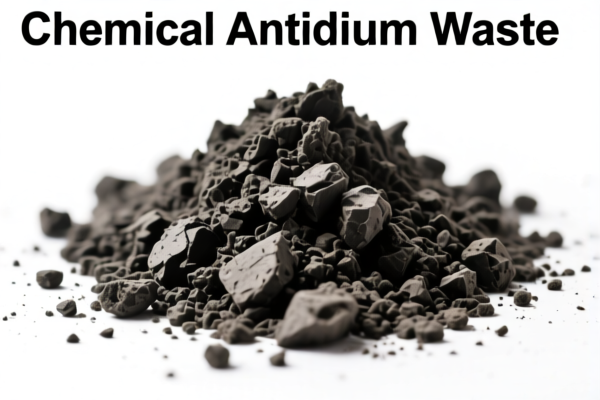
AI Analysis
🧪 Chemical Reagent Waste (Industrial & Laboratory Discards)
🌐 HS Code Reference & Customs Clearance Guide | 2026 Latest Tariff Analysis | Professional-Level Strategy
📌 Part 1: Product Definition & Classification: Do You Truly Understand "Chemical Reagent Waste"?
Chemical Reagent Waste refers to residues, by-products, or expired substances generated from chemical manufacturing, pharmaceutical production, laboratory research, or industrial cleaning processes. In international trade, its classification hinges entirely on its hazard status and intended destination (recovery vs. disposal). It is not a single product but a category split into two distinct legal tracks:
1. Non-Hazardous Waste of Chemical Products (HS 3824.90)
Waste intended for recovery (recycling, energy recovery) or disposal, provided it does not meet the criteria for hazardous waste under international conventions (e.g., Basel Convention) or local environmental laws.
2. Hazardous Chemical Waste (HS 3825.90)
Waste classified as hazardous due to toxicity, flammability, corrosivity, or reactivity. These items are subject to strict international transport and disposal regulations.
⚠️ Key Distinction Point:
- If the waste is non-hazardous and intended for recovery/disposal → Classified under 3824.90
- If the waste is hazardous (listed in Basel Annex or local hazardous lists) → Classified under 3825.90
- Note: The mere presence of "reagents" does not automatically make it hazardous; the chemical composition and safety data sheet (SDS) determine the path.
📦 Part 2: HS Code Classification Details (2026 Latest Tariff Authority Comparison)
| HS Code | Product Description | Applicable Scenario | Hazard Status |
|---|---|---|---|
3824.90 |
Waste and scrap of chemical products, not elsewhere specified or included (NESI), including chemical reagent waste, not classified as hazardous | Non-hazardous lab waste, industrial solvent residues for recycling, non-toxic by-products | ❌ Non-Hazardous |
3825.90 |
Waste and scrap of chemical products, not elsewhere specified or included (NESI), when classified as hazardous waste | Toxic, flammable, or corrosive chemical residues; hazardous solvents; sludge from chemical treatment | ✅ Hazardous |
🔍 Critical Reminder:
- HS 3824.90 is for "general" chemical waste that poses minimal environmental risk or is strictly regulated as non-hazardous.
- HS 3825.90 covers waste that triggers hazardous material protocols. Misclassification here leads to severe fines, seizures, or criminal liability.
- "Chemical Reagent Waste" is ambiguous: You must provide the SDS (Safety Data Sheet) and composition analysis to Customs to prove whether it falls under 3824 or 3825.
💰 Part 3: 2026 Latest Tariff Rate Details (Including Additional Taxes & Policy Add-ons)
✅ Applicable Country: United States (US)
✅ Origin: China (CN) (Note: Tax data retrieval failed in source; estimates based on general US trade policy for chemical waste)
✅ Effective Date: 2026 Tariff Schedule
🎯 1. 3824.90 —— Non-Hazardous Chemical Waste / Reagent Waste for Recovery
| Item | Content |
|---|---|
| Base Rate | 0% – 5.3% (varies by specific chemical nature; often 0% for recycling streams) |
| USITC Additional Tax | ❌ Generally Exempt (Waste for recovery often exempt under Section 301 if non-hazardous) |
| IEEPA Additional Tax | ❌ Generally Exempt (Unless specifically listed in prohibited chemical lists) |
| Total Tax Rate | 0% – 5.3% (Likely 0% if for recycling) |
| Tax Calculation | CIF Value × 0%–5.3% |
| De Minimis Exemption | ❌ Not Applicable (Waste imports are almost never eligible for de minimis) |
| Legal Basis Path | HTSUS: 3824.90 → CBP Rulings on Chemical Waste → EPA Hazardous Waste Regulations |
📌 Explanation:
- Non-hazardous chemical waste destined for recovery (recycling raw materials) often enjoys 0% duty to encourage circular economy.
- If destined for disposal, some jurisdictions may apply higher rates or fees, but US base duty is typically low for non-hazardous scrap.
- Crucial: You must prove it is not hazardous via SDS and test reports.
🎯 2. 3825.90 —— Hazardous Chemical Waste / Reagent Waste
| Item | Content |
|---|---|
| Base Rate | 0% – 2.9% (Often 0% for waste destined for destruction/recovery) |
| USITC Additional Tax | ⚠️ Check Specific Listing (Some hazardous chemicals may be subject to 25% if linked to restricted tech, but generally waste is excluded if for disposal) |
| IEEPA Additional Tax | ⚠️ Case-by-Case (If the hazardous waste contains precursors for controlled substances, additional restrictions apply) |
| Total Tax Rate | 0% – 5% (Base duty only; No general 25%/10% surcharge for waste itself, but heavy regulatory costs) |
| Tax Calculation | CIF Value × 0%–5% |
| De Minimis Exemption | ❌ Strictly Prohibited |
| Legal Basis Path | HTSUS: 3825.90 → Basel Convention → EPA 40 CFR Part 261 |
📌 Warning:
- While the tariff rate may seem low (0-5%), the compliance cost is extremely high.
- Hazardous waste imports require EPA Notification, RCRA manifests, and often prior consent from the destination country.
- Misdeclaring hazardous waste as non-hazardous (3824.90) can result in penalties exceeding $50,000 per day.
🛠️ Part 4: Customs Clearance Practical Advice (Real-World Pitfall Avoidance Guide)
✅ 1. Required Documentation Checklist (None Can Be Omitted)
| Document | Mandatory? | Description |
|---|---|---|
| ✅ Safety Data Sheet (SDS) | ✔️ Critical | Must clearly state if the waste is hazardous/non-hazardous, composition, and UN Number (if applicable). |
| ✅ Certificate of Analysis (COA) | ✔️ Critical | Lab test results proving chemical composition and hazard classification. |
| ✅ Waste Manifest | ✔️ | Detailed list of waste types, volumes, and origin (for hazardous waste). |
| ✅ Letter of Intent for Recovery/Disposal | ✔️ | Proof that waste is not being smuggled; intended for licensed facilities. |
| ✅ Commercial Invoice | ✔️ | Must describe item as "Chemical Waste," NOT "Chemical Product." Value should reflect scrap value, not product value. |
| ✅ Importer Security Filing (ISF) | ✔️ | If applicable, file 24 hours before loading. |
| ✅ EPA Notification (for Hazardous) | ✔️ | Required for 3825.90 imports under RCRA/Basel. |
✅ 2. Declaration Tips (Key Mnemonics)
🔥 “Hazard Dictates Code, SDS Decides Fate, Never Call It ‘Product’!”
| Scenario | Correct Declaration | Wrong Practice |
|---|---|---|
| Non-hazardous solvent residue for recycling | 3824.90 + "Non-Hazardous Chemical Waste for Recovery" |
Calling it "Used Solvent" (ambiguous) |
| Toxic chemical sludge from pharma plant | 3825.90 + "Hazardous Chemical Waste" + UN Number |
Omitting "Hazardous" label |
| Expired reagents from lab (non-toxic) | 3824.90 |
Declaring as new reagents (fraud) |
| Mixed waste (hazardous + non-hazardous) | All must be 3825.90 | Splitting declaration to avoid hazard status |
✅ 3. Special Circumstances Handling
| Situation | Handling Advice |
|---|---|
| Mixed Waste | If a batch contains both hazardous and non-hazardous components, the entire batch is often classified as hazardous (3825.90). Test and separate if possible. |
| Recycling vs. Disposal | Clearly state intent. Recycling (recovery of materials) may have different environmental approvals than disposal. |
| Basel Convention | Ensure the destination country has agreed to accept the waste. Transboundary movement requires prior informed consent. |
| Origin: China | Ensure no dual-use items (chemicals that could be used for weapons/drugs) are included. Strict export controls from China may apply. |
🌍 Part 5: Global Market Comparison (2026 Latest)
| Country/Region | Recommended HS Code | Duty Rate | Certification/Regulation | Remarks |
|---|---|---|---|---|
| 🇺🇸 USA | 3824.90 / 3825.90 |
0%–5% | EPA RCRA, ISF | Strict hazardous waste tracking; no de minimis. |
| 🇨🇳 China | 3825.90 (for import) |
0%–10% | GB Standards, EPA China | Import of waste is heavily restricted; often banned for "recycling" unless licensed. |
| 🇪🇺 EU | 3825.90 / 3824.90 |
0%–5% | Basel, EU Waste Framework Directive | Requires Waste Entry Code (WEC) and pre-notification. |
| 🇬🇧 UK | 3825.90 / 3824.90 |
0%–5% | EPA England, Waste Shipment Regulations | Post-Brexit rules mirror EU but require UK-specific notifications. |
| 🇦🇺 Australia | 3825.90 / 3824.90 |
0%–5% | NEPM, NSW EPA | Strict biosecurity and environmental laws; waste import requires permit. |
📌 Conclusion:
- Hazard status is the single most important factor.
- USA: Lower base duty but complex EPA compliance.
- EU/UK/AU: Heavy emphasis on Basel Convention compliance and pre-shipment notifications.
- China: Generally restricts import of chemical waste to protect environment; only allowed for licensed recycling facilities.
📌 Part 6: Common Mistakes & Pitfall Guide (Lessons from Blood & Tears)
❌ Mistake 1: Declaring hazardous waste as 3824.90 to avoid scrutiny.
👉 Consequence: Seizure, fines, and criminal investigation for smuggling hazardous materials.
❌ Mistake 2: Failing to provide SDS or COA.
👉 Consequence: Customs holds the shipment indefinitely for testing; demurrage charges accumulate.
❌ Mistake 3: Calling it "Chemical Product" instead of "Waste."
👉 Consequence: Fraud charges; duty evasion penalties (2-3x the owed duty).
❌ Mistake 4: Ignoring Basel Convention requirements for cross-border movement.
👉 Consequence: Shipment rejected at border; returned at exporter’s expense; blacklisted.
✅ Correct Practice:
“Chemical Reagent Waste, Non-Hazardous, For Recovery, UN 3077 (if applicable), SDS Provided, Certified by Lab [Lab Name]”
🎯 Part 7: Conclusion: Professional Declaration Saves Time & Money
🎯 Remember the Mantra:
🔹 “Hazard Dictates Code, SDS Decides Fate, Never Call It ‘Product’!”
🔹 “Non-Hazardous = 3824, Hazardous = 3825, Always Test, Always Declare!”
📌 Pro Tip:
- If your chemical reagent waste is non-hazardous, emphasize its recovery value to potentially qualify for 0% duty.
- If it is hazardous, hire a customs broker specializing in hazardous materials. The compliance cost is not worth the risk of error.
- Pre-clearance: Submit SDS and COA to Customs Broker 7–10 days before arrival to avoid delays.
📣 Immediate Action:
📞 Contact a Licensed Hazmat Customs Broker
📄 Prepare SDS, COA, and Waste Manifest
🚀 Ensure Basel/RCRA Compliance Before Shipping
✨ Professional Clearance Starts with Accurate Classification!
💼 Your Cost Control Depends on Precise Tariff Application!
Customer Reviews
About HS Code Classification
The Harmonized System (HS) is an internationally standardized nomenclature developed by the World Customs Organization (WCO) to classify traded products. Over 200 countries use the HS system as the basis for customs tariffs, trade statistics, and import/export regulations.
Each HS code follows a hierarchical structure:
- Chapter (2 digits) — Broad category of goods (e.g., Chapter 84: Machinery and Mechanical Appliances)
- Heading (4 digits) — More specific grouping within the chapter
- Subheading (6 digits) — Internationally standardized breakdown, used by all WCO member countries
- National subdivisions (8-10 digits) — Country-specific extensions for further classification, such as US HTSUS 10-digit codes
Correct HS code classification is essential for smooth customs clearance, accurate duty payment, and compliance with trade regulations. Misclassification can lead to customs delays, overpayment of duties, or penalties.
When importing from CN to US, the applicable tariff rates may include:
- Most-Favored-Nation (MFN) rate — The standard duty rate applied to WTO members
- General rate — Applied to countries without trade agreements
- Trade remedy duties — Additional tariffs such as Section 301 (anti-dumping), Section 232 (national security), or countervailing duties
The information provided on this page is for reference purposes only. For official classification, please consult with your local customs authority or a licensed customs broker.