Chemical Resistant Fiber Webbing
CN → US| HS Code | Tariff Rate | Origin | Destination | Doc |
|---|---|---|---|---|
| 5911310020 | 38.8% | CN | US | Official Doc |
| 4010394100 | 43.0% | CN | US | Official Doc |
| 5407942050 | 49.9% | CN | US | Official Doc |
| 5407942020 | 49.9% | CN | US | Official Doc |
| 5911320020 | 38.8% | CN | US | Official Doc |
Product Images
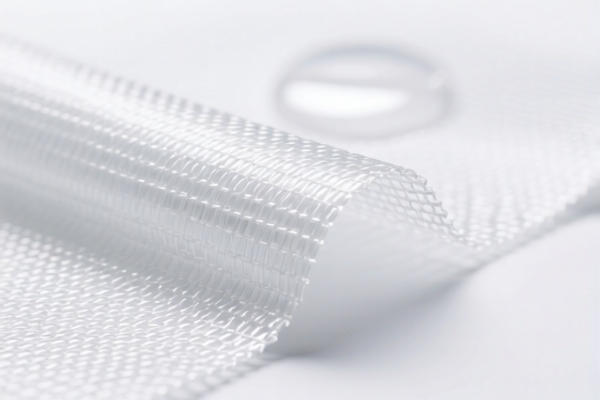

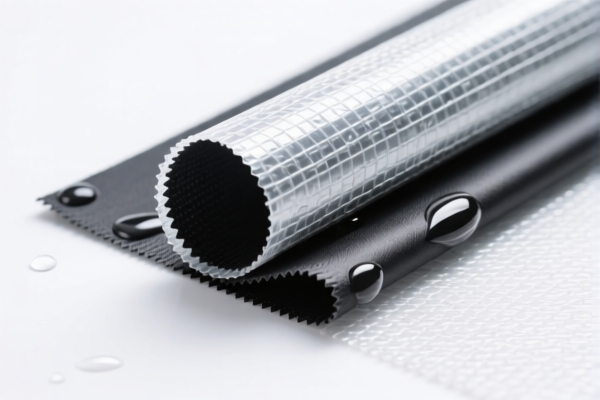
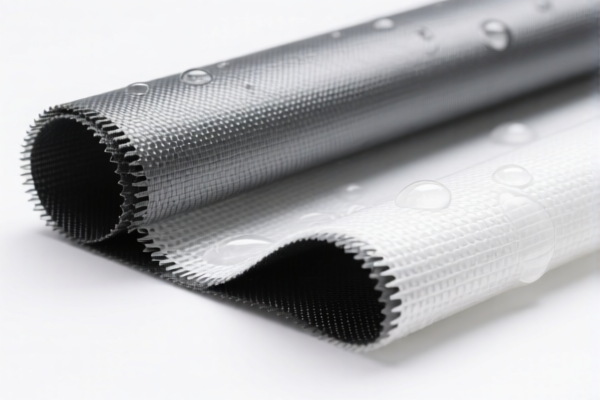
AI Analysis
🧵 Chemical Resistant Fiber Webbing: HS Code Classification & Duty Analysis (US Market)
🌐 HS Code Reference & Customs Clearance Guide | 2026 Latest Tariff Structure | Professional Clearance Strategy
📌 I. Product Definition & Classification: What is "Chemical Resistant Fiber Webbing"?
"Chemical Resistant Fiber Webbing" is a broad industrial term referring to woven or non-woven fabric strips made from synthetic fibers (polyester, nylon, aramid, etc.) designed to withstand harsh chemical environments. It is commonly used in filtration, conveyor belts, machinery components (like dryer felts), and industrial reinforcement.
In US Customs (CBP) classification, the critical distinction is not just the material, but the specific end-use and physical form. The provided data highlights four distinct classifications based on whether it is a generic textile, a specific machinery component (paper machine felt), or a power transmission/conveyor belt.
⚠️ Key Distinction Point:
- If it is a generic woven fabric strip without specific mechanical integration → Falls under Chapter 59 (Textile Articles).
- If it functions as a conveyor/transmission belt → Falls under HS 4010 (Vulcanized Rubber or Textile-Reinforced Belts).
- If it is used specifically for paper machine drying cylinders → Falls under HS 5911 (Textile Felt).
📦 II. HS Code Classification Details (2026 Latest Tariff Concordance)
| HS Code | Product Description | Application Scenario | Material/Form Specifics |
|---|---|---|---|
5911.31.00.20 |
Chemical Fiber Fabric Belts, generic textile classification | General industrial webbing, reinforcement tapes | Made of chemically resistant fibers, form: fabric belt. Lowest Base Duty. |
5911.32.00.20 |
Chemical Fiber Fabric Belts, likely for paper machine dryer felts | Industrial felts, dryer cylinders in paper mills | Material: Chemical fiber. Used for paper machinery. Lowest Base Duty. |
4010.39.41.00 |
Chemical Fiber Fabric Belts, classified as Transmission/Conveyor Belts | Power transmission, conveyor systems, industrial belts | Material: Synthetic fiber. Form: Transmission/Conveyor belt. Medium Base Duty. |
5407.94.20.50 |
Chemical Fiber Fabric, synthetic, generic textile | General synthetic fabric rolls, non-specific use | Material: Synthetic fiber. Form: Woven fabric. Highest Base Duty (14.9%). |
5407.94.20.20 |
Chemical Fiber Fabric, other specific textile structure | Other synthetic fabric structures not specified above | Material: Synthetic fiber. Form: Other woven structures. Highest Base Duty (14.9%). |
🔍 Critical Insight:
- The "Webbing" descriptor can be misleading. CBP often looks at the function. If it is used to transmit power or move products, it must be classified under 4010, even if made of fabric.
- If it is simply a strip of fabric for bundling or generic reinforcement, 5911.31/32 or 5407 are more likely.
- 5407 codes carry a significantly higher base tariff (14.9%) compared to 5911 (3.8%), making correct classification crucial for cost savings.
💰 III. 2026 Latest Tariff Rate Breakdown (Including Add-ons)
✅ Applicable Country: United States (US)
✅ Origin: China (CN)
✅ Effective Date: November 10, 2025 (including subsequent imports)
🎯 1. 5911.31.00.20 & 5911.32.00.20 —— Textile Belts/Felts (Lowest Base)
| Item | Detail |
|---|---|
| Base Duty | 3.8% (ad valorem) |
| USITC Section 301 Duty | +25.0% |
| Section 122 Duty (IEEPA) | +10.0% (Targeting China/HK) |
| Total Duty Rate | 38.8% |
| Tax Calculation | CIF Value × 38.8% |
| De Minimis Exemption | ❌ Not Eligible (deny_de_minimis) |
| Legal Authority Path | USITC:5911.31/32 → FOOTNOTE:301 (25%) → IEEPA:122 (10%) |
📌 Explanation:
- These codes benefit from the lowest base rate (3.8%) among the options.
- However, they are not exempt from the 301 tariff (25%) or the newer Section 122 tariff (10%).
- Total burden: 38.8%. This is the most cost-effective classification if the product qualifies as "felt" or "generic textile belt" under 5911.
🎯 2. 4010.39.41.00 —— Conveyor/Transmission Belts (Medium Base)
| Item | Detail |
|---|---|
| Base Duty | 8.0% (ad valorem) |
| USITC Section 301 Duty | +25.0% |
| Section 122 Duty (IEEPA) | +10.0% |
| Total Duty Rate | 43.0% |
| Tax Calculation | CIF Value × 43.0% |
| De Minimis Exemption | ❌ Not Eligible |
| Legal Authority Path | USITC:4010.39.41 → FOOTNOTE:301 (25%) → IEEPA:122 (10%) |
📌 Explanation:
- If CBP determines the webbing is functioning as a conveyor or transmission belt, it moves to Chapter 40.
- The base rate increases to 8.0%, pushing the total tax to 43.0%.
- Risk: Misdeclaring a conveyor belt as generic webbing (5911) to save 4.2% can lead to penalties, audits, and back duties.
🎯 3. 5407.94.20.50 & 5407.94.20.20 —— Synthetic Fabrics (Highest Base)
| Item | Detail |
|---|---|
| Base Duty | 14.9% (ad valorem) |
| USITC Section 301 Duty | +25.0% |
| Section 122 Duty (IEEPA) | +10.0% |
| Total Duty Rate | 49.9% |
| Tax Calculation | CIF Value × 49.9% |
| De Minimis Exemption | ❌ Not Eligible |
| Legal Authority Path | USITC:5407.94.20 → FOOTNOTE:301 (25%) → IEEPA:122 (10%) |
📌 Explanation:
- These codes apply if the item is classified strictly as woven synthetic fabric without specific "belt" or "felt" designation.
- This is the most expensive option at 49.9%.
- Avoid this classification unless the product is clearly a loose fabric roll not yet processed into a belt or felt.
🛠️ IV. Customs Clearance Practical Advice (Real-World Pitfall Guide)
✅ 1. Required Documentation Checklist
| Document | Required? | Notes |
|---|---|---|
| ✅ Product Specifications | ✔️ | Must detail chemical resistance grade, fiber type (polyester/nylon), and dimensions. |
| ✅ Function Declaration | ✔️ | Explicitly state: "Used for paper machine dryer felts" (5911) OR "Used for conveyor systems" (4010) OR "General reinforcement" (5911/5407). |
| ✅ Technical Drawings | ✔️ | Show weave pattern, thickness, and any vulcanization (if 4010). |
| ✅ Commercial Invoice | ✔️ | Must use precise English description matching HS code logic. |
| ✅ Material Safety Data Sheet (MSDS) | ✔️ | Proves "Chemical Resistance" claim if questioned. |
| ✅ Packing List | ✔️ | Ensure no mixed shipments with non-chemically resistant items. |
✅ 2. Declaration Strategy (Critical Keywords)
🔥 “Define Function, Define Material, Avoid Ambiguity!”
| Scenario | Correct Declaration | Incorrect Declaration | Consequence |
|---|---|---|---|
| Paper Machine Felt | "Chemical Resistant Polyester Fabric Belt for Paper Machine Dryer Cylinders" | "Chemical Fiber Webbing" | May be reclassified to 5407 (49.9%) if "felt" function isn't proven. |
| Conveyor Belt | "Textile-Reinforced Conveyor Belt, Chemical Resistant, Synthetic Core" | "Fabric Webbing" | CBP will force 4010 (43.0%). Penalty for under-declaring. |
| General Webbing | "Woven Polyester Fabric Strip, Chemical Resistant, for Industrial Reinforcement" | "Belt" | If it's not a belt, 5911 (38.8%) is safe. Avoid 4010. |
✅ 3. Special Handling Tips
| Situation | Recommendation |
|---|---|
| Vulcanized/Rubber-impregnated | If the fabric is heavily impregnated or coated with rubber to make it a belt, 4010 is mandatory. Do not try to classify as 5911. |
| Custom OEM Parts | Provide the original equipment manufacturer's (OEM) bill of materials to prove the specific end-use (e.g., a specific part for a chemical pump). |
| Mixed Containers | Ensure chemical resistant webbing is not commingled with non-chemically resistant textiles to simplify auditing. |
🌍 V. Global Market Comparison (2026 Latest)
| Country/Region | Recommended HS Code | Base Duty | Total Duty (CN Origin) | Notes |
|---|---|---|---|---|
| 🇺🇸 USA | 5911.31.00.20 |
3.8% | 38.8% | Best option if qualifies as felt/general belt. |
| 🇺🇸 USA | 4010.39.41.00 |
8.0% | 43.0% | Required for conveyor/transmission belts. |
| 🇨🇳 China | 5911.31.00.20 |
~5-10% | ~15-18% | Lower tariffs than US; no 301/122 add-ons. |
| 🇪🇺 EU | 5911.31 |
~5% | ~5% | Generally no major add-ons for textiles. |
| 🇲🇽 Mexico | 5911.31 |
~5% | ~5% | Favorable under USMCA if rules of origin met. |
📌 Conclusion:
- USA is the highest-cost market due to the 35% combined add-on tariffs (301 + 122).
- Classification is key: Choosing5911(38.8%) over4010(43.0%) or5407(49.9%) saves 4.2% to 11.1% per unit.
- Ensure your product description in the invoice aligns with the functional use to justify the lower HS code.
📌 VI. Common Errors & Pitfalls (Lessons Learned)
❌ Error 1: Calling a conveyor belt "Webbing" to avoid Chapter 40.
👉 Result: CBP inspects and reclassifies to 4010.39.41.00 (43.0%). Back duties + interest.
❌ Error 2: Not proving the "Felt" function for 5911.32.
👉 Result: CBP deems it generic fabric and moves to 5407 (49.9%). Huge cost increase.
❌ Error 3: Ignoring Section 122.
👉 Result: Assuming only 301 tariff applies. Missing the 10% IEEPA charge leads to underpayment and audits.
❌ Error 4: Vague Descriptions like "Chemical Fabric".
👉 Result: CBP assigns highest possible rate due to lack of specific product definition.
✅ Correct Practice:
"Woven Chemical-Resistant Polyester Fabric Strip, Class 2 Durability, For Use in [Specific Machinery], Model XYZ, Not Suitable for Transmission/Conveyance" (for 5911 classification).
🎯 VII. Conclusion: Precision in Classification Saves Money!
🎯 Key Takeaway:
🔹 "Function Dictates Code: Felt/Belt = 5911 (38.8%), Conveyor = 4010 (43.0%), Generic Fabric = 5407 (49.9%)."
🔹 "Total Duty is Base + 25% (301) + 10% (122)."
🔹 "Always provide technical proof of end-use to avoid reclassification penalties."
📌 Pro Tip:
If your supplier is in China, remember that all these codes are subject to the 35% cumulative tariff surcharge. Consider:
1. Pre-ruling: Apply for an Explanatory Ruling from CBP if the use is ambiguous.
2. Supply Chain Shift: Evaluate if production can be moved to Vietnam, Mexico, or Thailand to avoid the China-specific 301/122 tariffs entirely.
📣 Immediate Action:
📞 Consult your Customs Broker with product photos and technical specs.
📄 Update Invoice Descriptions to reflect specific chemical resistance and end-use.
🚀 Audit your current HS Codes to ensure you are not overpaying by 11.1% due to misclassification.
✨ Precision Classification is the First Step to Profitability!
💼 Don't let unclear HS Codes eat your margins!
Customer Reviews
About HS Code Classification
The Harmonized System (HS) is an internationally standardized nomenclature developed by the World Customs Organization (WCO) to classify traded products. Over 200 countries use the HS system as the basis for customs tariffs, trade statistics, and import/export regulations.
Each HS code follows a hierarchical structure:
- Chapter (2 digits) — Broad category of goods (e.g., Chapter 84: Machinery and Mechanical Appliances)
- Heading (4 digits) — More specific grouping within the chapter
- Subheading (6 digits) — Internationally standardized breakdown, used by all WCO member countries
- National subdivisions (8-10 digits) — Country-specific extensions for further classification, such as US HTSUS 10-digit codes
Correct HS code classification is essential for smooth customs clearance, accurate duty payment, and compliance with trade regulations. Misclassification can lead to customs delays, overpayment of duties, or penalties.
When importing from CN to US, the applicable tariff rates may include:
- Most-Favored-Nation (MFN) rate — The standard duty rate applied to WTO members
- General rate — Applied to countries without trade agreements
- Trade remedy duties — Additional tariffs such as Section 301 (anti-dumping), Section 232 (national security), or countervailing duties
The information provided on this page is for reference purposes only. For official classification, please consult with your local customs authority or a licensed customs broker.