Chemical Wood Pulp Coated Paperboard
CN → US| HS Code | Tariff Rate | Origin | Destination | Doc |
|---|---|---|---|---|
| 4804520020 | 35.0% | CN | US | Official Doc |
| 4804520040 | 35.0% | CN | US | Official Doc |
| 4807009400 | 35.0% | CN | US | Official Doc |
| 4807009200 | 35.0% | CN | US | Official Doc |
| 4702000040 | 10.0% | CN | US | Official Doc |
Product Images
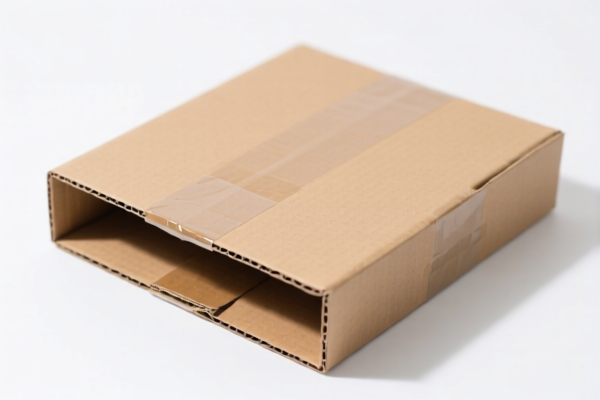
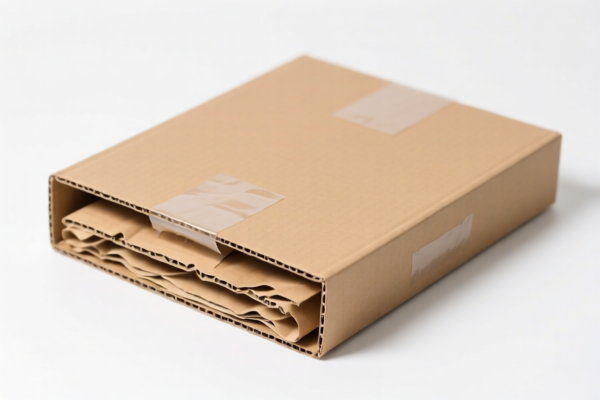
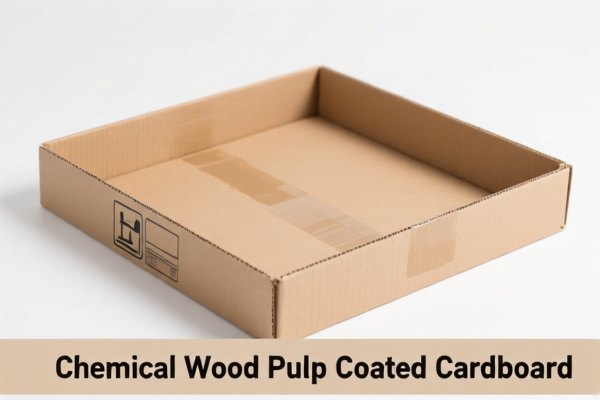
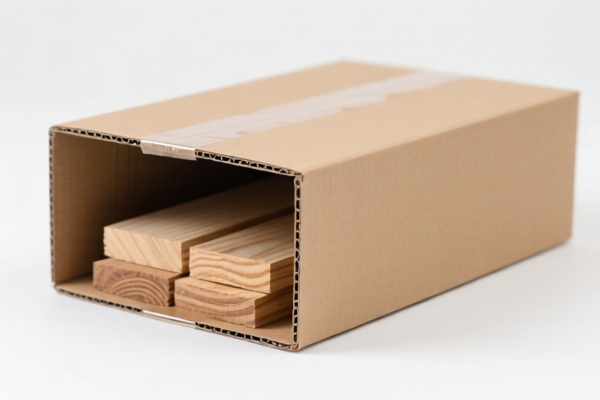
AI Analysis
📄 Chemical Wood Pulp Coated Paperboard: HS Code Classification & US Customs Clearance Guide (2026)
🌐 HS Code Reference & Customs Strategy | 2026 Latest Tariff Analysis | Professional Compliance Guide
📌 I. Product Definition & Classification: Do You Really Understand "Coated Paperboard"?
Chemical Wood Pulp Coated Paperboard is a high-grade packaging material widely used in consumer goods, pharmaceuticals, electronics, and luxury packaging. In international trade, its classification depends heavily on: - Manufacturing Process: Chemical wood pulp (kraft, sulfite, etc.) - Surface Treatment: Coated vs. uncoated - Thickness & Density: Determines if it’s classified as paper or paperboard
⚠️ Critical Distinction:
- If the product is uncoated and has a specific grammage/structure → It may be classified as Kraft Paper (4804)
- If it is coated or laminated → It falls under Composite Paper/Board (4807)
- If it is dissolving pulp grade → It may be misclassified as Chemical Pulp (4702) — High Risk!
📦 II. HS Code Breakdown (2026 Latest Tariff Data)
Based on the provided dataset, here are the applicable HS Codes for Chemical Wood Pulp Coated Paperboard:
| HS Code | Summary Description | Total Tax Rate | Tax Detail |
|---|---|---|---|
4804.52.00.20 |
Chemical wood pulp bleached kraft paperboard; falls under kraft paper & board category, matches base paper characteristics | 35.0% | Base: 0%, Additional: 25%, Section 301 (122 Clause): 10% |
4804.52.00.40 |
Chemical wood pulp bleached kraft paperboard; uniformly bleached, ≥95% chemical wood fiber, matches packaging substrate description | 35.0% | Base: 0%, Additional: 25%, Section 301 (122 Clause): 10% |
4807.00.94.00 |
Chemical wood pulp bleached kraft paperboard; classified as paperboard category, matches composite paper/board material attributes | 35.0% | Base: 0%, Additional: 25%, Section 301 (122 Clause): 10% |
4807.00.92.00 |
Chemical wood pulp bleached kraft paperboard; surface uncoated, matches paper/board material attributes | 35.0% | Base: 0%, Additional: 25%, Section 301 (122 Clause): 10% |
4702.00.00.40 |
Chemical wood pulp-based paper; matches dissolving-grade wood pulp process scope | 10.0% | Base: 0%, Additional: 0%, Section 301 (122 Clause): 10% |
🔍 Key Observation:
- 4 out of 5 HS Codes carry a 35% total tax rate due to the combination of: - 0% Base Tariff - 25% USITC Additional Tariff (Section 301) - 10% IEEPA Additional Tariff (Section 122, effective Nov 10, 2025) - Only4702.00.00.40is taxed at 10%, but this applies only if the product is dissolving-grade chemical pulp, not standard paperboard. Misclassification here carries high audit risk.
💰 III. 2026 Latest Tariff Rate Breakdown (Detailed Explanation)
✅ Applicable Country: United States (US)
✅ Origin: China (CN)
✅ Effective Date: November 10, 2025 onwards
🎯 1. HS Codes 4804.52.00.20, 4804.52.00.40, 4807.00.94.00, 4807.00.92.00 — Paperboard & Kraft Paper
| Item | Detail |
|---|---|
| Base Tariff | 0% (ad valorem) |
| USITC Additional Tariff | +25% (under USITC Footnote for Section 301) |
| IEEPA Additional Tariff | +10% (China-origin goods, effective Nov 10, 2025) |
| Total Effective Rate | 35% |
| Tax Calculation | CIF Value × 35% |
| De Minimis Exemption? | ❌ No (Section 301 & IEEPA tariffs are not eligible for de minimis exemption under $800) |
| Legal Pathway | IEEPA:9903.01.25 → USITC:4804.52.00.20 / 4807.00.94.00 → FOOTNOTE:301 |
📌 Explanation:
- The 25% USITC tariff is imposed under Section 301 of the Trade Act of 1974, targeting Chinese goods deemed to engage in unfair trade practices. - The 10% IEEPA tariff is imposed under the International Emergency Economic Powers Act, specifically targeting goods from China under Executive Orders related to national security and economic coercion. - Total 35% is a very high effective rate for paperboard. Importers must budget accordingly.
🎯 2. HS Code 4702.00.00.40 — Dissolving Chemical Pulp
| Item | Detail |
|---|---|
| Base Tariff | 0% |
| USITC Additional Tariff | 0% |
| IEEPA Additional Tariff | +10% |
| Total Effective Rate | 10% |
| Tax Calculation | CIF Value × 10% |
| De Minimis Exemption? | ❌ No |
| Legal Pathway | IEEPA:9903.01.25 → USITC:4702.00.00.40 → FOOTNOTE:301 |
📌 Critical Warning:
- This HS Code only applies if the product is dissolving-grade wood pulp, used for making rayon, cellulose acetate, etc. - Standard coated/uncoated paperboard does NOT qualify. Misclassification here can lead to penalties, seizures, or back-taxes.
🛠️ IV. Customs Clearance Practical Advice (Avoid Pitfalls)
✅ 1. Required Documentation Checklist
| Document | Mandatory? | Notes |
|---|---|---|
| ✅ Product Specification Sheet | ✔️ | Must include: fiber content (%), coating type, GSM, thickness, bleaching process |
| ✅ Manufacturing Process Diagram | ✔️ | Shows if it’s kraft, sulfite, or dissolving pulp |
| ✅ Product Photos (with labels) | ✔️ | Clear view of roll ends, packaging, and any certification marks |
| ✅ Third-Party Test Report | ✔️ | ISO, FSC, or TAPPI standards if applicable |
| ✅ Commercial Invoice | ✔️ | Must clearly state: “Chemical Wood Pulp Paperboard” or “Dissolving Pulp” |
| ✅ Certificate of Origin (CO) | ✔️ | If non-China origin, may qualify for lower tariffs |
| ✅ Packing List | ✔️ | Detail net/gross weight, dimensions, pallets |
✅ 2. Declaration Tips (Golden Rules)
🔥 Rule:
“Correct classification depends on fiber type, processing, and surface treatment — not just the final use.”
| Scenario | Correct HS Code | Wrong Approach |
|---|---|---|
| Standard bleached kraft paperboard (coated or uncoated) | 4804.52.00.20 / 4804.52.00.40 / 4807.00.94.00 |
Misclassifying as 4702 → Audit Risk |
| Uncoated kraft paperboard with uniform bleaching | 4804.52.00.40 |
Declaring as “general paper” → 35% tax |
| Dissolving-grade chemical pulp (not paperboard) | 4702.00.00.40 |
Using for standard paperboard → Penalties |
| Composite/laminated paperboard | 4807.00.94.00 |
Not declaring coating/lamination → Misclassification |
✅ 3. Special Cases
| Scenario | Recommendation |
|---|---|
| OEM Custom Paperboard | Provide client specs + design drawings to justify classification |
| Paperboard with Eco-Certifications (FSC, PEFC) | Still taxed at 35%; certifications don’t affect tariff rate |
| Paperboard Imported for Sample/Display | Still subject to full tariff; no exemption |
| Paperboard from Non-China Origins | May qualify for lower tariffs under FTAs (e.g., USMCA, ASEAN) |
🌍 V. Global Market Comparison (2026)
| Country/Region | Recommended HS Code | Tariff Rate | Certification Req. | Notes |
|---|---|---|---|---|
| 🇺🇸 United States | 4804.52.00.20 / 4807.00.94.00 |
35% | None specific | High tariff due to 301 & IEEPA |
| 🇨🇳 China | 4804.52.00.20 |
~5–10% | CCC (if applicable) | Lower import tariffs |
| 🇪🇺 European Union | 4804.52.00 |
0–6% | CE (if packaging) | No Section 301 equivalent |
| 🇬🇧 United Kingdom | 4804.52.00 |
0–6% | UKCA | Post-Brexit standards apply |
| 🇯🇵 Japan | 4804.52.00 |
0–3% | JIS | No additional tariffs |
📌 Conclusion:
- The US is the only major market imposing 35% tariffs on Chinese-origin paperboard due to Section 301 and IEEPA. - For cost efficiency, consider sourcing from Vietnam, Mexico, or Malaysia if eligible for IEEPA exemptions.
📌 VI. Common Mistakes & Pitfalls (Lessons Learned)
❌ Mistake 1: Declaring coated paperboard as “dissolving pulp” (4702)
👉 Consequence: 25% underpayment → Back-taxes + Penalties
❌ Mistake 2: Not declaring coating/lamination for 4807 codes
👉 Consequence: Customs reclassifies → 35% tax applies
❌ Mistake 3: Assuming de minimis ($800) applies
👉 Consequence: All shipments over $800 are fully taxed under 301/IEEPA
❌ Mistake 4: Using generic descriptions like “Paper” or “Cardboard”
👉 Consequence: CBP rejects declaration → Delays & Demurrage Fees
✅ Best Practice:
“Chemical Wood Pulp Bleached Kraft Paperboard, Coated, 200 GSM, FSC Certified, Roll Width 1200mm, Model XYZ”
🎯 VII. Conclusion: Precision in Classification = Cost Savings
🎯 Remember:
🔹 “Paperboard ≠ Dissolving Pulp”
🔹 “Coated or Uncoated = 35% in the US”
🔹 “Correct HS Code Saves You 25% in Tariffs”
📌 Pro Tip:
If your paperboard is sourced from Vietnam, Mexico, or other non-China origins, you may qualify for IEEPA exemptions, reducing the total tariff to 25% or lower.
Recommend applying for a Pre-Ruling (CBP Advance Ruling) to lock in your HS Code and avoid disputes.
📣 Take Action Now:
📞 Engage a licensed customs broker
📸 Provide product photos + specs
📄 Apply for CBP Pre-Ruling before shipment🚀 Ensure smooth customs clearance, minimize costs, and maximize your packaging supply chain efficiency!
✨ Professional Classification Starts with Accuracy!
💼 Every dollar saved in tariffs counts!
Customer Reviews
About HS Code Classification
The Harmonized System (HS) is an internationally standardized nomenclature developed by the World Customs Organization (WCO) to classify traded products. Over 200 countries use the HS system as the basis for customs tariffs, trade statistics, and import/export regulations.
Each HS code follows a hierarchical structure:
- Chapter (2 digits) — Broad category of goods (e.g., Chapter 84: Machinery and Mechanical Appliances)
- Heading (4 digits) — More specific grouping within the chapter
- Subheading (6 digits) — Internationally standardized breakdown, used by all WCO member countries
- National subdivisions (8-10 digits) — Country-specific extensions for further classification, such as US HTSUS 10-digit codes
Correct HS code classification is essential for smooth customs clearance, accurate duty payment, and compliance with trade regulations. Misclassification can lead to customs delays, overpayment of duties, or penalties.
When importing from CN to US, the applicable tariff rates may include:
- Most-Favored-Nation (MFN) rate — The standard duty rate applied to WTO members
- General rate — Applied to countries without trade agreements
- Trade remedy duties — Additional tariffs such as Section 301 (anti-dumping), Section 232 (national security), or countervailing duties
The information provided on this page is for reference purposes only. For official classification, please consult with your local customs authority or a licensed customs broker.