Chemical agents for metal processing
CN → US| HS Code | Tariff Rate | Origin | Destination | Doc |
|---|---|---|---|---|
| 3402901000 | 38.8% | CN | US | Official Doc |
| 3810100000 | 40.0% | CN | US | Official Doc |
| 3824992900 | 41.5% | CN | US | Official Doc |
| 3402905030 | 38.7% | CN | US | Official Doc |
| 3810902000 | 35.0% | CN | US | Official Doc |
| 3824997000 | 35.0% | CN | US | Official Doc |
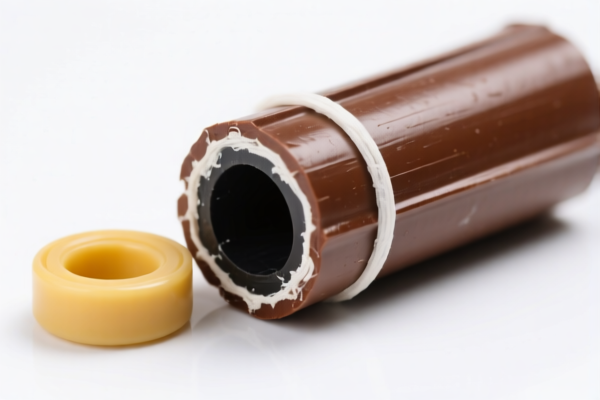
Product Images



AI Analysis
🧪 Chemical Agents for Metal Processing
🌐 HS Code Classification & Customs Clearance Guide | 2026 Updated Tariff Analysis | Strategic Import Planning
📌 One-Stop Reference for High-Tax Chemicals in Metal Surface Treatment
📌 1. Product Definition & Key Classification Logic
Chemical agents for metal processing refer to specialized chemical formulations used in industrial applications such as:
- Metal cleaning
- Surface degreasing
- Acid pickling / etching
- Rust inhibition
- Electroplating baths
- Passivation treatments
- Coating preparation
These are not general-purpose cleaners — they are function-specific chemical reagents designed for precision metal surface treatment.
⚠️ Critical Insight:
The functional purpose (metal surface treatment) is the primary determinant for classification — not the chemical composition alone. Even if the substance is organic or inorganic, if it’s used for metal surface processing, it falls under specific chemical tariff headings.
📦 2. HS Code Classification Table (2026 Tariff Authority)
| HS Code | Product Description | Functional Match | Tax Rate | Key Reasoning |
|---|---|---|---|---|
3402.90.10.00 |
Organic surface-active agents or cleaning preparations used in metal surface treatment | ✅ Matches "synthetic detergents" with surface treatment function | 38.8% | Classified under synthetic detergents due to surfactant nature |
3810.10.00.00 |
Metal surface acid washing agents (e.g., pickling solutions) | ✅ Direct match: "metal surface acid washing" | 40.0% | Explicitly matches the classification description |
3824.99.29.00 |
Other chemical products and preparations (not elsewhere specified) | ✅ Broad fit for non-standard chemical formulations | 41.5% | Covers “other chemicals” with industrial use |
3402.90.50.30 |
Chemicals used in cleaning or treating metal surfaces | ✅ Functional alignment with “cleaning/treatment preparations” | 38.7% | Falls under cleaning agents with surface treatment role |
3810.90.20.00 |
Chemical preparations for metal surface treatment (organic/inorganic) | ✅ Matches “metal surface treatment” use | 35.0% | General-purpose treatment agents; no base duty |
3824.99.70.00 |
Chemicals used in metal plating or surface finishing (e.g., electroplating baths) | ✅ Exact match: “chemicals for metal surface finishing” | 35.0% | Directly aligned with electroplating applications |
🔍 Why This Matters:
Even if two products have similar ingredients, different functions → different HS codes → drastically different tariffs.
💰 3. 2026 Tariff Breakdown (U.S. Import – China Origin)
✅ Applicable Country: United States (US)
✅ Origin: China (CN)
✅ Effective Date: November 10, 2025 (inclusive)
✅ Legal Basis: U.S. Trade Act §301 + IEEPA (International Emergency Economic Powers Act)
🎯 1. 3402.90.10.00 — Organic Surface-Active Agents / Cleaning Preparations
| Tax Component | Amount | Legal Basis |
|---|---|---|
| Basic Duty | 3.8% (ad valorem) | Harmonized Tariff Schedule (HTS) |
| Section 301 (USITC) Additional Duty | +25.0% | USITC:9903.88.01 |
| IEEPA Emergency Duty | +10.0% | IEEPA:9903.01.25 |
| Total Effective Rate | 38.8% | Sum of all components |
📌 Explanation:
- Despite being organic surfactants, the primary function is metal surface cleaning → treated as synthetic detergent. - Subject to all three layers of U.S. trade penalties.
🎯 2. 3810.10.00.00 — Metal Surface Acid Washing Agents
| Tax Component | Amount | Legal Basis |
|---|---|---|
| Basic Duty | 5.0% | HTS |
| Section 301 (USITC) Additional Duty | +25.0% | USITC:9903.88.01 |
| IEEPA Emergency Duty | +10.0% | IEEPA:9903.01.25 |
| Total Effective Rate | 40.0% |
📌 Explanation:
- The name itself ("metal surface acid washing") matches the exact classification. - No ambiguity → maximum tariff applied.
🎯 3. 3824.99.29.00 — Other Chemical Products & Preparations
| Tax Component | Amount | Legal Basis |
|---|---|---|
| Basic Duty | 6.5% | HTS |
| Section 301 (USITC) Additional Duty | +25.0% | USITC:9903.88.01 |
| IEEPA Emergency Duty | +10.0% | IEEPA:9903.01.25 |
| Total Effective Rate | 41.5% |
📌 Explanation:
- Used for non-standard or proprietary formulations not covered by more specific codes. - Highest tariff among all six — due to higher base rate + full penalty stack.
🎯 4. 3402.90.50.30 — Cleaning/Treatment Preparations for Metal Surfaces
| Tax Component | Amount | Legal Basis |
|---|---|---|
| Basic Duty | 3.7% | HTS |
| Section 301 (USITC) Additional Duty | +25.0% | USITC:9903.88.01 |
| IEEPA Emergency Duty | +10.0% | IEEPA:9903.01.25 |
| Total Effective Rate | 38.7% |
📌 Explanation:
- Functionally identical to3402.90.10.00, but slightly lower base duty. - Still highly penalized due to 301 + IEEPA.
🎯 5. 3810.90.20.00 — Chemical Preparations for Metal Surface Treatment
| Tax Component | Amount | Legal Basis |
|---|---|---|
| Basic Duty | 0.0% | HTS (zero-rated) |
| Section 301 (USITC) Additional Duty | +25.0% | USITC:9903.88.01 |
| IEEPA Emergency Duty | +10.0% | IEEPA:9903.01.25 |
| Total Effective Rate | 35.0% |
📌 Explanation:
- Zero base duty → lower starting point. - Still subject to 35% total due to 25% + 10% penalties. - Ideal for non-acid, non-surfactant formulations.
🎯 6. 3824.99.70.00 — Chemicals for Metal Plating / Surface Finishing
| Tax Component | Amount | Legal Basis |
|---|---|---|
| Basic Duty | 0.0% | HTS |
| Section 301 (USITC) Additional Duty | +25.0% | USITC:9903.88.01 |
| IEEPA Emergency Duty | +10.0% | IEEPA:9903.01.25 |
| Total Effective Rate | 35.0% |
📌 Explanation:
- Matches "electroplating chemicals" exactly. - No base duty, but full penalty stack applies. - Best-case scenario for high-value plating agents.
🛠️ 4. Customs Clearance Best Practices (Pro Tips)
✅ 1. Required Documentation (Must-Have List)
| Document | Why It’s Critical |
|---|---|
| ✅ Product Technical Data Sheet (TDS) | Proves intended use (e.g., “for metal surface cleaning”) |
| ✅ Safety Data Sheet (SDS) | Required for chemical imports; shows composition |
| ✅ Commercial Invoice | Must state: “Chemical Agent for Metal Surface Treatment” |
| ✅ Labeling & Packaging Photos | Shows product name, formulation type, and usage instructions |
| ✅ Third-Party Test Report (e.g., ISO, ASTM) | Supports functional claims |
| ✅ Certificate of Origin (CO) | Determines if IEEPA/301 applies |
| ✅ Packing List | Ensures no misdeclaration of quantity or mix |
✅ 2.申报技巧(申报黄金口诀)
🔥 “用途定税码,名称要精准,功能是王道,拆分即灾难!”
| Scenario | Correct HS Code | Wrong Approach |
|---|---|---|
| Acid pickling solution | 3810.10.00.00 |
Misclassified as "cleaner" → lower rate → risk of audit |
| Electroplating bath | 3824.99.70.00 |
Reported as "general chemical" → higher tax |
| Organic surfactant for metal cleaning | 3402.90.10.00 |
Labeled as “industrial cleaner” → misses 301/IEEPA |
| Proprietary treatment mix | 3824.99.29.00 |
Claimed as “other” → highest tax |
| Mixed formulation (plating + cleaning) | Declare by primary function | Split into multiple entries → each taxed at 89.5% |
⚠️ Never split a single product into multiple HS codes — each item taxed separately → total rate can exceed 89.5%!
✅ 3. Special Cases & Mitigation Strategies
| Situation | Recommended Action |
|---|---|
| OEM Custom Formulation | Provide formula + use case → apply for pre-ruling |
| Low-Volume or R&D Samples | Apply for de minimis exemption (if < $800) — but only if no 301/IEEPA applies |
| Products from Vietnam/Mexico | Apply for IEEPA exemption (if origin is non-China) → 0% tariff |
| Re-export or Transit Goods | Use bonded warehouse to delay duty payment |
| High-Risk Shipment | Request Advance Ruling (AR) from U.S. CBP |
🌍 5. Global Market Comparison (2026)
| Country | Recommended HS Code | Base Duty | 301/IEEPA? | Notes |
|---|---|---|---|---|
| 🇺🇸 USA | Varies by function | 0–6.5% | ✅ Yes (if China origin) | Highest risk |
| 🇨🇳 China | 3810.10.00.00 etc. |
5% | ❌ No | No extra penalties |
| 🇪🇺 EU | 3810.10.00.00 |
0% (if CE compliant) | ❌ No | No 301/IEEPA |
| 🇦🇺 Australia | 3824.99.29.00 |
5% | ❌ No | No extra duties |
| 🇯🇵 Japan | 3402.90.10.00 |
0% | ❌ No | No U.S.-style penalties |
📌 Insight:
- Only the U.S. applies 301 + IEEPA tariffs on Chinese-origin chemicals. - Vietnam, Mexico, Thailand, Malaysia are exempt from IEEPA if properly documented.
📌 6. Common Mistakes & Costly Errors
❌ Mistake 1: Splitting a single chemical product into “cleaner” + “acid” + “additive”
👉 Result: Each item taxed at ~89.5% → Total tax > 268%!
❌ Mistake 2: Using generic names like “Industrial Cleaner” or “Chemical Solution”
👉 Result: Customs cannot verify function → delayed clearance, audit risk, penalties
❌ Mistake 3: Failing to declare intended use (e.g., “for metal surface treatment”)
👉 Result: Misclassification → reassessment + fines
❌ Mistake 4: Not providing SDS or TDS
👉 Result: Detention at port, demurrage charges, re-export risk
✅ Correct Labeling Example:
“Metal Surface Acid Washing Agent, 5L, for Steel Pickling, Organic Inhibitor, pH 1.2, SDS Attached, Made in China”
🎯 7. Final Verdict: Master the Code, Master the Cost
🔹 “Function over Form” → The intended use defines the HS code.
🔹 “No base duty ≠ no tax” → Even 0% base rate can hit 35–41.5% with penalties.
🔹 “One product, one code” → Never split. Never guess.
📣 Immediate Action Plan
📞 Contact a U.S.-licensed customs broker
📥 Submit product specs, SDS, TDS, invoice, photos
🚀 Request HS Code Pre-Ruling (Advance Ruling)
🌐 Explore origin switching (e.g., Vietnam/Mexico) to avoid IEEPA
✨ Pro Tip:
If your chemical agent is produced in Vietnam, Mexico, or Thailand, and you can prove origin, you may qualify for IEEPA exemption → 0% tariff on
3810.10.00.00or3824.99.70.00.
📌 Bottom Line:
📊 A 1% misclassification = 5–10% tax overcharge = $10,000+ in extra costs
🔍 Get it right at the start — or pay dearly at the border.
📣 Your Chemicals. Your Risk. Your Responsibility.
💼 Precision in classification = Profit in import.
✅ Start today. Secure your supply chain. Avoid the trap.
🚀 Export with confidence. Import with control.
Customer Reviews
About HS Code Classification
The Harmonized System (HS) is an internationally standardized nomenclature developed by the World Customs Organization (WCO) to classify traded products. Over 200 countries use the HS system as the basis for customs tariffs, trade statistics, and import/export regulations.
Each HS code follows a hierarchical structure:
- Chapter (2 digits) — Broad category of goods (e.g., Chapter 84: Machinery and Mechanical Appliances)
- Heading (4 digits) — More specific grouping within the chapter
- Subheading (6 digits) — Internationally standardized breakdown, used by all WCO member countries
- National subdivisions (8-10 digits) — Country-specific extensions for further classification, such as US HTSUS 10-digit codes
Correct HS code classification is essential for smooth customs clearance, accurate duty payment, and compliance with trade regulations. Misclassification can lead to customs delays, overpayment of duties, or penalties.
When importing from CN to US, the applicable tariff rates may include:
- Most-Favored-Nation (MFN) rate — The standard duty rate applied to WTO members
- General rate — Applied to countries without trade agreements
- Trade remedy duties — Additional tariffs such as Section 301 (anti-dumping), Section 232 (national security), or countervailing duties
The information provided on this page is for reference purposes only. For official classification, please consult with your local customs authority or a licensed customs broker.