Chemical semibleached coniferous wood pulp
CN → US| HS Code | Tariff Rate | Origin | Destination | Doc |
|---|---|---|---|---|
| 4703290020 | 35.0% | CN | US | Official Doc |
| 4703210020 | 35.0% | CN | US | Official Doc |
| 4704290000 | 35.0% | CN | US | Official Doc |
| 4703290020 | 35.0% | CN | US | Official Doc |
| 4703290020 | 35.0% | CN | US | Official Doc |
Product Images
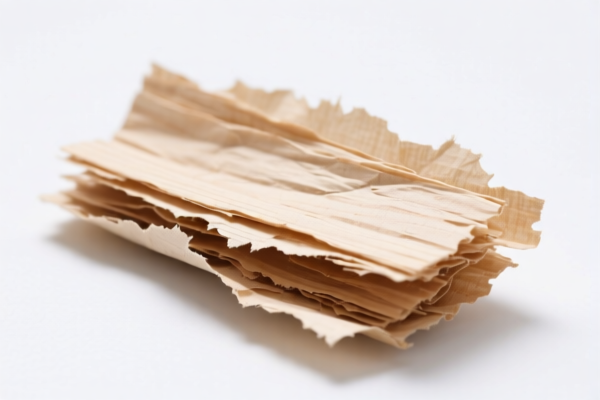
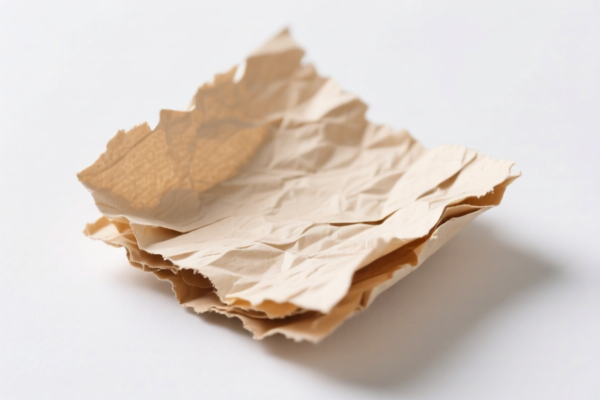
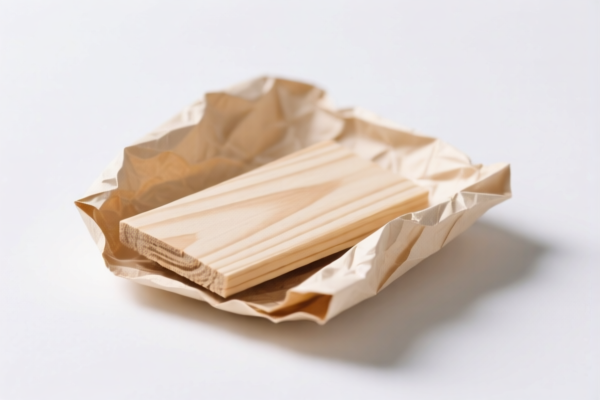
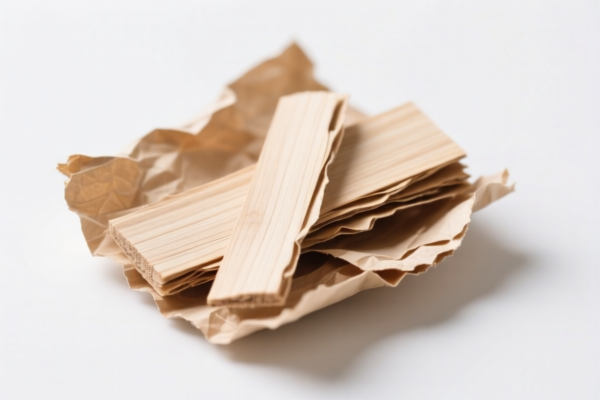
AI Analysis
🌲 Chemical Semibleached Coniferous Wood Pulp (Soda/Sulfate, Non-Dissolving)
🌐 HS Code Reference & Customs Clearance Guide | 2024/2025 Tariff Analysis | Professional Clearance Strategy
📌 I. Product Definition & Classification: What Exactly Is "Semi-bleached Wood Pulp"?
Chemical wood pulp, specifically from coniferous trees (softwoods like pine, spruce, fir), is a critical raw material for papermaking, tissue, and cardboard production. This specific category refers to Soda or Sulfate process pulps that are not of the dissolving grade (i.e., not intended for viscose/rayon production) and have undergone only partial bleaching.
Key Distinctions: * Process: Soda or Sulfate (Kraft) chemical method. * Source: Coniferous (Softwood). * Status: Semibleached (partially delignified and whitened, but not fully white like bleached pulp). * Exclusion: Must NOT be "dissolving grade."
⚠️ Critical Clarification:
- If the pulp is fully bleached → It falls under4703.21.00.40.
- If the pulp is semibleached → It falls under4703.21.00.20.
- If it is non-coniferous (hardwood, e.g., eucalyptus) → Different HS Code (4703.31...).
- If it is dissolving grade → Different HS Code (4706...).
📦 II. HS Code Classification Details (Based on Provided Data)
| HS Code | Product Description | Status | Key Feature |
|---|---|---|---|
4703.21.00.20 |
Chemical woodpulp, soda or sulfate, other than dissolving grades: Semibleached or bleached: Coniferous Semibleached | Semibleached | Partially processed, lower brightness than fully bleached pulp. |
4703.21.00.40 |
Chemical woodpulp, soda or sulfate, other than dissolving grades: Semibleached or bleached: Coniferous Bleached | Fully Bleached | Higher brightness, refined whiteness. |
🔍 Important Note:
The user input "Chemical semibleached coniferous wood pulp" specifically matches4703.21.00.20.
However, both codes share the same tax structure in the provided data.
💰 III. 2024/2025 Tariff Rate Breakdown (Detailed Tax Clauses)
✅ Applicable Jurisdiction: Implied US Tariff Structure (Based on "Additional Duty" format)
✅ Product Origin: China (CN) (Implied by the 25% additional duty common in US-China trade context)
✅ Data Source: Provided<DATA>
🎯 1. 4703.21.00.20 —— Semibleached Coniferous Wood Pulp
| Item | Detail |
|---|---|
| Base Duty (MFN) | 0.0% (Ad Valorem) |
| Additional Duty | 25.0% |
| Total Tax Rate | 25.0% |
| Tax Calculation | CIF Value × 25% |
| De Minimis Exemption | ❌ Not Applicable (High-value industrial raw materials rarely qualify) |
| Legal Basis | Section 301 Tariff List / Trade Act Provisions |
📌 Interpretation:
- Base Duty (0.0%): The standard Most Favored Nation (MFN) rate for wood pulp is typically low or zero to encourage raw material imports.
- Additional Duty (25.0%): This represents the Section 301 tariffs imposed on specific Chinese goods. Wood pulp is a critical industrial input, and its classification here attracts the full punitive rate.
- Total Liability: Importers must pay 25% of the declared value in duties alone. No base duty offsets this.
🎯 2. 4703.21.00.40 —— Bleached Coniferous Wood Pulp
| Item | Detail |
|---|---|
| Base Duty (MFN) | 0.0% (Ad Valorem) |
| Additional Duty | 25.0% |
| Total Tax Rate | 25.0% |
| Tax Calculation | CIF Value × 25% |
| De Minimis Exemption | ❌ Not Applicable |
📌 Note:
While technically "bleached" vs. "semibleached" differs in chemical processing, the tariff burden is identical at 25%. Do not attempt to misdeclare "semibleached" as "bleached" to save costs; the physical properties (brightness, kappa number) are easily verified by customs labs.
🛠️ IV. Customs Clearance Practical Advice
✅ 1. Documentation Checklist (Essential for Wood Pulp)
| Document | Required? | Purpose |
|---|---|---|
| ✅ Commercial Invoice | ✔️ | Must specify: "Soda/Sulfate," "Coniferous," "Semibleached/Bleached," "Non-Dissolving." |
| ✅ Bill of Lading | ✔️ | Check packaging type (bales, bags). |
| ✅ Certificate of Origin | ✔️ | Crucial for verifying country of origin for Section 301 applicability. |
| ✅ Product Specification Sheet | ✔️ | Must include: Kappa Number, Viscosity, Brightness, Moisture Content, Fiber Type (e.g., Pine, Spruce). |
| ✅ MSDS (Material Safety Data Sheet) | ✔️ | Chemical pulp is generally non-hazardous, but documentation is required for shipping. |
| ✅ Fumigation Certificate | ✔️ | If shipped in wooden pallets/crates, ISPM 15 compliance is mandatory. |
✅ 2. Clearance Strategies & Tips
🔥 "Accuracy is King: Misclassification Leads to Seizure or Penalties"
| Scenario | Correct Approach | Risk of Error |
|---|---|---|
| Describing the Product | Use precise terms: "Sulfate Wood Pulp, Coniferous, Semibleached, Non-Dissolving Grade" | Vague terms like "Wood Pulp" may trigger manual inspection and delays. |
| Distinguishing Bleach vs. Semi | Provide lab results showing brightness (< 50-60 ISO) for semibleached vs. (> 80-90 ISO) for bleached. | Mislabeling does not reduce tax here (both 25%), but can lead to fraud allegations if intent is proven. |
| Dissolving Grade Check | Confirm it is NOT for viscose/rayon production. If it is, the HS Code changes, and duty rates may differ. | Misclassifying dissolving grade as non-dissolving is a common audit target. |
| Packaging | Ensure bales are tightly wrapped and labeled. | Loose packaging can damage goods and lead to quality disputes, not just customs issues. |
✅ 3. Special Considerations
| Issue | Advice |
|---|---|
| Origin Transshipment | If pulp is manufactured in China but shipped from Vietnam, it may still be subject to US duties if Chinese origin is not properly declared or if substantial transformation didn't occur. |
| Quality Disputes | Customs may test pulp upon entry. Ensure your specs match the commercial invoice exactly. |
| Volume Imports | For large shipments, consider engaging a customs broker for a Pre-Ruling to confirm HS Code and duty liability in advance. |
🌍 V. Global Market Context (Comparison)
| Region | Typical Duty on Wood Pulp (China Origin) | Notes |
|---|---|---|
| 🇺🇸 United States | 25% (Total) | High due to Section 301. No base duty. |
| 🇨🇳 China | 0% - 5% | Import duty may be low, but VAT applies (13%). |
| 🇪🇺 European Union | ~6.5% | Standard EU duty; no punitive tariffs for wood pulp. |
| 🇮🇳 India | ~7.5% | Basic Customs Duty + SWS. |
📌 Conclusion:
The US market is significantly more expensive for Chinese-origin wood pulp due to the 25% additional duty. Importers must factor this into their landed cost calculations.
📌 VI. Common Mistakes & Pitfalls
❌ Mistake 1: Omitting "Semibleached" or "Bleached" in the description.
👉 Consequence: Customs cannot verify the HS Code, leading to detention and potential misclassification penalties.
❌ Mistake 2: Declaring as "Chemical Pulp" without specifying "Coniferous."
👉 Consequence: Incorrect HS Code assignment. Hardwood pulp has different codes and potentially different duty histories.
❌ Mistake 3: Ignoring the "Non-Dissolving" clause.
👉 Consequence: If the pulp is actually dissolving grade, the HS Code is wrong, and duty rates may differ (though often similar, the legal risk is high).
❌ Mistake 4: Assuming "Semibleached" and "Bleached" have different tax rates in this specific dataset.
👉 Consequence: While they share the 25% rate, misdeclaration can still lead to audits and fines for providing false information.
🎯 VII. Conclusion: Smart Importing for Wood Pulp
🎯 Key Takeaways:
🔹 "Specify Fully: Chemical, Process, Origin, and Bleach Status."
🔹 "Expect 25% Duty: No base duty, but heavy additional tariff."
🔹 "Verify Specs: Lab tests must match invoices for semibleached vs. bleached."
📌 Pro Tip:
If you are importing large volumes, consider bonded warehouses or Foreign Trade Zones (FTZ) to defer duty payments until the pulp is released for consumption. This improves cash flow.
📣 Immediate Action Required:
📞 Consult with a licensed customs broker.
📄 Prepare detailed technical specifications (Kappa number, Brightness, Yield).
📦 Ensure all packaging is ISPM 15 compliant if wooden.
✨ Precision in Classification = Savings in Duties!
💼 Wood pulp is a strategic commodity; protect your supply chain with accurate documentation.
Customer Reviews
About HS Code Classification
The Harmonized System (HS) is an internationally standardized nomenclature developed by the World Customs Organization (WCO) to classify traded products. Over 200 countries use the HS system as the basis for customs tariffs, trade statistics, and import/export regulations.
Each HS code follows a hierarchical structure:
- Chapter (2 digits) — Broad category of goods (e.g., Chapter 84: Machinery and Mechanical Appliances)
- Heading (4 digits) — More specific grouping within the chapter
- Subheading (6 digits) — Internationally standardized breakdown, used by all WCO member countries
- National subdivisions (8-10 digits) — Country-specific extensions for further classification, such as US HTSUS 10-digit codes
Correct HS code classification is essential for smooth customs clearance, accurate duty payment, and compliance with trade regulations. Misclassification can lead to customs delays, overpayment of duties, or penalties.
When importing from CN to US, the applicable tariff rates may include:
- Most-Favored-Nation (MFN) rate — The standard duty rate applied to WTO members
- General rate — Applied to countries without trade agreements
- Trade remedy duties — Additional tariffs such as Section 301 (anti-dumping), Section 232 (national security), or countervailing duties
The information provided on this page is for reference purposes only. For official classification, please consult with your local customs authority or a licensed customs broker.