Chemicals to Reduce Paint and Varnish Viscosity
CN → US| HS Code | Tariff Rate | Origin | Destination | Doc |
|---|---|---|---|---|
| 3814001000 | 41.5% | CN | US | Official Doc |
| 3814002000 | 41.5% | CN | US | Official Doc |
| 3208900000 | 38.2% | CN | US | Official Doc |
| 3208100000 | 38.7% | CN | US | Official Doc |
Product Images
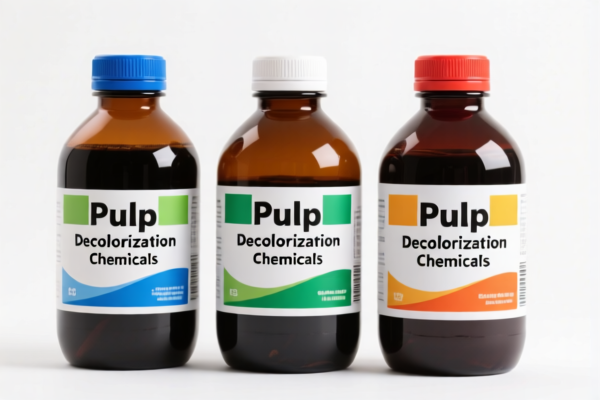
AI Analysis
🎨 Chemicals to Reduce Paint and Varnish Viscosity (Dilutents & Thinning Agents)
🌐 HS Code Reference & Customs Clearance Guide | 2026 Latest Tariff Analysis | Professional Strategy
📌 I. Product Definition & Classification: What Are These Chemicals?
"Chemicals to Reduce Paint and Varnish Viscosity" are primarily organic solvents or chemical additives used to thin paints, varnishes, and lacquers. In international trade, their classification depends heavily on their chemical composition and primary function:
Organic Solvent Diluents: Pure chemical compounds (e.g., acetone, toluene, xylene) whose main purpose is to lower viscosity. → Likely classified under Chapter 38 (Miscellaneous Chemical Products).
Paint Component Additives: Chemical substances that are part of a synthetic polymer-based paint system or act as auxiliary agents within a paint formulation. → Likely classified under Chapter 32 (Tanning, Dyeing, Paint, Varnish, etc.).
⚠️ Key Distinction Point:
- If the product is a pure organic solvent used solely for thinning →归类 3814.00
- If the product is a synthetic polymer-based component or a paint accessory/agent integrated into the paint system →归类 3208.90 or 3208.10
📦 II. HS Code Classification Details (2026 Latest Tariff Authority Comparison)
| HS Code | Product Description | Application Scenario | Chemical Nature |
|---|---|---|---|
3814.00.10.00 |
Chemicals for reducing the viscosity of paints and varnishes, classified as organic solvent diluents. | Pure solvents, thinners for industrial paints | ✅ Organic Solvent |
3814.00.20.00 |
Chemicals for reducing paint viscosity, meeting the definition of organic solvents and diluents. | General-purpose thinners, industrial cleaning agents | ✅ Organic Solvent |
3208.90.00.00 |
Chemical products for reducing paint viscosity, classified as components of paints and varnishes based on synthetic polymers. | Paint additives, polymer-based thinners, binder components | ✅ Synthetic Polymer Component |
3208.10.00.00 |
Chemical products for paints and varnishes, acting as viscosity-regulating auxiliaries highly related to paint systems. | Paint modifiers, auxiliary agents, specific paint formulators | ✅ Paint System Accessory |
🔍 Key Reminder:
- Products labeled strictly as "Diluents" or "Solvents" often fall under 3814.
- Products described as "Components of Paints" or "Based on Synthetic Polymers" often fall under 3208.
- Misclassification can lead to significant tax differences.
💰 III. 2026 Latest Tariff Rate Details (Including Surtaxes & Policy Additions)
✅ Applicable Country: United States (US)
✅ Origin: China (CN)
✅ Effective Time: Since November 10, 2025 (for subsequent imports)
🎯 1. 3814.00.10.00 & 3814.00.20.00 —— Organic Solvent Diluents
| Item | Content |
|---|---|
| Base Duty Rate | 6.5% (ad valorem) |
| Section 301 Surtax | +25% (China-origin specific) |
| Section 122 Tariff | +10% (Specific trade policy surcharge) |
| Total Tax Rate | 41.5% |
| Tax Calculation | CIF Value × 41.5% |
| De Minimis Exemption | ❌ Not Available (High duty threshold) |
| Legal Basis Path | USITC:3814.00.10.00 → Section 301: 25% → Section 122: 10% |
📌 Explanation:
- "Base Duty 6.5%": Standard MFN (Most Favored Nation) rate for organic solvents/diluents under Chapter 38.
- "Section 301 Surtax 25%": Imposed under the U.S. Trade Act of 1974, Section 301, targeting Chinese imports.
- "Section 122 Tariff 10%": Additional surcharge applicable to specific chemical categories under current trade regulations.
- Total 41.5%: This is a high-cost category. Importers must calculate this into landed costs accurately.
🎯 2. 3208.90.00.00 —— Synthetic Polymer-Based Paint Components
| Item | Content |
|---|---|
| Base Duty Rate | 3.2% (ad valorem) |
| Section 301 Surtax | +25% (China-origin specific) |
| Section 122 Tariff | +10% (Specific trade policy surcharge) |
| Total Tax Rate | 38.2% |
| Tax Calculation | CIF Value × 38.2% |
| De Minimis Exemption | ❌ Not Available |
| Legal Basis Path | USITC:3208.90.00.00 → Section 301: 25% → Section 122: 10% |
📌 Note:
- Although classified under Chapter 32 (Paints/Varnishes), it still faces Section 301 and Section 122 surcharges.
- The base rate (3.2%) is lower than Chapter 38 (6.5%), resulting in a 3.3% total savings compared to organic solvents.
🎯 3. 3208.10.00.00 —— Paint System Auxiliary Agents
| Item | Content |
|---|---|
| Base Duty Rate | 3.7% (ad valorem) |
| Section 301 Surtax | +25% (China-origin specific) |
| Section 122 Tariff | +10% (Specific trade policy surcharge) |
| Total Tax Rate | 38.7% |
| Tax Calculation | CIF Value × 38.7% |
| De Minimis Exemption | ❌ Not Available |
| Legal Basis Path | USITC:3208.10.00.00 → Section 301: 25% → Section 122: 10% |
📌 Note:
- Slightly higher base rate than3208.90but still lower than Chapter 38.
- Suitable for products that are additives or modifiers rather than pure solvents.
🛠️ IV. Customs Clearance Practical Advice (Pitfall Avoidance Guide)
✅ 1. Preparation Checklist (All Required)
| Document | Must Provide | Explanation |
|---|---|---|
| ✅ Product Specification Sheet | ✔️ | Detailed chemical composition, CAS number, viscosity reduction efficiency |
| ✅ Safety Data Sheet (SDS) | ✔️ | Critical for classification; must indicate if it's a "solvent" or "paint component" |
| ✅ Product Photos (Label/Container) | ✔️ | Clear display of product name, model, and warning labels |
| ✅ Third-Party Test Report | ✔️ | Chemical analysis report proving if it's a pure solvent or polymer-based |
| ✅ Commercial Invoice | ✔️ | Must specify "Viscosity Reducing Chemicals" and clarify function |
| ✅ Certificate of Origin (CO) | ✔️ | If not China-origin, may apply for preferential rates |
| ✅ Packing List | ✔️ | Detail net/gross weight, volume, and hazard class (if applicable) |
✅ 2. Declaration Tips (Key Mnemonic)
🔥 "Pure Solvent? 3814! Paint Component? 3208! Base Rate Matters, Total Tax Drastic!"
| Scenario | Correct Declaration | Wrong Practice |
|---|---|---|
| Pure organic thinner | 3814.00.10.00 / 3814.00.20.00 |
Misclassify as paint component → Overpay? No, Underpay if audit fails. |
| Polymer-based paint additive | 3208.90.00.00 |
Misclassify as solvent → Higher tax burden |
| General paint modifier | 3208.10.00.00 |
Ambiguous description → Customs inspection delay |
| Hazardous Chemicals | Declare Hazard Class | Hidden hazard info → Penalty + Return |
✅ 3. Special Cases Handling
| Situation | Handling Advice |
|---|---|
| OEM Custom Thinner | Provide customer order + formula design to justify classification. |
| Mixed Solvents | If primarily one type, classify by main component. If mixed, consult HS ruling. |
| Paint + Thinner Kit | Declare separately if possible. If bundled, declare as kit with highest duty or seek advance ruling. |
| Hazardous Material | Ensure IMDG/IATA compliance for shipping. Customs will check SDS rigorously. |
🌍 V. Global Main Market Comparison (2026 Latest)
| Country/Region | Recommended HS Code | Duty Rate | Certification Requirement | Notes |
|---|---|---|---|---|
| 🇺🇸 USA | 3814.00.10.00 / 3208.90.00.00 |
38.2%~41.5% (China Origin) | SDS, MSDS, EPA Registration (if applicable) | High surcharges apply. |
| 🇨🇳 China | 3814.00.10.00 / 3208.90.00.00 |
5%~6.5% | CCC (if applicable), GB Standards | No additional surcharges. |
| 🇪🇺 EU | 3814.00.10.00 / 3208.90.00.00 |
0%~6.5% | REACH, CLP Labeling | Lower base rates, strict chemical regulation. |
| 🇦🇺 Australia | 3814.00.10.00 / 3208.90.00.00 |
5%~7.5% | NICNAS Assessment | No major surcharges. |
| 🇯🇵 Japan | 3814.00.10.00 / 3208.90.00.00 |
0%~5% | PRTR Law | No surcharges. |
📌 Conclusion:
- USA is the highest cost market due to Section 301 and Section 122 tariffs.
- Chapter 38 (Solvents) has a higher base rate than Chapter 32 (Paint Components).
- Optimization Strategy: If your product fits 3208.90.00.00, you save 3.3% on total duty compared to 3814.00.10.00.
📌 VI. Common Mistakes & Pitfall Guide (Lessons Learned)
❌ Mistake 1: Calling all thinners "Paint Solvents"
👉 Consequence: May be forced into Chapter 38 even if it's a polymer additive → Higher tax!
❌ Mistake 2: Ignoring Section 122 Tariff
👉 Consequence: Unexpected 10% surcharge at customs → Cash flow issue!
❌ Mistake 3: Incomplete SDS
👉 Consequence: Customs cannot verify chemical nature → Delay + Inspection Fees!
❌ Mistake 4: Mixing Hazardous and Non-Hazardous in One Shipment
👉 Consequence: Entire shipment flagged → Storage Fees + Return Risk!
✅ Correct Practice:
"Viscosity Reducing Agent, Synthetic Polymer-Based, CAS No. XXXXX, Non-Hazardous (or Hazard Class X), for Industrial Paint Thinning, Model XYZ, SDS Attached."
🎯 VII. Conclusion: Precise Classification, Cost Efficiency!
🎯 Remember the Mnemonic:
🔹 "Solvent = 3814 (6.5% Base)! Component = 3208 (3.2% Base)!
301 & 122 Add 35%! Total 41.5% vs 38.2%!
Choose Chapter 32 if possible! Save 3.3%!
SDS is King! Hazard Info is Key!
Customs Inspection Awaits!"
📌 Pro Tip:
If your product is originally from Vietnam, Mexico, Thailand, or Malaysia, you may apply for IEEPA Exemption or FTA Preferences, reducing rates to 0%~5%.
Recommend applying for an Advance Ruling before shipment to avoid classification disputes.
📣 Immediate Action:
📞 Contact a professional customs broker + Provide Product Images + Apply for HS Code Advance Ruling
🚀 Let your chemicals pass through customs smoothly, efficiently, and profitably!
✨ Professional Clearance Starts with Precise Classification!
💼 Every Penny of Cost Deserves Accurate Calculation!
Customer Reviews
About HS Code Classification
The Harmonized System (HS) is an internationally standardized nomenclature developed by the World Customs Organization (WCO) to classify traded products. Over 200 countries use the HS system as the basis for customs tariffs, trade statistics, and import/export regulations.
Each HS code follows a hierarchical structure:
- Chapter (2 digits) — Broad category of goods (e.g., Chapter 84: Machinery and Mechanical Appliances)
- Heading (4 digits) — More specific grouping within the chapter
- Subheading (6 digits) — Internationally standardized breakdown, used by all WCO member countries
- National subdivisions (8-10 digits) — Country-specific extensions for further classification, such as US HTSUS 10-digit codes
Correct HS code classification is essential for smooth customs clearance, accurate duty payment, and compliance with trade regulations. Misclassification can lead to customs delays, overpayment of duties, or penalties.
When importing from CN to US, the applicable tariff rates may include:
- Most-Favored-Nation (MFN) rate — The standard duty rate applied to WTO members
- General rate — Applied to countries without trade agreements
- Trade remedy duties — Additional tariffs such as Section 301 (anti-dumping), Section 232 (national security), or countervailing duties
The information provided on this page is for reference purposes only. For official classification, please consult with your local customs authority or a licensed customs broker.