Chicken Breast
CN → US| HS Code | Tariff Rate | Origin | Destination | Doc |
|---|---|---|---|---|
| 1602320040 | 41.4% | CN | US | Official Doc |
| 2106909990 | 16.4% | CN | US | Official Doc |
| 1602320030 | 41.4% | CN | US | Official Doc |
Product Images
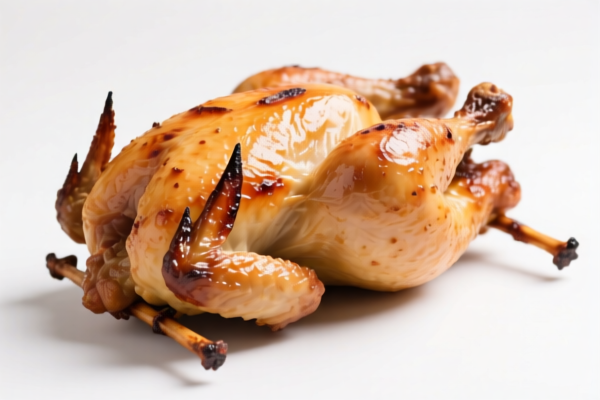
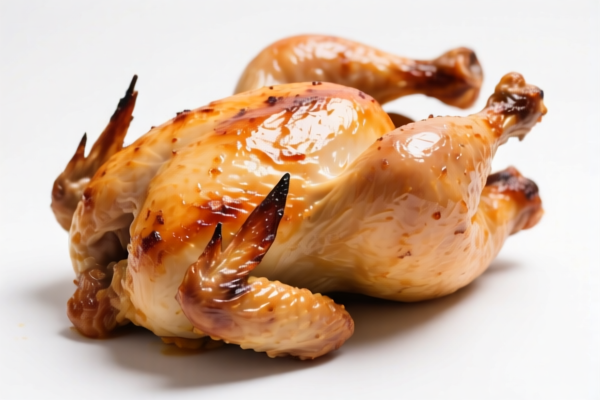
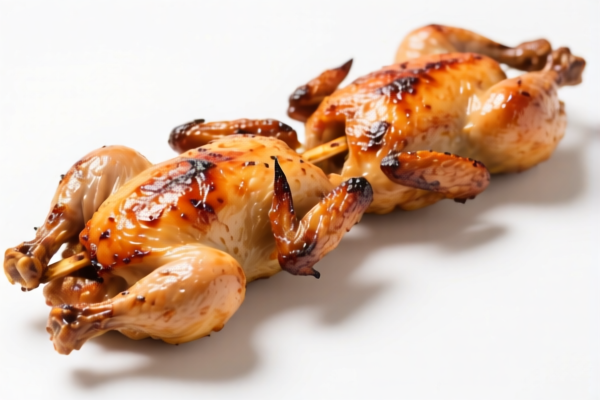
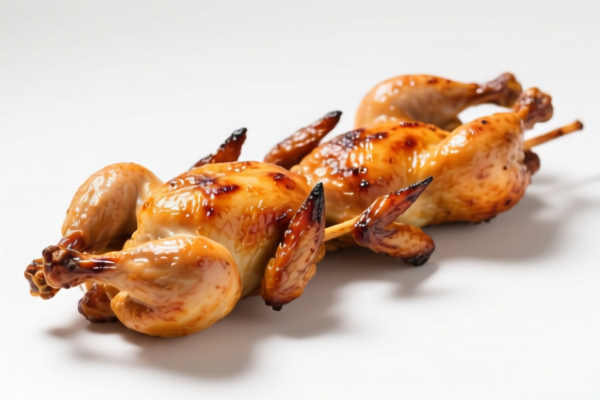
AI Analysis
🐔 Chicken Breast (Chicken Meat Products)
🌐 HS Code Reference & Customs Clearance Guide | 2026 Latest Tariff Analysis | Professional Clearance Strategy
📌 Part I: Product Definition & Classification: Do You Really Understand "Chicken Breast"?
Chicken breast is the most popular cut of poultry meat, widely used in frozen, fresh, and processed forms. In international trade, its classification depends heavily on its processing state: - Raw/Fresh: Often considered "meat" but if prepared (trimmed, packaged), it may fall under processed categories. - Processed/Prepared: Cooked, cured, or otherwise prepared chicken breast falls under Heading 1602 (Other prepared or preserved meat). - Food Mixture: If mixed with other ingredients to form a "preparations of food," it may fall under Heading 2106.
⚠️ Key Distinction:
- If it is simply meat without further preparation beyond standard trimming/packaging, it may still be classified under meat headings, but the provided data suggests a focus on preparation status.
- If it is processed, preserved, or part of a food preparation, it triggers different tax rates and HS codes.
📦 Part II: HS Code Classification Details (Based on Provided Data)
The provided data outlines three potential HS Codes for Chicken Breast, each with distinct tax implications.
| HS Code | Product Description | Tax Implication | Applicability Scenario |
|---|---|---|---|
1602.32.00.40 |
Chicken breast, matching chicken material, belongs to prepared or preserved meat products | Total Tax: 41.4% | Standard prepared chicken breast (meat-based). High tariff due to 301 & 122 clauses. |
2106.90.99.90 |
Chicken breast, as a food preparation, fits under "Other" in food category | Total Tax: 16.4% | Chicken breast used as an ingredient in a broader food preparation. Lower tariff due to no 301 clause. |
1602.32.00.30 |
Chicken meat, name consistent with chicken material, defaults to prepared meal attributes | Total Tax: 41.4% | Similar to 1602.32.00.40, treated as prepared meat. High tariff applies. |
🔍 Key Insight:
- The tax difference is significant: 41.4% vs. 16.4%.
- The lower tax rate (16.4%) applies only if the product is clearly defined as a food preparation under Heading 2106, avoiding the stricter "prepared meat" classification.
- Both1602.32.00.40and1602.32.00.30incur the same high tax burden due to the classification as prepared meat.
💰 Part III: 2026 Latest Tariff Rate Breakdown (Including Additional Duties)
✅ Applicable Country: USA (US)
✅ Origin: China (CN)
✅ Effective Date: 2025 onwards (including subsequent imports)
🎯 1. 1602.32.00.40 & 1602.32.00.30 — Prepared/Preserved Chicken Meat
| Item | Detail |
|---|---|
| Base Tariff | 6.4% (Ad Valorem) |
| Section 301 Additional Tariff | +25.0% (US Trade Act Section 301) |
| Section 122 Tariff | +10.0% (Retaliatory tariff on China) |
| Total Tax Rate | 41.4% |
| Tax Calculation | CIF Value × 41.4% |
| De Minimis Exemption | ❌ Not Eligible (Deny de minimis) |
| Legal Basis Path | Base Tariff: 6.4% → Section 301: 25.0% → Section 122: 10.0% |
📌 Explanation:
- The 25% Section 301 tariff is applied to Chinese-made prepared meat products.
- The 10% Section 122 tariff is a retaliatory measure.
- Total 41.4% is a high tariff barrier, significantly impacting profitability.
- No de minimis exemption applies, meaning even small shipments are subject to these duties.
🎯 2. 2106.90.99.90 — Chicken as Food Preparation
| Item | Detail |
|---|---|
| Base Tariff | 6.4% (Ad Valorem) |
| Section 301 Additional Tariff | +0.0% (Not applicable to this code) |
| Section 122 Tariff | +10.0% (Retaliatory tariff on China) |
| Total Tax Rate | 16.4% |
| Tax Calculation | CIF Value × 16.4% |
| De Minimis Exemption | ❌ Not Eligible (Deny de minimis) |
| Legal Basis Path | Base Tariff: 6.4% → Section 122: 10.0% |
📌 Explanation:
- The absence of the 25% Section 301 tariff is the key benefit.
- Only the 10% Section 122 tariff applies.
- Total 16.4% is significantly lower than the 41.4% rate, making this classification highly advantageous if legally justifiable.
- No de minimis exemption applies.
🛠️ Part IV: Customs Clearance Practical Advice (Avoiding Pitfalls)
✅ 1. Preparation Checklist (Essential Documents)
| Document | Required | Notes |
|---|---|---|
| ✅ Product Specification Sheet | ✔️ | Must detail processing method, ingredients, and intended use. |
| ✅ Commercial Invoice | ✔️ | Clearly state "Chicken Breast" and specify if it is "Prepared Meat" or "Food Preparation." |
| ✅ Packing List | ✔️ | Include net weight, gross weight, and package dimensions. |
| ✅ Certificate of Origin | ✔️ | Confirm Chinese origin to apply correct tariffs. |
| ✅ Processing Method Description | ✔️ | Detailed explanation of how chicken is prepared (e.g., cooked, marinated, mixed). |
✅ 2. Declaration Tips (Critical Keywords)
🔥 "Define the Process, Not Just the Product!"
| Scenario | Correct Declaration | Incorrect Declaration |
|---|---|---|
| Prepared Chicken (High Tax) | "Prepared Chicken Breast, Cooked and Packaged" | "Raw Chicken Breast" |
| Food Preparation (Low Tax) | "Chicken Breast Prepared as Food Ingredient, Mixed with Seasonings" | "Chicken Meat" |
| General | Clearly specify processing status to avoid misclassification. | Vague terms like "Chicken Product" lead to delays and audits. |
✅ 3. Special Considerations
| Situation | Recommendation |
|---|---|
| OEM/Private Label | Provide product formulations to justify "Food Preparation" classification if applicable. |
| Frozen vs. Fresh | Ensure the declared state matches the physical product. Misdeclaration can lead to penalties. |
| Ingredient Mixtures | If chicken is mixed with other ingredients, emphasize the "preparation" aspect to potentially qualify for 2106.90.99.90. |
🌍 Part V: Global Market Comparison (2026 Latest)
| Country/Region | Recommended HS Code | Tariff Rate | Certification | Notes |
|---|---|---|---|---|
| 🇺🇸 USA | 1602.32.00.40 or 2106.90.99.90 |
41.4% or 16.4% | USDA Inspection + FDA | High tariffs for Chinese-origin products. |
| 🇨🇳 China | 1602.32.00.40 or 2106.90.99.90 |
Variable | CCC (if applicable) | No additional tariffs for domestic trade. |
| 🇪🇺 EU | 1602.32.00.90 |
Variable | EU Health Certificate | Different HS structure; check local codes. |
| 🇬🇧 UK | 1602.32.00.90 |
Variable | UK Health Certificate | Post-Brexit rules apply. |
| 🇯🇵 Japan | 1602.32.00.90 |
Variable | JFSL Compliance | Strict food safety regulations. |
📌 Conclusion:
- USA imposes high tariffs on Chinese-origin chicken products, especially under1602.32.00.40.
- Opting for2106.90.99.90can save 25% in tariffs, but requires strong justification for "food preparation" status.
- Other markets (EU, UK, Japan) have different HS structures and tariff regimes; always verify local codes.
📌 Part VI: Common Mistakes & Pitfalls (Lessons Learned)
❌ Mistake 1: Declaring "Chicken Breast" without specifying processing status.
👉 Consequence: Customs may classify it as 1602.32.00.40 (41.4%) instead of 2106.90.99.90 (16.4%).
❌ Mistake 2: Using "Raw Chicken" for processed products.
👉 Consequence: Misclassification, potential fines, and shipment delays.
❌ Mistake 3: Ignoring Section 301 and 122 tariffs.
👉 Consequence: Unexpected high costs and cash flow issues.
✅ Correct Practice:
"Prepared Chicken Breast, Cooked, Vacuum-Sealed, Used as Food Ingredient, Model XYZ, USDA Approved"
🎯 Part VII: Conclusion: Professional Declaration, Cost Savings!
🎯 Remember the Key Takeaway:
🔹 "Processing Status Determines Tax Rate!"
🔹 "Prepared Meat = 41.4%, Food Prep = 16.4%!"
🔹 "Justify 'Food Preparation' to Save 25%!"
📌 Pro Tip:
- If your chicken breast is mixed with other ingredients or used as an ingredient in a broader food product, emphasize the "food preparation" aspect to potentially qualify for the lower 16.4% tariff.
- Consult a customs broker to verify the correct classification based on your specific product formulation.
📣 Action Step:
📞 Contact a Customs Broker + Provide Product Formulation + Apply for Advance Ruling
🚀 Ensure Smooth Clearance, Save Costs, and Maximize Profits!
✨ Professional Clearance Starts with Accurate Classification!
💼 Every Cent of Cost is Worth Precise Calculation!
Customer Reviews
About HS Code Classification
The Harmonized System (HS) is an internationally standardized nomenclature developed by the World Customs Organization (WCO) to classify traded products. Over 200 countries use the HS system as the basis for customs tariffs, trade statistics, and import/export regulations.
Each HS code follows a hierarchical structure:
- Chapter (2 digits) — Broad category of goods (e.g., Chapter 84: Machinery and Mechanical Appliances)
- Heading (4 digits) — More specific grouping within the chapter
- Subheading (6 digits) — Internationally standardized breakdown, used by all WCO member countries
- National subdivisions (8-10 digits) — Country-specific extensions for further classification, such as US HTSUS 10-digit codes
Correct HS code classification is essential for smooth customs clearance, accurate duty payment, and compliance with trade regulations. Misclassification can lead to customs delays, overpayment of duties, or penalties.
When importing from CN to US, the applicable tariff rates may include:
- Most-Favored-Nation (MFN) rate — The standard duty rate applied to WTO members
- General rate — Applied to countries without trade agreements
- Trade remedy duties — Additional tariffs such as Section 301 (anti-dumping), Section 232 (national security), or countervailing duties
The information provided on this page is for reference purposes only. For official classification, please consult with your local customs authority or a licensed customs broker.