Chicle Strips
CN → US| HS Code | Tariff Rate | Origin | Destination | Doc |
|---|---|---|---|---|
| 1704100000 | 21.5% | CN | US | Official Doc |
| 2106909985 | 16.4% | CN | US | Official Doc |
| 1704903550 | 40.6% | CN | US | Official Doc |
| 2106909998 | 16.4% | CN | US | Official Doc |
| 2106903900 | 10.0% | CN | US | Official Doc |
| 1806909019 | 23.5% | CN | US | Official Doc |
Product Images
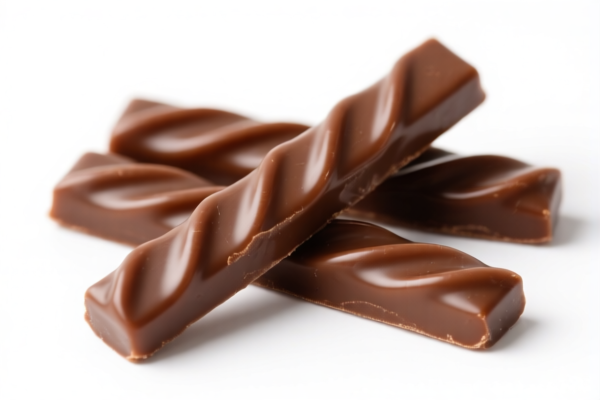
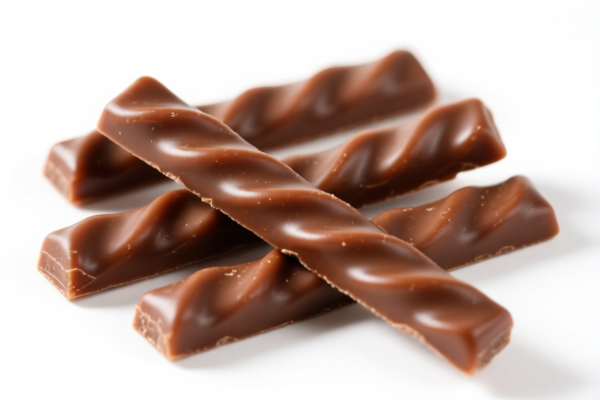
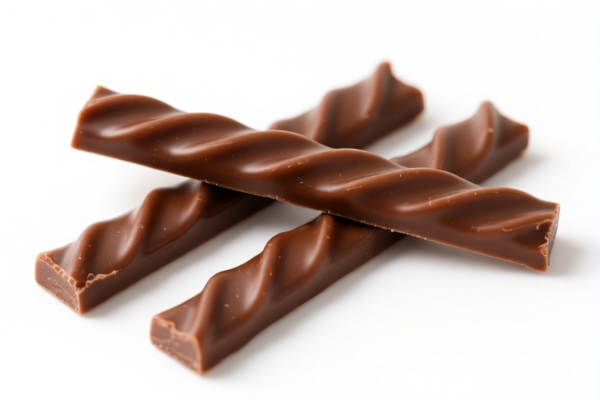
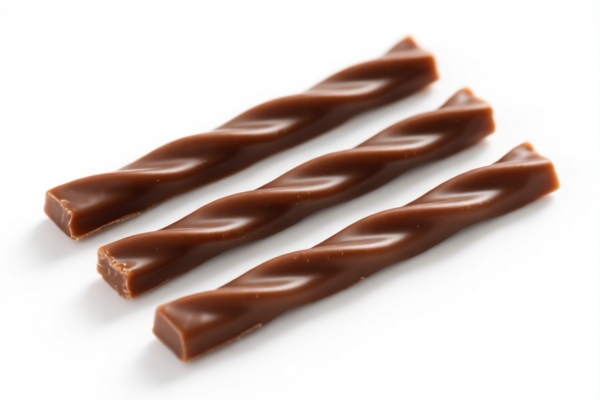
AI Analysis
🍬 Chicle Strips (Chewing Gum Base/Strips)
🌐 HS Code Reference & Customs Clearance Guide | 2026 Latest Tariff Analysis | Professional Clearance Strategy
📌 I. Product Definition & Classification: Do You Really Understand "Chicle Strips"?
Chicle Strips, commonly known as chewing gum strips, are flexible, chewable food products derived from chicle (a natural latex) or synthetic gum bases. In international trade, their classification depends heavily on composition (presence of cocoa/sugar) and processing level (basic candy vs. complex food preparation).
Key Distinctions: * Pure Chicle/Sugar Candy: If primarily sugar/chicle without cocoa, it falls under Chapter 17. * Complex Food Preparation: If heavily processed with additives, flavors, or other non-sugar bases, it may fall under Chapter 21. * Cocoa Content: If cocoa is a significant ingredient, it falls under Chapter 18.
⚠️ Critical Differentiation Point:
- If the product is essentially sugar/chicle with no cocoa → 1704.90
- If it is a complex food mix not elsewhere specified → 2106.90
- If it contains cocoa as a base ingredient → 1806.90
📦 II. HS Code Classification Details (2026 Latest Tariff Authority Match)
Based on the provided data, here are the five potential HS Codes for Chicle Strips, ranging from low-risk food preparations to high-tax candy classifications.
| HS Code | Product Description | Matching Basis (Logic) | Total Tax Rate |
|---|---|---|---|
1704.90.35.50 |
Sugar Confectionery, Not Containing Cocoa | Matches "ready-to-eat candy" material attributes; retail packaged; inferred as other candies without cocoa conflict. | 40.6% |
2106.90.99.98 |
Food Preparations N.E.S. | Chewing gum is a food preparation; inferred as a general "other" food prep category (not beverage/cream/sweetener specific). | 16.4% |
2106.90.39.00 |
Other Sugar Preparations/Confectionery | Fits "tablet/sugar product" shape; no material conflict; classified under other unlisted food products. | 10.0% |
1806.90.90.19 |
Other Chocolate/Cocoa Confectionery | Inferred as chewable food with sugar; fits "other confectionery" under Chapter 18; no cocoa conflict noted. | 23.5% |
1806.90.90.90 |
Other Chocolate/Cocoa Preparations | Inferred as chocolate/cocoa-based candy; fits "other" sub-category under chocolate products; no peanut/conflict. | 23.5% |
🔍 Key Insight:
- The lowest tax rate (10.0%) comes from 2106.90.39.00, but this requires strict adherence to the definition of "sugar preparations" without triggering higher cocoa/tax brackets.
- The highest tax rate (40.6%) applies if classified strictly as sugar confectionery without cocoa due to Section 301 & 122 tariffs.
- Misclassification Risk: Declaring as "Chicle" (natural) might push it toward 2106, but if it contains added sugars and flavors, customs may reclassify it as 1704 or 1806.
💰 III. 2026 Latest Tariff Rate Breakdown (Including Surtaxes & Policy Surcharges)
✅ Applicable Country: United States (US)
✅ Origin: China (CN)
✅ Effective Date: 2025/2026 (Current Trade Policy)
🎯 1. 1704.90.35.50 —— Sugar Confectionery, Not Containing Cocoa
High-Tax Category – Be Aware!
| Item | Content |
|---|---|
| Base Tariff | 5.6% (ad valorem) |
| Section 301 Surcharge | +25.0% (Trade Remedy Tariff) |
| Section 122 Surcharge | +10.0% (Emergency Import Surcharge) |
| Total Rate | 40.6% |
| Tax Calculation | CIF Value × 40.6% |
| De Minimis Exemption | ❌ Not Applicable (High tariff goods excluded from $800 de minimis) |
| Legal Basis Path | HTSUS:1704.90.35.50 → Section 301 Footnote → Section 122 Authority |
📌 Explanation:
- 40.6% is a very high effective duty for confectionery.
- This applies if the product is deemed standard sugar candy without cocoa.
- Risk: High cost impact on profit margins; must be factored into pricing.
🎯 2. 2106.90.99.98 —— Food Preparations N.E.S.
Moderate Tax Category
| Item | Content |
|---|---|
| Base Tariff | 6.4% |
| Section 301 Surcharge | 0.0% (Some 2106 items exempt or lower rate) |
| Section 122 Surcharge | +10.0% |
| Total Rate | 16.4% |
| Tax Calculation | CIF Value × 16.4% |
| De Minimis Exemption | ❌ Not Applicable |
| Legal Basis Path | HTSUS:2106.90.99.98 → Section 122 Authority |
📌 Note:
- 16.4% is significantly lower than 40.6%.
- Requires strong justification that the product is a complex food preparation rather than simple sugar candy.
- Suitable for gum with complex bases, flavors, and textures.
🎯 3. 2106.90.39.00 —— Other Sugar Preparations
Lowest Tax Category – Preferred if Eligible
| Item | Content |
|---|---|
| Base Tariff | 0.0% |
| Section 301 Surcharge | 0.0% |
| Section 122 Surcharge | +10.0% |
| Total Rate | 10.0% |
| Tax Calculation | CIF Value × 10.0% |
| De Minimis Exemption | ❌ Not Applicable |
| Legal Basis Path | HTSUS:2106.90.39.00 → Section 122 Authority |
📌 Note:
- 10.0% is the most cost-effective classification.
- Applies if the product fits "other sugar preparations" but not standard candy.
- Challenge: Customs may scrutinize whether it truly fits here vs. 1704.
🎯 4. & 5. 1806.90.90.19 / 1806.90.90.90 —— Other Chocolate/Cocoa Confectionery
Medium-High Tax Category
| Item | Content |
|---|---|
| Base Tariff | 6.0% |
| Section 301 Surcharge | +7.5% |
| Section 122 Surcharge | +10.0% |
| Total Rate | 23.5% |
| Tax Calculation | CIF Value × 23.5% |
| De Minimis Exemption | ❌ Not Applicable |
| Legal Basis Path | HTSUS:1806.90.90.xx → Section 301 → Section 122 |
📌 Note:
- 23.5% is moderate but higher than 10.0% or 16.4%.
- Applies if cocoa is present.
- Useful if the product has a chocolate-like profile or significant cocoa content.
🛠️ IV. Customs Clearance Practical Advice (Battle-Tested Pitfall Guide)
✅ 1. Essential Documentation Checklist (Mandatory)
| Document | Must Provide | Description |
|---|---|---|
| ✅ Product Specification Sheet | ✔️ | Ingredients list, chicle/sugar/cocoa ratio, additives |
| ✅ Ingredient Declaration | ✔️ | Detailed breakdown to determine HS Code (Sugar vs. Cocoa vs. Prep) |
| ✅ Product Photos | ✔️ | Clear image of packaging, label, and product form (strip) |
| ✅ Commercial Invoice | ✔️ | Accurate description: "Chicle Strips, Chewing Gum, Sugar Base" |
| ✅ Certificate of Origin | ✔️ | If not China-origin, to check for FTA benefits |
| ✅ FDA Registration | ✔️ | Mandatory for food imports into the US |
| ✅ Prior Notice to FDA | ✔️ | Required before shipment arrival |
✅ 2. Declaration Strategy (Key Mantra)
🔥 "Base Matters: Sugar=1704, Prep=2106, Cocoa=1806. Choose Wisely!"
| Scenario | Correct Declaration | Wrong Practice |
|---|---|---|
| Pure Chicle/Sugar Gum | 1704.90.35.50 (40.6%) |
Misdeclare as "Food Prep" → Risk of Rejection + Penalties |
| Complex Flavor/Textured Gum | 2106.90.99.98 (16.4%) or 2106.90.39.00 (10.0%) |
Declare as "Chocolate" → 23.5% or Audit |
| Chocolate-Flavored/Coated | 1806.90.90.xx (23.5%) |
Declare as "Sugar Candy" → 40.6% (Higher!) |
| Natural Chicle Base | 2106.90.39.00 (10.0%) |
If customs disagrees → Back to 1704 or 2106.99 |
📌 Pro Tip:
- If the product is 100% chicle and sugar with minimal additives, customs may prefer 1704.
- If it has complex formulations (gum base, flavorings, softeners), 2106 is more defensible.
- Always provide ingredient lists to justify the chosen HS Code.
✅ 3. Special Cases & Handling
| Situation | Handling Advice |
|---|---|
| OEM/Private Label | Provide client order + design specs to prove commercial nature |
| Sample vs. Commercial | Samples may qualify for de minimis if < $800, but high tariff codes (like 1704) may still attract duty if deemed "commercial intent" |
| Natural vs. Synthetic Gum | Natural chicle may support 2106 (food prep); synthetic may lean toward 1704 (sugar candy) |
| Allergen Warning | If contains peanuts/tree nuts, ensure FDA labeling compliance; may affect classification if "mixed" |
🌍 V. Global Market Comparison (2026 Update)
| Country/Region | Recommended HS Code | Tariff Rate | Certification | Notes |
|---|---|---|---|---|
| 🇺🇸 USA | 2106.90.39.00 |
10.0% | FDA | Best rate if eligible; avoid 1704 if possible |
| 🇨🇳 China | 1704.90.00.00 |
5% | CCC/GB | No Section 301; lower cost |
| 🇪🇺 EU | 1704.90.00 |
8-12% | CE/FDA | Varies by country; no US-style surtaxes |
| 🇬🇧 UK | 1704.90.00 |
10% | FSA | Post-Brexit tariffs apply |
| 🇯🇵 Japan | 1704.90.00 |
3.5% | FSA | Low duty; no major surcharges |
📌 Conclusion:
- USA is the most challenging market due to Section 301 & 122 tariffs.
- China-origin goods face 10-40.6% depending on classification.
- EU/Japan offer more favorable rates for confectionery.
📌 VI. Common Errors & Pitfalls (Blood Lessons)
❌ Error 1: Declaring all gum as 2106 to avoid 1704 tariffs
👉 Consequence: Customs audits may reclassify to 1704 → Back duties + Penalties
❌ Error 2: Ignoring FDA Requirements
👉 Consequence: Shipment held at border → Deportation or Destruction
❌ Error 3: Mislabeling "Chicle" as "Cocoa" to force 1806
👉 Consequence: 23.5% tariff; if caught, fraud penalties
❌ Error 4: Using "Candy" for complex gum
👉 Consequence: 40.6% tariff; better to use 2106 if justified
✅ Correct Practice:
"Chicle Strips, Chewing Gum, Sugar & Chicle Base, Flavor: Mint, Packaged for Retail, FDA Registered, Model XYZ"
🎯 VII. Conclusion: Smart Classification Saves Money!
🎯 Remember the Mantra:
🔹 "Sugar=40%, Prep=10%, Cocoa=23%. Choose Right, Pay Less!"
🔹 "FDA is Mandatory, HS Code is Critical, Declaration Must Be Precise!"
📌 Pro Tip:
- If your chicle strips are from Vietnam, Mexico, or Thailand, you may qualify for IEEPA/USMCA exemptions → 0-5% tariff.
- Recommendation: Apply for a Customs Ruling before shipment to lock in the 10.0% or 16.4% rate.
- Always provide ingredient breakdowns to customs to support your HS Code choice.
📣 Immediate Action:
📞 Contact a licensed customs broker + Provide ingredient list + Apply for FDA Prior Notice
🚀 Ensure smooth clearance, cost efficiency, and compliance for your Chicle Strips!
✨ Professional Clearance, Starting with Accurate Classification!
💼 Every Cent of Duty Counts in Confectionery Trade!
Customer Reviews
About HS Code Classification
The Harmonized System (HS) is an internationally standardized nomenclature developed by the World Customs Organization (WCO) to classify traded products. Over 200 countries use the HS system as the basis for customs tariffs, trade statistics, and import/export regulations.
Each HS code follows a hierarchical structure:
- Chapter (2 digits) — Broad category of goods (e.g., Chapter 84: Machinery and Mechanical Appliances)
- Heading (4 digits) — More specific grouping within the chapter
- Subheading (6 digits) — Internationally standardized breakdown, used by all WCO member countries
- National subdivisions (8-10 digits) — Country-specific extensions for further classification, such as US HTSUS 10-digit codes
Correct HS code classification is essential for smooth customs clearance, accurate duty payment, and compliance with trade regulations. Misclassification can lead to customs delays, overpayment of duties, or penalties.
When importing from CN to US, the applicable tariff rates may include:
- Most-Favored-Nation (MFN) rate — The standard duty rate applied to WTO members
- General rate — Applied to countries without trade agreements
- Trade remedy duties — Additional tariffs such as Section 301 (anti-dumping), Section 232 (national security), or countervailing duties
The information provided on this page is for reference purposes only. For official classification, please consult with your local customs authority or a licensed customs broker.