Childrens Tablet
CN → US| HS Code | Tariff Rate | Origin | Destination | Doc |
|---|---|---|---|---|
| 8471410150 | 17.5% | CN | US | Official Doc |
| 8471300100 | 10.0% | CN | US | Official Doc |
| 8517620090 | 35.0% | CN | US | Official Doc |
| 8517690000 | 35.0% | CN | US | Official Doc |
Product Images
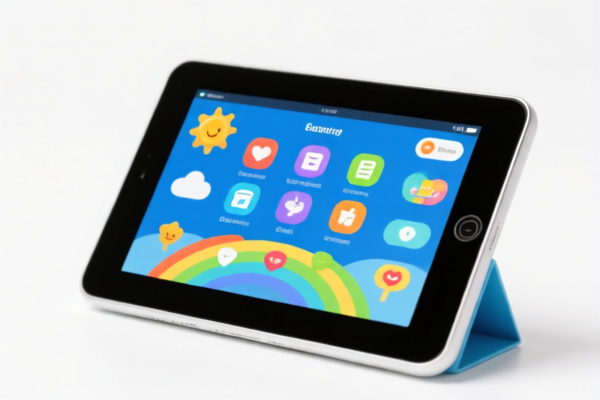
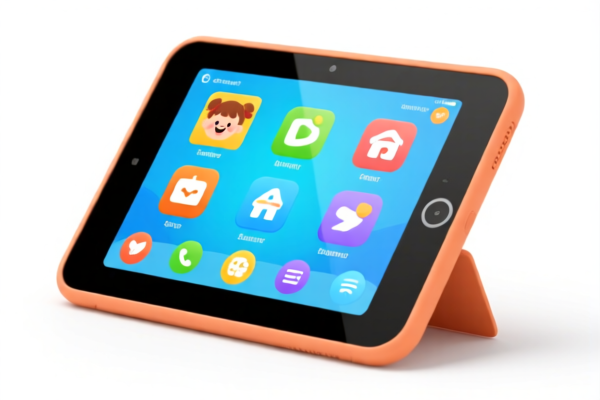
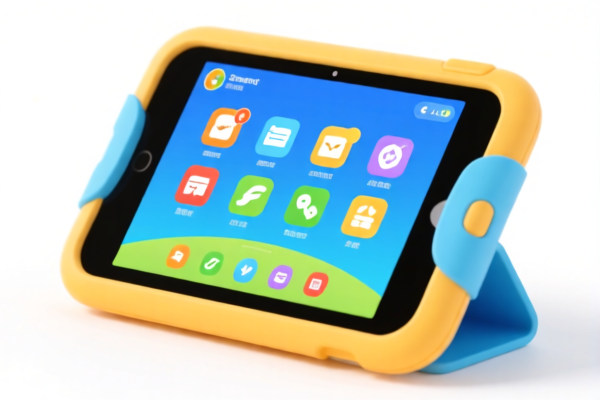

AI Analysis
🎒 Kids' Tablet (Children's Tablets)
🌐 HS Code Reference & Customs Clearance Guide | 2026 Latest Tariff Analysis | Professional Strategy for Cross-Border E-Commerce
📌 1. Product Definition: What Makes a "Children's Tablet" Unique?
A Children's Tablet is not merely a "smaller iPad." In international trade classification, its HS Code depends heavily on its functional core and physical form, not just its marketing label ("kids-safe," "educational," or "durable").
However, customs authorities look at the primary function: - Is it an Automatic Data Processing (ADP) Machine? → If it has a CPU, memory, and operates like a computer (Android/iOS based). - Is it a Communication/Data Transmission Device? → If its primary purpose is receiving/transmitting data (e.g., some simplified smart tablets). - Is it a Toy? → If it lacks computing capabilities and only plays pre-loaded media.
⚠️ Critical Distinction for US Imports:
The US Customs and Border Protection (CBP) has tightened scrutiny on "Tablets" originating from China. Even if marketed as "for kids," if it functions as a standard tablet (running Android/iOS, connecting to Wi-Fi, processing data), it is generally classified as an ADP Machine or Data Transmission Device, exposing it to Section 301 (Trade War) and Section 122/IEEPA tariffs.
📦 2. HS Code Classification Details (2026 Latest Tariff Alignment)
Below are the four possible classifications for a Children's Tablet, based on the provided data. The correct choice depends on the specific hardware configuration and primary use case declared.
| HS Code | Product Description | Total Tax Rate | Tax Breakdown (China Origin) |
|---|---|---|---|
8471.41.01.50 |
Integrated ADP Machine Tablet form factor: CPU, Touchscreen (Input), Display (Output) in one case. |
17.5% | Base: 0% Sec 301: 7.5% Sec 122/IEEPA: 10% |
8471.30.01.00 |
Portable ADP Machine Weighs <10kg, portable, fits in one housing. |
10.0% | Base: 0% Sec 301: 0% Sec 122/IEEPA: 10% |
8517.62.00.90 |
Data Transmission Device Used for receiving/transmitting voice, image, or data. |
35.0% | Base: 0% Sec 301: 25% Sec 122/IEEPA: 10% |
8517.69.00.00 |
Other Data Transmission Equipment General electronic device for data transfer/reception. |
35.0% | Base: 0% Sec 301: 25% Sec 122/IEEPA: 10% |
🔍 Key Insight:
-8471.41.01.50is the most common classification for standard Android/iOS-based kids' tablets because they are essentially mini-computers with integrated input/output.
-8471.30.01.00may apply if the device is deemed a "Portable Data Processing Unit" without the full integrated peripheral definition of 8471.41, but this is less common for modern touchscreens.
-8517.xxxxxxcodes are risky. They apply if the tablet is primarily seen as a communication tool (like a specialized smart device for remote learning/monitoring) rather than a general-purpose computer. Note the high tariff (35%)!
💰 3. Tariff Rate Breakdown (USA - China Origin)
🎯 Option 1: 8471.41.01.50 (Most Likely for Standard Kids' Tablets)
| Item | Detail |
|---|---|
| Product | Tablet PC (Integrated CPU, Touchscreen, Display) |
| Base Duty | 0.0% |
| Section 301 (Trade War) | 7.5% |
| Section 122 / IEEPA | 10.0% |
| Total Effective Rate | 17.5% |
| De Minimis Exemption ($800) | ❌ NOT ELIGIBLE Due to Section 301 and IEEPA exclusions, most children's tablets from China do not qualify for the $800 de minimis exemption under Section 321. Full duties apply. |
🎯 Option 2: 8471.30.01.00 (Portable ADP)
| Item | Detail |
|---|---|
| Product | Portable Automatic Data Processing Machine (<10kg) |
| Base Duty | 0.0% |
| Section 301 | 0.0% (Note: Some interpretations vary, but data shows 0%) |
| Section 122 / IEEPA | 10.0% |
| Total Effective Rate | 10.0% |
| De Minimis Exemption ($800) | ❌ NOT ELIGIBLE IEEPA 10% usually blocks de minimis. |
🎯 Option 3 & 4: 8517.62.00.90 / 8517.69.00.00 (Communication Devices)
| Item | Detail |
|---|---|
| Product | Data Transmission/Reception Device |
| Base Duty | 0.0% |
| Section 301 | 25.0% |
| Section 122 / IEEPA | 10.0% |
| Total Effective Rate | 35.0% |
| De Minimis Exemption ($800) | ❌ NOT ELIGIBLE Highly restricted. |
📌 Critical Warning:
- Section 122/IEEPA (10%) is currently applied to all Chinese-made electronics, including tablets, regardless of the base HS code.
- Section 301 rates vary: 7.5% for ADP machines (8471), but 25% for communication devices (8517).
- Result: Expect to pay 17.5% - 35% duty. Do not rely on de minimis ($800) for individual packages. Bulk shipments will definitely require formal entry and duty payment.
🛠️ 4. Customs Clearance Practical Advice (Avoiding Delays & Penalties)
✅ 1. Essential Documentation
| Document | Requirement | Why? |
|---|---|---|
| Product Specifications | Must clearly state: CPU, RAM, Storage, Operating System (Android/iOS), Screen Size, Weight. | To prove it is an ADP Machine (8471) and not a toy. |
| Photos | Clear images of the device powered on (showing the OS interface) and the back label. | CBP needs to see it's a functional computer, not a static toy. |
| Commercial Invoice | Must describe as "Kids' Educational Tablet Computer" or "Portable Touchscreen Computer for Children". Avoid vague terms like "Toy" or "Gadget." | Misclassification as a "Toy" (9503) could lead to penalties if it's actually an ADP machine. |
| FCC Certification | Mandatory for all wireless devices in the US. | No FCC ID = Seizure or Return. |
| CPSIA Compliance | Proof that the device meets Children's Product Safety rules (lead, phthalates, etc.). | Required for customs entry of children's products. |
✅ 2. Declaration Tips (Keywords Matter)
🔥 Golden Rule: Declare it as a Computer, Not a Toy.
If you declare it as a "Toy" (HS 9503), CBP will likely reclassify it as a Tablet Computer (HS 8471) and assess 17.5% duties + penalties.
| ✅ Correct Declaration | ❌ Incorrect Declaration |
|---|---|
| "Android-Based Children's Tablet Computer, 10-inch Touchscreen, Wi-Fi Enabled" | "Children's Educational Toy Tablet" |
| "Portable Automatic Data Processing Machine for Kids" | "LCD Display Device" |
| "Smart Tablet for Children, Running Android OS" | "Gadget" or "Electronic Device" |
✅ 3. Special Scenarios
| Scenario | Recommendation |
|---|---|
| Pre-loaded Educational Apps | Still an ADP Machine. The software doesn't change the hardware classification. |
| No Operating System (Bootloader Only) | Risky. CBP may classify as "Parts" or "Equipment," leading to higher duties or delays. Always ship with OS. |
| Gifts Under $800 | ❌ Do Not Use De Minimis. Section 301/122 exclusions mean these are not exempt. Declare formally. |
| Bulk Import (B2B) | Use Bonded Warehouses or Importer of Record services. Consider Section 301 Exclusions if applicable (check USTR lists). |
🌍 5. Global Market Comparison (2026)
| Market | HS Code | Duty Rate | Key Requirement |
|---|---|---|---|
| 🇺🇸 USA | 8471.41.01.50 |
17.5% | FCC, CPSIA, Formal Entry |
| 🇪🇺 EU | 8471.41.00.00 |
0% - 4% | CE, RoHS, WEEE, GDPR (Data Privacy) |
| 🇨🇳 China | 8471.41.01.50 |
0% - 13% | CCC Certification (if applicable) |
| 🇬🇧 UK | 8471.41.00.00 |
0% - 4% | UKCA, RoHS |
📌 Conclusion:
- USA is the most expensive market due to Section 301 & IEEPA tariffs.
- EU/UK focus on Safety & Data Privacy (GDPR) rather than high tariffs.
- For US imports, accurate classification under 8471 is critical to avoid overpaying or underpaying (which leads to audits).
📌 6. Common Mistakes & Pitfalls (Learn from Others!)
❌ Mistake 1: Declaring a tablet as a "Toy" to avoid duties.
👉 Result: CBP reclassifies it as ADP (8471), assesses 17.5% duty + penalty.
👉 Fix: Always declare as "Tablet Computer."
❌ Mistake 2: Ignoring the 122/IEEPA 10% tariff.
👉 Result: Underpayment. CBP will audit and demand back duties + interest.
👉 Fix: Budget for at least 10% extra for IEEPA tariffs on all Chinese electronics.
❌ Mistake 3: Using De Minimis ($800) for bulk shipments.
👉 Result: Shipments seized. Section 301/122 items are excluded from de minimis.
👉 Fix: Use formal entry for all shipments over $800, or even single packages if high-value.
❌ Mistake 4: Missing FCC ID.
👉 Result: Device confiscated at port.
👉 Fix: Ensure every unit has a visible FCC ID and compliance statement.
🎯 7. Conclusion: Smart Sourcing for Kids' Tablets
🎯 Key Takeaway:
🔹 Children's Tablets are Computers, Not Toys.
🔹 USA Duties: 17.5% (Standard) or 35% (High Risk).
🔹 No De Minimis Exemption.
🔹 FCC + CPSIA are Mandatory.
📌 Pro Tip:
If you are importing large volumes, consider:
1. Section 301 Exclusion Application: Check if your specific model qualifies for exclusion.
2. Supply Chain Diversification: Source from Vietnam, India, or Mexico to avoid US-China tariffs (but verify Country of Origin rules).
3. Pre-Arrival Review Program (PARP): Work with a customs broker to get a binding ruling on your HS Code before shipping.
📣 Immediate Action Required:
📞 Consult a Customs Broker to classify your specific model under
8471.41.01.50or8471.30.01.00.
📋 Ensure FCC & CPSIA Compliance is documented.
💰 Factor in 17.5% - 35% duty in your cost calculation.
🚀 Avoid "Toy" declarations to prevent penalties.
✨ Accurate Classification Saves Money.
💼 Clear Documentation Ensures Smooth Clearance.
Customer Reviews
About HS Code Classification
The Harmonized System (HS) is an internationally standardized nomenclature developed by the World Customs Organization (WCO) to classify traded products. Over 200 countries use the HS system as the basis for customs tariffs, trade statistics, and import/export regulations.
Each HS code follows a hierarchical structure:
- Chapter (2 digits) — Broad category of goods (e.g., Chapter 84: Machinery and Mechanical Appliances)
- Heading (4 digits) — More specific grouping within the chapter
- Subheading (6 digits) — Internationally standardized breakdown, used by all WCO member countries
- National subdivisions (8-10 digits) — Country-specific extensions for further classification, such as US HTSUS 10-digit codes
Correct HS code classification is essential for smooth customs clearance, accurate duty payment, and compliance with trade regulations. Misclassification can lead to customs delays, overpayment of duties, or penalties.
When importing from CN to US, the applicable tariff rates may include:
- Most-Favored-Nation (MFN) rate — The standard duty rate applied to WTO members
- General rate — Applied to countries without trade agreements
- Trade remedy duties — Additional tariffs such as Section 301 (anti-dumping), Section 232 (national security), or countervailing duties
The information provided on this page is for reference purposes only. For official classification, please consult with your local customs authority or a licensed customs broker.