Chlorinated Paraffin Coating Additive
CN → US| HS Code | Tariff Rate | Origin | Destination | Doc |
|---|---|---|---|---|
| 3812205000 | 40.0% | CN | US | Official Doc |
| 2903196050 | 40.5% | CN | US | Official Doc |
| 2903191000 | 38.7% | CN | US | Official Doc |
| 3824890000 | 41.5% | CN | US | Official Doc |
| 3824995000 | 41.5% | CN | US | Official Doc |
Product Images


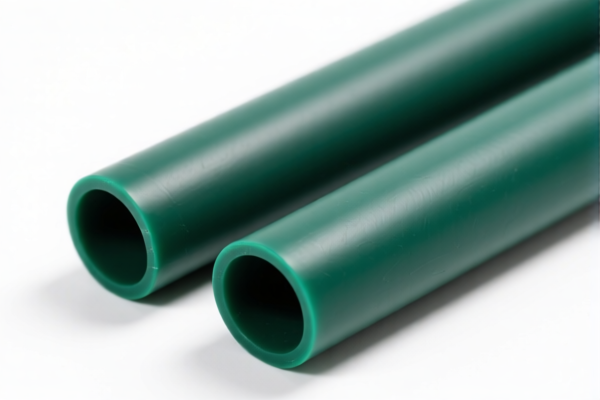
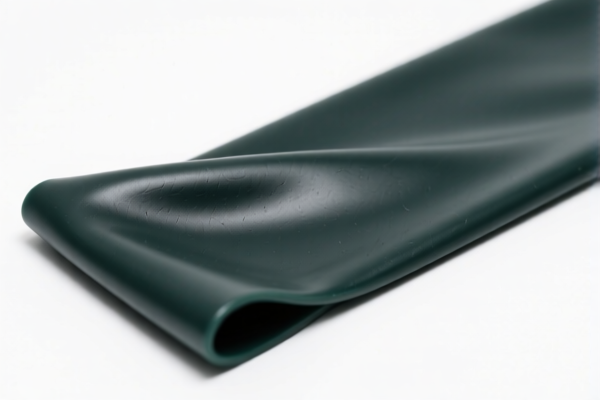
AI Analysis
🧪 Chlorinated Paraffin Coating Additive
🌐 HS Code Reference & Customs Clearance Guide | 2026 Latest Tariff Analysis | Professional Clearance Strategy
📌 Part I: Product Definition & Classification: What Exactly is "Chlorinated Paraffin" in International Trade?
Chlorinated Paraffin (CP) is a widely used chemical intermediate and additive, primarily derived from the chlorination of paraffin wax. In the context of Coating Additives, it serves specific functions depending on its molecular weight and chlorine content:
Short-Chain Chlorinated Paraffins (SCCPs):
Characteristics: High chlorine content, high volatility, and high toxicity.
Status: Banned or severely restricted globally under the Stockholm Convention due to environmental persistence and bioaccumulation.
Risk: Strictly Prohibited* in most Western markets. If detected, shipments face immediate rejection or destruction.
Medium-Chain (MCCPs) & Long-Chain Chlorinated Paraffins (LCCPs):
Characteristics: Lower volatility, used as plasticizers, flame retardants, and anti-corrosion agents in coatings, lubricants, and adhesives.
Status: Heavily scrutinized. While not fully banned like SCCPs, they face strict regulatory thresholds (e.g., EU REACH restrictions) and high anti-dumping/countervailing duties in specific jurisdictions (notably the US and EU).
⚠️ Key Distinction Point:
- If the product is a pure chemical derivative used as a raw material → Often classified under Chapter 29 (Organic Chemicals) or Chapter 38 (Miscellaneous Chemical Products).
- If it is a formulated preparation specifically designed for textile, rubber, or plastic processing → Often classified under Chapter 38 (Preparations for Chemical Processing).
- Critical Note: Misclassification between "Chemical Derivative" (Ch 29) and "Preparation/Product" (Ch 38) leads to significant tariff differences and customs delays.
📦 Part II: HS Code Classification Details (Based on Provided Data)
The following HS Codes are derived from the specific scenarios of Chlorinated Paraffin usage, focusing on its chemical nature versus its industrial application as an additive.
| HS Code | Product Description (Based on Input Data) | Application Context | Classification Logic |
|---|---|---|---|
2903.19.10.00 |
Chlorinated Paraffin as Halogenated Hydrocarbon Derivative | Chemical Intermediate / Raw Material | Recognizes CP as a derivative of hydrocarbons where chlorine replaces hydrogen. Lowest base duty among chemical options. |
3812.20.50.00 |
Chlorinated Paraffin as Textile/Plastic Processing Aid | Additive for Textiles or Plastics | Classified as a "Composite Plasticizer" or "Processing Aid." Focuses on its function in fabric or polymer manufacturing rather than pure chemistry. |
2903.19.60.50 |
Chlorinated Paraffin as General Chemical Additive | General Chemical Additive | Treated as a "Halogenated Derivative of Hydrocarbons" not specifically enumerated elsewhere. Broader chemical classification. |
3824.89.00.00 |
Chlorinated Paraffin as Unspecified Chemical Product | Industrial Chemical Preparation | Classified under "Miscellaneous Chemical Products." Suitable if the CP is part of a complex formulation not fitting specific additive codes. |
3824.99.50.00 |
Chlorinated Paraffin as Chlorinated (Non-Halogenated Other Elements) | Industrial Chemical Formulation | Focuses on the chemical structure: Chlorinated hydrocarbon without other specific halogens. Broad "Other" category for chemical preparations. |
🔍 Key Reminder:
- Chapter 29 Codes (2903...) imply a pure or near-pure chemical substance.
- Chapter 38 Codes (3812...,3824...) imply a mixture, preparation, or functional additive.
- Customs Authorities often scrutinize Chapter 38 classifications to ensure the product isn't simply a bulk chemical sold under a fancy name to evade higher specific duties.
💰 Part III: 2026 Latest Tariff Rate Breakdown (Including Surcharges)
✅ Applicable Country: United States (US)
✅ Origin: China (CN)
✅ Effective Time: Ongoing (Subject to Section 301 and IEEPA updates)
🎯 1. 2903.19.10.00 – Halogenated Hydrocarbon Derivative (Lowest Base Duty)
| Item | Detail |
|---|---|
| Base Duty | 3.7% (Ad valorem) |
| Section 301 Surcharge | +25% (USITC Footnote) |
| Section 122 / IEEPA Surcharge | +10% (Targeted on specific Chinese chemical inputs) |
| Total Tariff Rate | 38.7% |
| Tax Calculation | CIF Value × 38.7% |
| De Minimis Eligibility | ❌ No (Value exceeds $800 threshold, and subject to high tariffs) |
| Legal Basis Path | HTSUS:2903.19.10.00 → USITC:301_List3 → IEEPA:122_Clause |
📌 Explanation:
- This code offers the lowest base duty (3.7%) among the options.
- However, the 35% in surcharges (25% + 10%) make the total burden extremely high.
- Strategy: Use only if the product is definitively a pure chemical derivative and can prove it doesn't fall under specific "processing aid" definitions.
🎯 2. 3812.20.50.00 – Textile/Plastic Processing Aid
| Item | Detail |
|---|---|
| Base Duty | 5.0% (Ad valorem) |
| Section 301 Surcharge | +25% |
| Section 122 / IEEPA Surcharge | +10% |
| Total Tariff Rate | 40.0% |
| Tax Calculation | CIF Value × 40.0% |
| De Minimis Eligibility | ❌ No |
| Legal Basis Path | HTSUS:3812.20.50.00 → USITC:301_List3 → IEEPA:122_Clause |
📌 Explanation:
- Suitable if the CP is explicitly marketed and used as a textile finishing agent or composite plasticizer.
- Slightly higher base duty than2903.19.10.00, but may be more defensible if the product is part of a formulated blend for textiles.
🎯 3. 2903.19.60.50 – General Chemical Additive
| Item | Detail |
|---|---|
| Base Duty | 5.5% (Ad valorem) |
| Section 301 Surcharge | +25% |
| Section 122 / IEEPA Surcharge | +10% |
| Total Tariff Rate | 40.5% |
| Tax Calculation | CIF Value × 40.5% |
| De Minimis Eligibility | ❌ No |
| Legal Basis Path | HTSUS:2903.19.60.50 → USITC:301_List3 → IEEPA:122_Clause |
📌 Explanation:
- A "catch-all" for halogenated derivatives not specified elsewhere.
- Highest base duty among Chapter 29 options. Use only if the product is a pure chemical but doesn't fit the specific "hydrocarbon derivative" niche of2903.19.10.00.
🎯 4. 3824.89.00.00 – Unspecified Chemical Product
| Item | Detail |
|---|---|
| Base Duty | 6.5% (Ad valorem) |
| Section 301 Surcharge | +25% |
| Section 122 / IEEPA Surcharge | +10% |
| Total Tariff Rate | 41.5% |
| Tax Calculation | CIF Value × 41.5% |
| De Minimis Eligibility | ❌ No |
| Legal Basis Path | HTSUS:3824.89.00.00 → USITC:301_List3 → IEEPA:122_Clause |
📌 Explanation:
- For complex mixtures or preparations that don't fit other Chapter 38 subheadings.
- Higher base duty reflects the "miscellaneous" nature. Ensure the product is indeed a preparation (mixed with other solvents/additives) to justify this code.
🎯 5. 3824.99.50.00 – Chlorinated Preparation (Other)
| Item | Detail |
|---|---|
| Base Duty | 6.5% (Ad valorem) |
| Section 301 Surcharge | +25% |
| Section 122 / IEEPA Surcharge | +10% |
| Total Tariff Rate | 41.5% |
| Tax Calculation | CIF Value × 41.5% |
| De Minimis Eligibility | ❌ No |
| Legal Basis Path | HTSUS:3824.99.50.00 → USITC:301_List3 → IEEPA:122_Clause |
📌 Explanation:
- Similar to3824.89.00.00but specifies "Chlorinated" status.
- Use when the product is a chlorinated preparation that doesn't fall under specific plasticizer or textile aid codes.
🛠️ Part IV: Customs Clearance Practical Advice (Real-World Pitfall Guide)
✅ 1. Document Checklist (Mandatory)
| Document | Required | Description |
|---|---|---|
| ✅ Technical Data Sheet (TDS) | ✔️ | Must specify Chlorine Content (%) and Chain Length (SCCP/MCCP/LCCP). Critical for regulatory compliance. |
| ✅ Certificate of Analysis (COA) | ✔️ | Confirms purity and absence of banned SCCPs. |
| ✅ MSDS (SDS) | ✔️ | Section 9 (Physical/Chemical Properties) and Section 3 (Composition) must match HS code justification. |
| ✅ Bill of Lading / Commercial Invoice | ✔️ | Must clearly state "Chlorinated Paraffin" and NOT "Plasticizer" unless justified. |
| ✅ Origin Certificate | ✔️ | Proves origin is China (triggering 301/122 tariffs). |
| ✅ Usage Statement | ✔️ | Explain end-use (e.g., "Used as flame retardant in rubber coatings"). |
✅ 2. Declaration Tips (Key Strategy)
🔥 "Pure vs. Mixed, Chain Length is King!"
| Scenario | Correct HS Code Strategy | Incorrect Action |
|---|---|---|
| Pure CP (LCCP/MCCP) | 2903.19.10.00 (Lowest base duty) |
Declare as 3824 (Higher base duty) without proof of mixture. |
| CP mixed with solvents/additives for Textiles | 3812.20.50.00 |
Declare as pure chemical 2903 → Risk of reclassification + penalties. |
| CP mixed for General Industrial Use | 3824.99.50.00 or 3824.89.00.00 |
Avoid generic "Chemical Additive" without specific subheading. |
| SCCP (Banned) | STOP | Do not declare. Shipment will be seized. |
📌 Note:
- If the product is a simple solution (e.g., CP in mineral spirits), it is still often classified under Chapter 29 if the CP is the essential character, but Chapter 38 if it's a formulated preparation. Consult a customs broker for mixture cases.
✅ 3. Special Handling for US Imports
| Issue | Solution |
|---|---|
| Section 301 Tariffs (25%) | Unavoidable for Chinese origin. Factor into cost model. |
| Section 122 Tariffs (10%) | Applies to specific chemical inputs. Check latest USITC notices. |
| EPA/TSCA Compliance | Chlorinated Paraffins are regulated under TSCA. Ensure Safer Choice or exemption status if required. |
| State-Level Bans (CA, NY, etc.) | Some US states ban MCCPs/SCCPs in products. Verify end-use destination. |
🌍 Part V: Global Market Comparison (2026 Outlook)
| Region | Recommended HS Code | Estimated Total Duty | Key Regulatory Hurdle |
|---|---|---|---|
| 🇺🇸 USA | 2903.19.10.00 |
38.7% | Section 301 + IEEPA. TSCA Compliance. |
| 🇨🇳 China | 2903.19.10.00 |
~5% (Import) | Low tariffs, but strict environmental production standards. |
| 🇪🇺 EU | 2903.19.10.00 |
~5% + REACH | REACH Restriction: MCCPs are restricted to 0.1% in articles. Very strict. |
| 🇬🇧 UK | 2903.19.10.00 |
~5% + UK REACH | Post-Brexit UK REACH aligns closely with EU restrictions. |
| 🇯🇵 Japan | 2903.19.10.00 |
~0-3% | CSCL (Chemical Substances Control Law) registration required. |
📌 Conclusion:
- USA: High tariffs, but clear path if classified correctly.
- EU: Low tariffs but highest regulatory barrier. MCCPs are heavily restricted.
- China: Low import duty, but export restrictions on SCCPs.
📌 Part VI: Common Errors & Pitfalls (Lessons Learned)
❌ Error 1: Declaring MCCPs as LCCPs to avoid EU restrictions.
👉 Consequence: Customs lab testing will reveal chlorine content. Fine + Seizure.
❌ Error 2: Using Chapter 38 for pure chemicals to look like a "preparation."
👉 Consequence: Customs may reject and reclassify to Chapter 29, leading to underpayment of duties if base rates differ, or audit flags.
❌ Error 3: Ignoring Section 122 surcharges.
👉 Consequence: Underestimating landed cost by 10%. Profit margin erodes.
✅ Correct Approach:
"Long-Chain Chlorinated Paraffin (MCCP), Chlorine Content 52%, CAS No. 85536-67-4, for Use as Flame Retardant in Rubber Coatings."
🎯 Part VII: Conclusion: Precision in Classification Saves Money!
🎯 Remember the Golden Rules:
🔹 "Pure Chemicals go to Ch 29; Mixtures go to Ch 38."
🔹 "SCCPs are Dead; MCCPs/LCCPs are Watched."
🔹 "US Tariffs are High (38.7%+); Plan Your Margin."
📌 Pro Tip:
If your Chlorinated Paraffin is destined for the EU, consult a REACH compliance expert before shipping. In the US, apply for an Advance Ruling if the product is a complex mixture to avoid disputes.
📣 Immediate Action:
📞 Contact your customs broker with the CAS Number and Chlorine Content %.
🚀 Get a Pre-Classification Ruling from CBP if the product is a new formulation.
✨ Professional Clearance Starts with Accurate Classification!
💼 Every Percent of Duty Saved is Profit Earned!
Customer Reviews
About HS Code Classification
The Harmonized System (HS) is an internationally standardized nomenclature developed by the World Customs Organization (WCO) to classify traded products. Over 200 countries use the HS system as the basis for customs tariffs, trade statistics, and import/export regulations.
Each HS code follows a hierarchical structure:
- Chapter (2 digits) — Broad category of goods (e.g., Chapter 84: Machinery and Mechanical Appliances)
- Heading (4 digits) — More specific grouping within the chapter
- Subheading (6 digits) — Internationally standardized breakdown, used by all WCO member countries
- National subdivisions (8-10 digits) — Country-specific extensions for further classification, such as US HTSUS 10-digit codes
Correct HS code classification is essential for smooth customs clearance, accurate duty payment, and compliance with trade regulations. Misclassification can lead to customs delays, overpayment of duties, or penalties.
When importing from CN to US, the applicable tariff rates may include:
- Most-Favored-Nation (MFN) rate — The standard duty rate applied to WTO members
- General rate — Applied to countries without trade agreements
- Trade remedy duties — Additional tariffs such as Section 301 (anti-dumping), Section 232 (national security), or countervailing duties
The information provided on this page is for reference purposes only. For official classification, please consult with your local customs authority or a licensed customs broker.