Chlorinated Paraffin Core Binder Formula
CN → US| HS Code | Tariff Rate | Origin | Destination | Doc |
|---|---|---|---|---|
| 3901909000 | 41.5% | CN | US | Official Doc |
| 3824100000 | 41.0% | CN | US | Official Doc |
| 3901302000 | 35.0% | CN | US | Official Doc |
| 3824992900 | 41.5% | CN | US | Official Doc |
| 3506915000 | 37.1% | CN | US | Official Doc |
Product Images
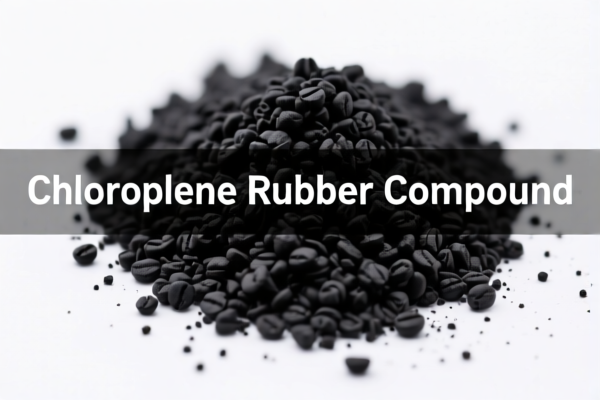
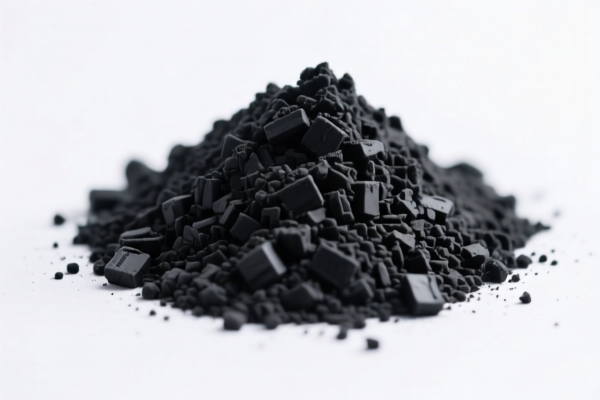
AI Analysis
🧪 Chlorinated Paraffin Core Binder Formula (Casting Adhesive)
🌐 HS Code Classification & Customs Clearance Guide | 2026 Tariff Analysis | Strategic Compliance Strategy
📌 1. Product Definition & Chemical Nature: What is this "Chlorinated Paraffin Binder"?
This product is a formulated binder adhesive primarily composed of chlorinated components. In the context of international trade and customs classification, its nature is ambiguous because it straddles the line between a chemical intermediate (polymer) and a finished formulation (adhesive/mixture).
Key Characteristics: * Primary Ingredient: Chlorinated paraffins (chlorine-rich hydrocarbon chains). * Function: Used as a binder for molding or core-making in foundry applications (casting sand molds/cores). * State: It is a "formulation" (mixture), not a pure chemical substance, but may contain primary shapes of ethylene polymers or vinyl chloride copolymers.
⚠️ Critical Classification Dilemma:
Customs authorities may classify this based on:
1. The Formulation/Binding Function: As a prepared adhesive or chemical mixture (Chapter 38).
2. The Base Polymer: If it is primarily viewed as an ethylene polymer or vinyl chloride copolymer in primary shape (Chapter 39).
3. The Specific Use: As a "modified binder" for casting cores (Chapter 38).
📦 2. HS Code Classification Matrix (2026 Latest Tariff Schedule)
Based on the provided data, here are the 5 potential HS Code classifications, ranging from chemical intermediates to specific formulations.
| HS Code | Classification Description | Key Rationale for Classification | Total Duty Rate (US Import) |
|---|---|---|---|
| 3901.90.90.00 | Other Primary Shapes of Ethylene Polymers | Viewed as a non-specific ethylene polymer category. Contains chlorinated components fitting the "ethylene polymer" description but not specific enough for other sub-headings. | 41.5% |
| 3824.10.00.00 | Prepared Binders for Foundry Molds or Cores | Most Likely Functional Classification. Explicitly matches the use case ("casting mold or core binder"). The "preparation/modification" feature is highlighted. No material conflict. | 41.0% |
| 3901.30.20.00 | Ethylene-Vinyl Acetate-Vinyl Chloride Copolymers | Based on chemical composition. "Chlorinated" implies Vinyl Chloride content. Classified as a specific copolymer in primary shape. | 35.0% |
| 3824.99.29.00 | Other Prepared Binders (Not Elsewhere Specified) | Generic "preparation" classification. Fits the binder attribute and casting use, but falls under "other" because it might not strictly meet the specific definition of 3824.10 in some interpretations. | 41.5% |
| 3506.91.50.00 | Other Adhesives Based on Polymers | Classifies as a general adhesive. "Chlorinated" denotes chemical nature. It is a polymer-based adhesive but not specifically a foundry binder (thus Chapter 35 vs 38). | 37.1% |
💰 3. Detailed Tariff Breakdown (2026 US Import Duties)
✅ Country of Origin: United States (US)
✅ Target Origin: China (CN)
✅ Applicable Laws: Section 301 (USITC) + IEEPA (EO 14038)
🎯 Scenario 1: Misclassification as "Chemical Intermediate" (High Risk)
HS Code: 3901.90.90.00 (Other Ethylene Polymers)
| Item | Detail |
|---|---|
| Base MFN Duty | 6.5% |
| Section 301 Tariff | +25.0% |
| IEEPA Tariff (122 Clause) | +10.0% |
| Total Effective Rate | 41.5% |
| Legal Basis | USITC:3901.90.90.00 + FOOTNOTE:9903.88.01 + IEEPA:9903.01.25 |
⚠️ Risk: If classified as a polymer, you pay 41.5%. If it is actually a "preparation," it should likely be 3824 (41.0%) or potentially lower if a specific copolymer code is used correctly (3901.30.20 at 35.0%).
🎯 Scenario 2: Correct Functional Classification (Best Fit for Use Case)
HS Code: 3824.10.00.00 (Prepared Binders for Foundry Molds)
| Item | Detail |
|---|---|
| Base MFN Duty | 6.0% |
| Section 301 Tariff | +25.0% |
| IEEPA Tariff (122 Clause) | +10.0% |
| Total Effective Rate | 41.0% |
| Legal Basis | USITC:3824.10.00.00 + FOOTNOTE:9903.88.01 + IEEPA:9903.01.25 |
✅ Advantage: Saves 0.5% compared to
3901.90.90.00. More defensible if technical data sheets (TDS) emphasize "foundry core/binder" application.
🎯 Scenario 3: Optimized Chemical Classification (Lowest Duty)
HS Code: 3901.30.20.00 (Ethylene-Vinyl Acetate-Vinyl Chloride Copolymer)
| Item | Detail |
|---|---|
| Base MFN Duty | 0.0% |
| Section 301 Tariff | +25.0% |
| IEEPA Tariff (122 Clause) | +10.0% |
| Total Effective Rate | 35.0% |
| Legal Basis | USITC:3901.30.20.00 + FOOTNOTE:9903.88.01 + IEEPA:9903.01.25 |
🚀 Optimization: This is the lowest duty rate (35.0%).
Condition: Your product must chemically contain Vinyl Acetate and Vinyl Chloride as part of an ethylene copolymer chain. If it is only chlorinated paraffins (alkanes), this classification is incorrect and risky for audit.
🎯 Scenario 4: Generic Adhesive Classification
HS Code: 3506.91.50.00 (Other Adhesives)
| Item | Detail |
|---|---|
| Base MFN Duty | 2.1% |
| Section 301 Tariff | +25.0% |
| IEEPA Tariff (122 Clause) | +10.0% |
| Total Effective Rate | 37.1% |
| Legal Basis | USITC:3506.91.50.00 + FOOTNOTE:9903.88.01 + IEEPA:9903.01.25 |
⚠️ Risk: Foundry binders are specifically covered in Chapter 38 (3824). Using Chapter 35 (General Adhesives) may be challenged if the product is explicitly marketed for casting molds.
🛠️ 4. Customs Clearance Strategy & Recommendations
✅ 1. Documentation Preparation (Mandatory)
| Document | Purpose | Critical Detail |
|---|---|---|
| Technical Data Sheet (TDS) | Proves Chemical Composition | Must list % of Chlorinated Paraffins, Vinyl Chloride, Vinyl Acetate, and other solvents/resins. |
| Statement of Use | Proves Function | Explicitly state: "Used as a binder for foundry molding and core-making in sand casting." |
| Formula/Composition | Supports HS Code | Justifies whether it is a "Polymer" (Ch 39) or a "Preparation" (Ch 38). |
| MSDS | Safety & Classification | Confirm hazard classes; helps customs verify "chlorinated" nature. |
✅ 2. HS Code Selection Strategy
| Goal | Recommended HS Code | Why? |
|---|---|---|
| Lowest Legal Duty | 3901.30.20.00 |
35.0% Total. Only if the formula contains Ethylene-Vinyl Acetate-Vinyl Chloride copolymers. |
| Safest Functional Fit | 3824.10.00.00 |
41.0% Total. Directly matches "Foundry Binder." Hard to dispute if use case is clear. |
| Generic/High Risk | 3901.90.90.00 |
41.5% Total. Avoid unless no other specific polymer code fits. |
🔥 Key Tip:
If your product is purely Chlorinated Paraffin in a solvent, it might not fit3901.30.20.00(which requires Vinyl Acetate/Vinyl Chloride copolymers). In that case,3824.10.00.00is the most defensible "Use-Based" classification.
✅ 3. Common Pitfalls & Avoidance
| Mistake | Consequence | Solution |
|---|---|---|
| Listing as "Chlorinated Rubber" | Wrong Chapter (40 vs 39/38). Customs may reclassify. | Use precise chemical names: "Chlorinated Paraffin" or "Ethylene Copolymer." |
| Ignoring IEEPA 10% | Underpayment of duty. | Always add 10% IEEPA on top of 301 tariffs for China-origin goods. |
| Declaring as "General Adhesive" | Audit risk for misclassification. | If used in foundries, 3824 is preferred over 3506. |
| Splitting Shipments | Customs scrutiny on "avoidance." | Declare full formula in one HS Code. |
🌍 5. Global Market Comparison (2026)
| Region | Recommended HS Code | Est. Total Duty (China Origin) | Notes |
|---|---|---|---|
| 🇺🇸 USA | 3824.10.00.00 or 3901.30.20.00 |
41.0% or 35.0% | Includes 301 (25%) + IEEPA (10%) + Base Duty. |
| 🇨🇳 China | 3824.10.00.00 |
~6-13% | Import duty varies by exact subheading; no US-style Section 301. |
| 🇪🇺 EU | 3824.10.00.00 |
~6.5% | No Section 301/IEEPA equivalents. Standard MFN applies. |
📌 6. Final Recommendation
- Analyze Formula: Does it contain Vinyl Acetate?
- Yes: Argue for
3901.30.20.00(35.0%) – Lowest Cost. - No: Argue for
3824.10.00.00(41.0%) – Safest Use-Case Fit.
- Yes: Argue for
- Documentation: Ensure the Statement of Use explicitly mentions "Foundry Core/Mold Binder."
- Pre-Ruling: If shipment value is high, request a US CBP Binding Ruling to lock in the 35.0% or 41.0% rate and avoid post-entry audits.
🚀 Pro Tip:
"Chlorinated" triggers scrutiny. Ensure your MSDS and TDS are consistent with the HS Code claimed. Mismatched chemical descriptions = Delays + Seizures.
✨ Precision Classification Saves Up to 6.5% in Duties!
💼 Don't let misclassification eat your margins. Audit your formula today.
Customer Reviews
About HS Code Classification
The Harmonized System (HS) is an internationally standardized nomenclature developed by the World Customs Organization (WCO) to classify traded products. Over 200 countries use the HS system as the basis for customs tariffs, trade statistics, and import/export regulations.
Each HS code follows a hierarchical structure:
- Chapter (2 digits) — Broad category of goods (e.g., Chapter 84: Machinery and Mechanical Appliances)
- Heading (4 digits) — More specific grouping within the chapter
- Subheading (6 digits) — Internationally standardized breakdown, used by all WCO member countries
- National subdivisions (8-10 digits) — Country-specific extensions for further classification, such as US HTSUS 10-digit codes
Correct HS code classification is essential for smooth customs clearance, accurate duty payment, and compliance with trade regulations. Misclassification can lead to customs delays, overpayment of duties, or penalties.
When importing from CN to US, the applicable tariff rates may include:
- Most-Favored-Nation (MFN) rate — The standard duty rate applied to WTO members
- General rate — Applied to countries without trade agreements
- Trade remedy duties — Additional tariffs such as Section 301 (anti-dumping), Section 232 (national security), or countervailing duties
The information provided on this page is for reference purposes only. For official classification, please consult with your local customs authority or a licensed customs broker.