Chlorinated Paraffin Sealant
CN → US| HS Code | Tariff Rate | Origin | Destination | Doc |
|---|---|---|---|---|
| 8487900040 | 38.9% | CN | US | Official Doc |
| 8487900080 | 88.9% | CN | US | Official Doc |
| 3506915000 | 37.1% | CN | US | Official Doc |
| 3506990000 | 37.1% | CN | US | Official Doc |
Product Images
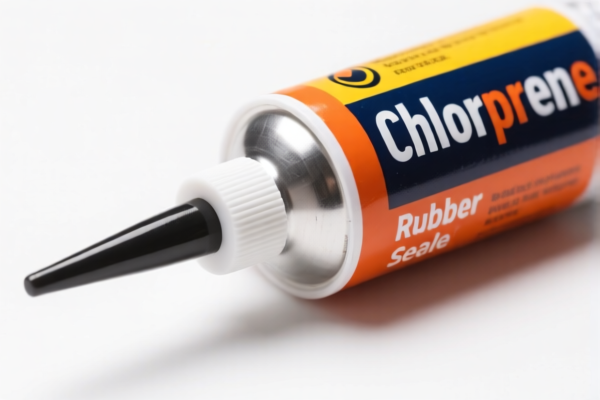
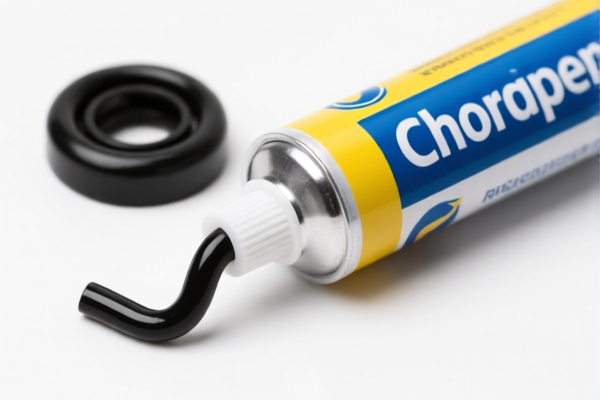
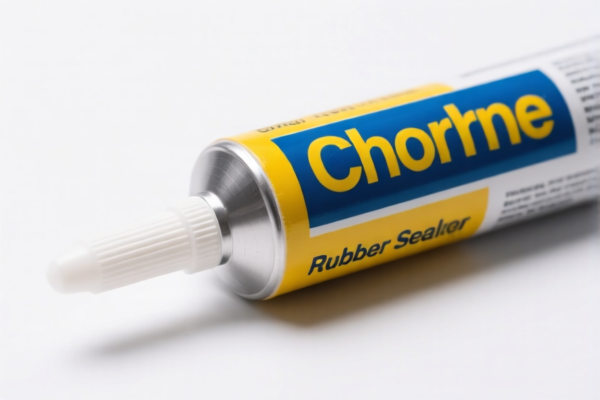
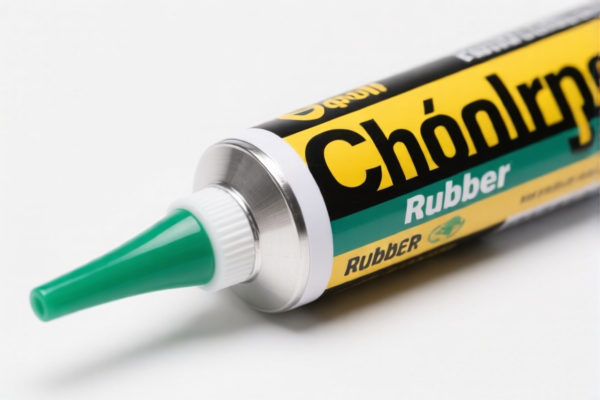
AI Analysis
🛡️ Chlorinated Paraffin Sealant (CP Sealant)
🌐 HS Code Reference & Customs Clearance Guide | 2026 Latest Tariff Analysis | Professional-Level Strategy
📌 I. Product Definition & Classification: What is a "Chlorinated Paraffin Sealant"?
Chlorinated Paraffins (CP) are synthetic chemical compounds derived from paraffin wax by chlorination. When used as a sealant, they are typically formulated as: 1. Prepared Adhesives/Glues: Liquid or paste forms intended to bond or seal materials. 2. Chemical Sealants: Rubber-based or polymer-based compounds used for sealing gaps, joints, or surfaces in industrial applications.
⚠️ Critical Distinction:
- If the product is a pure chemical intermediate (not prepared for retail or specific end-use sealing) → It may fall under Chapter 29 (Organic Chemicals).
- If the product is formulated, mixed, or put up for retail sale as a glue, adhesive, or sealant → It falls under Chapter 35 (Prepared Glues & Adhesives).
- If the product is a mechanical seal component (e.g., an O-ring or lip seal) → It falls under Chapter 84 or 40 (Machinery Parts or Rubber Articles).📌 Key Question for Classification:
Is your "sealant" a chemical substance applied by hand/brush/spray (Glue/Adhesive/Sealant) OR a physical part inserted into machinery?
- Chemical Application → Look at HS 3506.
- Mechanical Part → Look at HS 8487.
📦 II. HS Code Classification Details (2026 Latest Tariff Alignment)
Based on the provided data, we analyze two distinct pathways depending on the physical form and function of the product.
| HS Code | Product Description | Applicable Scenario | Key Determinant |
|---|---|---|---|
3506.91.50.00 |
Prepared glues & adhesives: Other: Adhesives based on polymers (Headings 3901–3913) or rubber: Other | Chemical Sealants/Glues: CP-based adhesives, liquid sealants, retail-packaged bonding agents | Form: Liquid/Paste; Function: Bonding/Sealing via chemical adhesion |
3506.99.00.00 |
Prepared glues & adhesives: Other: Other | General Adhesives: CP-based products not covered by 3506.91 (e.g., non-polymer/rubber based, or non-retail bulk) | Form: Liquid/Paste; Function: General Adhesive/Sealant (Non-Polymer/Rubber Base) |
8487.90.00.40 |
Machinery parts (non-electrical): Other: Oil seals, other than those of Chapter 40 | Mechanical Oil Seals: Physical CP-rubber composite seals used in pumps, engines, or hydraulic systems | Form: Solid Part; Function: Mechanical barrier against oil leakage |
8487.90.00.80 |
Machinery parts (non-electrical): Other: Other | Other Machinery Parts: Non-standard mechanical components made of CP composites | Form: Solid Part; Function: Generic machinery component |
🔍 重点提醒 (Critical Notes):
- Chemical Sealants (3506): If your product is a tube of "Chlorinated Paraffin Sealant" used for construction or manufacturing bonding, it is NOT a machinery part. It is an adhesive.
- Mechanical Seals (8487): If your product is a pre-formed rubber/plastic seal ring (O-ring, lip seal) made with CP rubber, it is a Machinery Part.
- Misclassification Risk: Declaring a liquid sealant as a "machinery part" (8487) will cause customs delays, as HS 8487 explicitly excludes electrical features and requires non-specified machinery parts.
💰 III. 2026 Latest Tariff Rate Breakdown (Including Surtaxes)
✅ Applicable Country: United States (US)
✅ Origin: China (CN)
✅ Effective Time: 2025-11-10 onwards
🎯 1. 3506.91.50.00 —— Chlorinated Paraffin Adhesives (Polymer/Rubber Base)
| Item | Content |
|---|---|
| Basic Tariff | 0.0% (ad valorem) |
| Additional Tariff | 0.0% |
| Total Tariff Rate | 0.0% |
| Tax Calculation | CIF Value × 0% = $0 |
| De Minimis Eligibility | ✅ Yes (if value < $800) |
| Legal Basis | HTSUS: 3506.91.50 → No Footnote 9903 or 9904 surcharge applied |
📌 Explanation:
- This specific subheading for adhesives based on polymers (Headings 3901–3913) or rubber currently enjoys a 0% total tariff in the provided data.
- No Section 301 or IEEPA surcharges are listed for this code in the provided dataset.
- Advantage: This is the most favorable classification if your product is a CP-based adhesive/sealant.
🎯 2. 3506.99.00.00 —— Other Prepared Adhesives (Non-Polymer/Rubber)
| Item | Content |
|---|---|
| Basic Tariff | 2.1% |
| Additional Tariff (Section 301/IEEPA) | +25.0% |
| Total Tariff Rate | 27.1% |
| Tax Calculation | CIF Value × 27.1% |
| De Minimis Eligibility | ❌ No (Deny De Minimis due to >25% surtax) |
| Legal Basis | IEEPA:9903.01.25 → USITC:3506.99.00 → FOOTNOTE:9903.88.01 |
📌 Explanation:
- If your CP sealant is not based on polymers (3901-3913) or rubber, it falls here.
- High Cost: 27.1% total duty.
- De Minimis Blocked: Cannot use Section 321 ($800 exemption) for individual shipments if classified here.
🎯 3. 8487.90.00.40 —— Mechanical Oil Seals (Non-Ch40)
| Item | Content |
|---|---|
| Basic Tariff | 3.9% |
| Additional Tariff (Section 301/IEEPA) | +25.0% |
| Total Tariff Rate | 28.9% |
| Tax Calculation | CIF Value × 28.9% |
| De Minimis Eligibility | ❌ No (Deny De Minimis due to >25% surtax) |
| Legal Basis | IEEPA:9903.01.25 → USITC:8487.90.00.40 |
📌 Explanation:
- If your CP product is a physical seal part (e.g., a rubber O-ring made with CP), it is taxed as a machinery part.
- Note: Even if made of rubber, if it is a "mechanical seal" for machinery, it is not classified under Chapter 40 (Rubber Articles) but under Chapter 84 (Machinery Parts).
🎯 4. 8487.90.00.80 —— Other Machinery Parts (Steel/Aluminum/Copper Components)
| Item | Content |
|---|---|
| Basic Tariff | 3.9% |
| Additional Tariff (Section 301/IEEPA) | +25.0% |
| Steel/Aluminum/Copper Surtax | +50.0% |
| Total Tariff Rate | 78.9% |
| Tax Calculation | CIF Value × 78.9% |
| De Minimis Eligibility | ❌ No |
| Legal Basis | IEEPA:9903.01.25 → USITC:8487.90.00.80 → FOOTNOTE:Steel/Aluminum/Copper |
📌 Explanation:
- Extreme Risk: If your "sealant" part contains steel, aluminum, or copper components (e.g., a metal-reinforced CP seal), it triggers the 50% Steel/Aluminum tariff.
- Total 78.9% is prohibitively high. Avoid this classification if possible.
- Most CP sealants are polymer/rubber-based and do not contain metals, so this code is likely inapplicable unless the product is a complex mechanical assembly.
🛠️ IV. Customs Clearance Practical Advice (Avoid Pitfalls)
✅ 1. Documentation Checklist (Mandatory)
| Document | Must Provide | Explanation |
|---|---|---|
| ✅ Product Technical Data Sheet | ✔️ | Must specify: Chemical Composition (Is it Polymer/Rubber-based? Is it pure CP?), Physical State (Liquid/Solid), Intended Use (Adhesive vs. Mechanical Seal). |
| ✅ Formula/Composition Statement | ✔️ | List % of Chlorinated Paraffins. If >80% polymers (3901-3913), argue for 3506.91.50.00. |
| ✅ Product Photos | ✔️ | Show packaging. If retail-sized (<1kg), note "Retail Sale". |
| ✅ Safety Data Sheet (SDS) | ✔️ | Required for chemical imports. Confirms it is a "Prepared Adhesive" or "Chemical". |
| ✅ Commercial Invoice | ✔️ | Describe as: "Chlorinated Paraffin Based Adhesive, Liquid Form, for Industrial Bonding" (for 3506) OR "Synthetic Rubber Oil Seal, Mechanical Part" (for 8487). |
✅ 2. Classification Strategy (Key Decision Matrix)
| Your Product Type | Recommended HS Code | Why? |
|---|---|---|
| Liquid/Gel CP Sealant in tubes/tins | 3506.91.50.00 |
0% Duty. Classify as adhesive based on polymer/rubber. |
| Bulk CP Adhesive (not retail) | 3506.99.00.00 |
27.1% Duty. If not polymer/rubber based. |
| Rubber O-Ring/Seal Ring (CP material) | 8487.90.00.40 |
28.9% Duty. Classified as machinery part, not Chapter 40. |
| Metal-Reinforced CP Seal | 8487.90.00.80 |
AVOID: 78.9% Duty due to Steel/Al/Cu surtax. |
🔥 Golden Rule:
"Liquid/Paste = Adhesive (3506). Solid Part = Machinery Part (8487)."
Never declare a liquid sealant as a "machinery part" to avoid duties; customs will inspect and reclassify, leading to penalties.
✅ 3. Special Case Handling
| Scenario | Action |
|---|---|
| Is it a "Prepared Glue"? | If yes, it goes to Chapter 35. Check if base is Polymer (3901-3913) → 3506.91.50.00 (0%). |
| Is it an "Oil Seal"? | If it is a mechanical seal for pumps/engines, it goes to Chapter 84. Do not use Chapter 40 (Rubber) for machinery-specific seals. |
| Does it contain Metal? | If yes, check for Steel/Al/Cu content. If >0%, expect 78.9% duty on 8487.90.00.80. |
| De Minimis Shipment (<$800) | Only eligible if HS Code has 0% surtax. 3506.91.50.00 is eligible. 3506.99, 8487.90 are NOT. |
🌍 V. Global Market Comparison (2026)
| Country/Region | Recommended HS Code | Tariff (China Origin) | Key Requirement |
|---|---|---|---|
| 🇺🇸 USA | 3506.91.50.00 |
0.0% (if Polymer/Rubber based) | SDS, Formula Disclosure |
| 🇺🇸 USA | 8487.90.00.40 |
28.9% | Machinery Function Proof |
| 🇪🇺 EU | 3506.91 |
~0-2% | REACH Compliance (CP is restricted) |
| 🇨🇳 China | 3506.91 |
~0-5% | CCC (if electrical) |
📌 Note for USA:
- Chlorinated Paraffins (CP) are subject to EPA/OSHA regulations. Ensure your product meets TSCA requirements.
- High chlorinated paraffins (HCCP) are banned in many applications. Ensure you are using Medium Chlorinated Paraffins (MCCP) or Low Chlorinated Paraffins (LCCP) compliant with US law.
📌 VI. Common Mistakes & Pitfalls (Lessons Learned)
❌ Mistake 1: Declaring CP Sealant as "Rubber Article" (Chapter 40)
👉 Consequence: Incorrect classification. Mechanical seals go to Ch 84. Chemical sealants go to Ch 35.
👉 Result: Customs rejection or penalty.
❌ Mistake 2: Ignoring the "Polymer Base" for Adhesives
👉 Consequence: Classifying 3506.91.50.00 (0%) vs 3506.99.00.00 (27.1%).
👉 Result: If your adhesive is polymer-based, always use 3506.91.50.00 to save 27.1%.
❌ Mistake 3: Overlooking Steel/Aluminum Content in Mechanical Seals
👉 Consequence: Classifying 8487.90.00.80 without declaring metal content.
👉 Result: 50% additional surtax applies, totaling 78.9%.
✅ Correct Action:
Step 1: Determine if product is Chemical (Liquid) or Mechanical (Solid).
Step 2: If Chemical → Check if Polymer/Rubber-based → Use3506.91.50.00(0%).
Step 3: If Mechanical → Check for Metal Content → Use8487.90.00.40(28.9%) if non-metal.
🎯 VII. Conclusion: Professional Classification, Maximize Savings
🎯 Key Takeaway:
Chlorinated Paraffin Sealants are primarily Adhesives (Ch 35) unless they are Mechanical Parts (Ch 84).
- Liquid Sealant? → Aim for3506.91.50.00(0% Duty).
- Mechanical Seal? → Aim for8487.90.00.40(28.9% Duty).
- Avoid3506.99(27.1%) and8487.90.00.80(78.9%) unless necessary.📞 Immediate Action:
1. Confirm chemical composition (Polymer vs. Non-Polymer).
2. Confirm physical form (Liquid vs. Solid Part).
3. Submit SDS and Formula to customs broker for pre-classification.
4. If Liquid + Polymer-Based → Declare as3506.91.50.00for 0% Duty.
✨ Professional Clearance, Precise Classification!
💼 Your Cost, Optimized. Your Compliance, Secured.
Customer Reviews
About HS Code Classification
The Harmonized System (HS) is an internationally standardized nomenclature developed by the World Customs Organization (WCO) to classify traded products. Over 200 countries use the HS system as the basis for customs tariffs, trade statistics, and import/export regulations.
Each HS code follows a hierarchical structure:
- Chapter (2 digits) — Broad category of goods (e.g., Chapter 84: Machinery and Mechanical Appliances)
- Heading (4 digits) — More specific grouping within the chapter
- Subheading (6 digits) — Internationally standardized breakdown, used by all WCO member countries
- National subdivisions (8-10 digits) — Country-specific extensions for further classification, such as US HTSUS 10-digit codes
Correct HS code classification is essential for smooth customs clearance, accurate duty payment, and compliance with trade regulations. Misclassification can lead to customs delays, overpayment of duties, or penalties.
When importing from CN to US, the applicable tariff rates may include:
- Most-Favored-Nation (MFN) rate — The standard duty rate applied to WTO members
- General rate — Applied to countries without trade agreements
- Trade remedy duties — Additional tariffs such as Section 301 (anti-dumping), Section 232 (national security), or countervailing duties
The information provided on this page is for reference purposes only. For official classification, please consult with your local customs authority or a licensed customs broker.