Chlorinated Rubber Granules
CN → US| HS Code | Tariff Rate | Origin | Destination | Doc |
|---|---|---|---|---|
| 4002490000 | 35.0% | CN | US | Official Doc |
| 4002990000 | 35.0% | CN | US | Official Doc |
| 3824995000 | 41.5% | CN | US | Official Doc |
| 3824999397 | 40.0% | CN | US | Official Doc |
| 390990 | 0.0% | CN | US | Official Doc |
| 390590 | 0.0% | CN | US | Official Doc |
| 3911907000 | 35.0% | CN | US | Official Doc |
| 3913905000 | 41.5% | CN | US | Official Doc |
Product Images
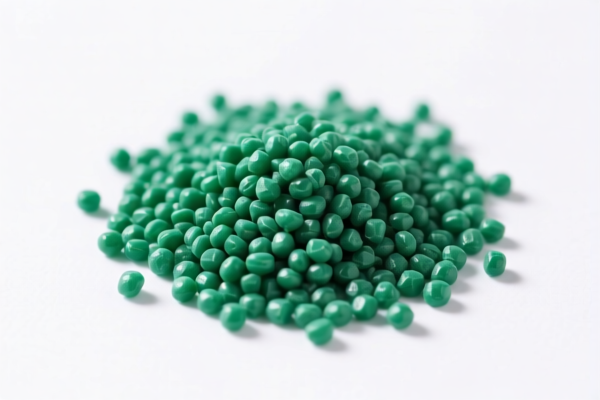


AI Analysis
🧪 Chlorinated Rubber Granules (CR)
🌐 HS Code Reference & Customs Clearance Guide | 2026 Latest Tariff Analysis | Professional Clearance Strategy
📌 I. Product Definition and Classification: Do You Really Understand "Chlorinated Rubber"?
Chlorinated Rubber (CR) is a synthetic polymer derived from natural rubber or synthetic rubber through chlorination. It is widely used in high-performance coatings, marine paints, industrial sealants, and adhesives due to its excellent chemical resistance, durability, and weathering properties.
In international trade, Chlorinated Rubber Granules are typically classified based on their form (primary forms/granules) and intended use (coatings vs. chemical mixtures). Misclassification is common because CR can appear under different chapters depending on whether it is treated as a plastic/rubber material or a prepared chemical product.
⚠️ Key Distinction Point:
- If the granules are pure chlorinated rubber intended as a raw material for coatings or further processing → Likely Chapter 39 (Plastics) or Chapter 40 (Rubber).
- If the granules are pre-mixed binders or chemical preparations (e.g., mixed with solvents, resins, or additives) → Likely Chapter 38 (Chemical Products).
📦 II. HS Code Classification Details (2026 Latest Tariff Authority Comparison)
| HS Code | Product Description | Applicable Scenario | Is it Pure Rubber? | Tax Status |
|---|---|---|---|---|
4002.49.00.00 |
Chloroprene (chlorobutadiene) rubber (CR): Other | Synthetic CR in primary forms (granules, sheets) | ✅ Yes (Synthetic Rubber) | ⚠️ High Tax (25%) |
4002.99.00.00 |
Other synthetic rubber and factice derived from oils: Other | Other synthetic rubbers (non-chloroprene) | ✅ Yes (Synthetic Rubber) | ⚠️ High Tax (25%) |
3909.90 |
Chlorinated rubber granules, not further specified, used primarily as a coating material | CR classified as a plastic/resin derivative | ❓ Ambiguous (Often Misclassified) | ❌ Error (Retrieval Failed) |
3905.90 |
Granules of chlorinated rubber, classified under other plastics, for industrial applications | CR treated as a modified natural polymer | ❓ Ambiguous | ❌ Error (Retrieval Failed) |
3824.99.50.00 |
Mixtures of halogenated hydrocarbons: Chlorinated but not otherwise halogenated | CR used as a chemical binder/preparation | ❌ No (Chemical Mixture) | ✅ Low Tax (0%) |
3824.99.93.97 |
Other chemical products/preparations, not elsewhere specified | Prepared binders or mixed CR preparations | ❌ No (Mixed Chemical) | ⚠️ High Tax (30%) |
3911.90.70.00 |
Chlorinated synthetic rubber (in primary forms) | CR as a specific plastic/resin product | ✅ Yes (Plastic/Rubber Hybrid) | ⚠️ High Tax (25%) |
3913.90.50.00 |
Modified natural polymers, not elsewhere specified | CR derived from natural rubber | ✅ Yes (Modified Natural) | ⚠️ High Tax (31.5%) |
🔍 Key Note:
- HS Code3909.90and3905.90have failed tax retrieval, indicating they are less common or problematic classifications for pure chlorinated rubber granules. Customs may reject these if not accompanied by detailed composition data.
- HS Code3824.99.50.00offers 0% tax but requires proof that the product is a chemical mixture/binder, not pure rubber.
- HS Code4002.49.00.00is the most direct classification for synthetic CR, but incurs a 25% additional tariff.
💰 III. 2026 Latest Tariff Rate Details (Including Additional Taxes, Policy Add-ons)
✅ Applicable Country: United States (US)
✅ Origin: China (CN)
✅ Effective Date: November 10, 2025 (and subsequent imports)
🎯 1. 4002.49.00.00 — Chloroprene Rubber (CR): Other
| Item | Content |
|---|---|
| Base Tariff Rate | 0% (ad valorem) |
| USITC Additional Tariff | +25% (Under USITC Footnote 9903.88.01) |
| Total Tariff Rate | 25% |
| Tax Calculation | CIF Value × 25% |
| De Minimis Exemption | ❌ Not Eligible |
| Legal Basis Path | USITC:4002.49.00.00 → FOOTNOTE:9903.88.01 |
📌 Explanation:
- This classification treats CR as synthetic rubber, subject to Section 301 tariffs (+25%).
- No IEEPA additional tax is listed for this specific code, so the total remains 25%.
🎯 2. 4002.99.00.00 — Other Synthetic Rubber: Other
| Item | Content |
|---|---|
| Base Tariff Rate | 0% |
| USITC Additional Tariff | +25% |
| Total Tariff Rate | 25% |
| Tax Calculation | CIF Value × 25% |
| De Minimis Exemption | ❌ Not Eligible |
| Legal Basis Path | USITC:4002.99.00.00 → FOOTNOTE:9903.88.01 |
📌 Note:
- Same tax treatment as4002.49.00.00if not specifically chloroprene.
- Common for non-chloroprene synthetic rubbers.
🎯 3. 3824.99.50.00 — Mixtures of Halogenated Hydrocarbons: Chlorinated
| Item | Content |
|---|---|
| Base Tariff Rate | 0% |
| Additional Tariff | 0% |
| Total Tariff Rate | 0% |
| Tax Calculation | CIF Value × 0% |
| De Minimis Exemption | ✅ Eligible (if under $800) |
| Legal Basis Path | USITC:3824.99.50.00 |
📌 Advantage:
- Zero tariff if the product is classified as a chemical mixture/binder rather than pure rubber.
- Critical Requirement: Must prove the product is a preparation for industrial use (e.g., mixed with resins, solvents, or additives).
🎯 4. 3824.99.93.97 — Other Chemical Products: Not Elsewhere Specified
| Item | Content |
|---|---|
| Base Tariff Rate | 5% |
| Additional Tariff | +25% |
| Total Tariff Rate | 30% |
| Tax Calculation | CIF Value × 30% |
| De Minimis Exemption | ❌ Not Eligible |
| Legal Basis Path | USITC:3824.99.93.97 |
📌 Caution:
- Higher tax due to being a generic chemical preparation.
- Only use if no more specific HS code applies.
🎯 5. 3911.90.70.00 — Chlorinated Synthetic Rubber (Plastics Chapter)
| Item | Content |
|---|---|
| Base Tariff Rate | 0% |
| Additional Tariff | +25% |
| Total Tariff Rate | 25% |
| Tax Calculation | CIF Value × 25% |
| De Minimis Exemption | ❌ Not Eligible |
| Legal Basis Path | USITC:3911.90.70.00 |
📌 Note:
- Classified under Plastics (Chapter 39) but still subject to 25% additional tariff.
- Suitable if CR is treated as a plastic resin derivative.
🎯 6. 3913.90.50.00 — Modified Natural Polymers
| Item | Content |
|---|---|
| Base Tariff Rate | 6.5% |
| Additional Tariff | +25% |
| Total Tariff Rate | 31.5% |
| Tax Calculation | CIF Value × 31.5% |
| De Minimis Exemption | ❌ Not Eligible |
| Legal Basis Path | USITC:3913.90.50.00 |
📌 Caution:
- Highest tax rate among the listed options.
- Only applies if CR is derived from natural rubber and classified as a modified natural polymer.
🛠️ IV. Customs Clearance Practical Advice (Real-World Pitfall Avoidance)
✅ 1. Preparation Checklist (All Required)
| Document | Required? | Explanation |
|---|---|---|
| ✅ Product Specification Sheet | ✔️ | Must include: Chlorine content, molecular weight, intended use (coatings, binders, etc.) |
| ✅ Material Safety Data Sheet (MSDS) | ✔️ | Proves chemical composition and safety handling |
| ✅ Third-Party Test Report | ✔️ | Confirming purity, chlorine content, and absence of mixed chemicals |
| ✅ Commercial Invoice | ✔️ | Must clearly state: "Chlorinated Rubber Granules, Pure/Formulation, HS Code [X]" |
| ✅ Packing List | ✔️ | Detailing net/gross weight, volume, and packaging type |
| ✅ Certificate of Origin (CO) | ✔️ | If claiming preferential treatment (if applicable) |
| ✅ Formula/Composition Breakdown | ✔️ | Critical for 3824.99.50.00 (0% tax) to prove it’s a mixture, not pure rubber |
✅ 2. Declaration Tips (Key Mnemonic)
🔥 “Pure CR = High Tax, Mixed CR = Low Tax, Be Clear with Composition!”
| Scenario | Correct Declaration | Wrong Practice |
|---|---|---|
| Pure CR Granules | 4002.49.00.00 (25% tax) |
Mislabel as 3824.99.50.00 → Customs Audit Risk |
| CR Mixed with Resins/Solvents | 3824.99.50.00 (0% tax) |
Declare as pure rubber → Missed 25% Savings |
| CR as Modified Natural Polymer | 3913.90.50.00 (31.5% tax) |
Use 3909.90 → Error (No Tax Data) |
| Unclear Composition | Request Pre-Ruling | Guessing HS Code → Delays + Penalties |
✅ 3. Special Cases Handling
| Situation | Handling Advice |
|---|---|
| OEM Custom Formulation | Provide client order + formula sheet to justify 3824.99.50.00 |
| CR Used in Marine Coatings | Emphasize industrial binder use to support 3824 classification |
| High Chlorine Content (>40%) | May be classified as halogenated hydrocarbon (3824.99.50.00) |
| Low Chlorine Content (Synthetic) | Stick to Chapter 40 (4002.49.00.00) |
🌍 V. Global Market Clearance Comparison (2026 Latest)
| Country/Region | Recommended HS Code | Tariff | Certification Requirement | Notes |
|---|---|---|---|---|
| 🇺🇸 USA | 3824.99.50.00 (if mixed) or 4002.49.00.00 (if pure) |
0% or 25% | TSCA Compliance | High audit risk for misclassification |
| 🇨🇳 China | 4002.49.00.00 |
0% | None | No additional tariffs |
| 🇪🇺 EU | 4002.49.00.00 |
0% | REACH Registration | CR is regulated under REACH |
| 🇯🇵 Japan | 4002.49.00.00 |
0% | JIS Standards | No additional tariffs |
| 🇦🇺 Australia | 4002.49.00.00 |
5% | None | Standard tariff |
📌 Conclusion:
- USA is the most complex market due to Section 301 tariffs and high audit scrutiny.
- China, EU, Japan, Australia generally apply lower or zero tariffs if classified correctly.
- Zero tariff in USA (3824.99.50.00) is possible but requires strong documentation proving it’s a chemical mixture, not pure rubber.
📌 VI. Common Errors & Pitfall Guide (Blood and Tears Lessons)
❌ Error 1: Declaring pure CR as 3824.99.50.00 without proof of mixing
👉 Consequence: Customs rejection + penalties + 25% retroactive tax
❌ Error 2: Using 3909.90 or 3905.90 due to lack of tax data
👉 Consequence: System error + delay + manual clearance
❌ Error 3: Not providing MSDS or formula breakdown for mixed CR
👉 Consequence: Unable to prove 0% tax eligibility → 25% tax applied
❌ Error 4: Ignoring chlorine content
👉 Consequence: Misclassification → Wrong HS Code → Wrong Tax
✅ Correct Approach:
“Chlorinated Rubber Granules, Chlorine Content: 35%, Mixed with Epoxy Resin, Industrial Coating Binder, MSDS Attached, HS Code: 3824.99.50.00”
🎯 VII. Conclusion: Professional Declaration, Save Time, Reduce Cost!
🎯 Remember the Mnemonic:
🔹 “Pure CR = 25%, Mixed CR = 0%, Proof is Key!”
🔹 “HS Code Determines Tax, Declaration Determines Success!”
📌 Tip:
If your chlorinated rubber is imported for R&D or small-scale testing, consider using de minimis exemption (under $800) if eligible.
For large-scale imports, always apply for an Advance Ruling from US Customs (CBP) to secure the correct HS Code and tax rate.
📣 Immediate Action:
📞 Contact a licensed customs broker + Provide MSDS + Formula Breakdown + Apply for HS Code Advance Ruling
🚀 Ensure smooth clearance, avoid penalties, and maximize cost efficiency!
✨ Professional Clearance Starts with Accurate Classification!
💼 Every penny of cost deserves precise calculation!
Customer Reviews
About HS Code Classification
The Harmonized System (HS) is an internationally standardized nomenclature developed by the World Customs Organization (WCO) to classify traded products. Over 200 countries use the HS system as the basis for customs tariffs, trade statistics, and import/export regulations.
Each HS code follows a hierarchical structure:
- Chapter (2 digits) — Broad category of goods (e.g., Chapter 84: Machinery and Mechanical Appliances)
- Heading (4 digits) — More specific grouping within the chapter
- Subheading (6 digits) — Internationally standardized breakdown, used by all WCO member countries
- National subdivisions (8-10 digits) — Country-specific extensions for further classification, such as US HTSUS 10-digit codes
Correct HS code classification is essential for smooth customs clearance, accurate duty payment, and compliance with trade regulations. Misclassification can lead to customs delays, overpayment of duties, or penalties.
When importing from CN to US, the applicable tariff rates may include:
- Most-Favored-Nation (MFN) rate — The standard duty rate applied to WTO members
- General rate — Applied to countries without trade agreements
- Trade remedy duties — Additional tariffs such as Section 301 (anti-dumping), Section 232 (national security), or countervailing duties
The information provided on this page is for reference purposes only. For official classification, please consult with your local customs authority or a licensed customs broker.