Chocolate
CN → US| HS Code | Tariff Rate | Origin | Destination | Doc |
|---|---|---|---|---|
| 2106909998 | 16.4% | CN | US | Official Doc |
| 1806909090 | 23.5% | CN | US | Official Doc |
| 1806329000 | 23.5% | CN | US | Official Doc |
| 1905901050 | 35.0% | CN | US | Official Doc |
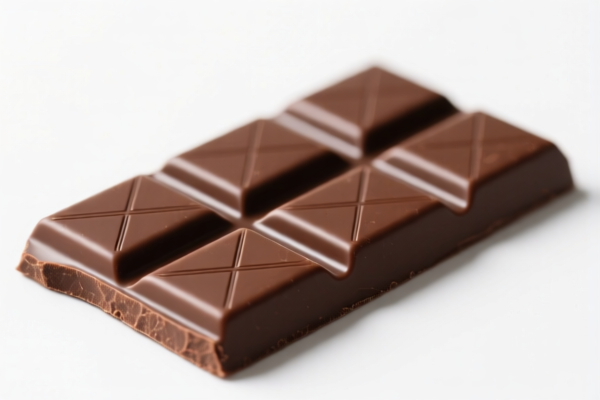
Product Images


AI Analysis
🍫 Chocolate & Cocoa Products: The Ultimate HS Code Guide & Customs Strategy | 2026 Tariff Breakdown
🌐 HS Code Reference & Customs Clearance Strategy | 2026 Full Tariff Analysis | Expert通关 Strategy
📌 一、Product Definition & Classification: Do You Really Know "Chocolate"?
In international trade, "Chocolate" is not a single entity. It is a complex category of sugar confectionery, cocoa-containing preparations, and baked goods (pastries). The classification depends entirely on: 1. Cocoa Content: Is it "containing cocoa" or "not containing cocoa"? 2. Physical State: Is it a bar, powder, frozen, or ready-to-eat? 3. Composition: Does it contain other ingredients (fruits, nuts, pastry dough)?
⚠️ Critical Distinction:
- White Chocolate / Sugar Confectionery (No Cocoa) → Chapter 17 (Highly specific sub-rules).
- Dark/Milk Chocolate (With Cocoa) → Chapter 18.
- Chocolate in Baked Goods (Pastries/Cakes) → Chapter 19 (Often the most expensive tariff due to "add-on" taxes).
📦 二、HS Code Classification Details (2026 Tariff Authority Comparison)
Based on the provided data, here is the exact breakdown for Chocolate and related confectionery items:
| HS Code | Product Description | Key Features | Applicable Tax Scenario |
|---|---|---|---|
| 1704.90.35.50 | Sugar Confectionery (White Chocolate) | No cocoa; Retail ready; "Other" sub-category. | 🟢 0.0% Total Tax |
| 1704.90.35.90 | Sugar Confectionery (White Chocolate) | No cocoa; Retail ready; "Other Other". | 🟢 0.0% Total Tax |
| 1905.90.10.50 | Sweet Baked Products (Pastries/Cakes) | Contains chocolate/fruit/nuts; Frozen or Unfrozen; Retail ready. | 🔴 25.0% Total Tax (High Risk!) |
| 1905.90.10.41 | Sweet Baked Products (Frozen Pastries) | Contains chocolate; Frozen; Retail ready. | 🔴 25.0% Total Tax (High Risk!) |
| 1806.90.90.90 | Chocolate & Cocoa Preparations | "Other" category; Not in bars/blocks; Complex mix. | 🟡 13.5% Total Tax |
| 1806.32.90.00 | Chocolate Bars (Unfilled) | In blocks/slabs; Not filled; Other variety. | 🟢 0.0% Total Tax |
🔍 Key Insight:
- Pure Chocolate Bars (1806.32.90.00) and White Chocolate (1704...) are Tax-Free (0%) in this specific dataset.
- Baked Goods (1905...) carry a massive 25.0% "Additional Tax" despite a 0% Base Tariff.
- Mixed/Prepared Chocolate (1806.90.90.90) faces a 13.5% combined rate.
💰 三、2026 Tariff Rate Breakdown (Detailed Tax Clauses)
✅ Context: Based on the provided data (Likely US Market with Section 301/Trade Policy Add-ons).
✅ Origin: China (CN) - Inferred from "Additional Tax" context.
✅ Status: Active.
🎯 1. 1704.90.35.50 & 1704.90.35.90 — White Chocolate / Sugar Confectionery (No Cocoa)
These apply to products like White Chocolate bars, gummies, and candies that contain NO cocoa solids.
| Tax Component | Rate | Details |
|---|---|---|
| Base Tariff | 0.0% | Standard MFN rate. |
| Additional Tax | 0.0% | No Section 301 or IEEPA penalty applies. |
| Total Tax | 0.0% | Duty-Free! |
| Clue | Ensure the ingredient list explicitly states "No Cocoa" (White Chocolate is sugar/fat/milk only). |
📌 Note: If your "White Chocolate" has cocoa butter only but is classified as "containing cocoa" by the customs authority, it might shift to Chapter 18. Stick to the definition: Sugar Confectionery NOT containing cocoa.
🎯 2. 1806.32.90.00 — Chocolate Bars (Not Filled)
Standard bars of milk or dark chocolate.
| Tax Component | Rate | Details |
|---|---|---|
| Base Tariff | 0.0% | Standard MFN rate. |
| Additional Tax | 0.0% | No penalty. |
| Total Tax | 0.0% | Duty-Free! |
| Clue | Must be not filled (no nuts, caramel, wafer inside). If filled, it may move to a different subheading or incur tax. |
📌 Note: This is the most common classification for standard chocolate bars. 0% duty makes this the ideal entry for standard chocolate.
🎯 3. 1806.90.90.90 — Other Chocolate Preparations
Complex chocolate products: Truffles, sauces, powders, or mixed chocolate items.
| Tax Component | Rate | Details |
|---|---|---|
| Base Tariff | 6.0% | Standard MFN rate. |
| Additional Tax | 7.5% | Section 301 / Trade Policy surcharge. |
| Total Tax | 13.5% | High Cost! |
| Clue | "Other" category implies it doesn't fit the simple bar definition. High risk of audit if description is vague. |
🎯 4. 1905.90.10.50 & 1905.90.10.41 — Chocolate Pastries, Cakes, & Baked Goods
This is the DANGER ZONE. Even if the item is 90% chocolate, if it is baked (cake, pastry, cookie), it falls here.
| Tax Component | Rate | Details |
|---|---|---|
| Base Tariff | 0.0% | Base is low. |
| Additional Tax | 25.0% | Heavy Penalty (likely Section 301). |
| Total Tax | 25.0% | Very High Cost! |
| Clue | "Pastry", "Cake", "Biscuits" + "Chocolate" = 25% Tax. Frozen vs. Unfrozen does not change the rate here (both are 25%). |
📌 Critical Warning:
- Do NOT ship chocolate cookies, brownies, or chocolate-filled croissants under1806(Chocolate) codes.
- Customs will reclassify them to1905and charge 25%.
- Frozen status (1905.90.10.41) does not lower the tax; it remains 25%.
🛠️ 四、Customs Clearance Practical Advice (Avoid Pitfalls)
✅ 1. Preparation Checklist (Must-Haves)
| Document | Requirement | Why? |
|---|---|---|
| ✅ Ingredient List | Mandatory | To prove "No Cocoa" (for 1704) or "Baked Good" (for 1905). |
| ✅ Product Photos | Mandatory | Show if it's a bar (1806) or a cake/pastry (1905). |
| ✅ Processing Method | Mandatory | Was it baked? Or just molded? Baked = 25% tax. |
| ✅ Frozen Status | Mandatory | For 1905.90.10.41 vs 1905.90.10.50. |
| ✅ Filling Declaration | Mandatory | Is the bar filled? If yes, 1806.32 might be wrong. |
✅ 2. Declaration Strategy (The "Golden Rules")
🔥 Rule: "Baked Goods = 25%, Pure Chocolate = 0%!"
| Scenario | Correct HS Code | Tax Rate | Mistake to Avoid |
|---|---|---|---|
| Chocolate Bar (Unfilled) | 1806.32.90.00 |
0% | Do not call it "Candy" (1704) if it has cocoa. |
| White Chocolate Bar | 1704.90.35.50 |
0% | Ensure label says "Contains NO Cocoa". |
| Chocolate Cookie / Brownie | 1905.90.10.50 |
25% | DO NOT declare as "Chocolate". It is "Baked". |
| Frozen Chocolate Cake | 1905.90.10.41 |
25% | Frozen cakes are still taxed at 25%. |
| Truffles / Mixed Prep | 1806.90.90.90 |
13.5% | Vague description leads to "Other" classification. |
✅ 3. Special Situations
| Situation | Strategy |
|---|---|
| OEM Private Label | Ensure the brand name and "Made in..." do not trigger trade wars, but the HS Code remains the primary tax driver. |
| Frozen vs. Fresh | For pastries (1905), freezing does NOT reduce tax. Both are 25%. |
| "Gift Set" (Bar + Pastry) | Split Declaration! Declare the bar as 1806 (0%) and the pastry as 1905 (25%). Do not lump them as "Chocolate Gift Box" (1806) or you lose the 25% on the pastry. |
🌍 五、Global Market Comparison (Inferred)
| Market | Chocolate Bar (1806) |
Pastries (1905) |
White Chocolate (1704) |
|---|---|---|---|
| 🇺🇸 USA (This Data) | 0% | 25% (Huge Penalty) | 0% |
| 🇪🇺 EU | ~5-6% | ~25% (High on baked goods) | ~0-6% |
| 🇯🇵 Japan | ~8% | ~5% | ~5% |
| 🇨🇳 China | ~5% | ~25% (Similar structure) | ~0% |
📌 Conclusion:
The 25% tax on "Baked Goods containing chocolate" is the biggest pitfall.
If your product is a Cake, Cookie, or Pastry, expect 25%. If it is a Bar, Powder, or White Chocolate, expect 0%.
📌 六、Common Mistakes & How to Fix Them (Lessons Learned)
❌ Mistake 1: Calling a "Chocolate Muffin" a "Chocolate Bar".
👉 Result: Customs rejects 1806. Re-classifies to 1905. Bill for 25% + Penalties!
❌ Mistake 2: Calling "White Chocolate" "Chocolate".
👉 Result: If it lacks cocoa, it must be 1704. If you use 1806, you might be flagged for misdeclaration, even if tax is 0%.
❌ Mistake 3: Shipping "Frozen Chocolate Cake" and hoping for a lower rate.
👉 Result: 1905.90.10.41 is still 25%. Freezing doesn't help the tariff here.
✅ Correct Way:
"Use the exact botanical description."
✅ "Milk Chocolate Bar, Unfilled, 100g" →1806.32.90.00(0%).
✅ "White Chocolate, Retail Ready" →1704.90.35.50(0%).
✅ "Chocolate Chip Cookie, Baked" →1905.90.10.50(25% - Prepare to pay!).
🎯 七、Final Verdict & Action Plan
🎯 Summary:
- Pure Chocolate / White Chocolate = 0% Tax (Sweet victory!).
- Baked Chocolate Goods = 25% Tax (The "Baked Goods Penalty").
- Mixed Chocolate Preparations = 13.5% Tax (Middle ground).
🎯 Action Plan:
1. Audit your ingredients: Is it baked? → Pay 25%.
2. Audit your structure: Is it a bar? → Pay 0%.
3. Check for Fillings: Filled bars might move to 1806.90 → Pay 13.5%.
4. Separate Shipments: If shipping a set (Bar + Cookie), declare them separately to optimize the bar to 0% and the cookie to 25% (instead of forcing the whole set to a higher rate).
📌 Pro Tip:
"If you sell Brownies or Cakes, accept the 25% tax. It is unavoidable under
1905. The only way to avoid it is to sell them as Unbaked Dough (different HS code) or change the product line to Pure Chocolate Bars (1806)."
📣 Immediate Action:
🚀 Verify your product type!
If it's baked, prepare your budget for 25%.
If it's a bar, claim your 0% duty.
Precision in classification saves 25% of your profit margin.
✨ Customs Clearance, The Smart Way!
💼 One HS Code wrong, 25% Tax right.
✅ Get it right the first time.
Customer Reviews
About HS Code Classification
The Harmonized System (HS) is an internationally standardized nomenclature developed by the World Customs Organization (WCO) to classify traded products. Over 200 countries use the HS system as the basis for customs tariffs, trade statistics, and import/export regulations.
Each HS code follows a hierarchical structure:
- Chapter (2 digits) — Broad category of goods (e.g., Chapter 84: Machinery and Mechanical Appliances)
- Heading (4 digits) — More specific grouping within the chapter
- Subheading (6 digits) — Internationally standardized breakdown, used by all WCO member countries
- National subdivisions (8-10 digits) — Country-specific extensions for further classification, such as US HTSUS 10-digit codes
Correct HS code classification is essential for smooth customs clearance, accurate duty payment, and compliance with trade regulations. Misclassification can lead to customs delays, overpayment of duties, or penalties.
When importing from CN to US, the applicable tariff rates may include:
- Most-Favored-Nation (MFN) rate — The standard duty rate applied to WTO members
- General rate — Applied to countries without trade agreements
- Trade remedy duties — Additional tariffs such as Section 301 (anti-dumping), Section 232 (national security), or countervailing duties
The information provided on this page is for reference purposes only. For official classification, please consult with your local customs authority or a licensed customs broker.