Chocolate Cookie
CN → US| HS Code | Tariff Rate | Origin | Destination | Doc |
|---|---|---|---|---|
| 1806310049 | 23.1% | CN | US | Official Doc |
| 1806909011 | 23.5% | CN | US | Official Doc |
Product Images
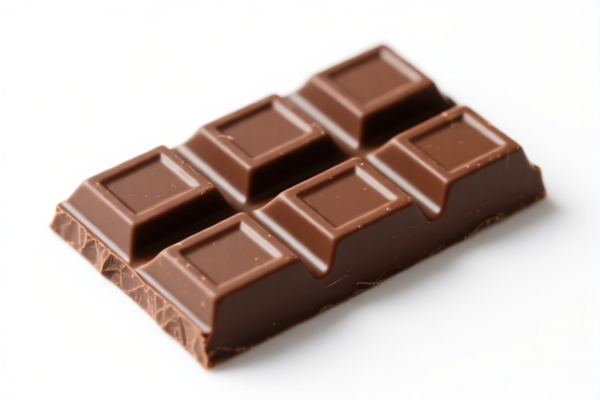
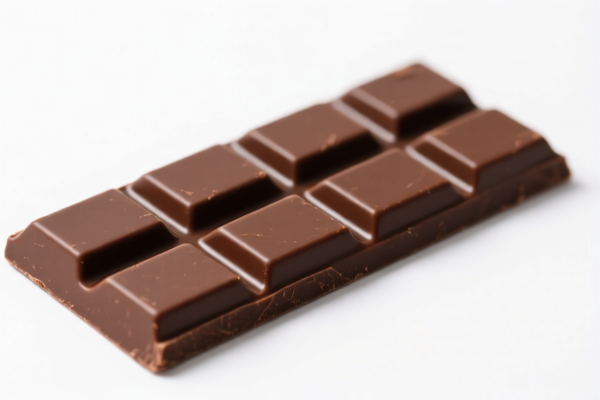
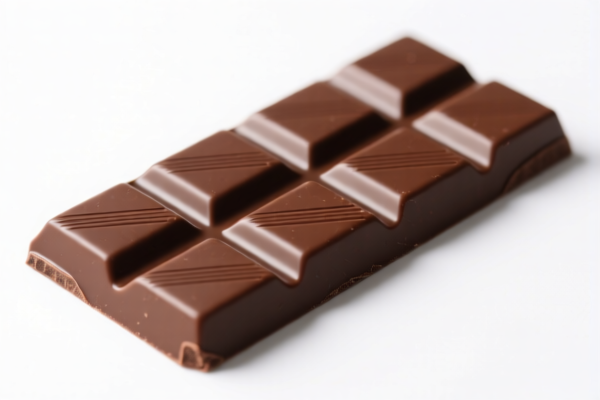
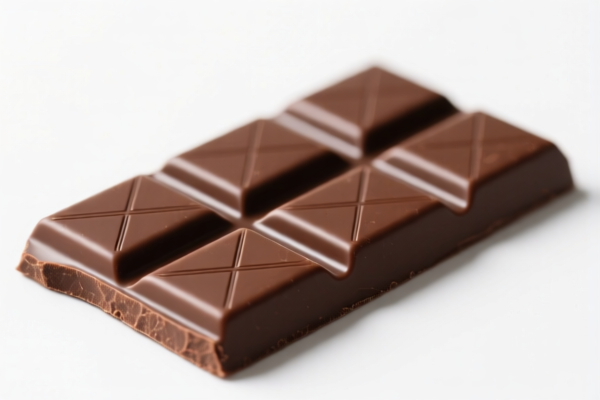
AI Analysis
🍫 Chocolate Cookies (Filled Confectionery Containing Cocoa)
🌐 HS Code Reference & Customs Clearance Guide | 2026 Latest Tariff Analysis | Professional Clearance Strategy
📌 I. Product Definition and Classification: Do You Really Know "Chocolate Cookies"?
In international trade, "Chocolate Cookies" are not a single unified category. Their classification and tax rates depend entirely on two key factors:
1. Structural Form: Are they loose/baked or formed into solid blocks/slabs?
2. Fillings: Do they contain peanuts or other specific ingredients?
The <DATA> provided distinguishes between two primary scenarios:
- Scenario A: Chocolate cookies in blocks, slabs, or bars that are filled confectionery (general).
- Scenario B: Other chocolate confectionery containing peanuts or peanut products.
⚠️ Key Distinction Point:
- If the product is a filled confectionery in block/slab/bar form (e.g., chocolate-coated cookie bars, filled chocolate biscuit blocks) and does NOT contain peanuts → HS Code 1806.31.00.49.
- If the product is a chocolate confectionery (including cookies/confectionery) containing peanuts → HS Code 1806.90.90.11.
📦 II. HS Code Classification Details (2026 Latest Tariff Authority Comparison)
| HS Code | Product Description | Applicable Scenario | Contains Peanuts? | Tax Rate |
|---|---|---|---|---|
1806.31.00.49 |
Chocolate and other food preparations containing cocoa: Other, in blocks, slabs or bars: Filled Confectionery: Other | Chocolate-filled cookie bars, filled chocolate biscuit slabs (Non-peanut) | ❌ No | 0.0% |
1806.90.90.11 |
Chocolate and other food preparations containing cocoa: Other: Other: Other: Other: Other Confectionery: Containing peanuts or peanut products | Chocolate-covered peanut cookies, peanut biscuit confections | ✅ Yes | 13.5% |
🔍 Important Reminder:
- HS 1806.31.00.49 applies specifically to Filled Confectionery in blocks/slabs/bars. If your "chocolate cookie" is loose (not in a block/slab/bar form), it may fall under a different sub-heading. However, based strictly on<DATA>, this is the code for filled blocks/slabs.
- HS 1806.90.90.11 is triggered by the presence of peanuts. Even if it is a cookie, the peanut content dictates this higher-tariff category.
💰 III. 2026 Latest Tariff Rate Details (Including Additional Taxes)
✅ Applicable Country: United States (US)
✅ Origin: China (CN) (Note: Tax rates in<DATA>reflect current US import duties for Chinese origin)
✅ Effective Time: Current applicable rates
🎯 1. 1806.31.00.49 —— Filled Confectionery (Block/Slab/Bar, Non-Peanut)
| Item | Content |
|---|---|
| Base Tariff | 0.0% |
| Additional Tariff | 0.0% |
| Total Tax Rate | 0.0% |
| Tax Calculation | CIF Value × 0% = $0 |
| De Minimis Eligibility | N/A (Even if eligible, tax is 0) |
| Legal Basis | HTSUS 1806.31.00.49 |
📌 Explanation:
- This category enjoys a zero tariff. This is highly favorable for imported chocolate-filled cookie blocks/slabs from China.
- Crucial Condition: The product must be classified as "Filled Confectionery" in "Blocks, Slabs, or Bars" and must NOT contain peanuts. If it contains peanuts, it shifts to the 13.5% category.
🎯 2. 1806.90.90.11 —— Other Confectionery Containing Peanuts
| Item | Content |
|---|---|
| Base Tariff | 6.0% |
| Additional Tariff (Section 301) | 7.5% |
| Total Tax Rate | 13.5% |
| Tax Calculation | CIF Value × 13.5% |
| De Minimis Eligibility | ❌ Not Eligible (Standard for food items under de minimis thresholds) |
| Legal Basis | HTSUS 1806.90.90.11 + Section 301 Footnote |
📌 Explanation:
- Base Tariff (6.0%): Standard Most Favored Nation (MFN) rate for "Other" chocolate confectionery.
- Additional Tariff (7.5%): Applied due to Section 301 trade measures on Chinese goods.
- Trigger: The presence of peanuts or peanut products.
- Warning: Many "chocolate cookies" contain peanut flour or chunks. If your product contains any peanuts, you cannot use the 0% rate. You must pay 13.5%.
🛠️ IV. Customs Clearance Practical Advice (Avoid Pitfalls Guide)
✅ 1. Required Documentation Checklist (Must Provide)
| Document | Mandatory | Description |
|---|---|---|
| ✅ Product Specification Sheet | ✔️ | Must explicitly state: "Chocolate Cookie", "Filled", "Form: Block/Slab/Bar", and Ingredient List (Peanut-free vs. Peanut-containing). |
| ✅ Ingredient Declaration | ✔️ | Critical: Must clearly declare if peanuts are present. "Contains: Milk, Cocoa, Sugar." OR "Contains: Cocoa, Sugar, Peanuts." |
| ✅ Product Photos | ✔️ | Clear photos showing the structure (e.g., cut open to show filling) to prove it is "Filled Confectionery in Block/Slab form." |
| ✅ Commercial Invoice | ✔️ | Must accurately describe goods as "Chocolate Filled Cookie Bars" or "Peanut Chocolate Confectionery." Avoid vague terms like "Snack." |
| ✅ Certificate of Origin (CO) | ✔️ | If claiming any preferential treatment (though current rates are standard for CN). |
✅ 2. Declaration Techniques (Key Mnemonics)
🔥 "Check Peanuts First, Then Check Form. Block = 1806.31, Peanut = 1806.90."
| Scenario | Correct HS Code | Wrong Action | Consequence |
|---|---|---|---|
| Chocolate cookie bars, filled with caramel, NO peanuts | 1806.31.00.49 |
Declare as general chocolate candy | Missed 0% rate? No, but wrong description may cause delay. |
| Chocolate cookie bars, filled with caramel, WITH peanuts | 1806.90.90.11 |
Declare as "Non-peanut filled bar" | Penalty + Back Taxes (13.5%). |
| Loose chocolate cookies (not in block/slab) | Not in <DATA> |
Force into 1806.31 |
Misclassification. May be rejected or reassigned. |
| Chocolate cookies containing nut oil (no peanuts) | 1806.31.00.49 (if block/filled) |
Declare as "Peanut" | Overpayment of taxes (unnecessary 13.5%). |
✅ 3. Special Case Handling
| Situation | Handling Advice |
|---|---|
| Mixed Packaging | If a box contains both peanut-free and peanut-filled bars, the higher tax rate (13.5%) may apply to the entire shipment if not declared separately. |
| "Peanut-Free" Claim | Must provide a lab test or supplier declaration proving <10 ppm peanut proteins to avoid Section 301 additional duties. |
| Loose Cookies | If cookies are not in "blocks, slabs, or bars," 1806.31.00.49 does not apply. They may fall under 1806.90 general confectionery. Check if they contain peanuts for the 13.5% rate. |
| Filling Type | "Filled Confectionery" in 1806.31 refers to products with sweet fillings (e.g., cream, caramel, fruit). Savory fillings may change classification. |
🌍 V. Global Market Comparison (2026 Latest)
| Country/Region | Recommended HS Code | Tariff (China Origin) | Notes |
|---|---|---|---|
| 🇺🇸 USA | 1806.31.00.49 |
0.0% | Zero tariff for non-peanut filled blocks/slabs. |
| 🇺🇸 USA | 1806.90.90.11 |
13.5% | High tariff due to peanuts + Section 301. |
| 🇨🇳 China | 1806.31.00.49 |
20% (Import Tariff) | Domestic consumption or re-export. |
| 🇪🇺 EU | 1806.31.00.49 |
Varies (often 5-12%) | EU tariffs differ; check local HTS. |
| 🇯🇵 Japan | 1806.31.00.49 |
8.6% | No additional Section 301. |
📌 Conclusion:
- The USA is the only market shown with 0% tariffs for this specific chocolate product (non-peanut, block form).
- Peanut content is the single biggest tax driver. A small change in recipe from "caramel" to "peanut caramel" increases tax from 0% to 13.5%.
📌 VI. Common Mistakes & Pitfalls (Lessons Learned)
❌ Mistake 1: Declaring "Chocolate Cookies" without specifying "Filled" or "Block Form"
👉 Result: Customs may classify as general confectionery (1806.90.90.90) or reject for insufficient detail.
❌ Mistake 2: Ignoring Peanut Content
👉 Result: Shipping a "Peanut Cookie" under 1806.31.00.49 leads to 13.5% back taxes + penalties.
❌ Mistake 3: Confusing "Loose Cookies" with "Blocks/Slabs"
👉 Result: 1806.31.00.49 strictly requires the product to be in blocks, slabs, or bars. Loose cookies may fall under 1806.90.
❌ Mistake 4: Using "Snack" or "Biscuit" as Primary Description
👉 Result: Ambiguity delays clearance. Always use "Chocolate Filled Confectionery" or "Chocolate Cookie Bar".
✅ Correct Declaration Example:
"Chocolate Filled Cookie Bars, 200g Block, Caramel Filling, Peanut-Free, For Retail, Model XYZ, FDA Compliant"
🎯 VII. Conclusion: Precise Classification Saves Money!
🎯 Remember the Mnemonic:
🔹 "Check Peanuts! If No Peanut & In Block → 0% Tariff (1806.31). If Peanut → 13.5% (1806.90)."
🔹 "Loose Cookies? Not 1806.31. Block/Slab/Bar is Mandatory for the 0% Rate!"
📌 Pro Tip:
If you are importing Peanut Cookies and want to avoid the 13.5% tariff, consider:
1. Sourcing from non-China countries (e.g., Vietnam, Thailand) to mitigate Section 301 duties.
2. Reformulating to peanut-free versions to utilize the 0% rate for1806.31.00.49.
📣 Immediate Action:
📞 Consult with a customs broker to verify if your "chocolate cookie" qualifies as "Filled Confectionery in Blocks/Slabs/Bars."
🚀 Declare accurately, pay less, clear faster!
✨ Professional Customs Clearance Starts with Precise Classification!
💼 Your Cost Efficiency Depends on These Details!
Customer Reviews
About HS Code Classification
The Harmonized System (HS) is an internationally standardized nomenclature developed by the World Customs Organization (WCO) to classify traded products. Over 200 countries use the HS system as the basis for customs tariffs, trade statistics, and import/export regulations.
Each HS code follows a hierarchical structure:
- Chapter (2 digits) — Broad category of goods (e.g., Chapter 84: Machinery and Mechanical Appliances)
- Heading (4 digits) — More specific grouping within the chapter
- Subheading (6 digits) — Internationally standardized breakdown, used by all WCO member countries
- National subdivisions (8-10 digits) — Country-specific extensions for further classification, such as US HTSUS 10-digit codes
Correct HS code classification is essential for smooth customs clearance, accurate duty payment, and compliance with trade regulations. Misclassification can lead to customs delays, overpayment of duties, or penalties.
When importing from CN to US, the applicable tariff rates may include:
- Most-Favored-Nation (MFN) rate — The standard duty rate applied to WTO members
- General rate — Applied to countries without trade agreements
- Trade remedy duties — Additional tariffs such as Section 301 (anti-dumping), Section 232 (national security), or countervailing duties
The information provided on this page is for reference purposes only. For official classification, please consult with your local customs authority or a licensed customs broker.