Christmas Embroidery Kit
CN → US| HS Code | Tariff Rate | Origin | Destination | Doc |
|---|---|---|---|---|
| 6307909891 | 24.5% | CN | US | Official Doc |
| 6307102030 | 22.8% | CN | US | Official Doc |
| 5810921000 | 0.0% | CN | US | Official Doc |
| 5810910020 | 0.0% | CN | US | Official Doc |
| 9503000090 | 10.0% | CN | US | Official Doc |
Product Images
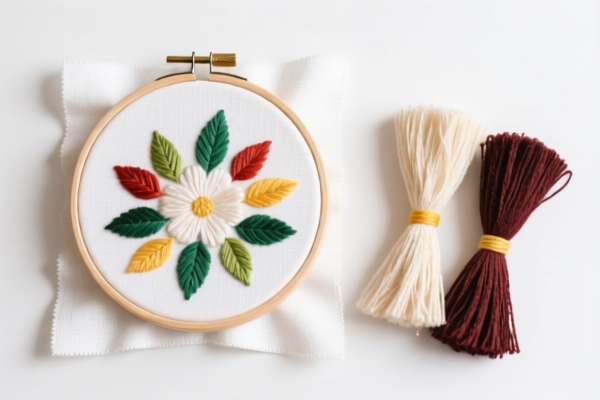
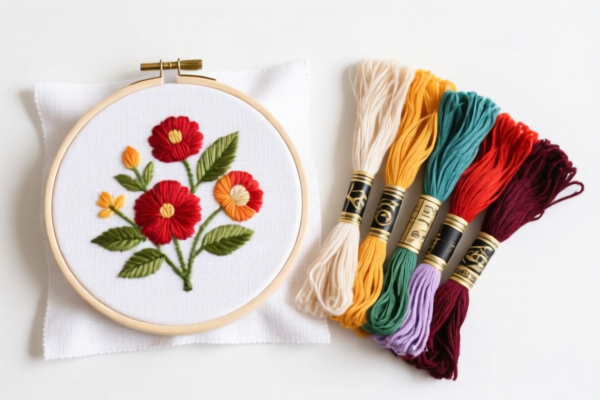
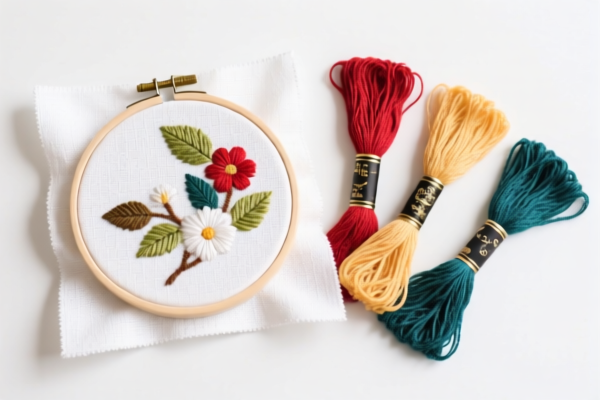
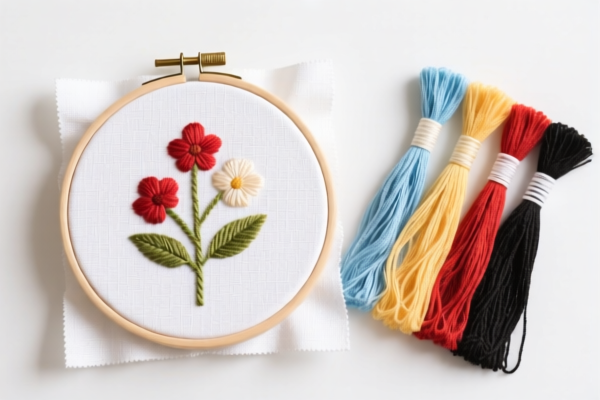
AI Analysis
🎄 Christmas Embroidery Kit (Holiday Handicrafts)
🌐 HS Code Reference & Clearance Guide | 2026 Latest Tariff Analysis | Professional Customs Strategy
📌 I. Product Definition & Classification: Do You Really Understand "Embroidery Kits"?
An Embroidery Kit is a packaged set of materials used for needlework, typically including pre-printed fabric, embroidery floss (threads), needles, and sometimes patterns or hoops. In international trade, these are classified based on their primary material and intended use.
Key Distinctions: * Textile Substrate (Fabric): If the kit is dominated by the value or function of the embroidered fabric (e.g., linen, cotton, or synthetic base), it often falls under Chapter 58 (Special fabrics; embroidered goods). * Toy/Handicraft Category: If the item is marketed primarily as a "craft toy" or "model kit" for educational/hobby purposes, it might fall under Chapter 95 (Toys). * Material Specifics: The presence of man-made fibers vs. natural fibers (cotton/wool) significantly impacts the HS Code selection and associated duties.
⚠️ Critical Differentiation:
- If the kit is fabric-based (most common):归入 Chapter 58 (5810).
- If the kit is a plastic/cardboard puzzle/craft: 归入 Chapter 95 (9503).
- Most standard Christmas embroidery kits with fabric and thread are treated as "Embroidered Articles".
📦 II. HS Code Classification Details (2026 Latest Tariff Authority)
Based on the provided data, here are the potential HS Codes for Christmas Embroidery Kits, categorized by material composition and product form:
| HS Code | Product Description | Key Characteristics | Primary Material Assumption |
|--------|--------------------------|-----------------------------|
| 5810.92.10.00 | Other Embroidered Articles (Man-Made Fibers) | Matches form and use; inferred to contain synthetic/man-made fiber embroidery materials. | Man-Made Fibers (Polyester/Nylon) |
| 5810.91.00.20 | Other Embroidered Articles (Cotton) | Matches form and use; inferred to contain cotton embroidery floss or base fabric. | Cotton |
| 6307.90.98.91 | Other Made-Up Articles (Textiles) | Inferred as a "finished product" form; fits the logic of "Other made-up articles." | Mixed/General Textile |
| 6307.10.20.30 | Cleaning Cloths/Textile Finished Goods | Inferred as textile finished goods; fits attributes regarding textile materials. | General Textile |
| 9503.00.00.90 | Toys: Puzzles/Model Kits | Fits "Other" category for unlisted handicraft/model items; marketed as a craft toy. | Mixed/Plastic/Cardboard Components |
🔍 Key Reminder:
- Embroidery Kits are most commonly classified under 5810 (Embroidery).
- The distinction between5810.92(Man-made) and5810.91(Cotton) depends on the primary fiber content of the thread and fabric.
- If the kit contains significant non-textile components (e.g., plastic hoops, cardboard patterns) and is sold as a "toy,"9503might be argued, but Customs often defaults to the primary material (5810).
💰 III. 2026 Latest Tariff Rate Breakdown (Including Additional Taxes & Policy Surcharges)
✅ Applicable Country: United States (US)
✅ Origin: China (CN)
✅ Effective Date: 2025/2026 (Current Trade Environment)
🎯 1. 5810.92.10.00 —— Other Embroidered Articles (Man-Made Fibers)
| Item | Content |
|---|---|
| Base Duty Rate | See Additional U.S. Note 2 (Varies, often 0%–5.3% depending on specific fiber type) |
| Additional U.S. Note | Note 2 applies (Specific textile footnote) |
| Section 301 Surcharge | +25.0% (Standard 301 tariff for Chapter 58/63 textiles from China) |
| Section 122 Tariff | +10.0% (Recent trade policy surcharge) |
| Total Effective Rate | See Additional U.S. Note 2 + 35.0% |
| Tax Calculation | (CIF Value × Base Rate) + (CIF Value × 35%) |
| De Minimis Exemption | ❌ Not Available (Deny de minimis for China-origin goods under 301) |
| Legal Basis Path | US Note 2 → Section 301: 9903.88.01 → Section 122 → USITC: 5810.92.10.00 |
📌 Explanation:
- "See Additional U.S. Note 2": This refers to specific duty rates defined in US Harmonized Tariff Schedule Notes for certain textile fibers. It may be low (e.g., 0-5%), but the 301 and 122 tariffs add a flat 35% on top.
- Total Burden: Even if base duty is low, the 35% additional tax makes this costly.
🎯 2. 5810.91.00.20 —— Other Embroidered Articles (Cotton)
| Item | Content |
|---|---|
| Base Duty Rate | See Additional U.S. Note 1 (Varies, often higher for cotton than synthetics) |
| Additional U.S. Note | Note 1 applies (Specific cotton textile footnote) |
| Section 301 Surcharge | +25.0% |
| Section 122 Tariff | +10.0% |
| Total Effective Rate | See Additional U.S. Note 1 + 35.0% |
| Tax Calculation | (CIF Value × Base Rate) + (CIF Value × 35%) |
| De Minimis Exemption | ❌ Not Available |
| Legal Basis Path | US Note 1 → Section 301: 9903.88.01 → Section 122 → USITC: 5810.91.00.20 |
📌 Note:
- Cotton-based embroidery kits face the same 35% surcharge as synthetic ones.
- Base duty for cotton (Note 1) is often higher than for synthetics (Note 2), so total cost may be slightly higher.
🎯 3. 6307.90.98.91 —— Other Made-Up Textile Articles
| Item | Content |
|---|---|
| Base Duty Rate | 7.0% |
| Section 301 Surcharge | +7.5% |
| Section 122 Tariff | +10.0% |
| Total Rate | 24.5% |
| Tax Calculation | CIF × 24.5% |
| De Minimis Exemption | ❌ Not Available |
| Legal Basis Path | Section 301 → Section 122 → USITC: 6307.90.98.91 |
📌 Explanation:
- If Customs classifies the kit as a "made-up article" rather than "embroidery," this rate applies.
- 24.5% is lower than the embroidery classification (~35%+), but risks reclassification penalty if deemed inaccurate.
🎯 4. 6307.10.20.30 —— Cleaning Cloths / Textile Finished Goods
| Item | Content |
|---|---|
| Base Duty Rate | 5.3% |
| Section 301 Surcharge | +7.5% |
| Section 122 Tariff | +10.0% |
| Total Rate | 22.8% |
| Tax Calculation | CIF × 22.8% |
| De Minimis Exemption | ❌ Not Available |
| Legal Basis Path | Section 301 → Section 122 → USITC: 6307.10.20.30 |
📌 Note:
- This classification is unlikely for embroidery kits unless they are bundled with cleaning cloths.
- 22.8% is the lowest tariff among textile categories but high misclassification risk.
🎯 5. 9503.00.00.90 —— Toys: Other (Including Craft Kits)
| Item | Content |
|---|---|
| Base Duty Rate | 0.0% |
| Section 301 Surcharge | 0.0% (Some toys exempt from 301, but verify current status) |
| Section 122 Tariff | +10.0% |
| Total Rate | 10.0% |
| Tax Calculation | CIF × 10.0% |
| De Minimis Exemption | ❌ Not Available (Check specific toy exemptions) |
| Legal Basis Path | Section 122 → USITC: 9503.00.00.90 |
📌 Explanation:
- 10% is the most favorable rate.
- Crucial Condition: The product must be clearly marketed and designed as a toy/craft kit for children or hobbyists, with no significant textile embroidery value.
- If the kit contains a finished embroidered piece or is primarily fabric-based, Customs may reject this classification.
🛠️ IV. Clearance Practical Advice (Battle-Tested Pitfall Avoidance)
✅ 1. Document Checklist (Non-Negotiable)
| Document | Required | Explanation |
|---|---|---|
| ✅ Product Specification Sheet | ✔️ | List all components: fabric type (cotton/polyester), thread material, needle count, pattern size. |
| ✅ Material Composition Statement | ✔️ | % of cotton, polyester, nylon, etc. Critical for 5810.91 vs 5810.92. |
| ✅ Product Photos (Unpacked) | ✔️ | Show the kit contents clearly: fabric, thread, needles, pattern. |
| ✅ Marketing Material/Packaging | ✔️ | If claiming 9503, show packaging labeled "Craft Toy," "Kids Activity," etc. |
| ✅ Commercial Invoice | ✔️ | Accurate description: "Christmas Embroidery Craft Kit, Cotton Fabric, Polyester Thread." |
| ✅ HS Code Ruling (Optional) | ✔️ | If available, pre-apply for an Advance Ruling to confirm classification. |
✅ 2. Declaration Strategy (Key Mantra)
🔥 “Material First, Function Second. Fabric = 5810, Toy = 9503.”
| Scenario | Correct Declaration | Wrong Practice |
|---|---|---|
| Standard Embroidery Kit (Fabric + Thread) | 5810.92.10.00 (Poly) or 5810.91.00.20 (Cotton) |
Declare as 9503 to save tax → Audit Risk! |
| Plastic Craft Kit (No Fabric, Only Plastic/Cardboard) | 9503.00.00.90 |
Declare as 6307 → Overpay Tax |
| Kit with Finished Embroidery | 5810 |
Declare as 6307 (Made-Up Article) → Misclassification |
| Mixed Bag (Fabric + Cleaning Cloth) | Split or Use Highest Duty | Combine incorrectly → Penalties |
✅ 3. Special Cases Handling
| Situation | Handling Advice |
|---|---|
| OEM Custom Kits | Provide design files and material specs to prove origin of components. |
| "Toy" vs. "Craft" | If marketed to adults as a "Home Decor Craft," use 5810. If marketed to kids as a "Learning Toy," 9503 may be viable. |
| Mixed Materials | If fabric is cotton and thread is polyester, classify based on principal material (usually fabric). |
| Small Packages (De Minimis) | ❌ Not Applicable for China-origin goods under current 301/122 tariffs. Full duty applies. |
🌍 V. Global Market Comparison (2026 Latest)
| Country/Region | Recommended HS Code | Tariff (China Origin) | Certification | Notes |
|---|---|---|---|---|
| 🇺🇸 USA | 5810.92.10.00 |
~35%+ (See Note 2 + 35%) | N/A | High tariffs due to 301 & 122. |
| 🇨🇳 China | 5810.92.10.00 |
0% (Most Favored Nation) | N/A | No surcharges. |
| 🇪🇺 EU | 5810.10 / 5810.92 |
0% - 4% | CE (if toy) | Lower tariffs, but stricter labeling. |
| 🇬🇧 UK | 5810.92 |
0% - 4% | UKCA | Post-Brexit standards apply. |
| 🇯🇵 Japan | 5810.92 |
0% - 4% | JIS (if toy) | Moderate tariffs. |
📌 Conclusion:
- USA is the most expensive market for Chinese-origin embroidery kits due to Section 301 and 122 tariffs.
- Consider diversifying supply chain to Vietnam, Mexico, or Bangladesh for US-bound goods to avoid surcharges.
- For US Market, carefully evaluate if9503classification is defensible to save ~25% in taxes.
📌 VI. Common Mistakes & Pitfalls (Lessons from Blood and Tears)
❌ Mistake 1: Declaring fabric-based embroidery kits as 9503 (Toys) without clear "toy" marketing.
👉 Consequence: Customs reclassifies to 5810, applies 35% surcharge, imposes penalties.
❌ Mistake 2: Ignoring the Base Duty Note (Note 1 vs Note 2).
👉 Consequence: Underpaying base duty, leading to underpayment penalties and interest.
❌ Mistake 3: Assuming De Minimis ($800) exemption applies.
👉 Consequence: Full duty + penalty on all China-origin shipments.
❌ Mistake 4: Mixing Cotton and Polyester without declaring primary material.
👉 Consequence: Classification dispute, delays in clearance.
✅ Correct Approach:
"Christmas Embroidery Kit: 100% Cotton Fabric Base, Polyester Embroidery Floss, Metal Needles, Paper Pattern. For Adult Craft/Hobby Use."
HS Code:5810.92.10.00(if polyester thread dominates) or5810.91.00.20(if cotton fabric dominates).
🎯 VII. Conclusion: Professional Declaration, Time-Saving, Cost-Effective!
🎯 Remember the Mantra:
🔹 "Fabric is King: 5810 for Embroidery, 9503 for Toys."
🔹 "US Tariffs are High: 35% Surcharge is Real."
🔹 "Declare Accurately: Misclassification Costs More Than Duty."
📌 Pro Tip:
If your embroidery kit is originating from Vietnam, Mexico, or Thailand, you may qualify for IEEPA Exemptions or lower 301 tariffs (check current FTAs).
Recommendation: Apply for an Advance Ruling with US Customs and Border Protection (CBP) for high-volume shipments to ensure classification certainty.
📣 Take Action Now:
📞 Contact a Professional Customs Broker + Provide Product Photos + Request HS Code Advance Ruling
🚀 Ensure your Christmas Embroidery Kits clear customs smoothly, save costs, and maximize profits!
✨ Professional Clearance Starts with Accurate Classification!
💼 Every Cent of Duty Matters!
Customer Reviews
About HS Code Classification
The Harmonized System (HS) is an internationally standardized nomenclature developed by the World Customs Organization (WCO) to classify traded products. Over 200 countries use the HS system as the basis for customs tariffs, trade statistics, and import/export regulations.
Each HS code follows a hierarchical structure:
- Chapter (2 digits) — Broad category of goods (e.g., Chapter 84: Machinery and Mechanical Appliances)
- Heading (4 digits) — More specific grouping within the chapter
- Subheading (6 digits) — Internationally standardized breakdown, used by all WCO member countries
- National subdivisions (8-10 digits) — Country-specific extensions for further classification, such as US HTSUS 10-digit codes
Correct HS code classification is essential for smooth customs clearance, accurate duty payment, and compliance with trade regulations. Misclassification can lead to customs delays, overpayment of duties, or penalties.
When importing from CN to US, the applicable tariff rates may include:
- Most-Favored-Nation (MFN) rate — The standard duty rate applied to WTO members
- General rate — Applied to countries without trade agreements
- Trade remedy duties — Additional tariffs such as Section 301 (anti-dumping), Section 232 (national security), or countervailing duties
The information provided on this page is for reference purposes only. For official classification, please consult with your local customs authority or a licensed customs broker.