Christmas Flower
CN → US| HS Code | Tariff Rate | Origin | Destination | Doc |
|---|---|---|---|---|
| 6702903500 | 19.0% | CN | US | Official Doc |
| 6702104000 | 13.4% | CN | US | Official Doc |
| 9505105020 | 10.0% | CN | US | Official Doc |
| 9505102500 | 10.0% | CN | US | Official Doc |
Product Images
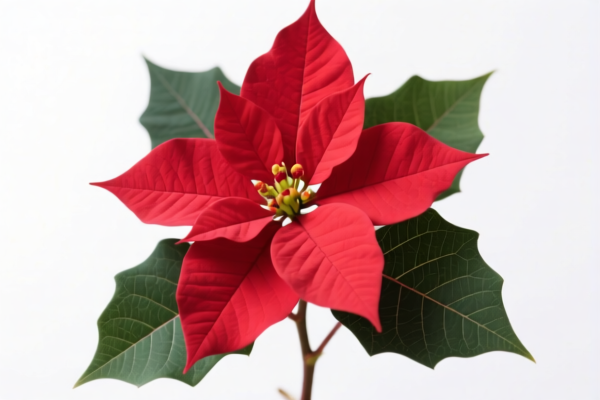
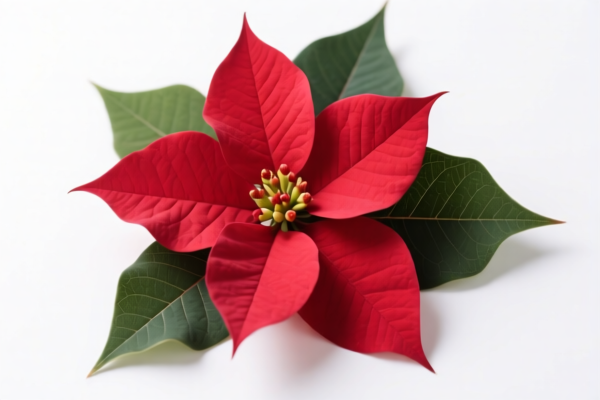
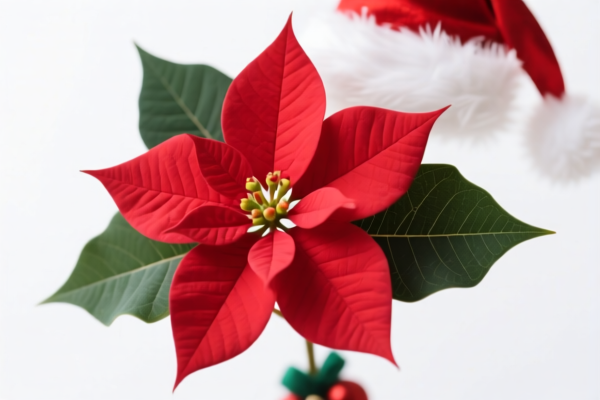
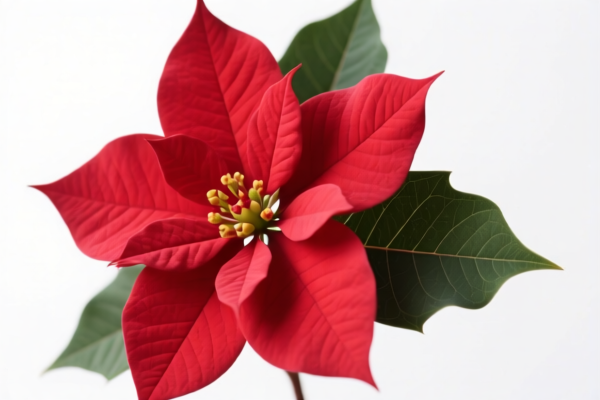
AI Analysis
🎄 Christmas Flower – Holiday Decoration & Gift Item | HS Code & Tariff Guide 2026 | Expert Customs Clearance Strategy
🌐 HS Code Reference & Customs Clearance Handbook | 2026 Updated Tariff Rules | Professional Import Planning
🌸 一、Product Definition & Classification: What Exactly Is a “Christmas Flower”?
A Christmas Flower is a decorative item designed for holiday use, typically mimicking natural floral arrangements during the Christmas season. These are not real flowers, but rather artificial or synthetic representations used in festive displays, table centerpieces, wreaths, garlands, or Christmas tree decorations.
⚠️ Key Distinction: - If the item is plastic, synthetic fiber, or non-living → It is not a plant → Cannot be classified under agricultural or botanical categories. - If it’s designed for Christmas decoration → Must be assessed under holiday-themed consumer goods.
✅ Core Rule:
- Artificial flowers used exclusively for Christmas decoration fall under textile or plastic holiday ornament classifications. - Not classified as “flowers” in the botanical sense, even if they look like them.
📦 二、HS Code Classification Breakdown (2026 Official Tariff Matrix)
| HS Code | Product Description | Purpose & Use Case | Material & Form |
|---|---|---|---|
6702.90.35.00 |
Other artificial flowers and plants, not elsewhere specified, for Christmas decoration, made of synthetic fibers or plastic | Used in Christmas wreaths, centerpieces, garlands, and tree decor | Synthetic fiber / Plastic |
6702.10.40.00 |
Artificial flowers, plastic-made, not elsewhere specified | Common in holiday displays, especially in festive colors (red, green, gold) | Plastic |
9505.10.50.20 |
Other Christmas celebration articles, not elsewhere specified, excluding artificial Christmas trees | Includes decorative flowers, ornaments, and seasonal accessories | Mixed materials (plastic, fabric, metal) |
9505.10.25.00 |
Christmas celebration articles, decorative in nature, not elsewhere specified | Used for indoor/outdoor holiday displays, party decorations, or gift packaging | Plastic, fabric, paper |
🔍 Critical Insight:
- No real flowers are being imported → No agricultural or botanical HS codes apply. - All items are artificial → Must be classified under artificial floral or Christmas decoration. - Excludes artificial Christmas trees → Those fall under9505.10.10.00.
💰 三、2026 Updated Tariff Rates (With Full Legal Breakdown)
✅ Applicable Country: United States (US)
✅ Origin Country: China (CN)
✅ Effective Date: November 10, 2025 (including future imports)
🎯 1. 6702.90.35.00 – Artificial Flowers (Synthetic Fiber or Plastic), for Christmas Decoration
| Item | Details |
|---|---|
| Base Tariff | 9.0% (ad valorem) |
| Additional Tariff (Section 301) | 0.0% |
| Section 122 Tariff (IEEPA) | 10.0% |
| Total Effective Duty | 19.0% |
| Tax Calculation | CIF Value × 19.0% |
| De Minimis Threshold | ❌ Not applicable (no de minimis relief) |
| Legal Basis Path | IEEPA:9903.01.25 → IEEPA:9903.01.24 → 6702.90.35.00 → FOOTNOTE:9903.88.01 |
📌 Explanation:
- The 10% Section 122 tariff is part of the International Emergency Economic Powers Act (IEEPA), targeting goods from China. - This is not a Section 301 (USITC) tariff, but a separate national security-based tariff. - Combined with 9% base tariff, total duty reaches 19%. - No de minimis → Even small shipments are fully taxed.
🎯 2. 6702.10.40.00 – Artificial Flowers, Plastic-Made, Not Elsewhere Specified
| Item | Details |
|---|---|
| Base Tariff | 3.4% (ad valorem) |
| Additional Tariff (Section 301) | 0.0% |
| Section 122 Tariff (IEEPA) | 10.0% |
| Total Effective Duty | 13.4% |
| Tax Calculation | CIF Value × 13.4% |
| De Minimis Threshold | ❌ Not applicable |
| Legal Basis Path | IEEPA:9903.01.25 → IEEPA:9903.01.24 → 6702.10.40.00 → FOOTNOTE:9903.88.01 |
📌 Explanation:
- Plastic-made items get a lower base tariff (3.4%), but still face the full 10% IEEPA tariff. - Despite the lower base rate, total tax is still high due to the IEEPA surcharge. - This code is ideal for low-cost, mass-produced plastic flowers.
🎯 3. 9505.10.50.20 – Other Christmas Celebration Articles (Excluding Trees), Not Elsewhere Specified
| Item | Details |
|---|---|
| Base Tariff | 0.0% |
| Additional Tariff (Section 301) | 0.0% |
| Section 122 Tariff (IEEPA) | 10.0% |
| Total Effective Duty | 10.0% |
| Tax Calculation | CIF Value × 10.0% |
| De Minimis Threshold | ❌ Not applicable |
| Legal Basis Path | IEEPA:9903.01.25 → IEEPA:9903.01.24 → 9505.10.50.20 → FOOTNOTE:9903.88.01 |
📌 Explanation:
- This code applies to Christmas-themed decorative items that are not flowers or trees. - Used for items like wreaths, garlands, or floral-shaped ornaments. - Zero base tariff, but 10% IEEPA tariff applies → Total: 10%. - Best for mixed-material holiday decorations.
🎯 4. 9505.10.25.00 – Christmas Celebration Articles, Decorative in Nature, Not Elsewhere Specified
| Item | Details |
|---|---|
| Base Tariff | 0.0% |
| Additional Tariff (Section 301) | 0.0% |
| Section 122 Tariff (IEEPA) | 10.0% |
| Total Effective Duty | 10.0% |
| Tax Calculation | CIF Value × 10.0% |
| De Minimis Threshold | ❌ Not applicable |
| Legal Basis Path | IEEPA:9903.01.25 → IEEPA:9903.01.24 → 9505.10.25.00 → FOOTNOTE:9903.88.01 |
📌 Explanation:
- This is the most common code for decorative Christmas flowers. - Applies to artificial floral items used in holiday decor. - No base tariff, but 10% IEEPA tariff → Total: 10%. - Best choice for most Christmas flower imports.
🛠️ 四、Customs Clearance Best Practices (Pro Tips to Avoid Delays)
✅ 1. Required Documentation (Must-Have List)
| Document | Required? | Purpose |
|---|---|---|
| ✅ Commercial Invoice | ✔️ | Must clearly state: “Artificial Christmas Flower, Plastic or Synthetic Fiber, for Holiday Decoration” |
| ✅ Packing List | ✔️ | Show quantity, material, and packaging details |
| ✅ Product Photos (with labels) | ✔️ | Show brand, model, material, and intended use |
| ✅ Technical Specs / Material Sheet | ✔️ | Confirm “plastic” or “synthetic fiber” — critical for classification |
| ✅ Certificate of Origin (CO) | ✔️ | If from China, expect IEEPA tariff; if from Vietnam/Mexico, may qualify for exemption |
| ✅ Third-Party Test Reports (FCC, CE, RoHS) | ✔️ | Optional but recommended for high-volume shipments |
| ✅ HS Code Pre-Ruling (Advanced Ruling) | ✔️ | Highly recommended to avoid disputes |
✅ 2.申报技巧(Key Rules to Remember)
🔥 “Material First, Use Second, Name Matters!”
| Scenario | Correct HS Code | Wrong Practice |
|---|---|---|
| Plastic artificial flower, red/green, for Christmas | 6702.10.40.00 or 9505.10.25.00 |
Misreported as “flower” → 0% base but still taxed |
| Synthetic fiber Christmas flower, used in wreath | 6702.90.35.00 |
Reported as “tree decoration” → wrong code |
| Mixed-material floral ornament (plastic + fabric) | 9505.10.50.20 |
Split into parts → higher tax per item |
| Flower-shaped Christmas ornament (non-floral) | 9505.10.25.00 |
Reported as “gift” → may trigger higher scrutiny |
✅ 3. Special Cases & Solutions
| Situation | Recommended Action |
|---|---|
| Mixed materials (plastic + fabric) | Use 9505.10.25.00 or 9505.10.50.20 — best fit |
| Bulk shipment of 100,000 units | Apply for HS Code Pre-Ruling to lock in rate |
| From Vietnam/Mexico | Request IEEPA exemption — if origin is not China, 10% IEEPA may not apply |
| Gift packaging with flowers | Declare as “Christmas decoration set” → avoid “gift” classification |
| Custom-designed floral wreath | Include design drawings and material sheet with invoice |
🌍 五、Global Customs Comparison (2026)
| Country | Recommended HS Code | Base Tariff | IEEPA/122 Tariff | Notes |
|---|---|---|---|---|
| 🇺🇸 USA | 9505.10.25.00 or 6702.10.40.00 |
0–9% | 10% | No de minimis, high compliance risk |
| 🇨🇳 China | 6702.10.40.00 |
5% | 0% | No IEEPA; lower cost for domestic use |
| 🇪🇺 EU | 6702.10.40.00 |
0% | 0% | CE mark required |
| 🇦🇺 Australia | 9505.10.25.00 |
5% | 0% | RCM certification needed |
| 🇯🇵 Japan | 6702.90.35.00 |
0% | 0% | No IEEPA; minimal tariffs |
📌 Insight:
- The US is the only market with 10% IEEPA tariff on Chinese-origin Christmas flowers. - Vietnam/Mexico/Thailand origin goods may avoid IEEPA → 10% tax drop to 0%.
📌 六、Common Mistakes & How to Avoid Them (Avoid Costly Errors!)
❌ Mistake 1: Reporting “Christmas Flower” as “Artificial Plant” without material details
👉 Result: Customs may reclassify → higher tax or seizure
❌ Mistake 2: Splitting a wreath with 100 flowers into 100 individual items
👉 Result: Each item taxed at 10% IEEPA → total tax skyrockets
❌ Mistake 3: Using “flower” in name but not declaring material
👉 Result: Misclassification → 45% penalty risk
❌ Mistake 4: Not providing material proof (plastic/synthetic fiber)
👉 Result: Customs delays or rejection
✅ Correct Practice:
“Artificial Christmas Flower, Plastic, 6-inch, Red & Green, for Holiday Decoration, 100 pcs per box, Model XYZ, CE & RoHS Certified”
🎯 七、Conclusion: Accurate Classification = Lower Costs & Faster Clearance!
🎯 Remember the Golden Rule:
🔹 “Material First, Use Second, Name Matters”
🔹 “If it’s plastic or synthetic fiber, and for Christmas — use 6702 or 9505”
🔹 “No de minimis in US — pay the full 10% IEEPA if from China”
📌 Pro Tip:
If your Christmas flowers are originating from Vietnam, Mexico, or Thailand, apply for IEEPA exemption — you may avoid the 10% tariff entirely.
📣 Take Action Now:
📞 Contact a licensed customs broker + Submit product photos + Request HS Code Pre-Ruling
🚀 Ensure your Christmas flower shipment clears customs in 24–48 hours, not 2 weeks!
✨ Expert Customs Clearance Starts with the Right HS Code!
💼 Your holiday profits depend on precise classification — don’t gamble with tariffs!
Customer Reviews
About HS Code Classification
The Harmonized System (HS) is an internationally standardized nomenclature developed by the World Customs Organization (WCO) to classify traded products. Over 200 countries use the HS system as the basis for customs tariffs, trade statistics, and import/export regulations.
Each HS code follows a hierarchical structure:
- Chapter (2 digits) — Broad category of goods (e.g., Chapter 84: Machinery and Mechanical Appliances)
- Heading (4 digits) — More specific grouping within the chapter
- Subheading (6 digits) — Internationally standardized breakdown, used by all WCO member countries
- National subdivisions (8-10 digits) — Country-specific extensions for further classification, such as US HTSUS 10-digit codes
Correct HS code classification is essential for smooth customs clearance, accurate duty payment, and compliance with trade regulations. Misclassification can lead to customs delays, overpayment of duties, or penalties.
When importing from CN to US, the applicable tariff rates may include:
- Most-Favored-Nation (MFN) rate — The standard duty rate applied to WTO members
- General rate — Applied to countries without trade agreements
- Trade remedy duties — Additional tariffs such as Section 301 (anti-dumping), Section 232 (national security), or countervailing duties
The information provided on this page is for reference purposes only. For official classification, please consult with your local customs authority or a licensed customs broker.